

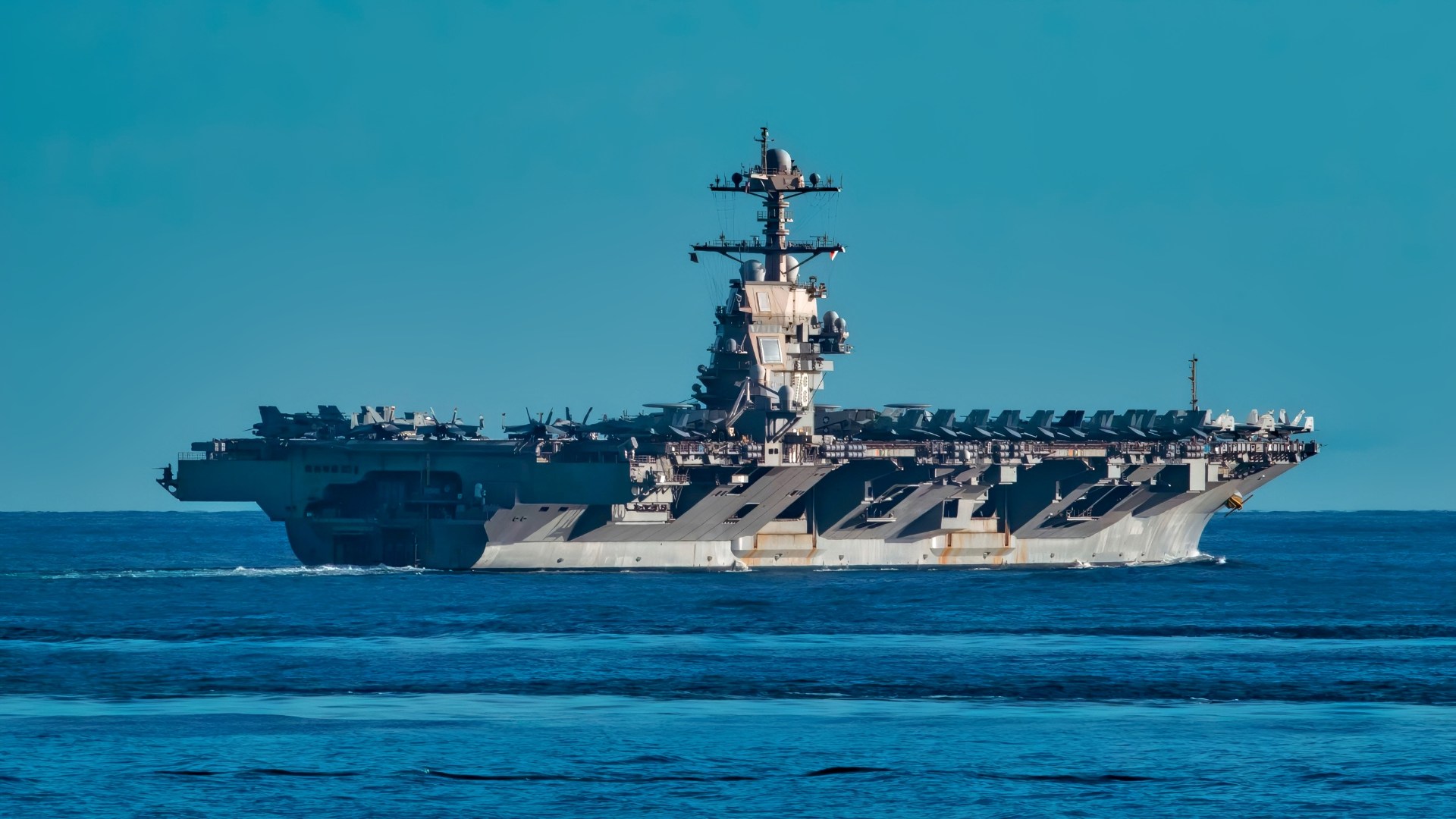
The USS Gerald R. Ford supercarrier just wrapped up a near-record deployment from Venezuela to the Middle East—and now needs major modifications before it can launch the F-35C stealth fighter.
The carrier’s deck must be reinforced and coated with heat-resistant materials to withstand the F-35C’s 3,600°F engine exhaust, and a new ODIN computer system must be integrated.

PHILIPPINE SEA (Dec. 11, 2023) An F-35C Lightning II, assigned to the “War Hawks” of Strike Fighter Squadron (VFA) 97, recovers aboard Nimitz-class aircraft carrier USS Carl Vinson (CVN 70). Vinson, the flagship of Carrier Strike Group ONE, is deployed to the U.S. 7th Fleet area of operations in support of a free and open Indo-Pacific. (U.S. Navy photo by Mass Communication Specialist 2nd Class Benjamin Ringers)
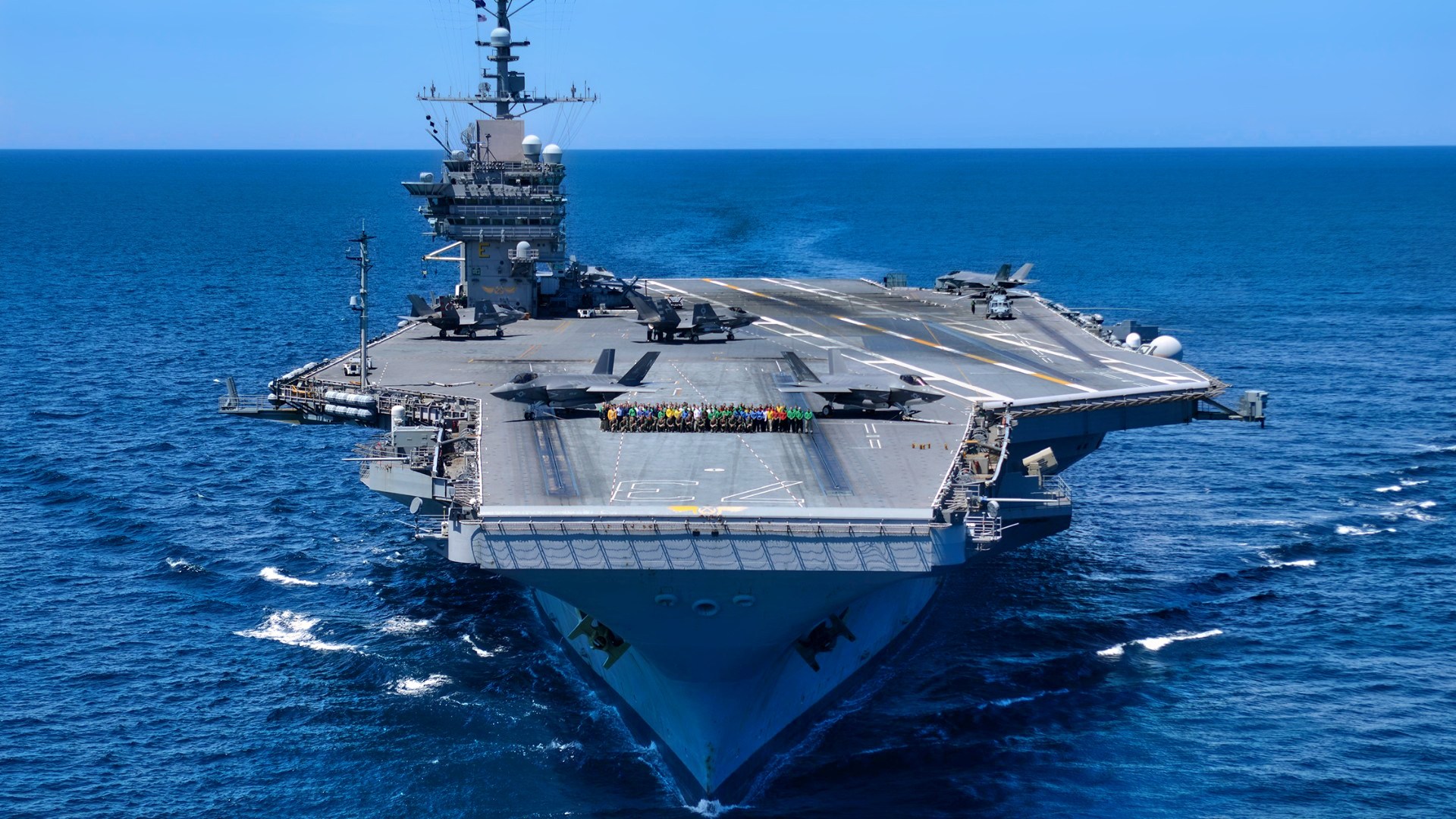
ATLANTIC OCEAN (Aug. 16, 2016) Sailors assigned to the Grim Reapers of Strike Fighter Squadron (VFA) 101, the Navy’s F-35C Fleet replacement squadron, pose on the flight deck of the aircraft carrier USS George Washington (CVN 73) during an aerial photo exercise. VFA-101 aircraft and pilots are conducting initial qualifications aboard George Washington in the Atlantic Ocean. The F-35C is expected to be Fleet operational in 2018. (U.S. Navy photo by Mass Communication Specialist Seaman Apprentice Krystofer Belknap)
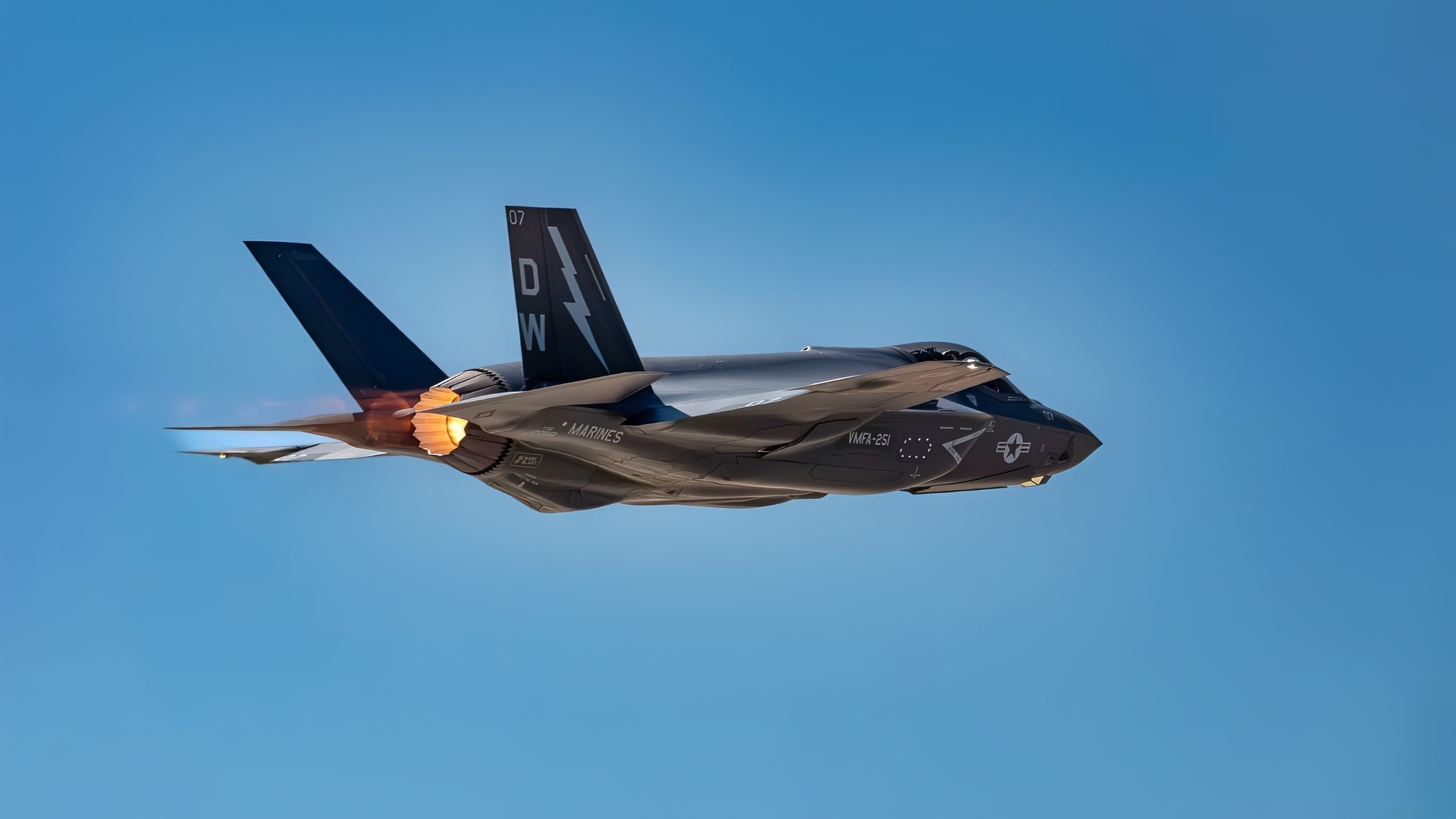
A U.S. Marine Corps F-35C Lightning II assigned to Marine Fighter Attack Squadron 251 (VMFA-251), Marine Corps Air Station Cherry Point, North Carolina, takes off for a mission in support of Red Flag-Nellis Marine Fighter Attack Squadron 251 (VMFA-251), 2nd Marine Aircraft Wing, Marine Corps Air Station Cherry Point, North Carolina 25-3 from Nellis Air Force Base, Nevada, July 22, 2025. Red Flag, strengthens join-force readiness through integration in realistic combat scenarios, enhancing interoperability and rapid-response capabilities. (U.S. Air Force photo by William R. Lewis)
The USS Gerald R. Ford Just Finished a Near-Record Deployment — Now It Needs F-35C Modifications, Deck Repairs, and a New Computer System
The famous and somewhat “maxed out” USS Gerald R. Ford supercarrier has required specific alterations and adjustments to ensure it can launch its 5th-generation stealth F-35C fighter jet. This capability is considered high priority for the U.S. Navy.
The USS Ford will soon undergo extensive repairs and sustainment activities following its extensive, near-record-setting deployment spanning from Venezuela to the Middle East.
As the first-of-its-kind 5th-generation stealth carrier-launched fighter jet, the F-35C brings a new dimension of air attack to the U.S. Navy, as there had previously never been a stealth fighter jet launched from a carrier.
Given the many advances in modern Russian– and Chinese-built air defenses, the ability to project 5th-generation stealth attacks from the sea is crucial to the Navy in the event of a great power conflict.
F-35C – Built for Carrier Flight
A “Naval Aviation Vision 2030-2035” document from 2021 explained that the F-35C aircraft was specifically engineered for landing on carriers with all-weather coatings and specially configured landing gear to enable a safe landing.
The aircraft was developed with a broad wingspan and ruggedized components for harsh maritime conditions, where rough seas, rain, wind, fog, and snow can complicate landing efforts.
Its 51-foot wingspan makes it the largest of the three F-35 variants, as the aircraft’s structure needs to withstand the impact of carrier landings. Also, the F-35C has larger, foldable wings to facilitate slower approach speeds compatible with moving ships.
The wings of the F-35C are built with what’s called “aileron control surfaces” designed to provide control power to roll the aircraft at slow approaching speeds.
The F-35C has been operational with the Navy for many years, yet it requires specific configurations to land and take off from the flight decks of Ford-class carriers.
One adjustment concerns structural reinforcements to ensure the carrier deck adequately supports the landings.
Another variable is the need to add heat-resistant materials to the ship’s deck.
This coating ensures that the heat from the engine exhaust of the F-35C is not damaging to the ship or the aircraft. The F-35C’s engine exhaust is roughly 3,600° F, requiring specialized jet blast deflectors to prevent damage to the deck, which the Ford requires to be upgraded to handle.
Subsequent Ford-class carriers, such as the USS Kennedy, have been engineered from the beginning to accommodate the F-35C. Yet, certain modifications needed for the F-35C were not completed on the USS Ford when the F-35C became operational.
The USS Ford was optimized with technology and structures designed to support the F/A-18 Super Hornet, a long-serving fighter now nearing the end of its service life.
Computing and Maintenance
The F-35C also requires a specific computerized maintenance system to be integrated into the USS Ford to ensure the stealth fighter is properly maintained while on the ship.
This F-35 computer system, called Operational Data Integrated Network (ODIN), was developed as a follow-on or improvement upgrade to the F-35’s well-known Autonomic Logistics Information System (ALIS).
As a high-speed, diagnostic computer system, ODIN performs several critical functions. One of those is condition-based maintenance, in which onboard sensors and computers monitor flight systems, such as engine rotation or cooling functions.
In addition, ODIN will examine the health of onboard software and hardware throughout the aircraft, including avionics and other electronics.
Part of the concept is to anticipate potential failures well before any malfunction occurs, to both preserve the aircraft’s safety and survivability and streamline the repair and maintenance process by getting ahead of the curve.
Most of all, a diagnostic or predictive computer system of this kind can mitigate the risk of in-flight malfunctions, which could, of course, introduce substantial performance and functionality issues, and even tactical complications.
USS Tripoli
Interestingly, similar structural adjustments were made to the U.S. Navy’s second America-class amphibious assault ship, called the USS Tripoli.
The amphibious assault ship needed to be reconfigured to ensure it could operate its F-35Bs effectively.
The issue is quite similar to that of the USS Ford, in that the deck coatings needed to be upgraded to withstand the intense engine and exhaust heat generated by the F-35B during take-off and landing.
About the Author: Kris Osborn
Kris Osborn is the President of Warrior Maven – Center for Military Modernization. Osborn previously served at the Pentagon as a highly qualified expert in the Office of the Assistant Secretary of the Army—Acquisition, Logistics & Technology. Osborn has also worked as an anchor and on-air military specialist at national TV networks. He has appeared as a guest military expert on Fox News, MSNBC, The Military Channel, and The History Channel. He also has a Masters Degree in Comparative Literature from Columbia University.


