

Summary and Key Points: China has 50,000 to 100,000 naval mines in 30 different varieties — the U.S. Navy has fewer than 10,000, mostly shallow-water Quickstrike bomb-conversion weapons. Only Russia has more, with an estimated 125,000. A PLAN officer wrote that the People’s Liberation Army Navy assesses the U.S. Navy’s mine warfare capabilities as extremely weak and has built its inventory around that gap. The historical record is striking: since World War II, more U.S. Navy ships have been damaged or sunk by sea mines than by torpedoes or missiles.
China Is a Sea Mine Superpower: The U.S. Navy Has a Problem

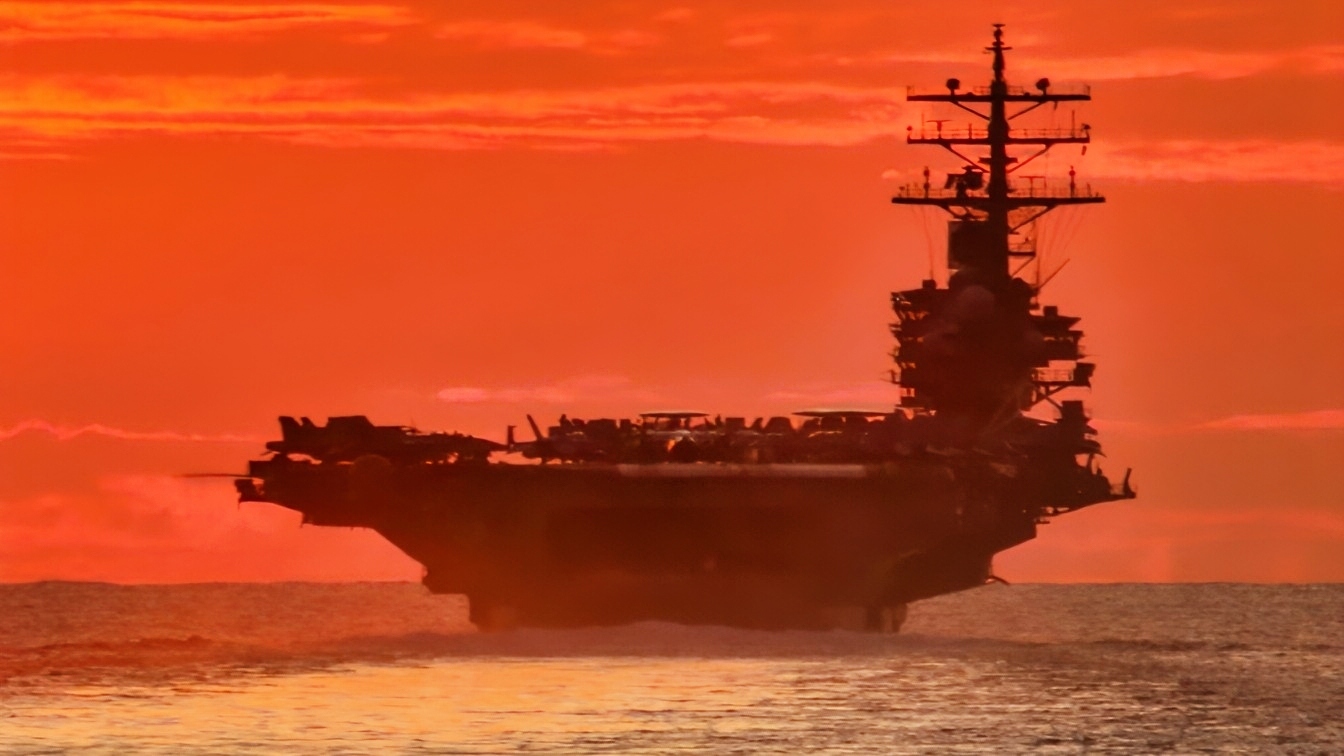
The world’s largest aircraft carrier, USS Gerald R. Ford (CVN 78) (front) and the Arleigh Burke-class guided-missile destroyer USS Bainbridge (DDG 96) participate in an integrated phase training event, March 23, 2025. The Gerald R. Ford Carrier Strike Group is underway in the Atlantic Ocean completing integrated naval warfighting training. Composite Training Unit Exercise (COMPTUEX) is the Joint Force’s most complex integrated training event and prepares naval task forces for sustained high-end Joint and combined combat. Integrated naval training provides America’s civilian leaders and commanders highly-capable forces that deter adversaries, underpin American security and economic prosperity, and reassure Allies and partners.(U.S. Navy photo by Mass Communication Specialist 2nd Class Maxwell Orlosky)
China’s sea mines could be a problem for the U.S. Navy — perhaps a problem that has not been fully reckoned with.
Difficult to detect, relatively inexpensive, and capable of exerting outsized influence on naval and amphibious campaigns, sea mines are more than tactically relevant; they possess some of the qualities of strategic weapons and make it much more dangerous for American and allied forces to operate near the coast of China, Taiwan, and other nearby chokepoints.
Cost Asymmetry
As the ongoing war in Iran and the tussle over the Strait of Hormuz have so clearly illustrated, naval mines are a powerful weapon for the defender. A destroyer or aircraft carrier — two of the most sophisticated pieces of military kit today — cost billions of dollars.
A sea mine, on the other hand, can cost as little as a few thousand dollars up to maybe a few hundred thousand dollars for advanced mines.
And even if a mine is unable to sink a ship, it can slow operations and consume resources and attention, thereby detrimentally shaping campaigns.
Deadly Weapons
The historical record illustrates an important lesson. Since the Second World War, more U.S. Navy ships have been damaged or sunk by mines rather than by torpedoes or missiles.
During the Korean War, for example, North Korea’s relatively simple mines delayed amphibious operations and came as a surprise to American commanders.
In 1988, the guided missile frigate USS Samuel B. Roberts nearly sank after it hit an Iranian mine in the Persian Gulf, and during the 1991 Gulf War, the USS Princeton and USS Tripoli were both damaged by Iraqi mines — naval mines that were not the technologically advanced mines used by the world’s major powers.
The Chinese Stockpile
China’s inventory of naval mines is thought to be quite large, possibly numbering in the tens of thousands, ranging from relatively simple contact mines to much more advanced types.
Other, more advanced naval mines include influence mines, triggered by magnetic, acoustic, or pressure signatures from passing ships rather than by physical contact with the mine.
Some of these can remain dormant until a certain number of passing ships have been counted, creating the impression of a clear and safe sea lane and complicating minesweeping efforts.
Still other kinds of naval mines could be deployed by aircraft, via submarine or fishing vessel, or disguised as merchant ships.
As one U.S. Navy officer observed, “Since the early 2000s, the PLAN has assessed that ‘relative to other combat mission areas, [the U.S. Navy’s] mine warfare capabilities are extremely weak.”
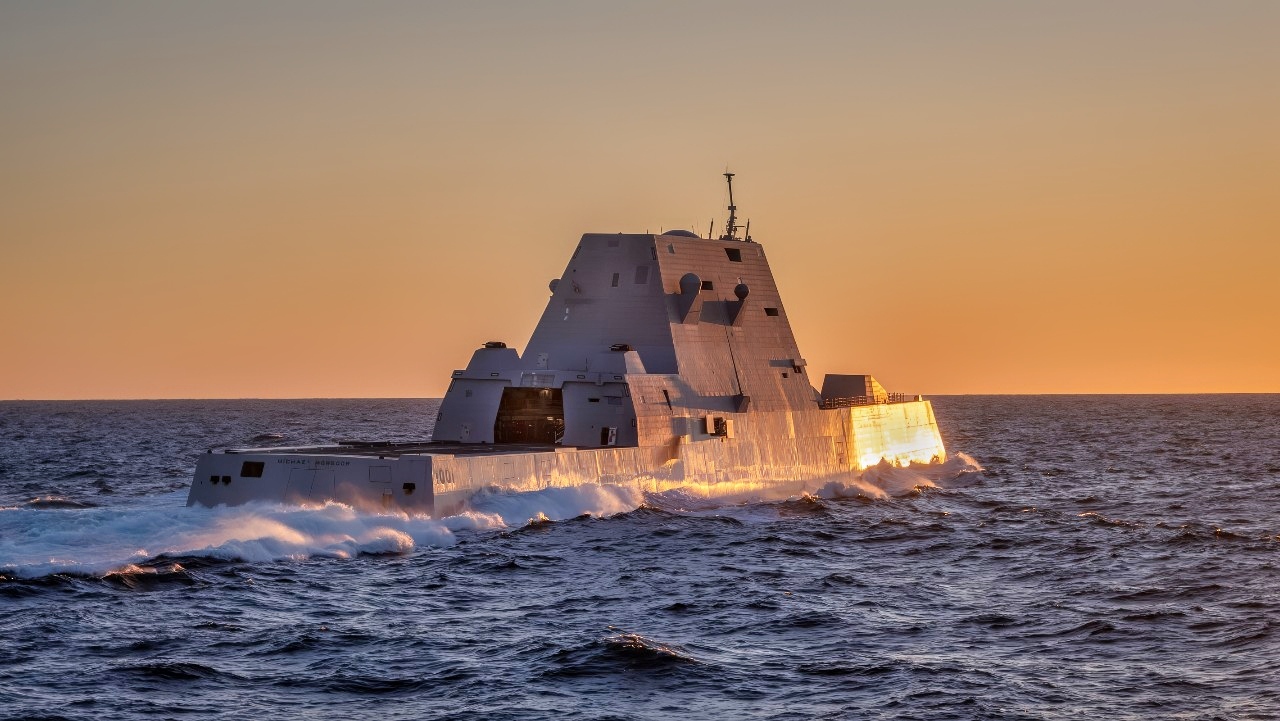
(February 10, 2024) — The Zumwalt Class Guided Missile Destroyer USS Michael Monsoor (DDG 1001) breaks away from the Henry J. Kaiser-class fleet replenishment oiler USNS Pecos (T-AO 197) shortly before sunset after taking on fuel. (U.S. Navy photo by Chief Mass Communication Specialist Mark D. Faram)
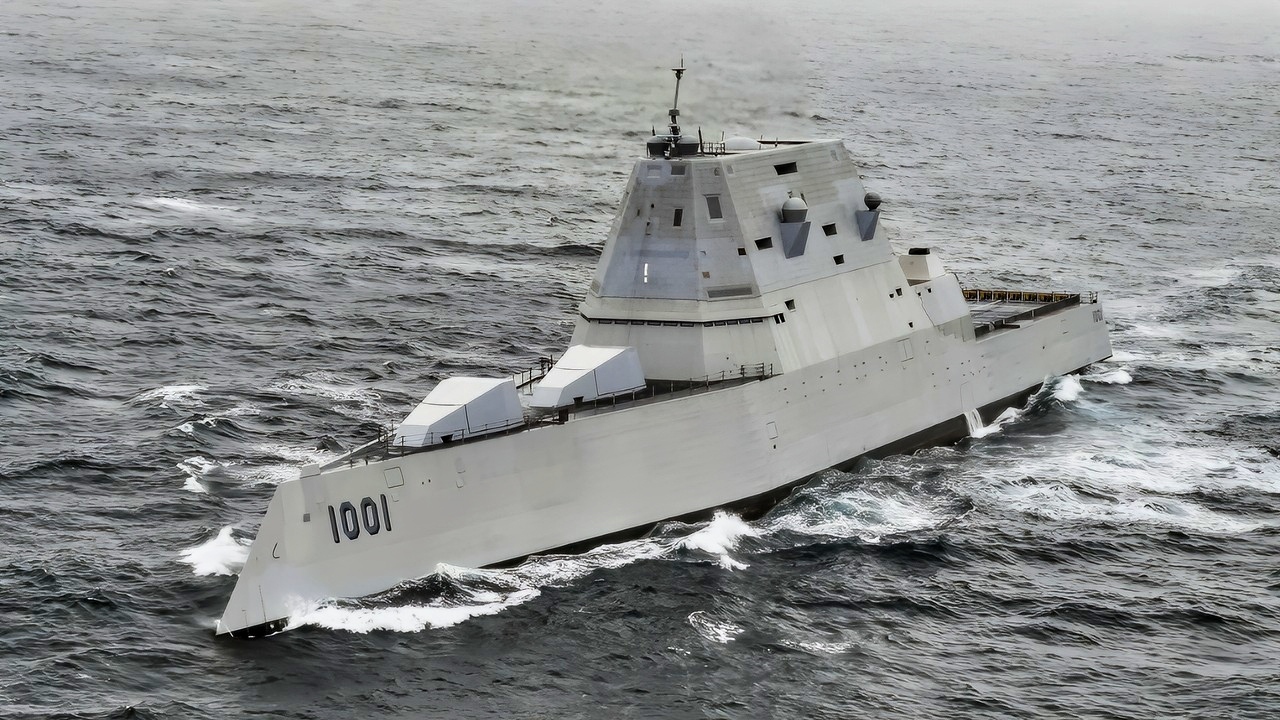
(April 21, 2021) Zumwalt-class guided-missile destroyer USS Michael Monsoor (DDG 1001) participates in U.S. Pacific Fleet’s Unmanned Systems Integrated Battle Problem (UxS IBP) 21, April 21. UxS IBP 21 integrates manned and unmanned capabilities into challenging operational scenarios to generate warfighting advantages. (U.S. Navy photo by Chief Mass Communication Specialist Shannon Renfroe)
The PLAN has capitalized on this advantage by developing more extensive mine inventories and robust delivery methods than the U.S. Navy. China has an estimated 50,000–100,000 maritime mines (only Russia has more, perhaps some 125,000).”
But the position of the U.S. Navy is significantly different than that of the PLAN. As the author notes, “in comparison, the U.S. Navy has fewer than 10,000 naval mines stockpiled, and most are the shallow-water Quickstrike general-purpose bomb-conversion weapons.
China fields more than 30 different varieties of maritime mines. This diversity provides flexibility in the fuse type, mine type, and case depth required for a wide variety of missions.”
Location, Location, Location
The particular geography of the western Pacific increases the risk that China’s naval mines pose to the U.S. Navy.
The waters surrounding Taiwan, including nearby islands, funnel ships through relatively narrow routes to ports, and China’s naval mines could be particularly effective in these crucial maritime chokepoints. Even just the threat of a mine or small minefield is enough to significantly slow down or otherwise delay the beginning of operations, both on the surface and below the water.
Therein lies one of the biggest but underappreciated aspects of mines: naval mines, through their threat alone, disrupt operational tempo. U.S. Navy carrier strike groups and amphibious forces rely on the predictable movement of men and logistical support elements.
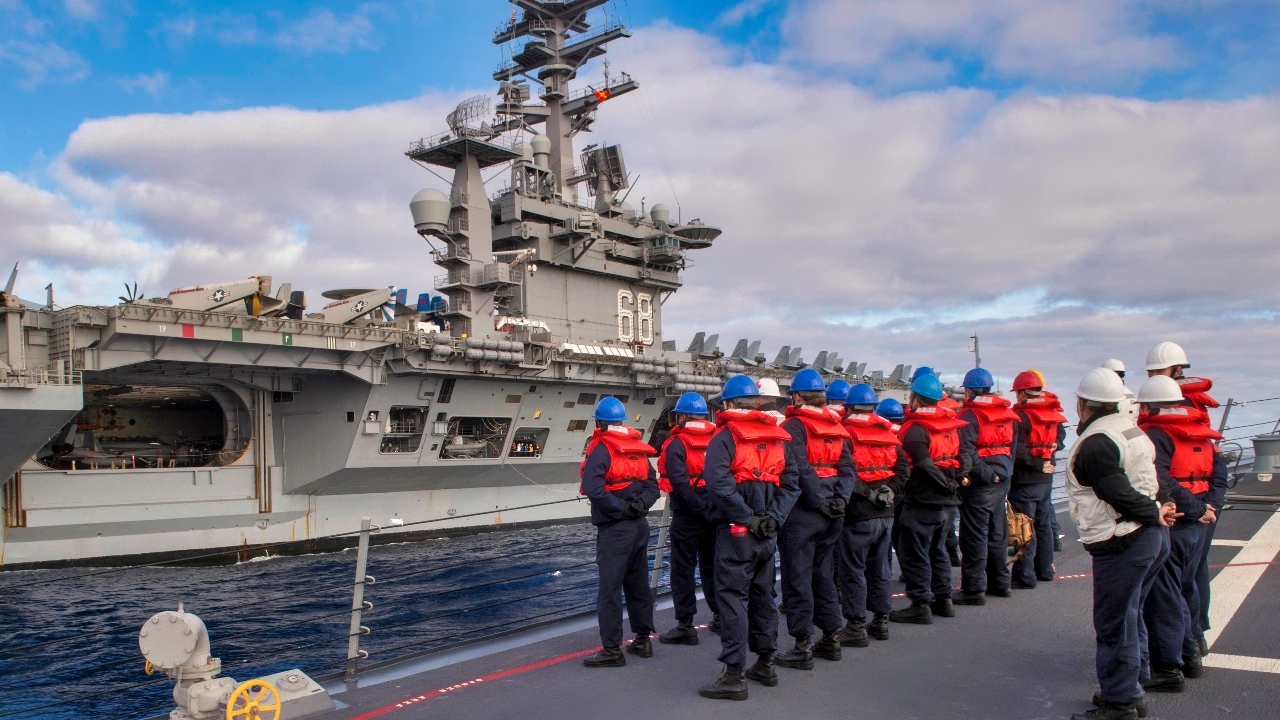
(June 11, 2017) Sailors aboard the Arleigh Burke-class guided-missile destroyer USS Pinckney (DDG 91) stand in formation as the ship pulls alongside the aircraft carrier USS Nimitz (CVN 68) to conduct a replenishment-at-sea. The Pinckney is currently underway as part of the Nimitz Carrier Strike Group on a regularly scheduled deployment to the Western Pacific and Indian Oceans. (U.S. Navy photo by Mass Communication Specialist 2nd Class Craig Z. Rodarte/Released)
In key ports, straits, or landing areas that are even suspected of being mined, commanders could conceivably stop or otherwise delay operations until those sea lanes are cleared.
During a kind of contingency operation around Taiwan, Chinese mines could conceivably wreak havoc on American supply lines throughout the Indo-Pacific, with potential knock-on effects that complicate the response from Japan or the Philippines.
Even just the rumor of mines can have a strategic influence, as wartime traffic redirects and civilian shipping insurers become cautious.
MORE – ‘A Combat Warplane’: The Dassault Rafale Fighter Doesn’t Care About the F-22 or F-35 Stealth Fighter
About the Author: Caleb Larson
Caleb Larson is an American multiformat journalist based in Berlin, Germany. His work covers the intersection of conflict and society, focusing on American foreign policy and European security. He has reported from Germany, Russia, and the United States. Most recently, he covered the war in Ukraine, reporting extensively on the war’s shifting battle lines in the Donbas and writing about its civilian and humanitarian toll. Previously, he worked as a Defense Reporter for POLITICO Europe. You can follow his latest work on X.


Billy Duncan
May 22, 2026 at 3:54 pm
The USS Roberts did not hit a mine, it was hit with an Iraqi Exercet Missile.
FCCM Billy Duncan USN Retired
Yourmom
May 22, 2026 at 7:05 pm
China, china, china. If china had all the crap that people have been carping about for the last oh, I don’t know, I’ll say 15 years, that America couldn’t defend itself against, they would’ve taken over the world by now, believe me.
Doug McCoy
May 23, 2026 at 2:36 am
Why is everyone so worried about China? All that needs to be done is to ban all imports from China and they will be beyond broke in a week. Will we have to do without some things? Sure. Other things will be more expensive as we procure them from other suppliers. But the pain to our economy won’t be anything like what China would suffer if we banned all imports from there.