

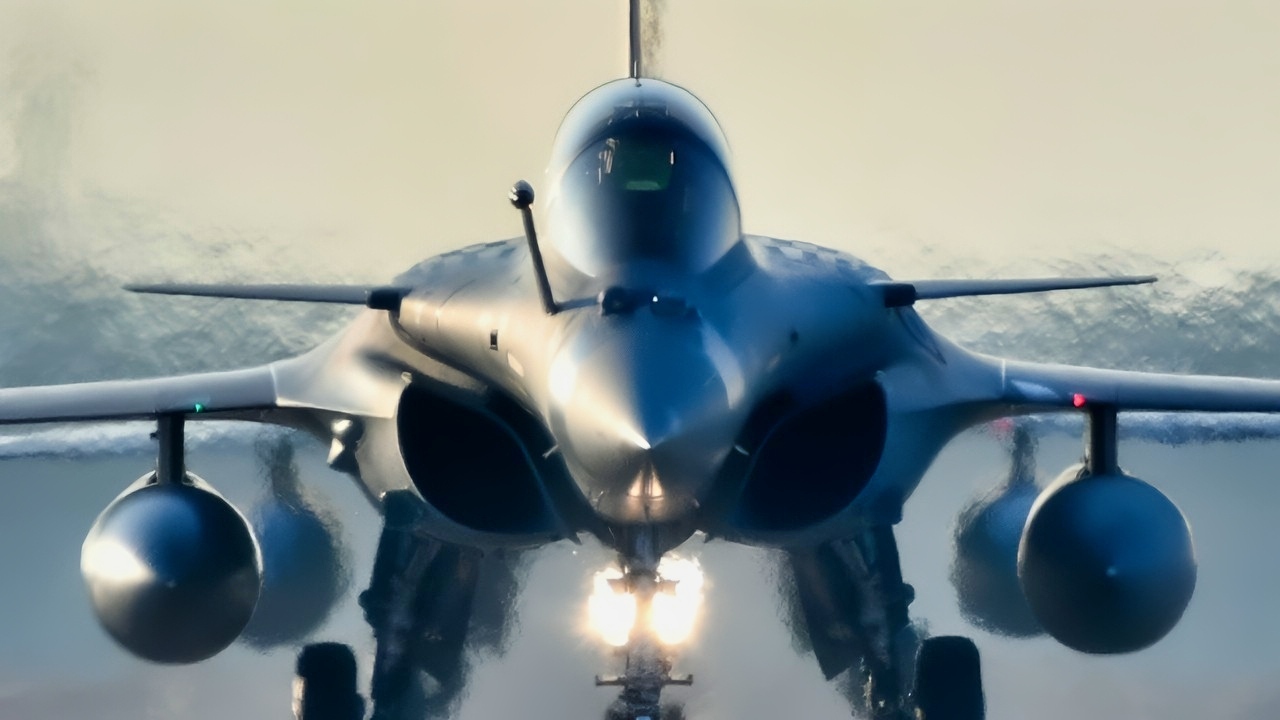
The Dassault Rafale is a French-built multirole fighter aircraft developed by Dassault Aviation to fulfill a wide variety of combat missions within a single platform. Conceived in the late 1970s to replace multiple legacy aircraft types, the Rafale was designed as an “omnirole” fighter capable of conducting air-superiority, ground-attack, reconnaissance, anti-ship warfare, and nuclear-deterrence missions with minimal reconfiguration.
The aircraft features a twin-engine, canard-delta configuration that provides both high agility and efficient supersonic flight, along with advanced avionics and sensor fusion systems that give pilots a high level of situational awareness in complex combat environments.
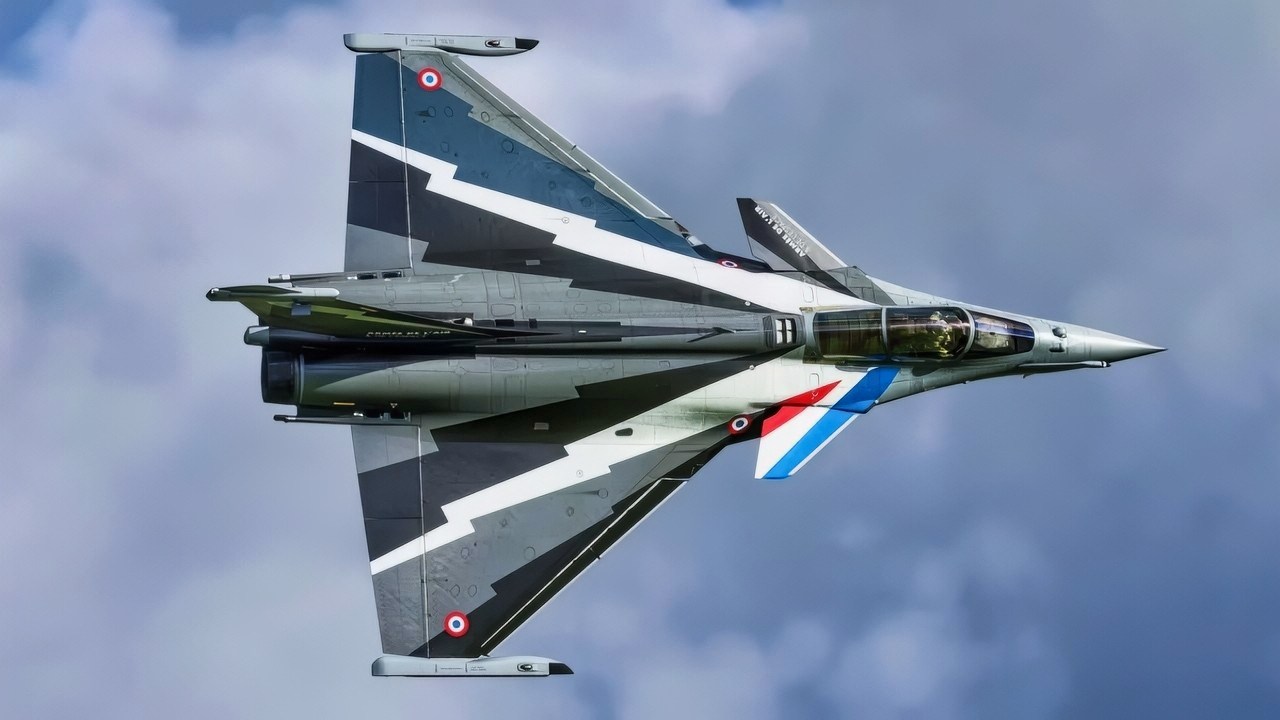
Dassault Rafale Fighter from France. Image Credit: Creative Commons.
From its earliest days, the Rafale program was structured around long-term adaptability, allowing it to evolve continuously through successive upgrade standards.
Early Dassault Rafale Deliveries
The first operational variant was the F1 standard, which entered service with the French Navy in 2004.
It was intentionally limited and primarily focused on air-to-air combat and fleet defense missions.
The F1 standard included the early RBE2 radar, which used passive electronically scanned array (PESA) technology, and the initial version of the SPECTRA electronic warfare system. Although the aircraft’s aerodynamic performance and core architecture were already mature, it lacked air-to-ground capabilities, reflecting a deliberate decision to field an operational fighter quickly while more advanced functions were still in development.
A major shift occurred with the introduction of the F2 standard in 2006, which expanded the Rafale’s mission scope to include air-to-ground operations. This upgrade added precision-guided munitions, improved targeting systems, and enhanced mission software, enabling the aircraft to carry out both air-to-air and ground attack roles within the same sortie.
The F2 standard marked the transition toward a fully multirole platform and brought the Rafale closer to its intended operational versatility.
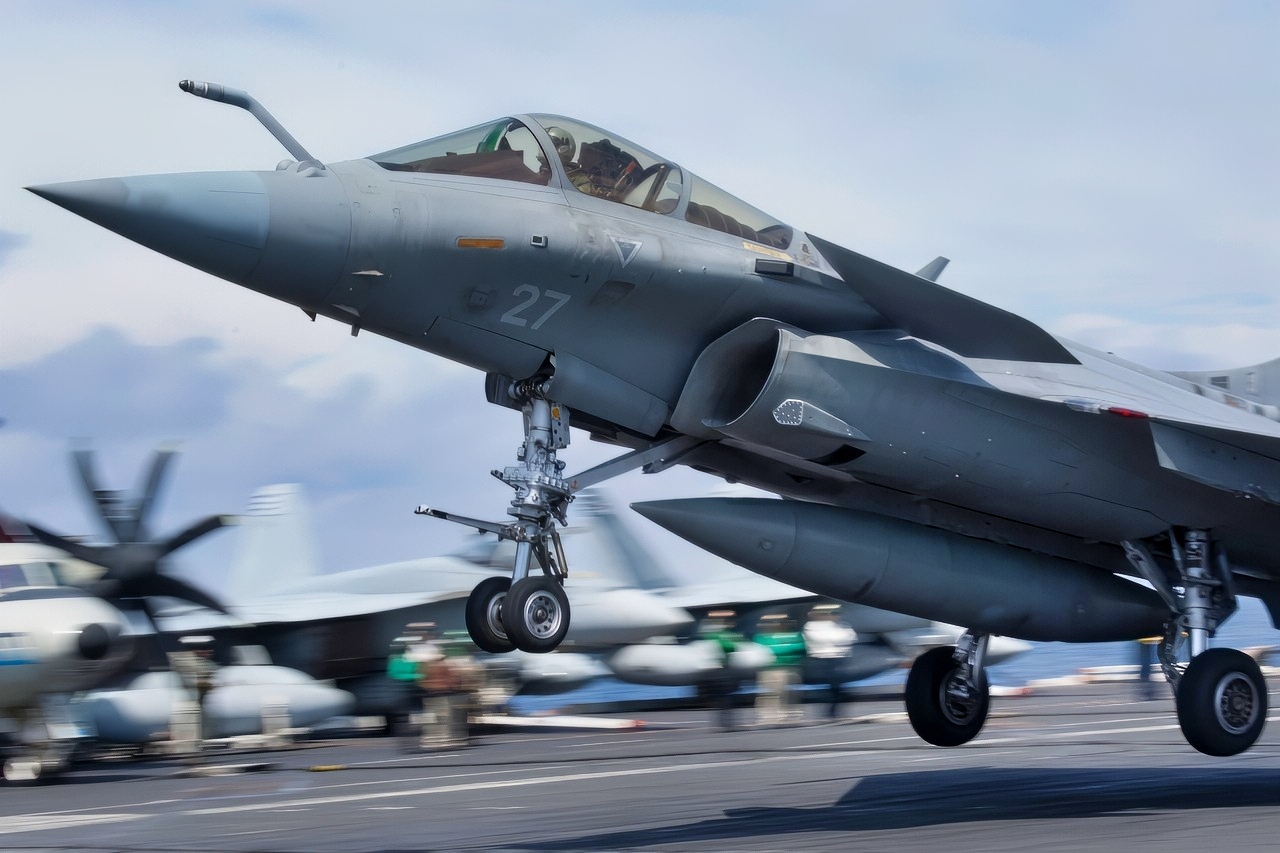
(July 3, 2018) A French Dassault Rafale M Fighter touches down on the flight deck aboard the Nimitz-class aircraft carrier USS Harry S. Truman (CVN 75). Harry S. Truman is currently deployed as part of an ongoing rotation of U.S. forces supporting maritime security operations in international waters around the globe. (U.S. Navy photo by Mass Communication Specialist 3rd Class Rebekah A. Watkins/Released)
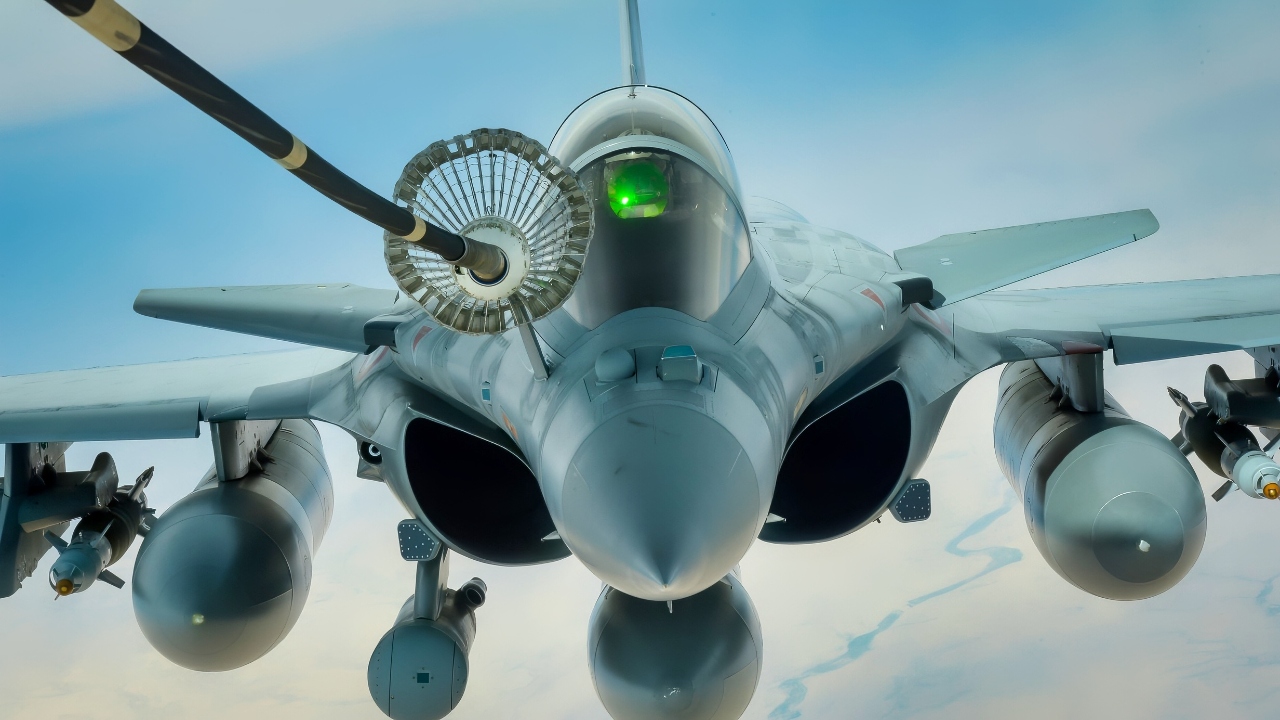
A French air force Dassault Rafale refuels from a U.S. Air Force KC-10 Extender from the 908th Expeditionary Air Refueling Squadron before conducting an aerial refuel during a Combined Joint Task Force – Operation Inherent Resolve mission March 20, 2017. The KC-10 provides aerial refueling capabilities for U.S. and coalition aircraft as they support Iraqi Security Forces and partnered forces as they work to liberate territory under the control of Islamic State of Iraq and Syria. (U.S. Air Force photo by Senior Airman Joshua A. Hoskins)
The F3 Standard
The F3 standard, introduced in 2008, further enhanced the aircraft’s multi-mission capabilities.
It included support for nuclear deterrence missions with the ASMP-A missile, anti-ship operations with Exocet missiles, and reconnaissance functions via dedicated sensor systems.
The weapons suite expanded significantly, incorporating systems such as the SCALP long-range cruise missile and the AASM precision-guided munitions, as well as the MICA air-to-air missile family. At this stage, the Rafale could effectively perform all mission types required by modern air forces, fulfilling its role as an adaptable combat aircraft.
A key element of the Rafale’s evolution has been the continuous improvement of its avionics, particularly its radar systems. The original RBE2 radar was eventually upgraded to the RBE2 AESA, which brought a substantial increase in detection range, multi-target tracking capability, and resistance to electronic jamming.
This radar allows the Rafale to operate effectively in both air-to-air and air-to-ground roles simultaneously, contributing to its versatility.
Ongoing development has led to the RBE2-XG radar, which uses gallium nitride technology and is expected to further increase detection performance and efficiency, particularly against advanced threats such as low-observable aircraft.
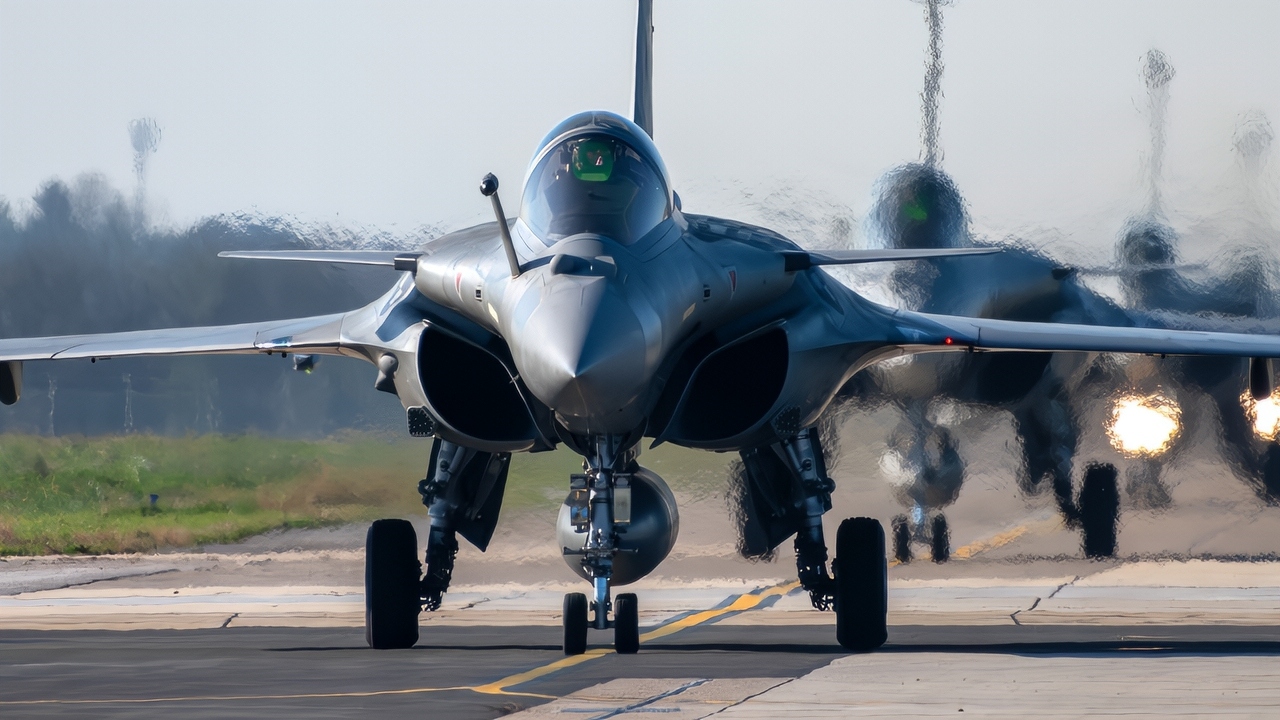
Dassault Rafale Ready for Action. Image Credit: Creative Commons.
F4 and Beyond
The F4 standard, first qualified in 2023, seeks to transition the Rafale into the era of network-centric warfare.
This standard introduces advanced data links, improved communication systems, and enhanced sensor fusion capabilities.
It also incorporates automated computing systems to assist pilots in managing complex missions and processing large amounts of information. Additional improvements include the integration of new weapons such as the MICA NG missile and upgrades to the SPECTRA electronic warfare suite. The F4 standard is being deployed in multiple phases, each adding new layers of capability, including better connectivity with allied forces and other platforms, such as drones and ground systems.
Currently, Dassault is working on the Rafale F5, the next iteration of the aircraft, slated to enter service in the 2030s and expected to incorporate next-generation technologies.
This future upgrade includes integration with Loyal Wingman drones, which will operate alongside the Rafale in coordinated missions. The F5 standard is also expected to introduce more powerful engines, improved electronic warfare systems, and advanced artificial intelligence features to support increasingly complex operational environments.
The Cold War Aircraft That isn’t Going Anywhere
Despite being originally designed in the 1970s, the Dassault Rafale remains an indispensable asset for the French and many other air forces worldwide. Part of this is due to the aircraft’s versatile payload, which enables it to undertake a wide range of missions.
Continuous upgrades to its sensors and avionics have also helped the aircraft to stay relevant. Its EW suites and warning systems give the aircraft a high level of survivability against modern threats, though not to the same level as a fifth-generation stealth fighter.
The Rafale program’s gradual upgrade approach has proven to be one of its greatest strengths.
Instead of developing entirely new aircraft for each generation, France has chosen to continuously improve the Rafale through incremental standards that introduce new technologies and capabilities over time.
This strategy allows the aircraft to remain relevant as the global environment continues to change while maintaining a high degree of commonality across the fleet.
As a result, the Rafale has evolved from a relatively limited air-defense fighter into a highly advanced and adaptable combat platform capable of meeting the demands of modern and future warfare.
About the Author: Isaac Seitz
Isaac Seitz, a Defense Columnist, graduated from Patrick Henry College’s Strategic Intelligence and National Security program. He has also studied Russian at Middlebury Language Schools and has worked as an intelligence Analyst in the private sector.


