

Ukrainian drone strikes have forced some of Russia’s largest oil refineries to halt operations or dramatically reduce fuel production, dealing one of the most significant blows yet to Moscow’s energy infrastructure since the war began more than four years ago. Reuters reported on May 20 that the combined annual refining capacity of the affected facilities now exceeds 83 million metric tons, representing nearly one-quarter of Russia’s total refining capacity.
The attacks have targeted key refineries in Ryazan, Moscow, Kirishi, Yaroslavl, and Nizhny Novgorod, all located deep inside central and western Russia. Several plants have either suspended operations entirely or are functioning at heavily reduced capacity after repeated strikes over the past several weeks. Per Reuters, the affected refineries collectively account for more than 30% of Russia’s gasoline production and roughly 25% of diesel output.
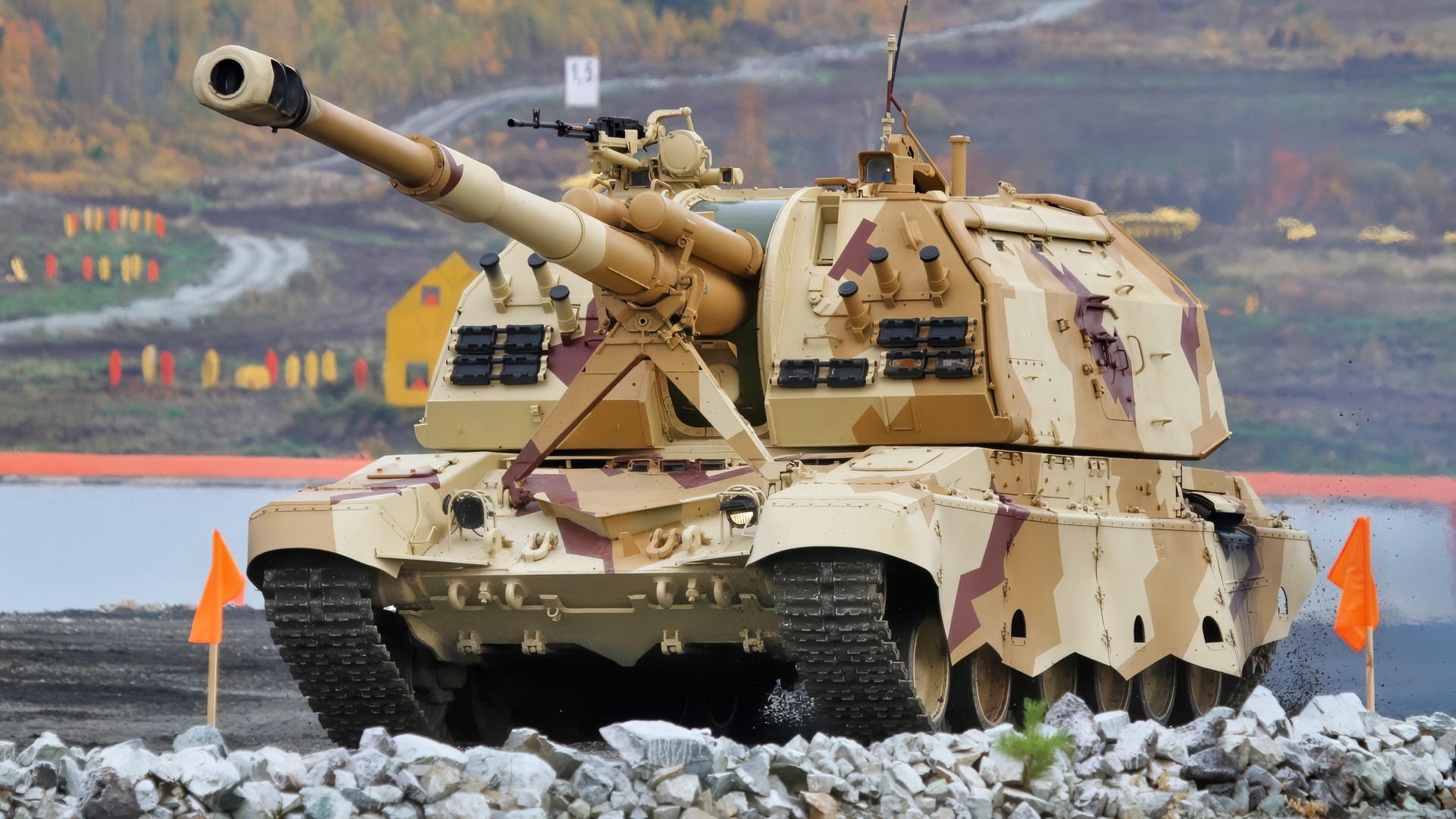
Russian Artillery. Image Credit: Creative Commons.
The campaign is a significant escalation in Ukraine’s long-range drone strategy, which is increasingly focusing on crippling the Russian economy and disrupting the oil revenues that are a critical part of the Russian war economy.
Putin In Trouble: Major Russian Refineries Forced Offline
Among the most significant facilities affected is the Ryazan refinery, one of Russia’s largest oil-processing plants and a key supplier of fuel to Moscow and surrounding regions. The refinery reportedly halted operations entirely after a Ukrainian drone strike on May 15.
The plant, owned by Rosneft, processed 13.1 million metric tons of crude oil in 2024 and accounted for nearly 5% of Russia’s total refining output.
The Moscow refinery reportedly halted operations on May 17 after another drone strike. Russian authorities have not publicly detailed the extent of the damage, but the shutdown is strategically important because the refinery directly supplies fuel to the capital region.
Further north, the Kirishinefteorgsintez refinery, commonly known as KINEF, has reportedly been fully offline since May 5. Reuters identified the plant as one of Russia’s largest refineries, with an annual processing capacity of around 20 million metric tons.
The Yaroslavl refinery, known as YANOS, has meanwhile been operating at only around one-quarter of its normal capacity, according to Reuters and industry sources. Gasoline sales from the refinery have almost completely stopped on Russia’s fuel exchange, while diesel sales reportedly dropped by around 2.5 times.
This week, Ukrainian drones also struck the Nizhny Novgorod refinery, known as NORSI, one of Russia’s most important fuel producers. Reuters later reported that the refinery partially shut operations after damage to its CDU-6 crude processing unit, which accounts for more than half of the plant’s refining capacity.

Tu-160 Bomber from Russia. Image Credit: Creative Commons.
Ukraine Expands Its Long-Range Drone War
The strikes should not come as a surprise; they are part of a much larger Ukrainian campaign against Russian energy infrastructure that has intensified dramatically throughout 2026. Ukrainian attacks on Russian refineries have roughly doubled compared to the same period last year. Ukrainian drones are now routinely reaching targets hundreds of miles inside Russian territory, including facilities close to Moscow and the Baltic coast. Others are striking deep inside central Russia.
On May 22, Ukrainian President Volodymyr Zelenskyy confirmed that Ukrainian forces had struck another refinery in Yaroslavl, roughly 700 kilometers from Ukraine’s border. Ukrainian drones also reportedly struck the Syzran refinery in Russia’s Samara region, more than 800 kilometers from Ukraine – the 11th such attack during May alone.
The strategy of targeting Russia with drones has been described by some in Ukraine as a form of “long-range sanctions,” arguing that Russia’s oil infrastructure is a legitimate wartime target because oil exports are one of Moscow’s primary sources of state revenue.
The strategy is increasingly causing problems for the Russian side, causing extensive damage to Russian oil infrastructure, with Ukrainian drone commanders also telling Reuters that as drones operate from longer ranges and utilize manual guidance systems, it is becoming easier to cause damage without using expensive, Western-supplied munitions.
Russia Attempts to Stabilize Fuel Supplies
The constant attacks are prompting mounting concerns inside Russia over domestic energy stability and fuel production for foreign buyers. Moscow had already imposed a gasoline export ban through July 31 to stabilize domestic supply and prevent shortages.

Tu-22M3 Russian Bomber. Image Credit: Creative Commons.
Russian authorities have also attempted to downplay the impact of the strikes publicly, insisting that domestic fuel supplies remain stable – but fuel sales from several damaged refineries have already been suspended on Russia’s St. Petersburg International Mercantile Exchange.
The Kremlin is also taking additional measures to protect energy infrastructure, with legislation recently being approved that allows drones to be shot down near offshore oil and gas facilities in the Caspian Sea as concerns grow over the vulnerability of these critical energy sites.
At the same time, other Russian oil facilities capable of compensating for the lost refining output have themselves come under repeated attack. Ukrainian strikes this year have also targeted export terminals in Tuapse, Ust-Luga, and Primorsk, as well as pipeline infrastructure linked to the Druzhba network.
About the Author: Jack Buckby
Jack Buckby is a British researcher and analyst specializing in defense and national security, based in New York. His work focuses on military capability, procurement, and strategic competition, producing and editing analysis for policy and defense audiences. He brings extensive editorial experience, with a career output spanning over 1,000 articles at 19FortyFive and National Security Journal, and has previously authored books and papers on extremism and deradicalization.


