

Summary and Key Points: Secretary of State Marco Rubio said in a recent NBC interview he would support Vice President JD Vance if Vance runs for the 2028 Republican nomination — and that he would prefer to continue serving as secretary of state under a Vance administration.
Rubio has become the public face of the Trump administration’s Iran and Venezuela diplomacy and is now overshadowing Vance in the polls.

F-15EX Eagle II In the Sky. Image Credit: Creative Commons.
The Iran War may complicate that race.
A March 2026 Marist poll found 84% of Republicans support U.S. military action against Iran, but a Reuters/Ipsos poll found only 27% of Americans overall support the strikes.
Brent crude has doubled since the war began and gasoline averages $4.55 per gallon.
The Iran War Is a Clear Problem for the GOP
Ever since Donald Trump selected JD Vance as his running mate, Republicans largely treated him as the natural successor to the MAGA movement.
That’s not all that unusual; vice presidents almost always begin with an institutional advantage inside their party because they are second in line for the presidency. Vance quickly became one of the most prominent messengers of Trump’s populist and anti-interventionist messaging, despite being extremely critical of him in just the years prior, going as far as calling him “America’s Hitler.”
For some time, Vance was considered the leading contender for the 2028 Republican nomination – but the Iran war, and Secretary of State Marco Rubio’s rise in the polls, have complicated that assumption.
Vance the Favorite?
While Vance remains a favorite among much of the MAGA base, Secretary Rubio has become one of the administration’s strongest performers, making a name for himself during the Venezuela crisis and the ongoing Iran conflict. In fact, Rubio has become the public face of much of the administration’s diplomacy and sanctions policy. Trump himself has repeatedly praised Rubio’s performance throughout the last year, particularly regarding the success in Venezuela and negotiations over the Strait of Hormuz.
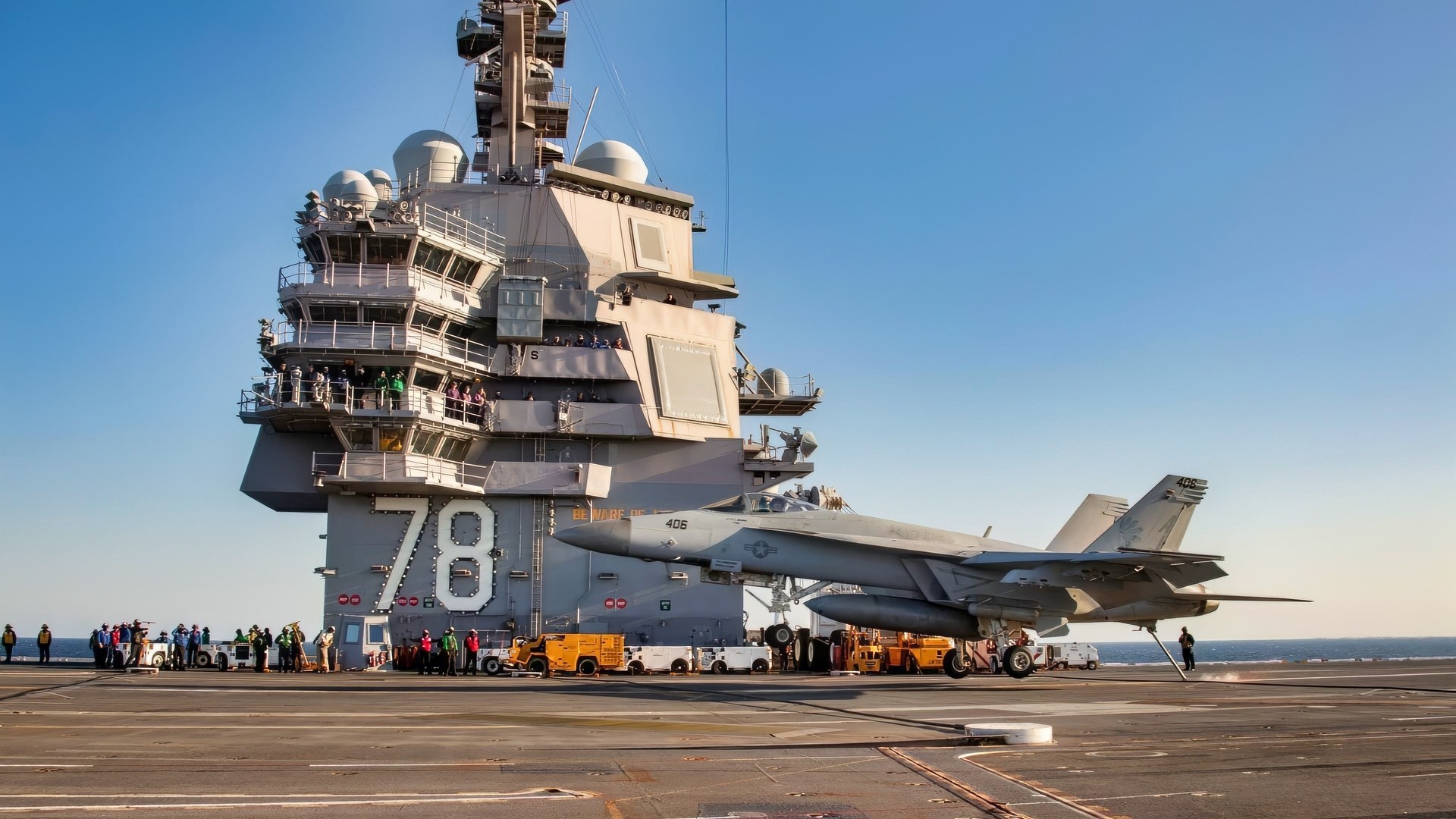
USS Gerald R. Ford Training. Image Credit: U.S. Navy.
But if one of these two men becomes the nominee for the Republicans in 2028 – and that is by no means guaranteed – the very issues that made Rubio popular could stand in the way of him being elected to the highest office in the land.
Where Rubio Stands
Rubio is almost certainly aware that he has, in many ways, overshadowed Vice President Vance in recent months – and rather than openly maneuvering against him, Rubio continues to praise the vice president publicly.
During a recent NBC interview, Rubio said he would support Vance if the vice president runs in 2028 and suggested he would rather continue serving as secretary of state under a Vance administration than immediately pursue the presidency himself.
That does not, of course, mean Rubio lacks presidential ambitions. Rubio has run before and remains one of the GOP’s most nationally recognizable figures – but the way in which he has handled these questions in recent weeks and months makes sense.
If the Iran war damages Republicans politically, Rubio may benefit from allowing Vance, the sitting vice president and closer political extension of Trump, to absorb the direct electoral consequences in the next election first.
At the same time, Rubio is insulating himself by building a reputation around competence rather than ideological loyalty alone. During the Venezuela operation earlier this year and subsequent Iran negotiations, Rubio has adopted a measured public tone that has served him well so far.
That could well help him later if Republicans lose in 2028 and the party looks for a candidate known for his competence more than anything.
As for Vance, it’s obvious to anybody paying attention: he wants to run and expects to be next in line. Even if he says otherwise.
Republicans Support the War – the Public Does Not
The problem for Vance, Rubio, or whoever gets the 2028 Republican nomination is that the American public doesn’t support the war in Iran. Republicans might, but the general public does not.
Polling consistently shows strong Republican support for military action against Iran – at least, for now. A March 2026 Marist poll, for example, found that 84% of Republicans supported U.S. military action. Quinnipiac found similar numbers, with Republicans supporting the war 86% to 9%. Outside of that Republican base, support drops significantly.
A Reuters/Ipsos poll found that only 27% of Americans supported the strikes, while 43% opposed them, and other polls consistently show that overall support for the war is low.

Donald Trump. Image Credit: The White House.
So while Rubio or Vance could theoretically win the Republican nomination by supporting the war, they would likely struggle to defend their position in a general election – particularly if the war continues until then or if its impact is still being felt.
Economic Pain Is Becoming the Real Threat
The biggest danger to Republicans may not be the war itself, but the economic effects it is producing. Since the February strikes, oil markets and shipping through the Strait of Hormuz have been repeatedly disrupted. Brent crude prices have doubled since the outbreak of the war, while U.S. benchmark West Texas Intermediate crude has risen roughly 90% because of the effective closure of Hormuz.
Before the conflict, Brent crude traded around the mid-$50s per barrel, but by May it had surged above $114 per barrel. Even this week, despite ongoing ceasefire negotiations, Brent has continued trading around $105-112 per barrel because markets still fear renewed fighting and prolonged supply disruptions.
That is all translating into higher prices for American consumers.
The average price of gasoline has risen by more than 50% during the conflict, to roughly $4.55 per gallon nationwide. Diesel prices have also climbed, and the inflationary effects are now spreading beyond fuel itself.
The Danger for Vance, Rubio, and the Republicans
While Republicans remain broadly united behind Trump on Iran right now, there’s no telling what will happen next. If Trump leaves office with the conflict unresolved, or with fuel prices still elevated and inflation persistent, or if broader economic pain continues, any Republican candidate connected to the administration’s Iran policy will be vulnerable in 2028. Especially Vance, and especially Rubio.
However, if the administration secures a relatively swift victory here, stabilizes the region, lowers energy prices, and restores economic confidence before the next election, Republicans could still argue that the intervention ultimately strengthened American security and did not damage American prosperity.
About the Author: Jack Buckby
Jack Buckby is a British researcher and analyst specializing in defense and national security, based in New York. His work focuses on military capability, procurement, and strategic competition, producing and editing analysis for policy and defense audiences. He brings extensive editorial experience, with a career output spanning over 1,000 articles at 19FortyFive and National Security Journal, and has previously authored books and papers on extremism and deradicalization.


