

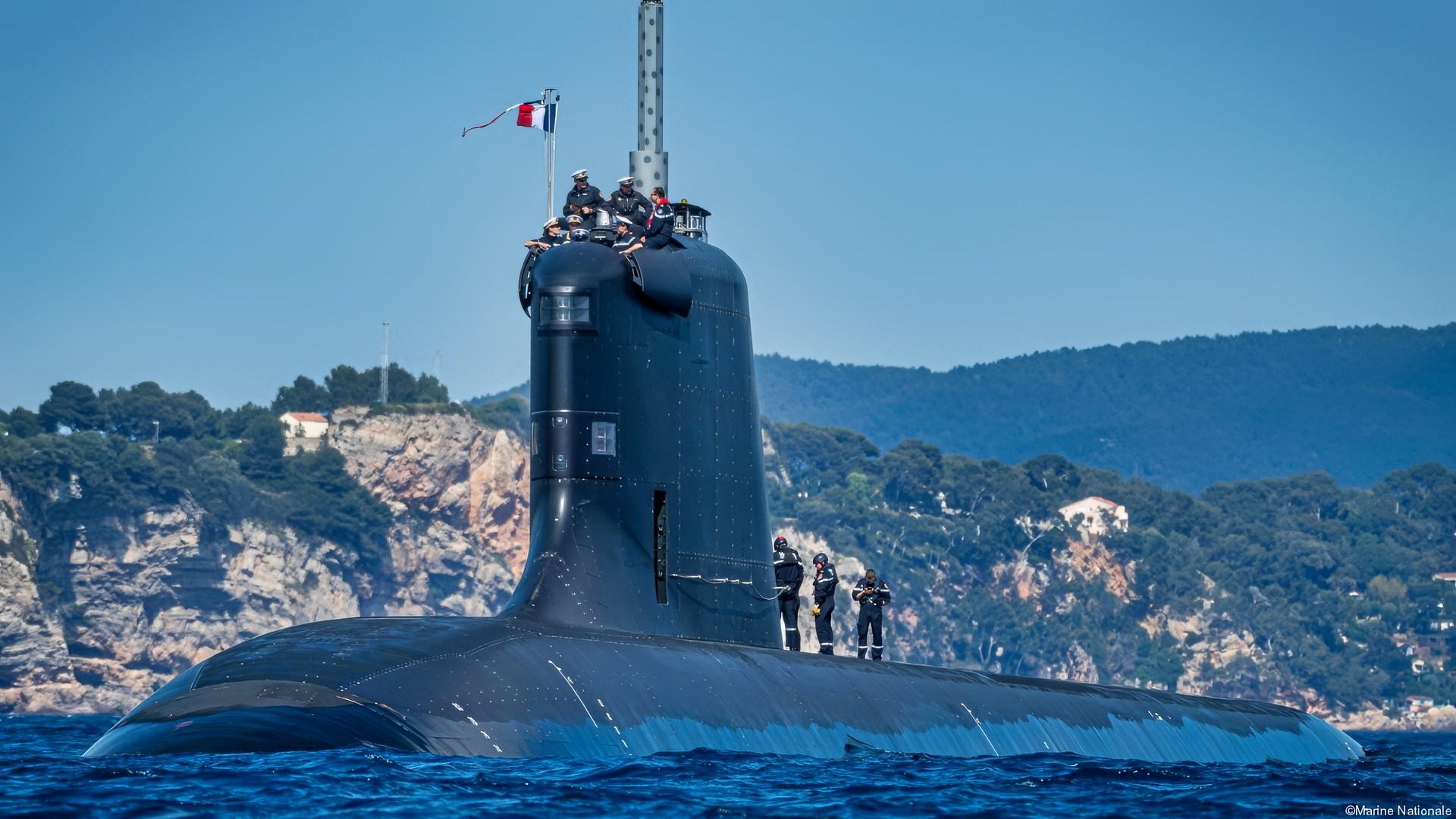
Summary and Key Points: France is building six nuclear-powered Suffren-class attack submarines — alternately called the Barracuda-class in English — to replace the Cold War-era Rubis-class one for one. The lead boat was commissioned in 2022.
-The fourth boat slipped into the water recently, and the sixth and final submarine is expected to enter service early in the 2030s.
-The class is built by Naval Group under a Direction Générale de l’Armement contract.
-Each boat carries roughly 24 weapons — about 60% the load of a U.S. Virginia-class or British Astute-class — including the new F-21 Artemis heavyweight torpedo, the SM-39 Exocet anti-ship missile, and the MdCN naval cruise missile. The Suffren-class is the first French Navy submarine ever to carry land attack cruise missiles. Each boat can also deliver 15 special forces personnel.
The Suffren-Class Submarine Means Business
The Suffren-class — alternatively known as the Barracuda-class in the English-speaking world — is the latest generation of nuclear-powered attack submarines in service with the French Navy.
The Suffren-class is, however, not yet complete. A total of six will ultimately be built for the French Navy and will replace the older Rubis-class of six submarines on a one-to-one basis. Compared to the Rubis subs, the newer Suffren-class can fill a variety of roles thanks to its modernized sensor suite and sonar-absorbent stealthy hull coating, and is a significant step up over the older Cold War-era submarines.
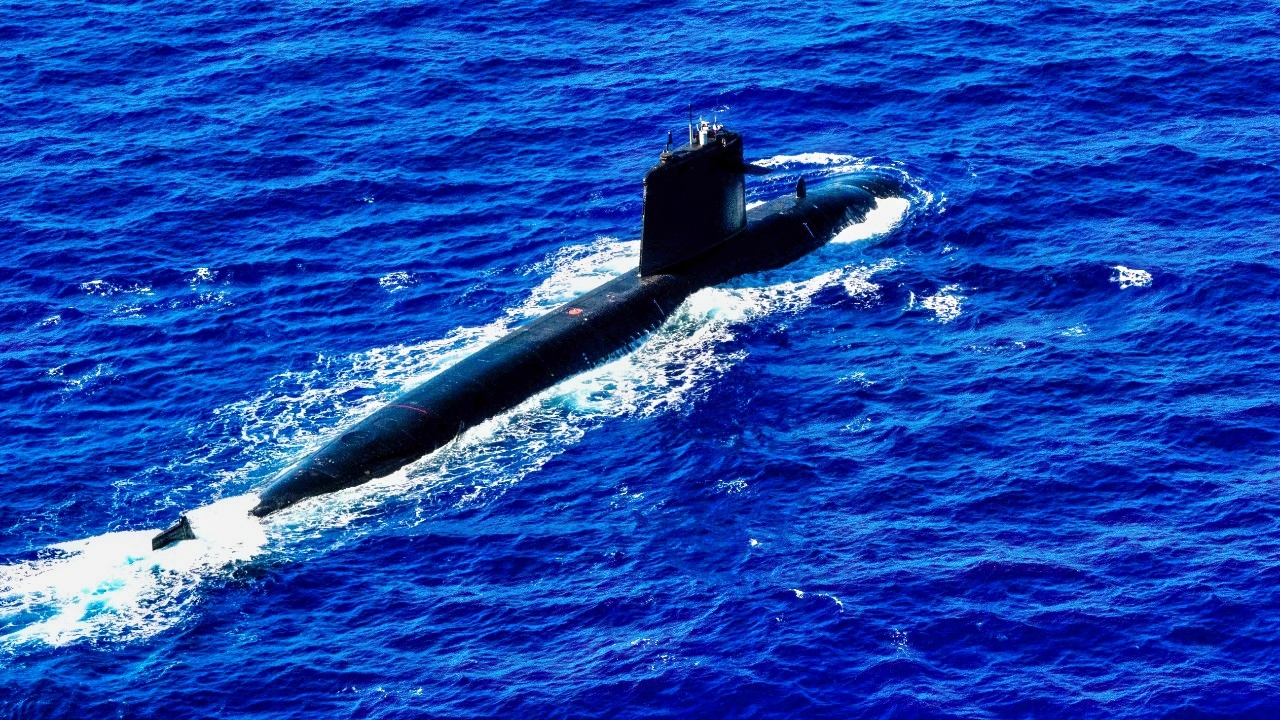
Rubis-Class Submarine from France. Image Credit: Creative Commons.

Image Credit: Creative Commons.
The Origin Story of the Suffren-class Submarines
The Suffren-class began, conceptually speaking, during the late 1990s and early 2000s.
That period, following the Cold War, was a time of rejuvenation for the French Navy, and the Direction générale de l’armement, the French military’s procurement body, awarded Naval Group the contract for the newly-conceived Suffren-class submarines.
In western navies, the Suffren submarines are among the newest in the fleet, with the lead boat commissioned in 2022, three years after launch, following initial qualification and validation trials.
Though the class is slated to ultimately count six boats in total, the fourth of the class recently slipped into the water, and two more Suffren-class submarines are to be built.
The sixth and final submarine of the class is expected to enter service early in the next decade. But the submarines are steadily incorporating newer technologies and upgrades as they come online.
Newer Submarines Are More Advanced Than Older Ones
In an interview conducted by Naval News, Admiral Xavier Petit, commander of the French submarine forces and strategic oceanic force, explained in more intricate detail how the latest Suffren-class submarine differs from the other boats in the class that preceded it.
Two of the most significant changes to the submarine are an updated version of the submarine’s combat management system, called SYCOBS, as well as an upgraded electronic warfare system.
A Planned Strategic Role — but Some Criticism Too
Though the Suffren-class is nuclear-powered, and therefore boasts unlimited range, with endurance crimped only by food requirements for the boat’s crew, some critics have drawn attention to the submarine’s relatively modest weapons loadout — at least compared to submarines that play a similar role in other navies.
“One disadvantage of this smaller size is that Suffren can carry fewer weapons,” H I Sutton, an authority on all matters submarine, writes.
“With nuclear-powered attack submarines being an apex predator, there is a consideration that they may sink so many enemy warships that they run out of torpedoes. This will be particularly true of the Suffren, which carries about the same number of weapons as a non-nuclear submarine. Her maximum load of around 24 weapons is about 60% that of the current Virginia and Astute classes.”
Part of the Suffren-class’s more modest weapons loadout can, however, be explained by the submarine’s other role as a special forces delivery and recovery platform. The Suffren-class has sufficient space on board for 15 special forces personnel and their equipment, as well as the appropriate facilities for insertion and pick-up. But despite the weapons limitations imposed by the class’s special forces role, the weaponry the Suffren-class does have on board is some of the most advanced under the waves today, H I Sutton explains.
“The brand new F-21 Artemis heavyweight torpedo is derived from the Italian Black Shark type. This has an all-electric propulsion using the latest battery technologies,” Sutton writes. “The boat will also be able to carry the SM-39 Exocet anti-ship missile and the new MdCN (Missile De Croisière Naval) cruise missile. This latter weapon provides the submarine with a strategic ‘first night’ strike capability, enabling it to hit land targets hundreds of miles away. It will be the first time that a French Navy submarine is equipped with land attack cruise missiles.”
One infographic, created by H I Sutton, provides a cutaway view of the Suffren-class submarine and illustrates its different compartments.
The Suffren-class is Small but Mighty
Although significantly more diminutive than its brethren in the Royal Navy or United States Navy, the Suffren-class is highly flexible.
One of the class’s more important roles would be to provide screening and escort for the French Navy’s Charles de Gaulle aircraft carrier, also nuclear-powered.
And in a similar fashion, the submarines could also provide protection and support for the French Navy’s Triomphant-class of ballistic missile submarines.
About the Author: Caleb Larson
Caleb Larson is an American multiformat journalist based in Berlin, Germany. His work covers the intersection of conflict and society, focusing on American foreign policy and European security. He has reported from Germany, Russia, and the United States. Most recently, he covered the war in Ukraine, reporting extensively on the war’s shifting battle lines in the Donbas and writing about its civilian and humanitarian toll. Previously, he worked as a Defense Reporter for POLITICO Europe. You can follow his latest work on X.


