

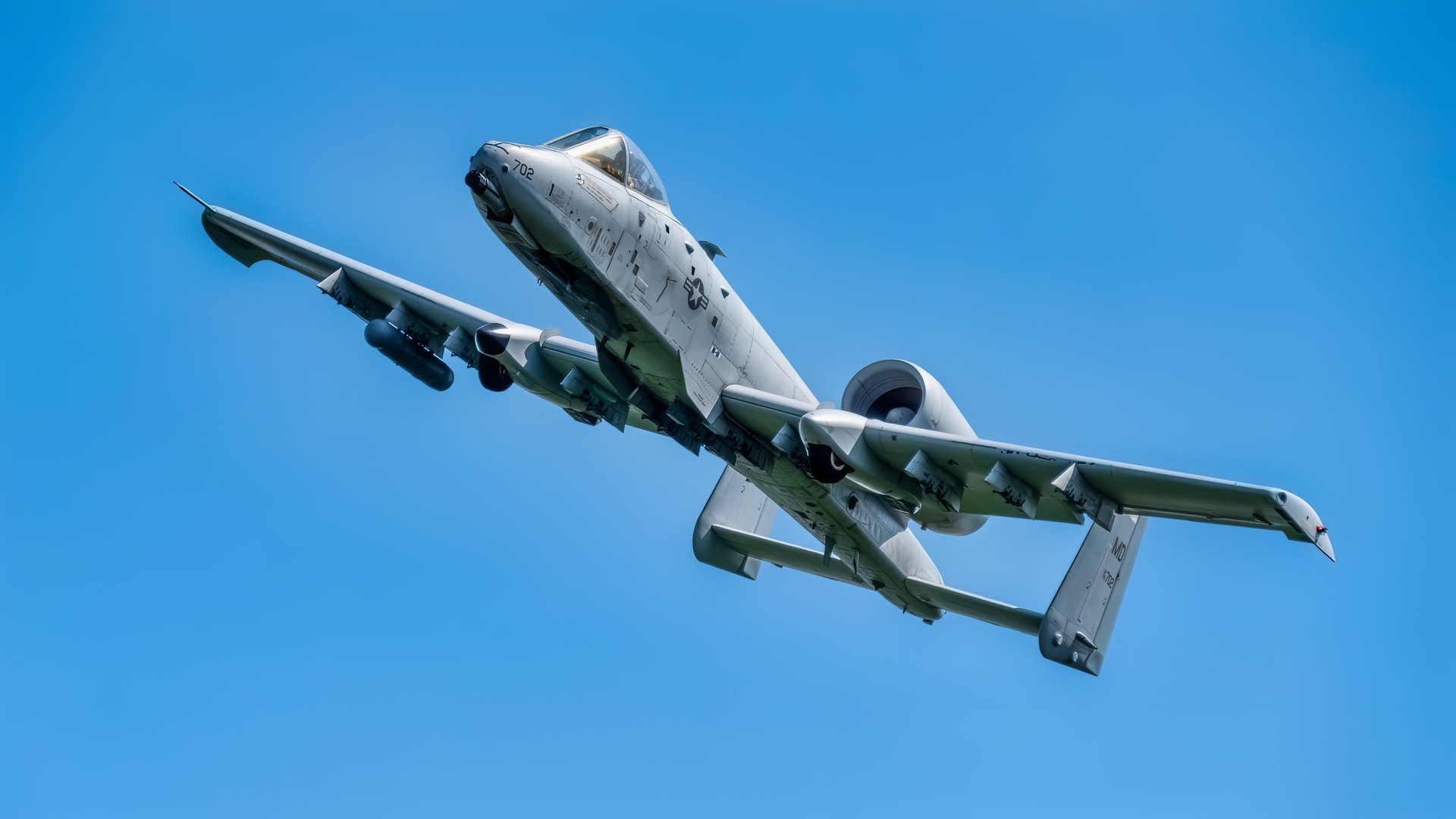
I have spent quite a bit of time looking at retired A-10 Warthogs, and I have the photos and video to prove it in this essay. The funny thing is, the A-10 just might never retire, at least it seems that way for the near future. It seems like the A-10 can destroy just about anything, especially tanks. But there is one combat story that proves the mighty A-10 might be truly the ultimate tank killer.
The Day Two A-10 Warthogs Killed 23 Iraqi Tanks — And Why The Aircraft Built To Stop The Soviet Army Is Still Flying In 2026
It was February 25, 1991. Second day of the Gulf War ground campaign. A large column of Iraqi tanks was rolling south from positions held by Saddam Hussein’s Republican Guard. Two Air Force A-10A Thunderbolt II, or A-10 Warthog, ground-attack aircraft from the 76th Tactical Fighter Squadron — flown by Captain Eric “Fish” Salomonson and First Lieutenant John Marks — were scrambled to find them and kill them.
By sunset, the two pilots had flown three combat sorties and destroyed 23 Iraqi tanks. It is the single highest one-day tank kill record ever recorded by a pair of fixed-wing aircraft. Thirty-five years later, it remains the most famous engagement in the operational history of the A-10 Warthog — an aircraft that was never supposed to be fighting in a desert against Iraqis, and that the United States Air Force has been trying to retire ever since.
The Mission Profile
The first sortie launched at sunrise. Salomonson and Marks were led to their target area by an OA-10 Forward Air Controller — an A-10 variant equipped specifically for forward observation and target marking. The Iraqi tank column was strung along a road and across the surrounding desert, with some vehicles trying to hide in prepositioned revetments and others scattering off the shoulders. Some armor was already smoldering from earlier A-10 strikes.
Marks recalled a tactical insight that shaped the engagement. The Iraqi tanks had churned up the sand as they maneuvered into their hiding positions. The tracks led directly to the vehicles. Following the tracks led directly to the kills.
On the first sortie, Salomonson and Marks destroyed eight Iraqi tanks — six with AGM-65 Maverick infrared-guided air-to-ground missiles, two with the A-10’s GAU-8 Avenger 30mm rotary cannon. They diverted to a Forward Operating Location to refuel and rearm rather than return to their original base. They expected to be stood down. Instead, the operations officer at the FOL ordered them back into the air immediately — Marines southwest of Kuwait City needed close air support.
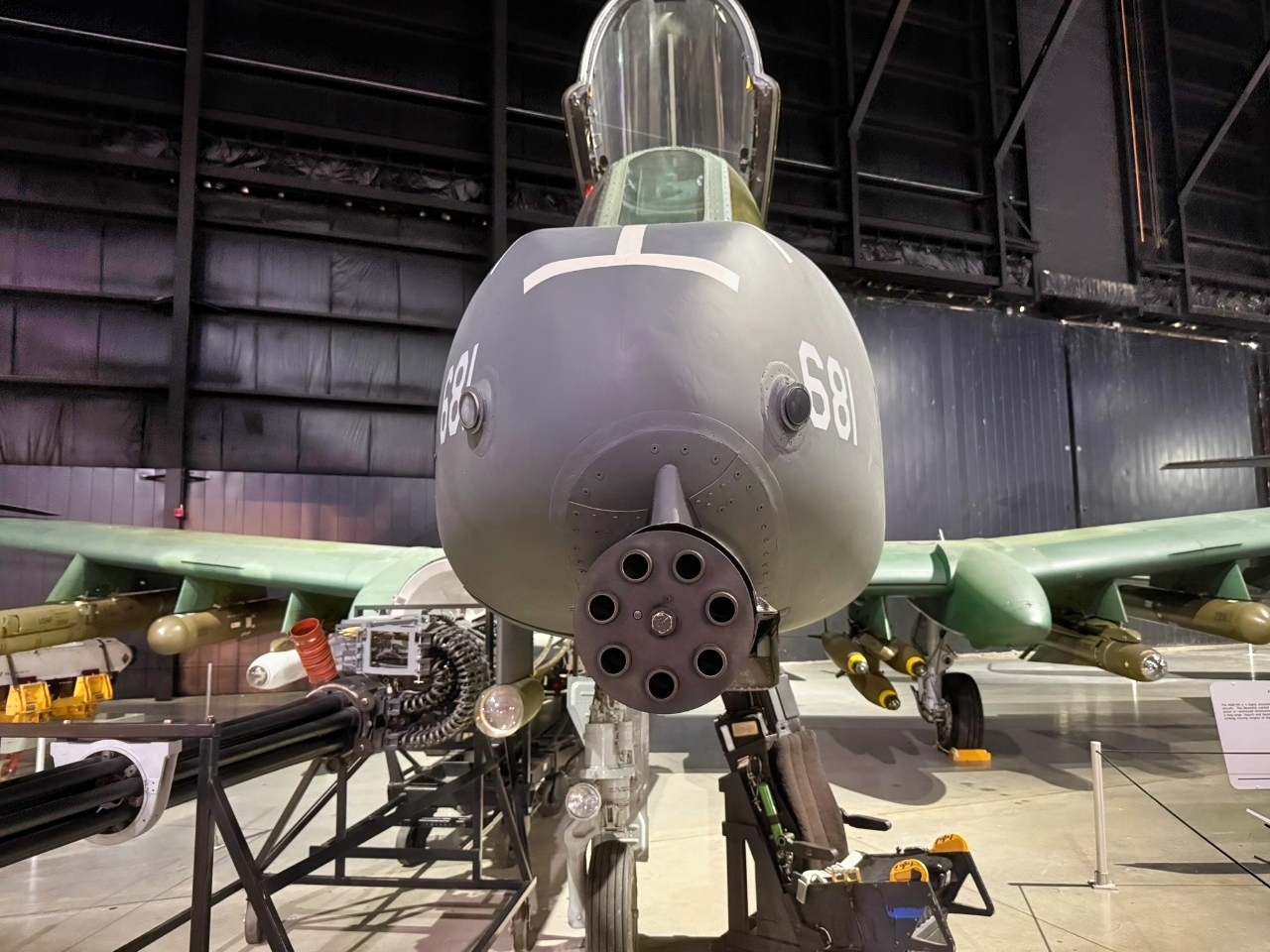
A-10 Warthog Cannon NSJ Photo. Taken at U.S. Air Force Museum on 7/19/2025.
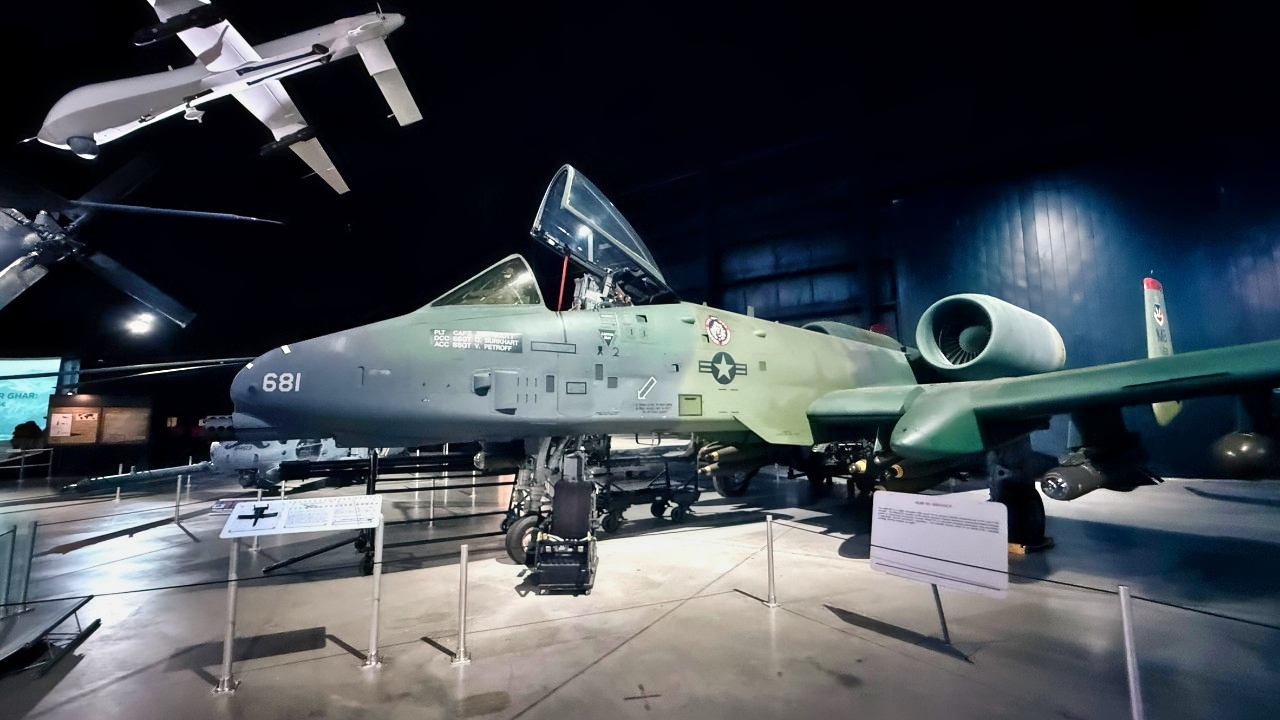
A-10 Warthog National Security Journal Photo.

A-10 Warthog National Security Journal Photo Essay Picture.
The second sortie was the most intense of the three. A Marine F/A-18 Hornet flying as Fast Forward Air Controller briefed the inbound A-10s on a developing emergency: two Marine AV-8B Harrier attack aircraft had already been hit, with one down and the other limping away on fire. The two Warthogs destroyed eight more Iraqi tanks during this engagement, working the same combination of Mavericks and the 30mm cannon that had carried the first mission.
A third sortie later that afternoon added another seven tank kills. Total for the day: 23 destroyed Iraqi tanks across three A-10 missions flown by two pilots in fewer than 12 hours.
A-10 History: What Made It Possible
The A-10 was built for exactly this engagement — except for the geography.
The aircraft was designed during the Cold War to kill Soviet tanks in a Warsaw Pact armored breakthrough across the Fulda Gap in central Germany. Every defining feature of the platform was optimized for the mission of finding, engaging, and destroying enemy armor at low altitude while absorbing heavy ground fire.
The centerpiece was the GAU-8/A Avenger — a seven-barrel 30mm rotary cannon that fired depleted-uranium armor-piercing rounds at a rate of approximately 3,900 rounds per minute. The entire aircraft was essentially designed around the gun. The cannon weighed nearly 4,000 pounds with its ammunition feed system, and the airframe’s nose, landing gear placement, and structural geometry were all optimized to accommodate the weapon as the primary anti-armor system.
The Maverick missile gave the A-10 a standoff anti-tank weapon. The infrared seeker version — the AGM-65D — allowed pilots to identify and engage individual armored vehicles at ranges that kept the A-10 outside the reach of most short-range air defense systems. In the Gulf War alone, A-10s fired approximately 90 percent of all AGM-65 Mavericks expended by U.S. forces during the campaign.
The titanium-armored cockpit, redundant hydraulics, self-sealing fuel tanks, and the capacity to survive substantial battle damage gave the A-10 a survivability profile no other tactical aircraft of its era could match.
Two AGM-65 Maverick missiles, an internally mounted GAU-8 cannon, and the ability to take a hit and keep flying — that was the package that produced the 23-tank record on February 25, 1991.
A-10s flew 8,100 sorties during Desert Storm with a mission-capable rate of 95.7 percent. The Warthog fleet collectively destroyed more than 900 Iraqi tanks, 2,000 other military vehicles, and 1,200 artillery pieces across the six-week campaign — figures that account for substantially more Iraqi armor than any other U.S. Air Force platform.
Why The Aircraft Is Still Flying In 2026
The Cold War ended without the Warsaw Pact armored breakthrough that the A-10 was built to stop.
The aircraft has spent the past 35 years adapting to missions it was never designed for — counter-insurgency in Iraq and Afghanistan, close air support against Taliban and ISIS positions, counter-drone operations during recent Middle East deployments.
The Air Force has tried to retire the platform repeatedly. Congress has blocked the retirements every time.
The most recent attempt was supposed to be the final one. The Air Force’s fiscal 2026 budget request asked Congress to retire the remaining 162 A-10s by the end of the year. The fiscal 2026 National Defense Authorization Act blocked the retirement, requiring the service to maintain at least 103 A-10s through September 2026. Active-duty A-10 training had been ended. Depot maintenance was being shut down. The platform was, by every official statement, finished.

A-10 Warthog. Image Credit: Creative Commons.

A U.S. Air Force A-10 Thunderbolt II flies a routine mission over the U.S. Central Command area of responsibility Dec. 23, 2024. A-10 Thunderbolt II pilots train and operate under night vision, allowing them to conduct presence patrols critical to regional security at any time and under any conditions. (U.S. Air Force photo)
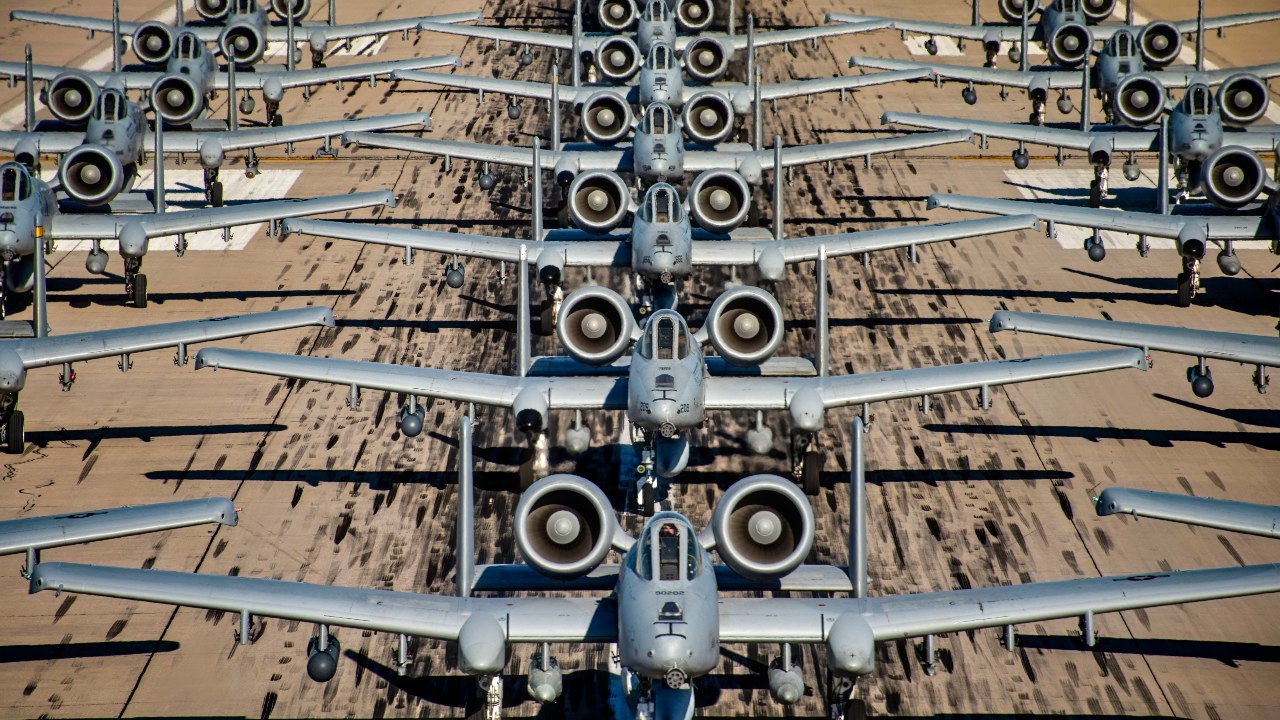
U.S. Air Force A-10 Thunderbolt IIs and an HC-130J Combat King II assigned to the 355th Wing taxi in formation on the runway at Davis-Monthan Air Force Base, Arizona, Feb. 9, 2022. The 355th Wing maintains and operates A-10 Thunderbolt IIs, HH-60G Pave Hawks and HC-130J Combat King IIs ensuring its Airmen and aircraft are ready to fly, fight and win. (U.S. Air Force photo by Senior Airman Alex Miller)
Then Operation Epic Fury began on February 28, 2026. The A-10 was sent into the Iran war and given a mission set the platform had not been designed for, but proved exceptional at: hunting Iranian fast-attack craft in the Strait of Hormuz, supporting the search and rescue mission that recovered two downed F-15E Strike Eagle airmen, and providing close air support against Iranian-backed militias across the broader theater. Air Force Secretary Troy Meink announced on April 20, 2026 that the A-10 retirement timeline would be extended to 2030.
The extension preserves three A-10 squadrons — one active-duty unit at Moody Air Force Base in Georgia and reserve squadrons at Whiteman Air Force Base in Missouri — with each squadron expected to maintain 18 aircraft. Defense Secretary Pete Hegseth responded to the announcement with three words on social media: “Long live the Warthog.”
The A-10 Warthog Retirement Watch
The reversal is significant. The Air Force had spent years arguing that the A-10 was not survivable in high-end conflict and needed to be retired to free up budget for sixth-generation fighters, collaborative combat drones, and the F-15EX.
Iran proved that the threat environment the Pentagon planned to fight in is not the only threat environment the United States actually fights in. The A-10 still kills things the F-35 and the F-22 cannot kill efficiently. The platform that was built to stop a Soviet tank invasion of Germany has spent the past 35 years killing whatever the United States needed killed.
In 2030, the Air Force will try again. The Warthog has earned the right to be skeptical that the next retirement date will stick any better than the last seven.
About the Author: Harry J. Kazianis
Harry J. Kazianis (@Grecianformula) was the former Senior Director of National Security Affairs at the Center for the National Interest (CFTNI), a foreign policy think tank founded by Richard Nixon based in Washington, DC. Harry has over a decade of experience in think tanks and national security publishing. His ideas have been published in the NY Times, The Washington Post, The Wall Street Journal, CNN, and many other outlets worldwide. He has held positions at CSIS, the Heritage Foundation, the University of Nottingham, and several other institutions related to national security research and studies. He is the former Executive Editor of the National Interest and the Diplomat. He holds a Master’s degree focusing on international affairs from Harvard University.


