

Summary and Key Points: Seven weeks after the Soviet Union dissolved, a Russian Sierra-class submarine designated K-276 Crab surfaced directly beneath the USS Baton Rouge in the Barents Sea, striking the American Los Angeles-class attack submarine from below. Both boats returned to port under their own power. The Russian crew painted a victory star on their sail.
-The USS Baton Rouge was quietly decommissioned in 1995 — the first Los Angeles-class ever retired — with analysts attributing its early exit to pressure-hull damage the Navy never publicly acknowledged.
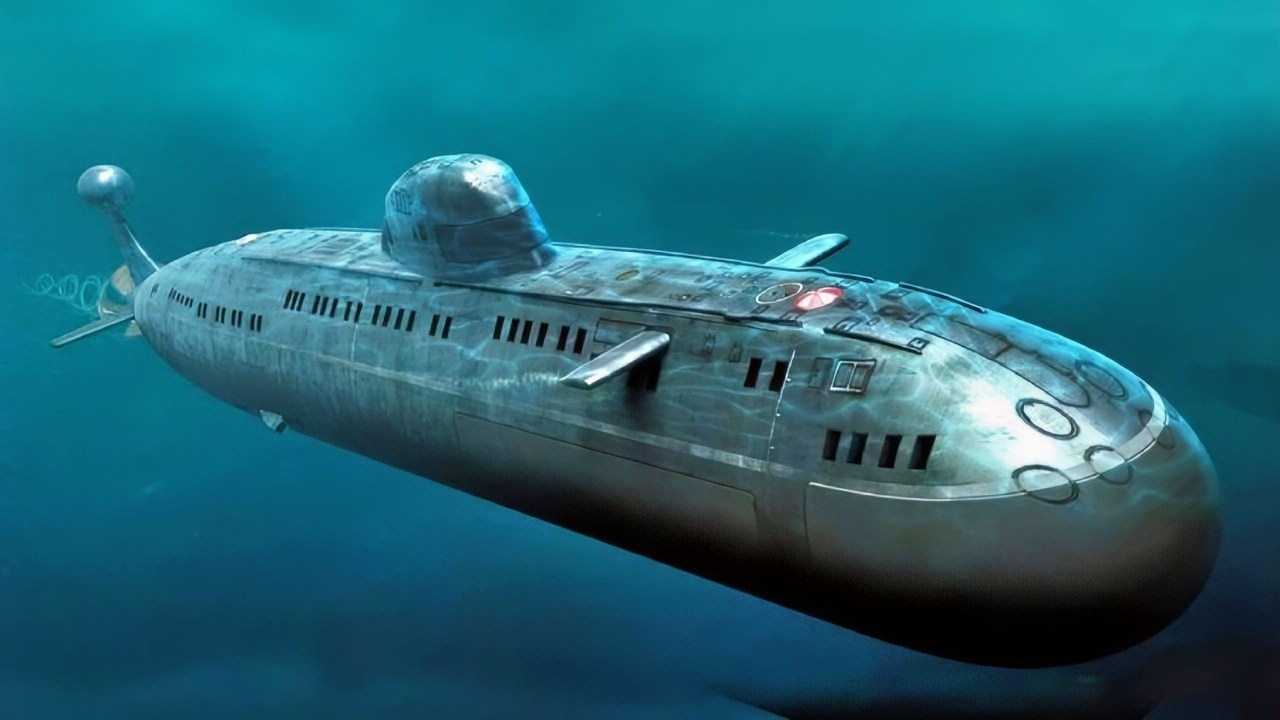
Sierra-Class Titanium Submarine. Image Credit: Creative Commons.

Sierra II-Class Submarine. Image Credit: Creative Commons.

Sierra-Class-Submarine. Image Credit: Creative Commons.
-Secretary of State James Baker flew to Moscow to contain the diplomatic fallout. A year later, it happened again
How A Russian Submarine Hit An American One From Below — The Forgotten Cold War Collision That Almost Ended Right As The Cold War Ended
The Soviet Union dissolved on December 25, 1991. The Cold War was officially over, and the diplomatic architecture between Moscow and Washington was being rebuilt from scratch under the new Russian Federation led by President Boris Yeltsin. Bilateral arms control talks were advancing on land. New cooperative agreements were being negotiated across a wide range of issues. The general mood in both capitals was one of cautious optimism that the long shadow of nuclear standoff was finally lifting.
The American and Russian submarine services had not received the same message. Both fleets continued operating in the Barents Sea under essentially Cold War-era rules of engagement. U.S. Navy attack submarines were running covert surveillance missions against Russian Northern Fleet ballistic missile boats based at Severomorsk. Russian submarines were conducting routine combat training in the same waters and remained intensely sensitive to American intelligence-gathering operations near their home bases. The shallow, acoustically challenging waters off the Kola Peninsula remained one of the most contested patches of ocean on the planet.
The collision that happened next was, in the words of multiple post-incident analysts, an accident waiting to happen.
The Collision
On February 11, 1992, at 20:16 local time, the USS Baton Rouge (SSN-689), a Los Angeles-class nuclear-powered attack submarine under the command of Captain Gordon Cremer, was operating submerged in the Barents Sea approximately 12 nautical miles from Kildin Island.

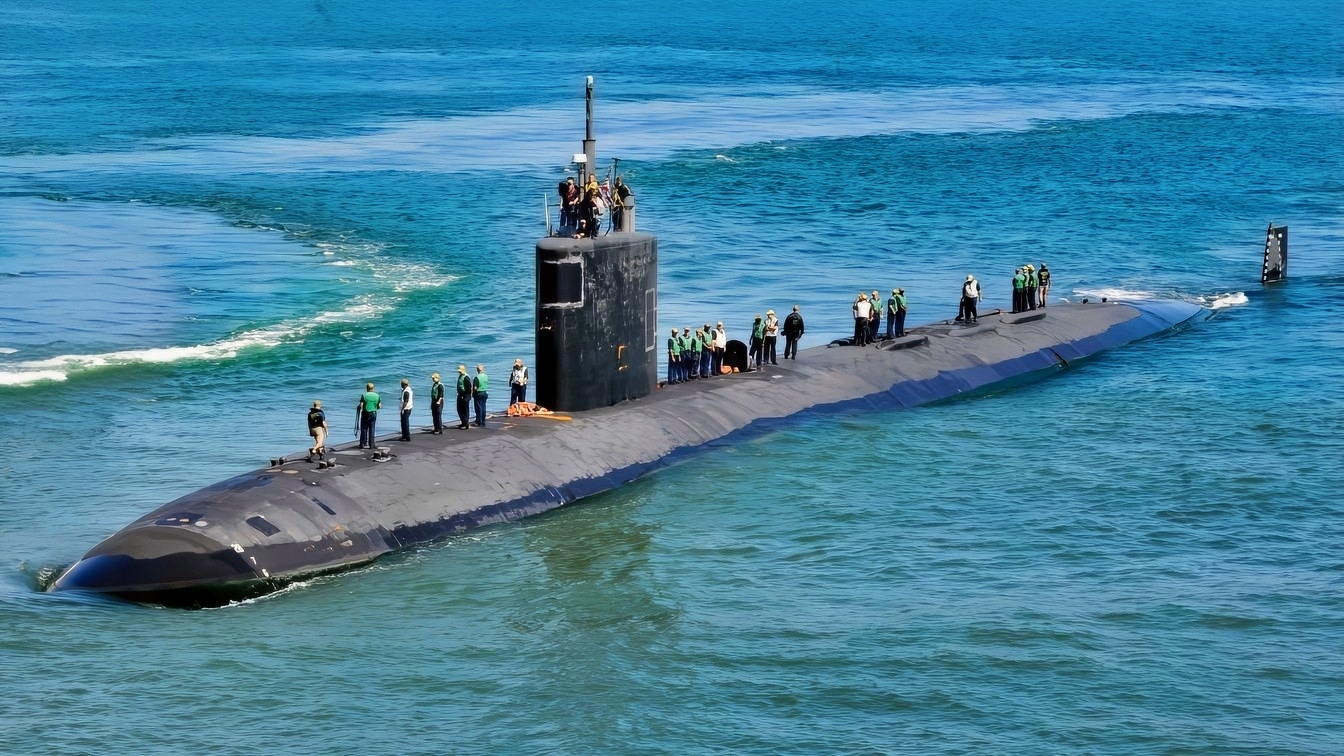
Los Angeles-Class. Image Credit: Creative Commons.
The boat was running at periscope depth, roughly 60 to 70 feet below the surface, using passive sonar to monitor Russian naval activity. Her mission, according to DIA records later obtained through FOIA requests, was an intelligence-gathering operation as part of the broader Cold War-era Operation Holy Stone series of submerged surveillance patrols.
The Russian Sierra-class attack submarine K-276 Crab, under the command of Cdr. Igor Lokot, was operating in the same general area, conducting routine combat training. The Sierra-class was one of the most advanced Soviet-era submarine designs ever built, featuring a rare titanium pressure hull that allowed the boat to dive deeper than any contemporary American or NATO submarine. The Russian boat was also operating on passive sonar.
The geometry of the encounter was almost perfectly designed to produce a collision. Both submarines were running quietly in shallow water that fragmented acoustic returns and reduced detection ranges to a fraction of what either crew was accustomed to in open ocean.
As Russian researcher Eugene Miasnikov documented in a detailed analysis published the year after the incident, Los Angeles-class boats are effectively deaf to acoustic signals approaching from a 60-degree cone directly astern. Sierra-class boats have similar blind spots. Both submarines were tracking other contacts. Neither had located the other before the collision.
K-276 was ascending toward the surface. The Baton Rouge was operating at periscope depth above the rising Russian boat. The Sierra-class submarine surfaced directly underneath the American submarine and struck her in the aft section.
What Happened In The Water
The titanium pressure hull and reinforced sail of the K-276 absorbed the impact better than the lighter steel construction of the Los Angeles-class. The Russian boat’s sail was dented, and its hydroacoustic array fairing was damaged. The Baton Rouge sustained two cuts to her hull, dents, and scrapes — damage initially denied by the U.S. Navy and only acknowledged on February 28, 1992, after the Pentagon issued a corrected statement following further inquiry from the New York Times.
Both submarines returned to their respective bases under their own power. There were no casualties on either vessel. The collision could have gone substantially worse — a slightly different angle of impact, a slightly different speed, or a slightly different depth, and one or both submarines could have suffered hull breaches that would have made the encounter the worst peacetime submarine disaster in the modern era. The fact that nobody died was something close to luck.
As one retired U.S. Navy engineer told me last week: “It proves how well actually both submarines were built. These subs came into direct, violent contact and neither went to the bottom. That says a lot about both nations and how they build such powerful and capable nuclear attack submarines.”
The American submariners then did something that has gone largely unrecognized in the broader history of the incident. According to crew testimony preserved through the Naval Submarine League archive, the Baton Rouge surfaced and circled the area to determine whether the Russian boat needed assistance — a basic seamanship obligation that applied even between vessels of mutually hostile navies and even immediately after a collision that one side could plausibly have claimed was deliberate.
The Diplomatic Response
The Pentagon initially declined to acknowledge that a collision had occurred.
The Russian government did acknowledge it, publicly and angrily.
President Yeltsin, less than two months into the new Russian Federation and still working to establish his personal credibility with both the Russian military and the American government, was furious. The collision appeared to confirm precisely what hardline Russian military officers had been telling him for months — that the Americans had no intention of changing their Cold War-era posture even as the political relationship between the two countries was being normalized.
U.S. Secretary of State James A. Baker was dispatched to Moscow to personally manage the crisis. The meetings with Yeltsin focused on damage control rather than the specifics of the collision itself. The Americans needed to demonstrate that the broader diplomatic relationship had not been compromised by an underwater incident that the political leadership in Washington had not known about in advance. The Russians needed assurances that American submarine operations near Russian naval bases would be substantially scaled back going forward.
The agreement that emerged from the Baker-Yeltsin meetings, as documented in summaries of the period preserved by the Australian Naval Institute and other defense historians, was that the U.S. Navy would discontinue certain submarine activities near Russian naval bases — particularly the tapping of undersea cables and the interception of wireless communications. The broader Operation Holy Stone surveillance pattern continued at a substantially reduced tempo. President Bill Clinton, after taking office in January 1993, briefly raised public questions about whether the surveillance missions should continue at all, before the U.S. Navy submarine community successfully argued for the missions to be retained in modified form.
The Two Submarines’ Different Fates
K-276 Crab was renamed B-276 Kostroma in 1992 and was fully repaired by June 29, 1992, returning to active service with the Russian Northern Fleet. Her crew painted the number “1” inside a star on the sail — the traditional Soviet submariners’ marking from the Great Patriotic War indicating a confirmed victory over an enemy vessel. Kostroma received a major refit in 2005 and remains in the Russian Northern Fleet reserve.
The Baton Rouge, according to the official Naval History and Heritage Command record, was placed in commission in reserve on November 1, 1993, decommissioned on January 13, 1995, and stricken from the Naval Vessel Register the same day. She became the first Los Angeles-class submarine ever to be decommissioned.
The Navy publicly attributed the early retirement to the cost of the upcoming reactor refueling, but multiple Western defense analysts have argued that the actual reason was pressure hull damage from the 1992 collision, which made continued service economically unjustifiable. The boat had served only 17 and a half years — substantially less than the 25-plus years many of her sister ships have logged. She was disposed of through the submarine recycling program in September 1997.
The incident reshaped how American submarine commanders thought about post-Cold War operations against Russian naval forces.
It did not end those operations — only a year later, on March 20, 1993, the USS Grayling collided with a Russian Delta IV-class ballistic missile submarine in the same general waters — but it permanently altered the calculus of how aggressively American boats could operate near Russian bases without producing diplomatic incidents that the broader bilateral relationship could no longer easily absorb. The Cold War was over. The undersea tensions that had defined it were not.
About the Author: Harry J. Kazianis
Harry J. Kazianis (@Grecianformula) was the former Senior Director of National Security Affairs at the Center for the National Interest (CFTNI), a foreign policy think tank founded by Richard Nixon based in Washington, DC. Harry has over a decade of experience in think tanks and national security publishing. His ideas have been published in the NY Times, The Washington Post, The Wall Street Journal, CNN, and many other outlets worldwide. He has held positions at CSIS, the Heritage Foundation, the University of Nottingham, and several other institutions related to national security research and studies. He is the former Executive Editor of the National Interest and the Diplomat. He holds a Master’s degree focusing on international affairs from Harvard University.


