


Summary and Key Points: The Trump administration has described Operation Epic Fury as a resounding success, with Secretary of Defense Pete Hegseth repeatedly citing low casualties and met strategic objectives.
-A Congressional report tells a different story. In 40 days of operations against Iran, the United States lost up to 42 manned and unmanned aircraft with a combined value of $2.6 billion.
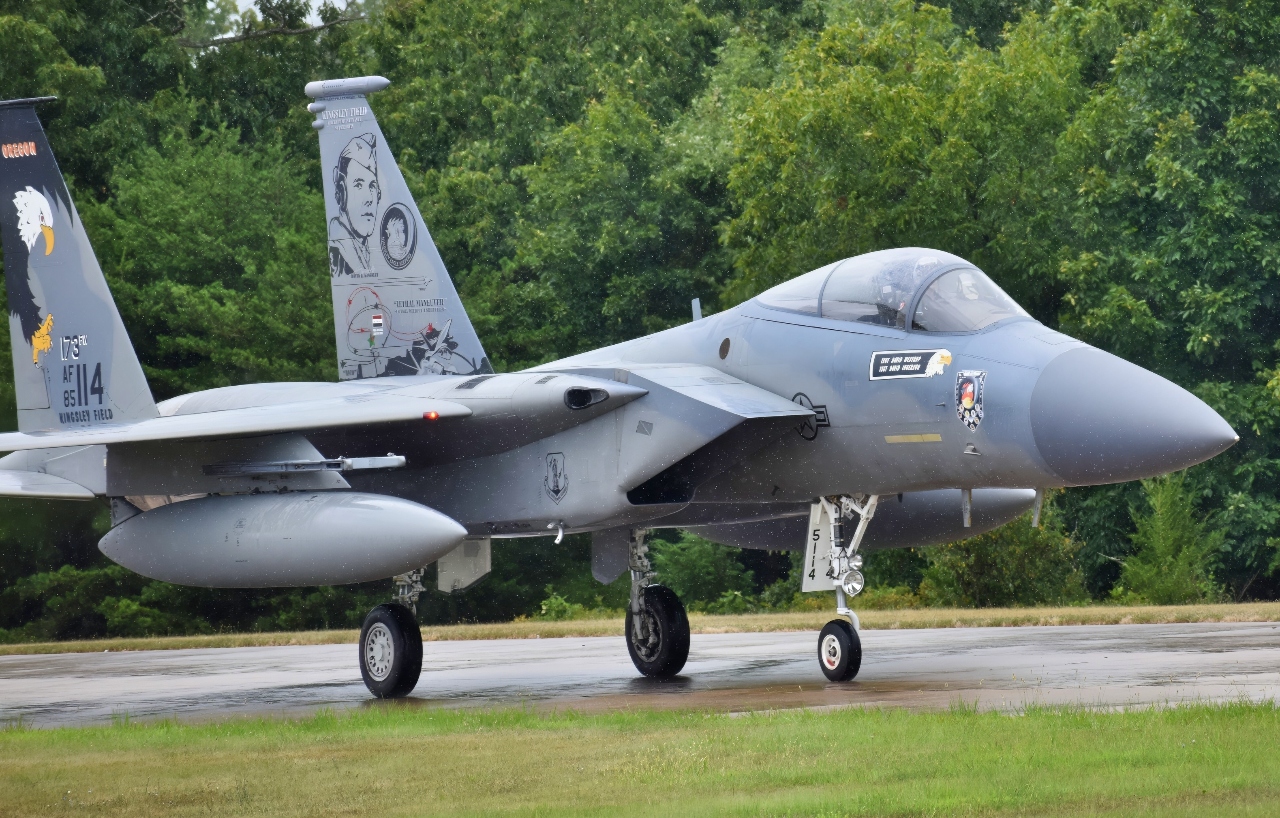
F-15C Fighter on the Tarmac. Image Credit: National Security Journal. Taken on August 13, 2025.
-Losses included four F-15E Strike Eagles, seven KC-135 tankers, one E-3 Sentry AWACS, two MC-130J special operations aircraft, one HH-60W combat search-and-rescue helicopter, and 24 MQ-9 Reaper drones — many destroyed by Iranian ballistic missiles and kamikaze drones while sitting unprotected on tarmacs at allied air bases.
The Iran War Damage to the U.S. Military Is Clear
We have been told by President Donald Trump and his national security team that Operation Epic Fury has been a resounding success.
Strikes against Iranian military targets and nuclear infrastructure have decimated Tehran’s defense forces and slowed down their ability to create a nuclear device.
Trump and Secretary of Defense Pete Hegseth constantly remind us of how the war against Iran has met all of its strategic objectives. Many Americans take these claims at face value and have noted that overall casualties have been low and military losses minimized.
However, the reality is different. Iran’s use of ballistic missiles and drones has created significant losses against the Air Force. The flying branch may have lost up to 42 manned and unmanned aircraft in the 40-day operation.

An F-15C Eagle assigned to the 44th Fighter Squadron returns from a training sortie at Kadena Air Base, Japan, Dec. 20, 2022. The 44th FS maintains combat readiness through daily training, ensuring the ability to provide superior airpower capabilities in support of a free and open Indo-Pacific. (U.S. Air Force photo by Senior Airman Jessi Roth)
What Has Been the Tally of Losses?
There have been numerous setbacks, and losses have been sustained by fighter jets, unmanned craft, tankers, and helicopters housed at allied air bases. Some of the worst Iranian attacks occurred at Prince Sultan Air Base near Riyadh in Saudi Arabia.
A Damaged F-35 Has Been Alarming
One Air Force F-35A Lightning II sustained damage from Iranian anti-aircraft fire and had to return to base. This action alarmed many in the U.S. military. The F-35A should be totally dominant with no losses to the Iranians. To be sure, the fifth-generation jets have enjoyed many successful missions with no casualties, but any damage to an F-35 still stings.
Other aircraft have been destroyed at bases in additional countries, and the total price tag for all lost warplanes has totaled $2.6 billion.
Congress Waves the Flag of Alarm
This information comes from a Congressional report, as noted by Aviation A2Z. Four F-15E Strike Eagles have been destroyed. One A-10 Warthog was downed. More bad news also struck the Air Force concerning the tanker program.
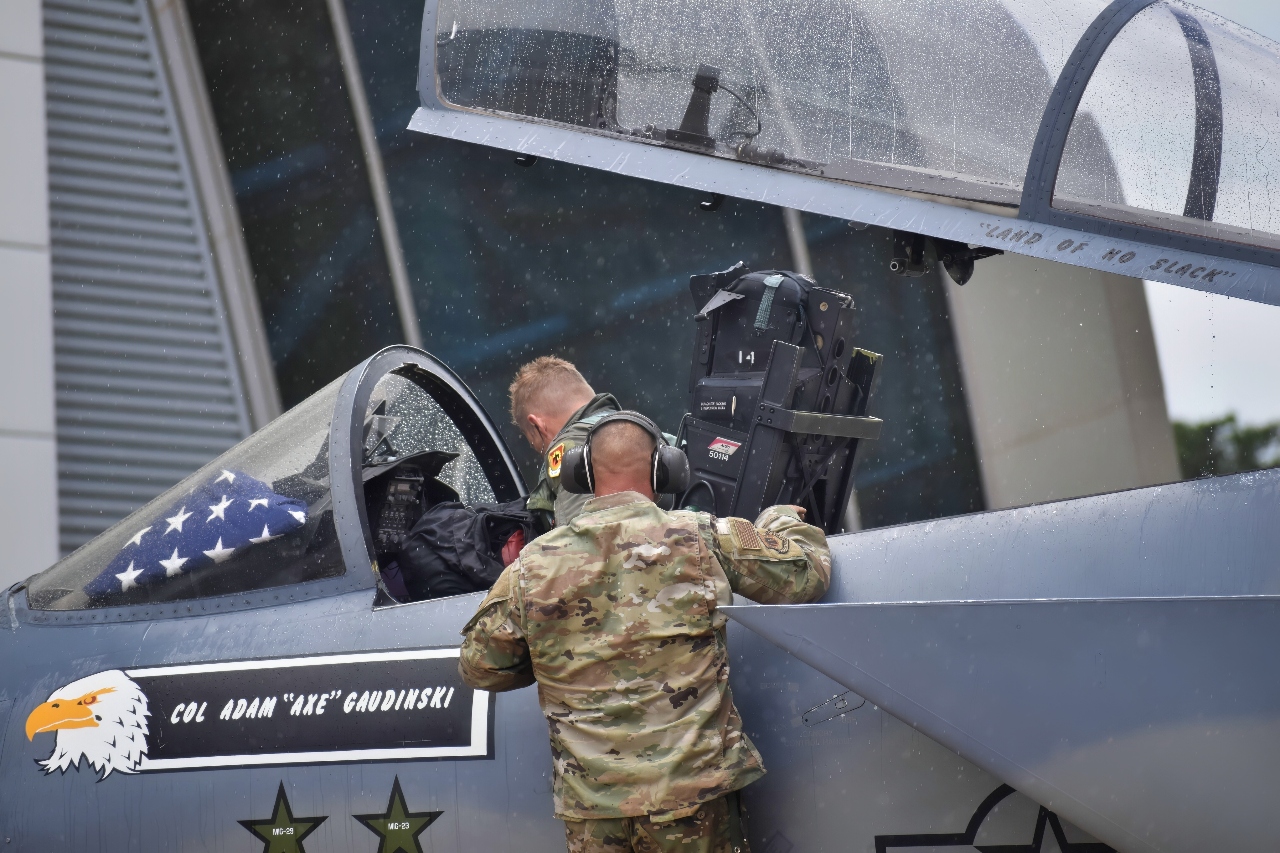
F-15C in the Rain at Smithsonian Outside DC. Image Credit: Brent Eastwood/National Security Journal.
Seven KC-135 refueling planes have been lost, making the tanker mission more difficult to execute. One E-3 Sentry Airborne Warning and Control System (AWACS) aircraft, and two MC-130J Commando II special operations aircraft were taken out.
“The rotary-wing loss involved one HH-60W Jolly Green II combat search-and-rescue helicopter. Uncrewed aircraft losses were the highest, comprising 24 MQ-9 Reaper medium-altitude long-endurance drones and one MQ-4C Triton high-altitude long-endurance drone,” according to the Congressional report.
Maybe Iran Has Some Good Ideas to Counter the Americans
Iran should be given credit for its asymmetric Mosaic Defense Strategy. This consists of a large network of autonomous air defense systems that can operate independently without orders from a higher command structure. The United States did an excellent job of suppressing enemy air defenses. Up to 70 percent of these systems have been destroyed. However, the Mosaic strategy has still been effective in certain circumstances.
Iran Learned Better Tactics
The Iranians have also adjusted air defense tactics throughout the war. They have found that shoulder-fired MANPADS have been effective against F-15E Strike Eagles.
Tehran’s rocket forces have also successfully caught U.S. aircraft on the ground. They have used kamikaze one-way drones to devastating effect.
In some ways, the United States has been predictable with its various tactics, techniques, and procedures. The Iranians noted when the aircraft were refueled. They surmised that certain altitudes were consistent and that American drones were controlled in similar ways.

Lt. COl. Stephen ‘Steagle’ Mindek, 104th Fighter Wing pilot, takes off in an F-15C Eagle for Maj. John “Space’ Stout’s fini-flight, January 10, 2025, at Barnes Air National Guard Base, Westfield, Massachusetts.
Following the fini-flight, Maj. Stout was greeted with cheers from his fellow Airmen, friends, and family. Maj. Stout’s final ride in the F-15C Eagle resulted in over 1100 hours flown in the legendary aircraft.
(U.S. Air National Guard photo by Jay Hewitt)
The Iranians also realized that electronic warfare tactics happened at regular times that could be countered by air defense systems.
The Americans must take lessons learned and conduct an after-action review that should address some of these issues. U.S. Air Force practices need to be varied to avoid predictability.
China and Russia Could Repeat Iranian Tactics
Another problem is that many of the destroyed aircraft were on bases without reinforced hangars. This is something that Russia and China will notice. The Chinese can introduce bombing tactics against U.S. aircraft that are not heavily protected in Guam and Okinawa. China has “Guam killing” long-range hypersonic missiles that can take out U.S. aircraft that are not dug in with underground bunkers and hangars.
Iranian drone and missile attacks on Prince Sultan Air Base in Saudi Arabia were especially surprising. The U.S. Air Force lost six aircraft there. These were sitting on the tarmac. Five KC-135 tankers and one E-3 Sentry AWACS airplane were hit.
“On March 27, Iran fired approximately six ballistic missiles supplemented by nearly 30 drones. The ballistic missiles possibly included models such as Fateh-313, Qiam, Emad, Sejjil, or Khorramshahr variants, while the drones likely comprised Shahed-series UAVs,” the Congressional report stated.
Iran Is No Pushover
This action shows that many ballistic missile and drone launching sites in Iran were still intact at the time. One-way drones from Iran have also been successful.
The Need to Better Protect U.S. Aircraft on Bases
The U.S. Air Force will learn from these losses. Leadership will consider improving the air defenses of bases with Patriot PAC-3 and THAAD air defenders. They can work on building underground hangars to remove airplanes from the tarmac. The Air Force can work with Ukraine on how to counter loitering drone munitions.
Congress should summon Air Force leadership to Capitol Hill for a hearing after the war is concluded. Lawmakers need to understand which systems and practices should be improved and how Americans can avoid on-the-ground attacks that have knocked out such expensive military hardware. The Russians and the Chinese could replicate these attacks. But combat can teach lessons that help prepare for the next war. The Americans must learn from their mistakes in Iran and avoid the same difficulties in a conflict with Russia or China.
About the Author: Brent M. Eastwood, PhD
Author of now over 3,500 articles on defense issues, Brent M. Eastwood, PhD, is the author of Don’t Turn Your Back On the World: A Conservative Foreign Policy and Humans, Machines, and Data: Future Trends in Warfare, plus two other books. Brent was the founder and CEO of a tech firm that predicted world events using artificial intelligence. He served as a legislative fellow for US Senator Tim Scott and advised the senator on defense and foreign policy issues. He has taught at American University, George Washington University, and George Mason University. Brent is a former US Army Infantry officer. He can be followed on X @BMEastwood.


