

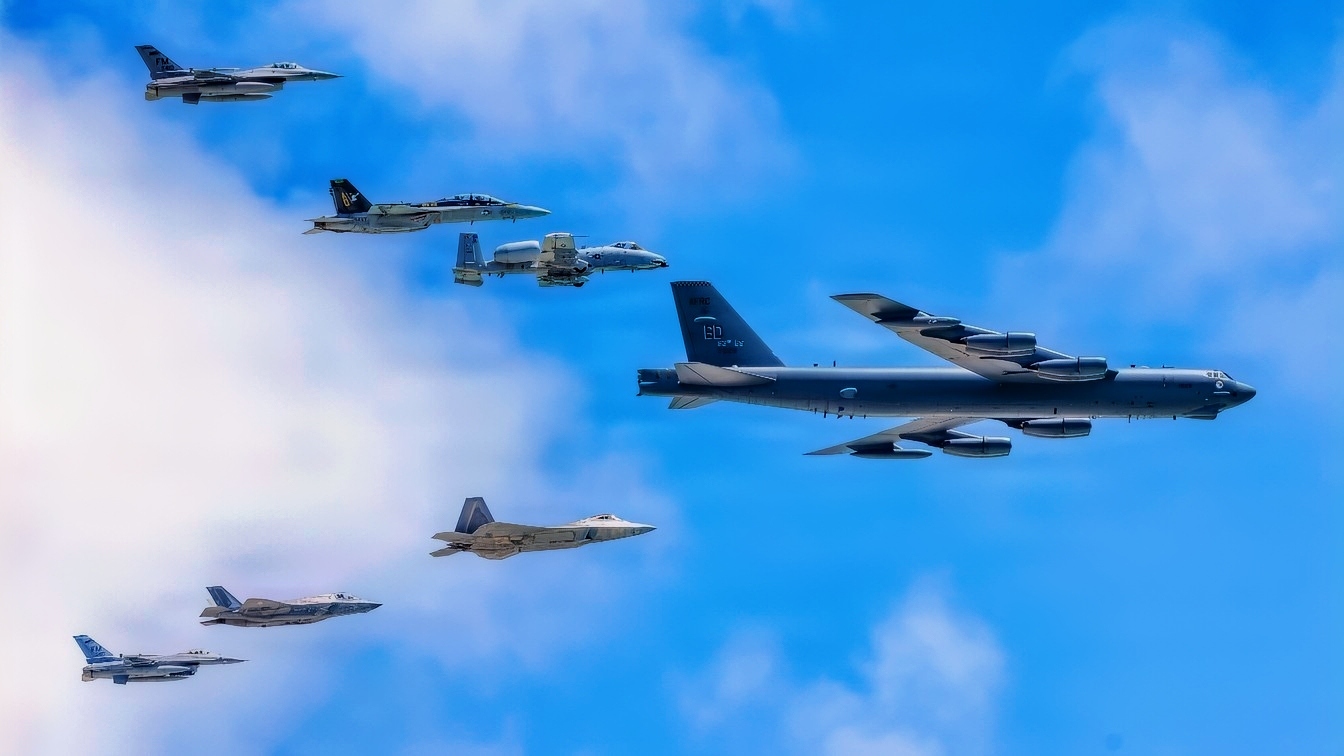
Summary and Key Point: The Air Force plans to keep the B-52J Stratofortress a core component of America’s long-range strike capability for decades, but the bomber faces a fundamental problem: modern integrated air defenses have made it too dangerous to fly over contested airspace.
The B-52J Problem
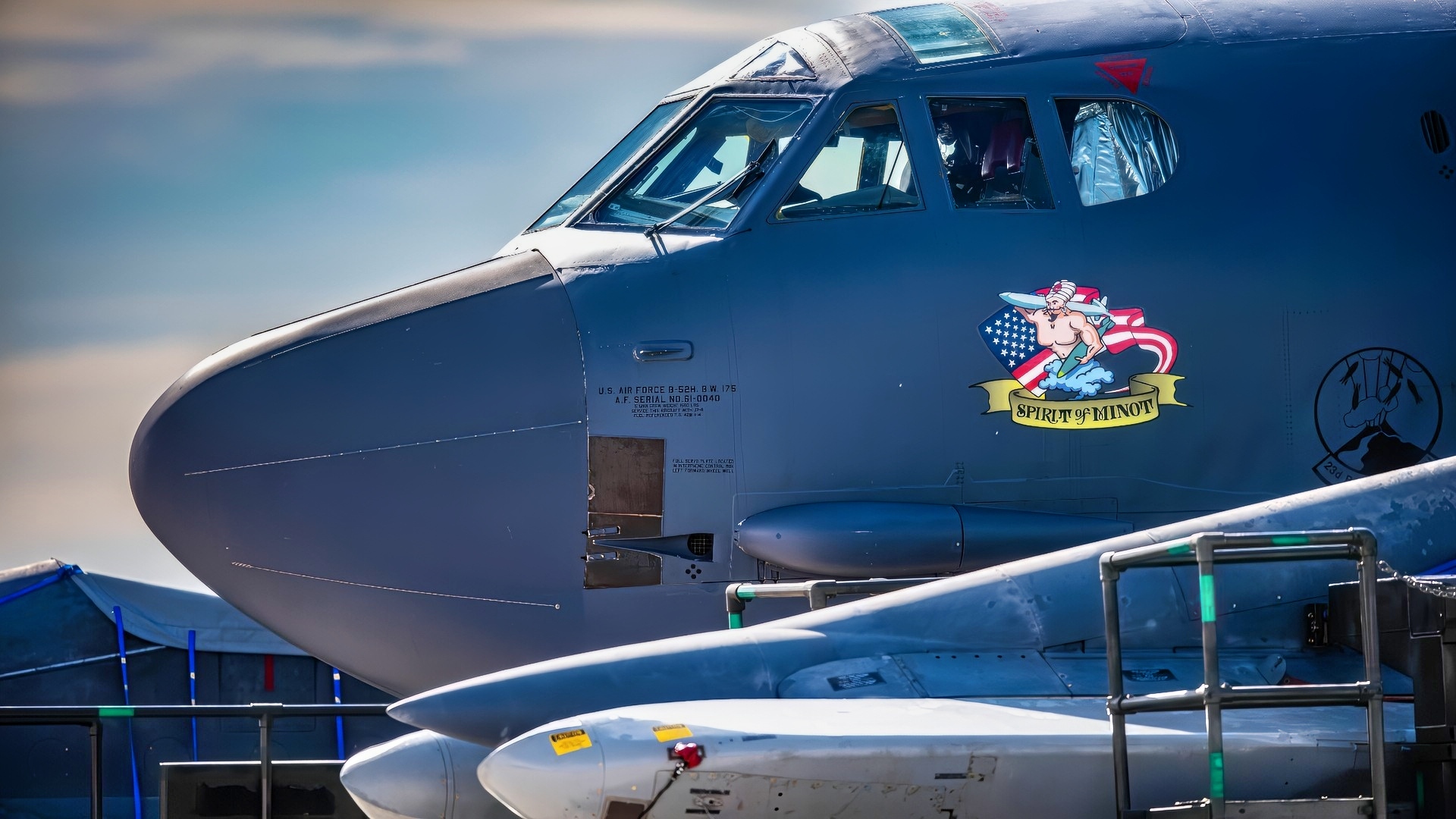
A U.S. Air Force B-52H Stratofortress assigned to the 23rd Bomb Squadron sits on the flightline during exercise Prairie Vigilance 25-1 at Minot Air Force Base, North Dakota, April 12, 2025. Vigilance series exercises are conducted with a focus on the safe and secure handling of equipment. (U.S. Air Force photo by Senior Airman Kyle Wilson)
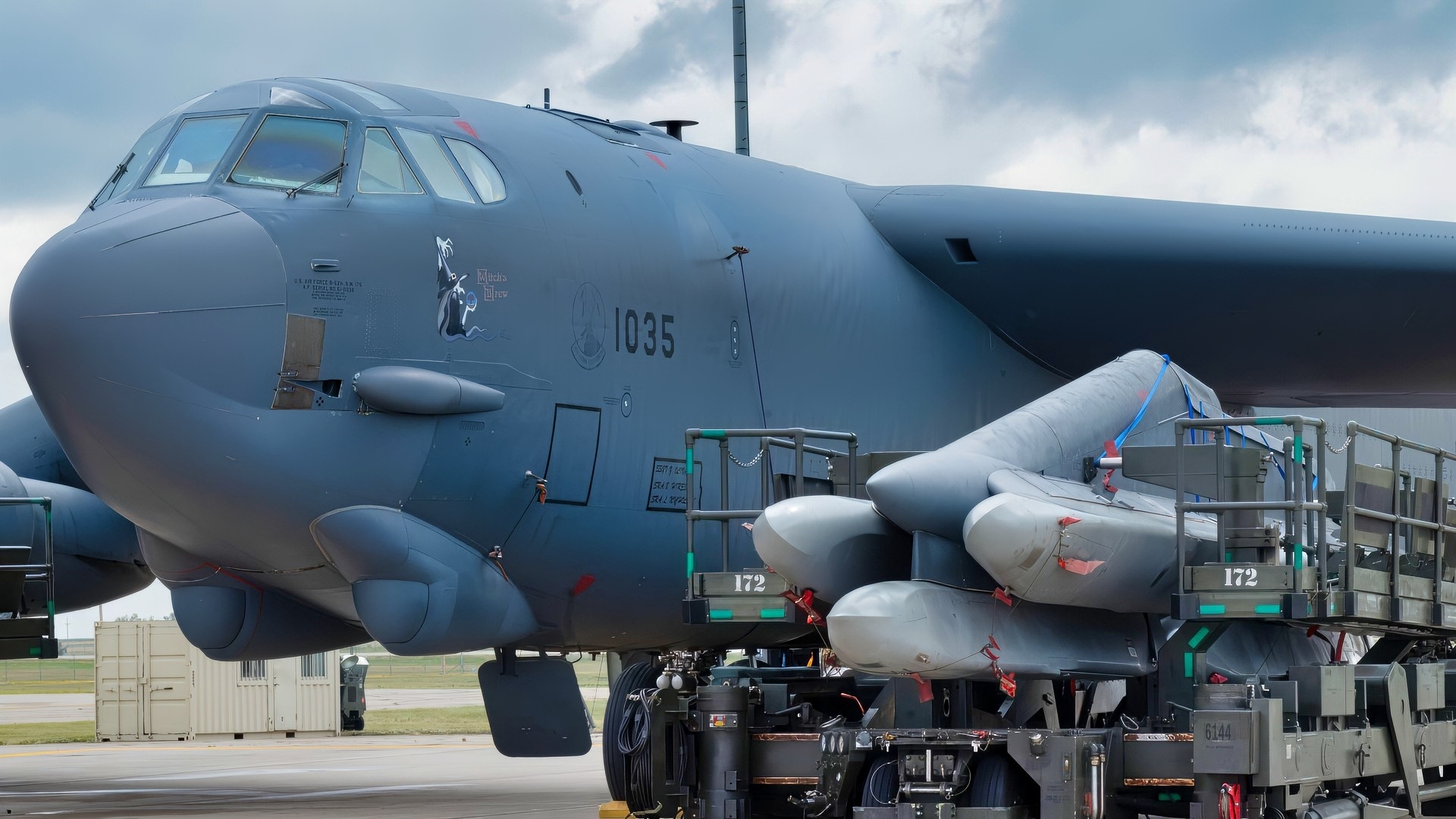
A B-52H Stratofortress sits on the flightline before a munitions load operation at Minot Air Force Base, North Dakota, Sept 5, 2025. The base-wide readiness exercise tested the wing’s ability to generate aircraft, conduct security operations and respond to challenging scenarios. (U.S. Air Force photo by Airman 1st Class Vincent Padilla)

A B-52H Stratofortress sit parked on the flight line at Minot Air Force Base, North Dakota, Aug. 8, 2022. The B-52 is capable of dropping or launching gravity bombs, cluster bombs, precision-guided missiles and joint direct attack munitions. (U.S. Air Force photo by Airman Alysa Knott)
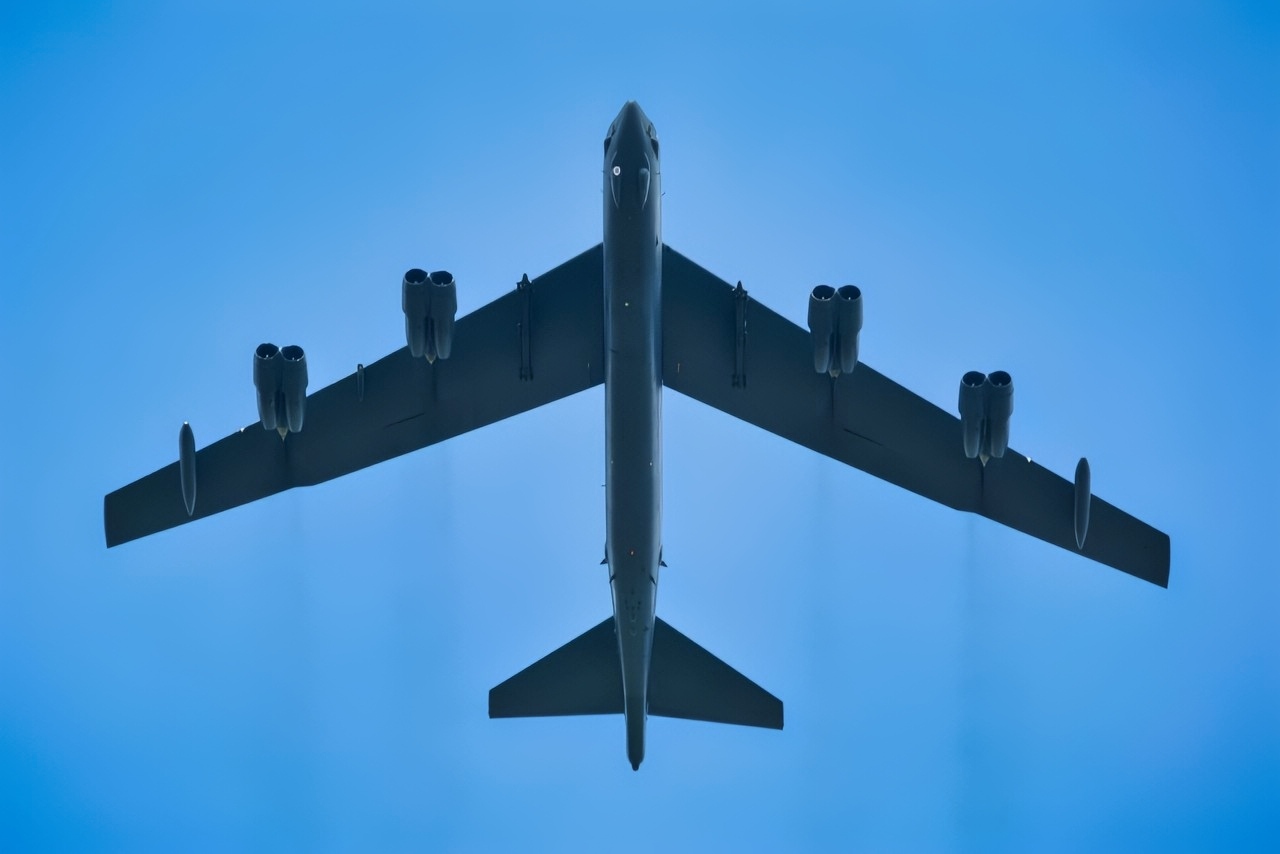
Military service members, veterans, and citizens of Guam gathered for the Memorial Day Commemoration at the Guam Veterans Cemetery. The Ceremony consisted of a fly over from a B-52H Stratofortress, a musical performance from the Guam Territorial Band & Cantate, guest speaking from the honorable Eddie Baza Calvo, a Fallen Soldier Gravesite Tribute, and the playing of Taps. (U.S. Marine Corps photo by Lance Cpl. Jacob Snouffer/Released)
The Air Force wants the new B-52J Stratofortress long-range strategic bomber to remain a core component of America’s long-range strike capability for decades, meaning that the B-52 will have served the Air Force for about a century before anyone seriously talks about decommissioning these birds. Yet, the B-52 has a problem that essentially all long-range manned bombers today face: increasingly sophisticated, lethal air defenses.
Ukraine Proved Modern Air Defenses Change Everything
We’ve seen this pattern play out in the ongoing war in Ukraine. The Russians, because of the presence of effective air defense systems in Ukraine, were compelled to conduct many airstrikes from beyond-visual-range (BVR). Russian forces made it work.
On the face of it, a military that can effectively sustain an air war from BVR is impressive.
Yet the weapons needed for successful BVR strikes are more technically complex than the systems that would be employed if bombers could reliably fly over contested territory, drop their payloads, and return home safely. Because these weapons are more complex–usually precision-guided standoff systems–they cost more, putting a serious drain on the attacking country.
As the Russians have demonstrated, they have had to rely on other methods to fight their Ukrainian foes because the air defenses of Ukraine have been effective in keeping much of the Russian Air Force out of contested airspace. Of course, the Russians have adapted.
They’ve had years to do so.
Iran Exposed America’s Own Vulnerabilities
The Americans, meanwhile, have learned nothing from the last several years of proxy warfare against Russia. When the Americans were required to take action against an enemy state, like the Islamic Republic of Iran, they discovered that the presence of advanced Iranian air defenses seriously curtailed their airpower.
Yes, the Americans still effectively bombed the targets they wanted to in Iran, but they did so–as did the Israelis–from afar. Washington never once risked the safety of the B-52s at its disposal by flying them over Iran and dropping bombs over targets the way we used to do in basically every war since the Second World War.
The Pentagon could not risk losing a large number of B-52s.
Data from the Iran War highlights how dangerous it has been for American pilots. The US lost 42 planes, many of them larger systems. Had the Americans attempted to fly their B-52s over Iranian airspace, even with suppression of enemy air defense missions underway by the Americans and Israelis, the chances that the US would lose massive numbers of these iconic planes were high.
Vietnam’s Warning Still Haunts the B-52 Force
During the Vietnam War, notably the infamous Christmas Day Bombings of 1972, 33 B-52 bombers were lost over North Vietnam, and between 15 and 17 B-52s were shot down (the Air Force lost an additional 14 to 16 planes at that time due to accidents and incidents unrelated to combat). An astonishing 33 airmen were killed or went missing as a result of those losses. That was when the United States was an industrial behemoth and could reliably replace costly losses, such as nearly 20 B-52s in combat.
Today, the United States is not an industrial behemoth.
Losing even one or two B-52s in combat over Iran would have been catastrophic both for morale and for the overall B-52 force itself. Replacements would not be forthcoming, and the American people would be irate over such a massive loss of life and equipment in one sitting.
America’s Industrial Challenge
Hence, the B-52s, like the Russian bombers throughout the Ukraine War, have been forced to employ standoff attacks primarily. Unlike the Russians, whose industrial base is primed for a war of attrition and can reliably replace ordnance expended in their war, the US defense industrial base struggles to sustain its needs even in relative peacetime.
Now that the high-tempo conflict that relies disproportionately on airstrikes from BVR has erupted, the Pentagon is secretly panicking as it has drained its arsenals of critical advanced precision-guided standoff munitions.
Most defense analysts assess that it will take between four and five years for those critical stockpiles of expensive, complex standoff munitions (and air defense interceptors) to be replenished to their levels before the Iran War started.
Don’t forget, too, that those stockpiles had already been precariously drained during the Biden administration, when the forty-sixth president generously gave Ukraine as many of America’s finite stockpiles of key defensive weapons as it could, as the Russians invaded.
The one-two punch of the Ukraine and Iran Wars, occurring in short order, has ensured that the US defense industrial base will be lucky to replenish its losses by 2030. If the wars continue, or more likely escalate and expand, those key standoff munitions will simply be unavailable–meaning that the B-52 long-range bombers will be useless or take greater risks by dropping less sophisticated munitions from within heavily contested enemy airspace.
The Future of the B-52J Program May Need a Strategic Rethink
These new, painful realities could potentially threaten the viability of the Air Force’s big investment in the B-52J upgrade. If the Air Force cannot rely on these long-range bombers being used to their fullest, it must reassess the money and resources going into their development and possibly reallocate them to more viable projects, such as cheaper unmanned systems or even hypersonic weapons that do not require the B-52.
The B-52 remains one of the most unique and impressive platforms for long-range strikes.
But the rise of increasingly sophisticated air defenses means that future B-52s will likely simply conduct standoff strikes.
If, however, the US defense industrial base cannot meet the demand imposed by the increased operational tempos of the wars, then the United States will now face a problem, and the Air Force must reassess its plans for the new line of B-52Js.
About the Author: Brandon J. Weichert
Brandon J. Weichert is Senior National Security Editor. Recently, Weichert became the editor of the “NatSec Guy” section at Emerald. TV. He was previously the senior national security editor at The National Interest. Weichert hosts The National Security Hour on iHeartRadio, where he discusses national security policy every Wednesday at 8 p.m. Eastern. He hosts a companion show on Rumble entitled “National Security Talk.” Weichert consults regularly with various government institutions and private organizations on geopolitical issues. His writings have appeared in numerous publications, among them Popular Mechanics, National Review, MSN, and The American Spectator. And his books include Winning Space: How America Remains a Superpower, Biohacked: China’s Race to Control Life, and The Shadow War: Iran’s Quest for Supremacy. Weichert’s newest book, A Disaster of Our Own Making: How the West Lost Ukraine, is available for purchase at any bookstore. Follow him via Twitter/X @WeTheBrandon.


