
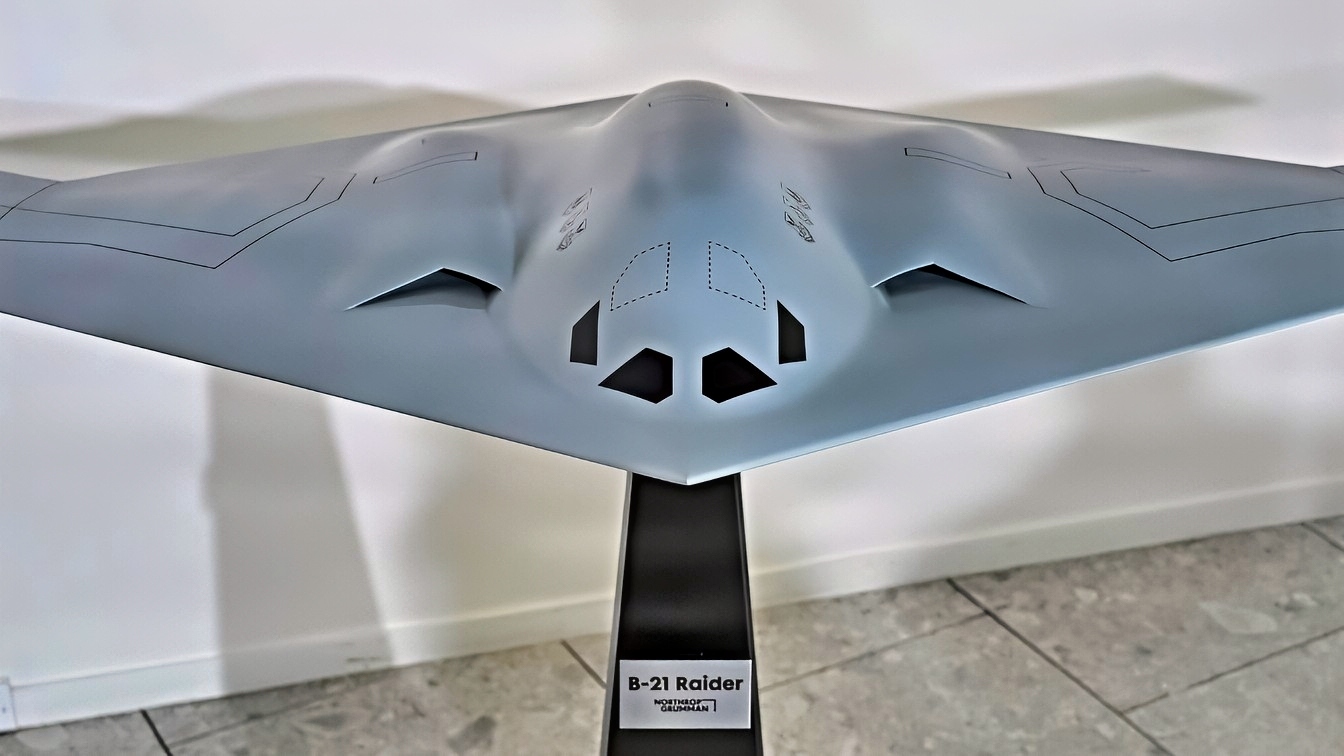
Summary and Key Points: During a May 13 House Armed Services Committee hearing, Air Force Deputy Chief of Staff for Strategic Deterrence Lt. Gen. David H. Tabor signaled that the long-standing requirement of 100 B-21 Raiders no longer reflects operational reality, given China’s rapidly expanding air defense and missile capabilities. Defense Secretary Pete Hegseth subsequently confirmed that the United States will need “a lot more” than 100 Northrop Grumman stealth bombers. The Raider’s radar cross-section is reportedly comparable to a mosquito or small bird under certain frequencies — small enough to penetrate the world’s most heavily defended airspace and strike targets repeatedly across vast distances.
The B-21 Raider Is a Stealth Genius
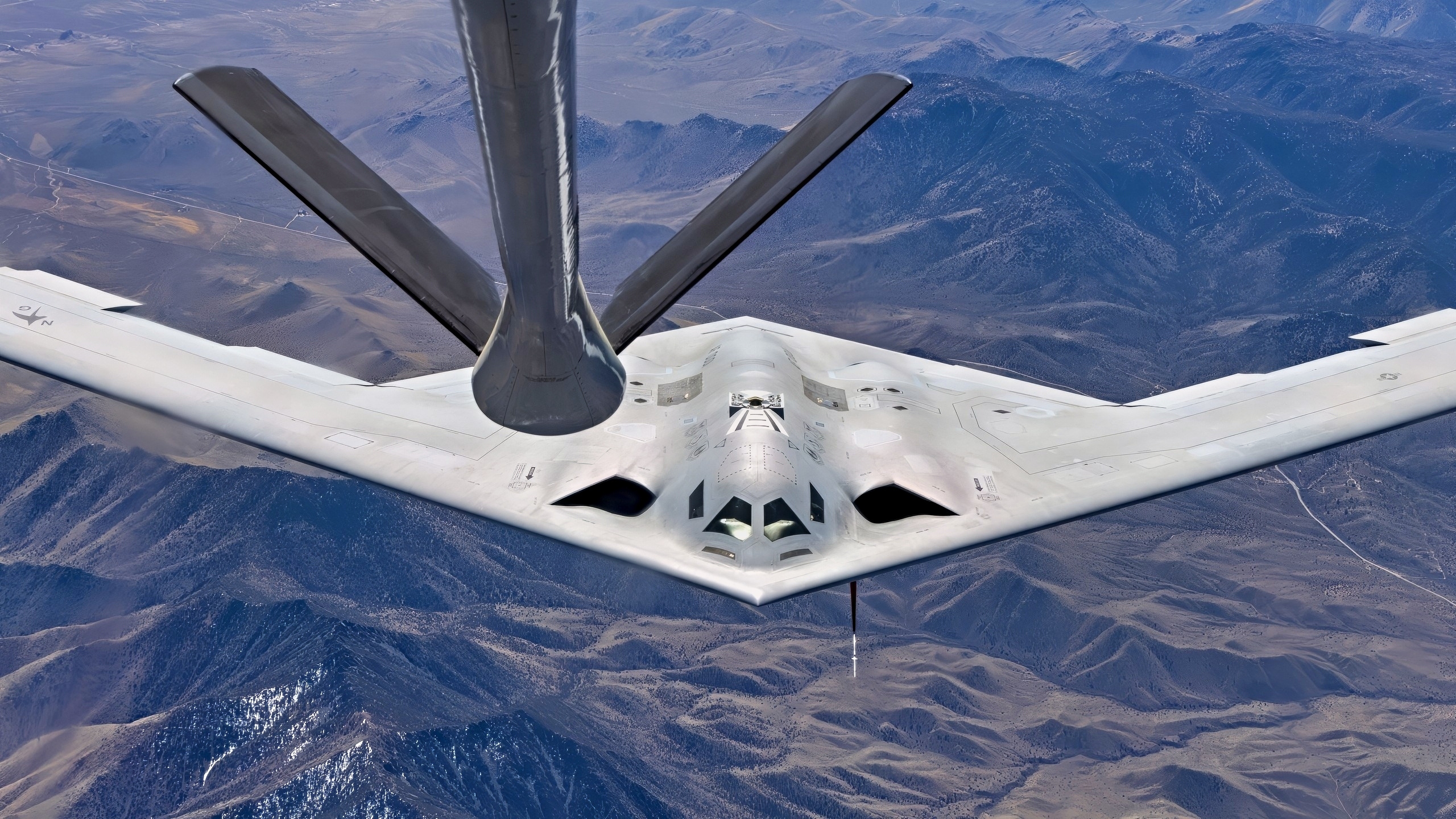
B-21 Raider April 2026. Image Credit: Creative Commons.
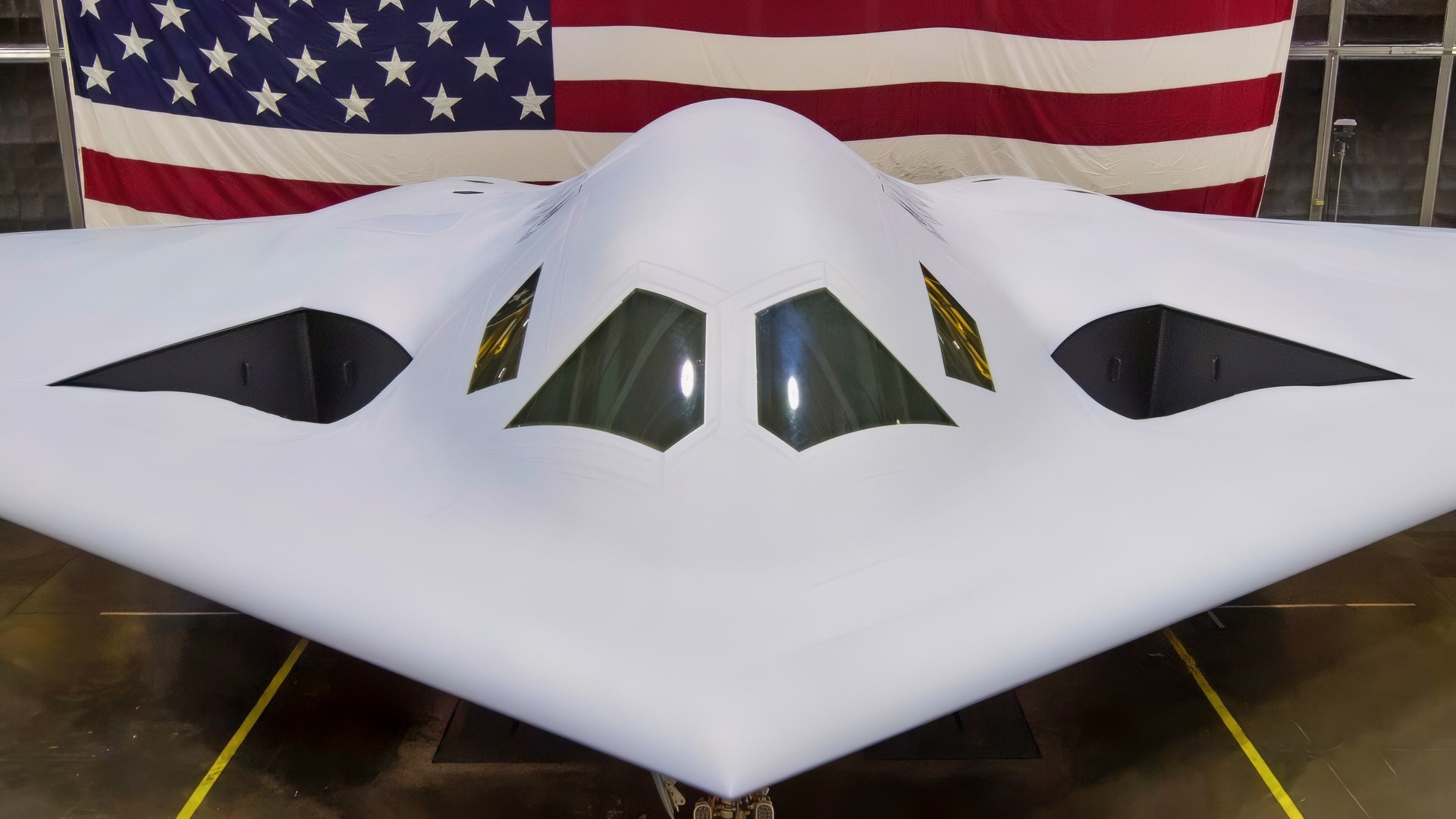
The B-21 Raider was unveiled to the public at a ceremony Dec. 2, 2022 in Palmdale, Calif. The B-21 will provide survivable, long-range, penetrating strike capabilities to deter aggression and strategic attacks against the United States, allies, and partners. (U.S. Air Force photo)
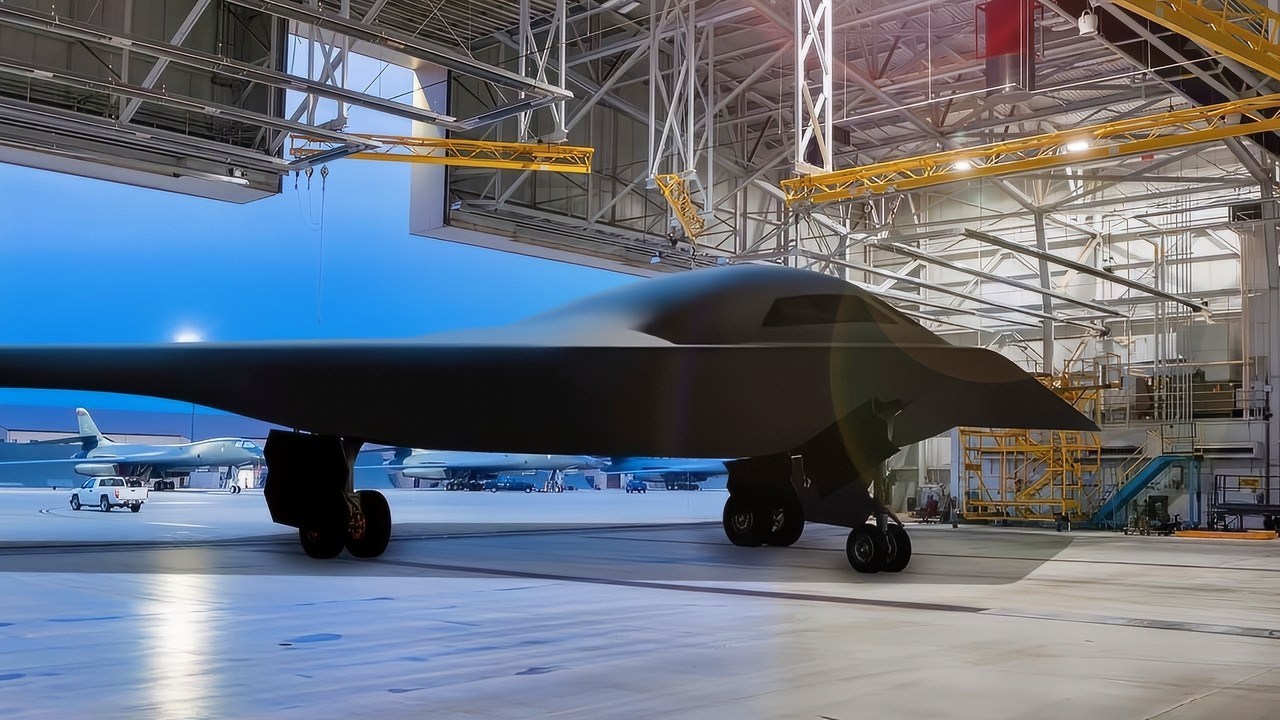
Artist rendering of a B-21 Raider in a hangar at Ellsworth Air Force Base, South Dakota, one of the future bases to host the new airframe. AFCEC is leading a $1 billion construction effort at Ellsworth to deliver sustainable infrastructure to meet warfighter demands for bomber airpower. (U.S. Air Force graphic)

B-21 Raider Up Close. Image Credit: U.S. Air Force.

A second B-21 Raider test aircraft takes off, Sept. 11, from Palmdale, Calif., to join the Air Force’s flight test campaign at Edwards Air Force Base, Calif. The addition of the second test aircraft expands mission systems and weapons integration testing, advancing the program toward operational readiness. (Courtesy photo)
Following years of debate among analysts, the Pentagon is now beginning to publicly signal that the U.S. Air Force could dramatically expand procurement of the Northrop Grumman B-21 Raider as military planners prepare for the possibility of a large-scale war in the Indo-Pacific against China.
During a May 13 House Armed Services Committee hearing on strategic forces, Air Force Deputy Chief of Staff for Strategic Deterrence and Nuclear Integration Lt. Gen. David H. Tabor indicated that the long-standing requirement for 100 B-21s may no longer reflect operational reality, particularly as the Air Force prepares to retire portions of its B-1B and B-2 fleets while facing rapidly expanding Chinese air defense and missile capabilities.
That discussion went further when Defense Secretary Pete Hegseth said during subsequent Pentagon budget discussions that the United States would need “a lot more” than 100 Raiders in the coming decades. The push for more Raiders is not just about replacing aging bombers, either.
The B-21 is one of the only aircraft likely capable of surviving inside the world’s most heavily defended airspace, largely because of its extraordinarily small radar signature – reportedly so tiny under some conditions that it is comparable to the radar return of a mosquito or a small bird.
Why the Pentagon Wants More B-21s
For years, the Air Force has talked about procuring “at least 100” B-21s – a number based on what is necessary to replace portions of the aging B-1B and B-2 fleets. That number, however, has long been seen as inadequate – and increasingly so, as China rapidly expands its missile forces and integrated air defenses, builds its own competing platforms and its anti-access capabilities across the Pacific.
A future conflict involving Taiwan or the broader Indo-Pacific will likely involve attacks on American airfields and infrastructure, communications systems will be at risk, and carrier strike groups will also likely be targeted.
In such an environment, the United States cannot rely solely on short-range fighters operating from vulnerable regional bases. The B-21 changes the equation, but it only works if the U.S. Air Force has enough of them.
The Pentagon recognizes that it needs aircraft capable of launching from long distances, penetrating dense air defense networks, and of course surviving inside highly contested airspace – and then, striking targets repeatedly over enormous geographic areas. Only the B-21 was designed specifically for this mission.
What Radar Signature Means
When radar systems search for aircraft, they transmit radio waves outward and measure the energy that bounces back toward the radar receiver. The larger and stronger the reflection, the easier it is to detect and track the target. That reflected signal is known as radar cross-section, or RCS.
The physical size of an aircraft does not determine its radar cross-section; rather, it determines how large it appears electronically to radar systems.
A massive aircraft can therefore appear electronically smaller than a fighter jet if its shape and materials are carefully engineered.
Traditional aircraft create strong radar returns because they are not designed not to – everything from their exposed engine fan blades and sharp angles to their external weapons and vertical stabilizers all reflect radar energy back toward the emitter. A stealth aircraft, however, is designed to avoid that.
Their surfaces are shaped to scatter radar energy away from the radar source rather than reflecting it back. Engine intakes are hidden because spinning turbine blades create enormous radar reflections. Weapons are carried internally rather than under the wings.
Special radar-absorbent materials help dissipate incoming energy before it can bounce back toward enemy sensors. The result is an aircraft that is significantly harder to detect until it reaches a much closer range – and by then, it’s typically too late to do anything about it.
The B-21 Is Like A “Mosquito”
The B-2 Spirit already has one of the smallest radar signatures ever achieved for a bomber, with public estimates often likening it to a small bird. The B-21 is widely expected to improve on that design.
Exact figures remain classified, but former defense officials and analysts have repeatedly indicated that the Raider’s radar signature could be closer to that of a mosquito under certain radar frequencies.
Even if those comparisons are partly incorrect and the size is actually larger than a mosquito, the fact that it is an evolution of the B-2 indicates that its radar signature will be smaller than that of the United States’ most modern operational stealth bomber. It will have an extraordinarily tiny radar return, and no doubt the smallest in the world.
Even a modest reduction in radar cross-section can significantly reduce detection range. If a radar can normally detect a conventional bomber at 250 or 300 miles, for instance, reducing the radar signature dramatically may shrink that detection window to a fraction of that distance – and that creates huge operational advantages. It means enemy air defense crews have less time to classify targets and scramble interceptors, they can’t coordinate missile batteries quickly enough, and they won’t have time to prepare layered defenses.
A stealth bomber like the B-21 may be inside engagement zones before defenders fully understand what they are even tracking.
When the B-21 Is Expected to Arrive
The Air Force plans to begin fielding operational B-21s later this decade, with Ellsworth Air Force Base in South Dakota expected to become the first operational Raider base. Over time, the aircraft will gradually replace the B-1B Lancer and B-2 Spirit fleets while eventually operating alongside upgraded B-52Js as the backbone of America’s long-range bomber force.
If current Pentagon discussions result in expanded procurement, the Raider could remain in production well into the 2040s as the United States prepares for an era increasingly defined by long-range stealth warfare in the Indo-Pacific.
About the Author: Jack Buckby
Jack Buckby is a British researcher and analyst specializing in defense and national security, based in New York. His work focuses on military capability, procurement, and strategic competition, producing and editing analysis for policy and defense audiences. He brings extensive editorial experience, with a career output spanning over 1,000 articles at 19FortyFive and National Security Journal, and has previously authored books and papers on extremism and deradicalization.


