

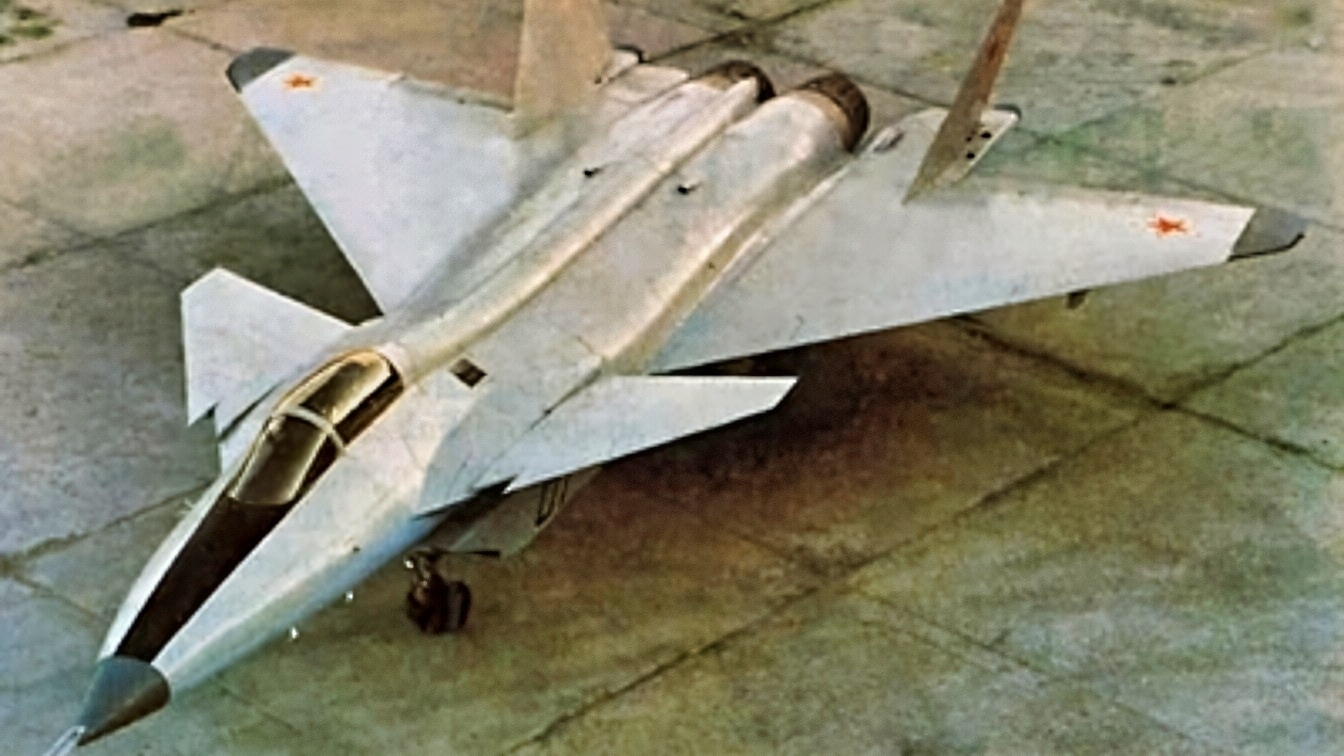
Summary and Key Points: When the Soviet Union launched the MiG 1.44 (MFI program) in the late 1970s, the goal was to field a heavy air-superiority fighter capable of Mach 2 speeds, supercruise, and extreme maneuverability — Moscow’s answer to America’s Advanced Tactical Fighter program that produced the F-22 Raptor. The Soviet Union collapsed before the program yielded an operational fighter; the prototype flew twice in 2000 and the program was officially canceled in 2002
The MiG 1.44 Was No F-22 Raptor
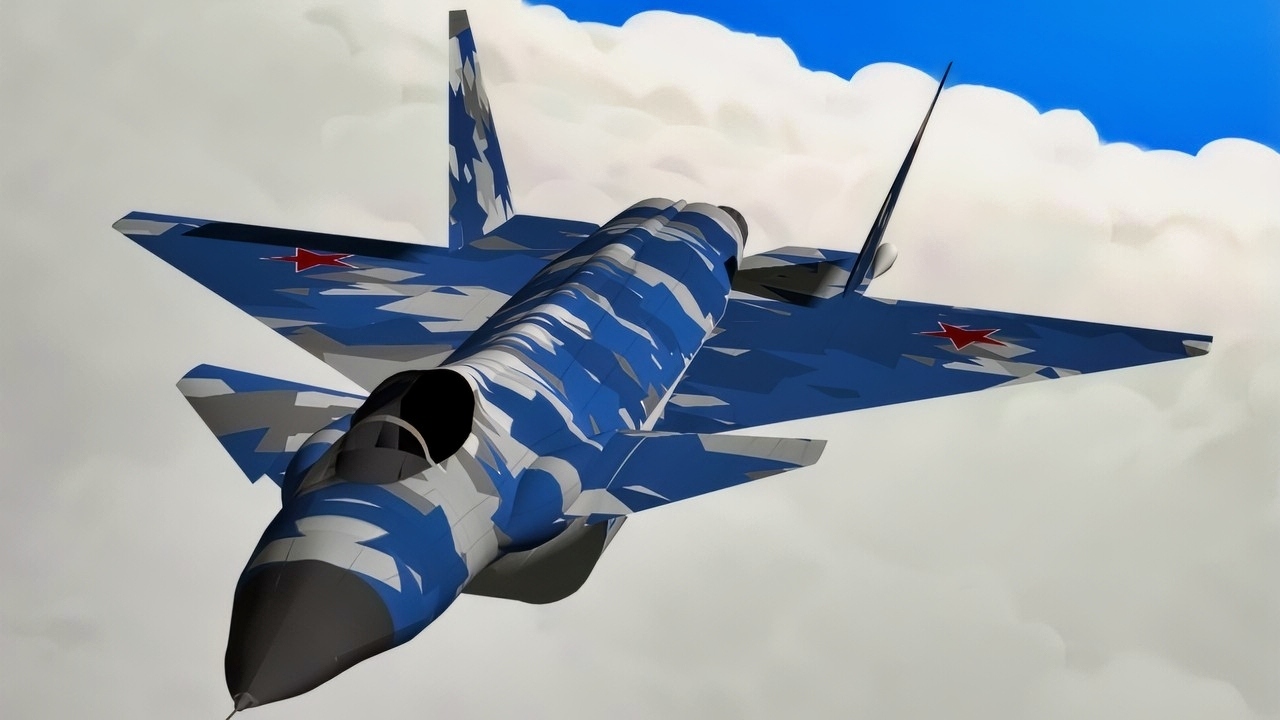
MiG 1.44 Russian Fighter. Image Credit: Creative Commons.
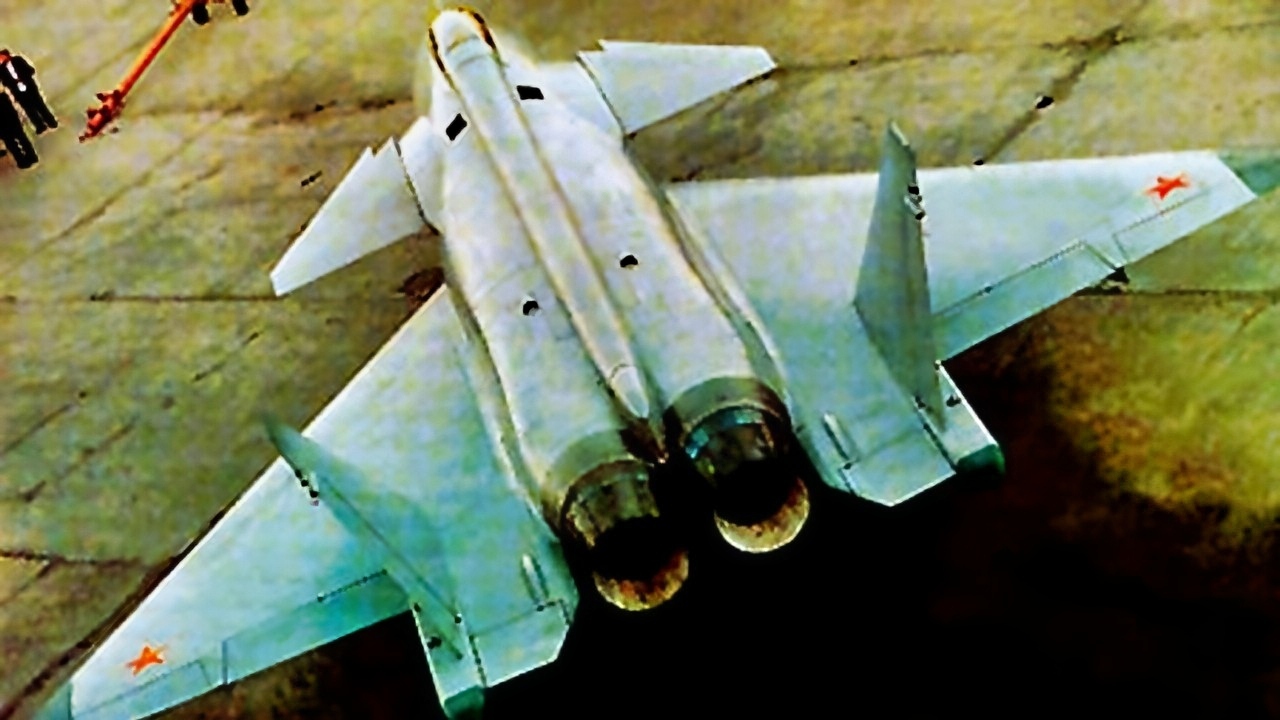
MiG 1.44 Russian State Media Picture

MiG 1.44 Fighter. Image Credit: Creative Commons.
One of the enduring questions surrounding China’s J-20 Mighty Dragon is: how did China suddenly make such a large leap into fifth-generation fighter development? By the late 2000s, China had experience in modifying Soviet aircraft, reverse-engineering systems, and improving domestic production—yes. But a heavy, twin-engine stealth fighter represented a major technological leap, sparking rampant speculation.
And one theory that has persisted in aerospace circles is that China had help. Specifically, some believe that China enjoyed a blend of Soviet aerodynamic research, Russian industrial data, and Western-derived stealth concepts. What exactly happened to get China up to speed so quickly remains unclear.
But it seems China may have borrowed enough pieces to dramatically shorten the development time of its first-ever fifth-generation fighter.
The Lost Fighter
The MiG 1.44 (MFI program) was the Soviet answer to America’s Advanced Tactical Fighter (ATF) program, which eventually culminated in the F-22 Raptor.
Conceived in the late 1970s and 1980s, the MFI program focused on fielding a heavy air-superiority fighter capable of Mach 2 speeds, supercruise, and extreme maneuverability.
The Soviets took a different approach than the Americans, however. While the Americans were focused on stealth and sensors, the Soviets prioritized speed and maneuverability.
But the Soviet Union collapsed before the MFI program ever yielded an operational fighter, as funding evaporated and the program stalled; the prototype only flew twice in 2000, and that was it: the program was officially canceled in 2002.
MiG DNA?
Some people think the J-20 has MiG DNA because visual similarities are immediately apparent.
For example, both aircraft have long fuselages, large delta wing layouts, forward canards near the cockpit, twin outward-canted tails, and ventral fins beneath the engines.
The canards are especially notable, differing significantly from American fifth-generation aircraft like the F-22 and F-35; canards generate airflow vortices over the wing, resulting in improved agility and better high-angle-of-attack performance.
And because canards are so specific, it stands out that both the MiG and the J-20 have them. Between the canards and other consistent external design choices, many suspect that China received at least some Soviet aerodynamic guidance.
Post-Soviet Russia certainly had the financial incentive to share fighter tech; after the Soviet Union collapsed, the economy withered, and defense companies struggled.
And Mikoyan, once the leader in Soviet aerospace design, was losing influence to Sukhoi, which has since fully overtaken it as the leader in Russian aerospace.
It seems possible that Mikoyan could have sold wind tunnel research or engineering data, or flight control work to the Chinese. Granted—no smoking gun exists; no contract or blueprint package has been released. And regardless, it seems unlikely that China bought a fighter 1-for-1 from Russia. What may have happened, though, is that China received aerodynamic research from Russia.
Stealth Flaws
The MiG-to-J-20 theory has at least one major issue, however: the MiG 1.44 was not designed around modern stealth. The MiG had large canards, straight intakes, exposed engine faces, and geometry that created radar reflections.
The J-20 is significantly different in this respect, with sharper nose shaping, diverterless supersonic intakes (DSI), stealth-oriented intake geometry, and a larger internal weapons volume.
The two jets differ in mission set, too; specifically, the MiG 1.44 was designed for European air superiority, while the J-20 was designed for long-range Pacific work as an anti-access/area-denial jet. So despite sharing aerodynamic influence, the J-20 is not a direct copy of the MiG 1.44.
Strategic Implications
Modern military development increasingly resembles the adaptation, acquisition, and integration of existing platforms rather than the isolated invention of new ones. China likely benefited from Russian assistance, at least in terms of shortening the J-20 development cycle.
In practice, this could mean that instead of two or three decades of trial and error, China would start with existing research and adapt it to specific needs and mission sets.
If true, China may have compressed decades of aerospace experimentation into a much shorter timeline, surprising the world with a fifth-generation fighter that marked a relatively rapid step-change from their existing tech.
And while the J-20 is not a MiG-1.44 clone, the similarities are probably not a pure coincidence.
About the Author: Harrison Kass
Harrison Kass is a writer and attorney focused on national security, technology, and political culture. His work has appeared in City Journal, The Hill, Quillette, The Spectator, and The Cipher Brief. He holds a JD from the University of Oregon and a master’s in Global & Joint Program Studies from NYU. More at harrisonkass.com.


