
A new poll from Russia’s independent Levada Center is being widely cited online as evidence that Russians are finally turning against the war in Ukraine and, by extension, against President Vladimir Putin himself. But the actual findings are considerably more complicated.
The survey, conducted between February 18 and February 25 across 137 localities in 50 Russian regions, found that two-thirds of Russians now support peace negotiations with Ukraine, while support for continuing the war has fallen to 24%, the lowest level recorded since Levada began tracking the issue. At the same time, however, support for the Russian armed forces remains extremely high at 72%.

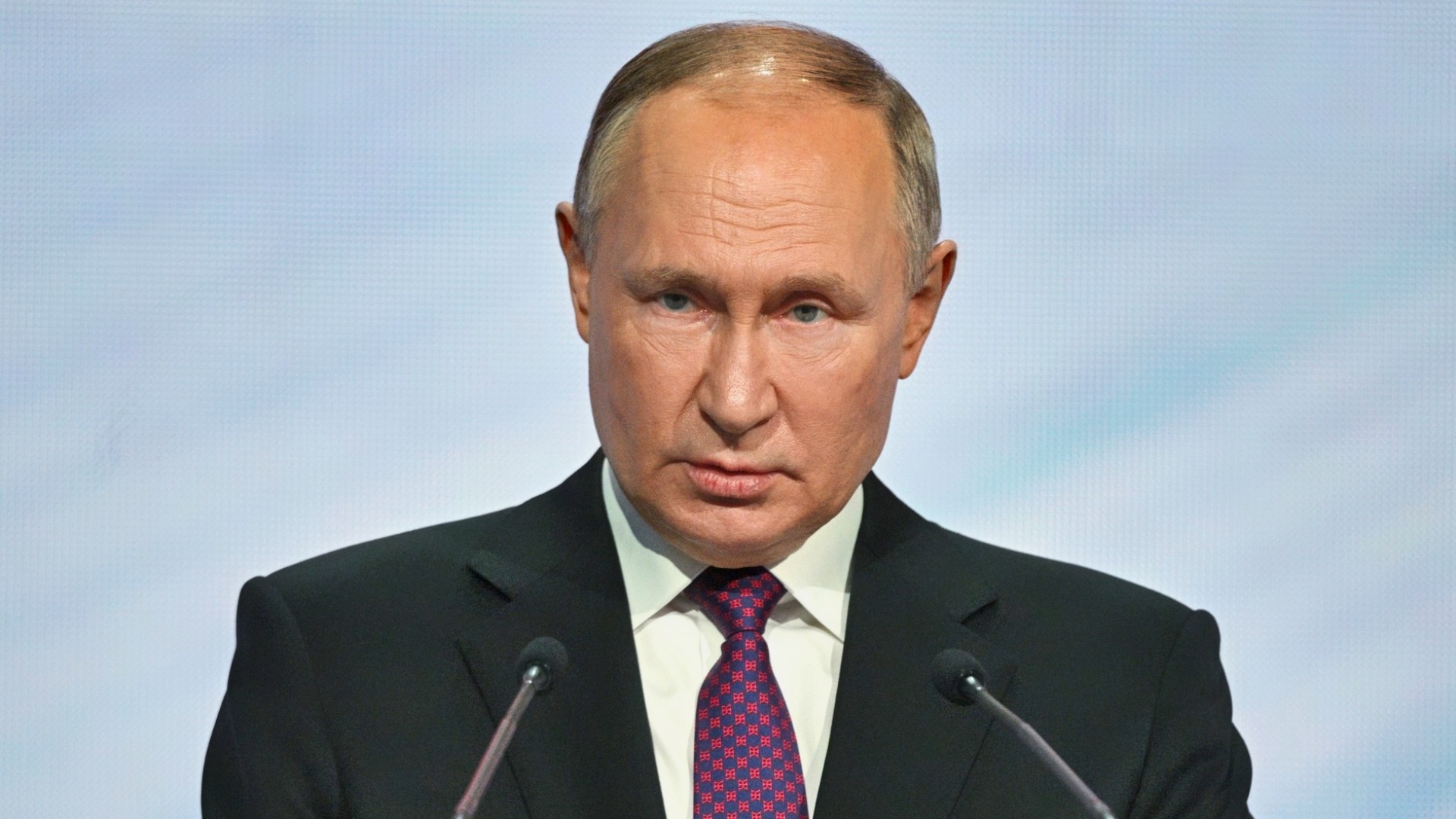
Putin in 2022. Image Credit: Creative Commons.

President of Russia Vladimir Putin at the at the BRICS+ meeting (via videoconference). Image Credit: Creative Commons.
It seems contradictory, but it isn’t really. The data suggest that Russians are growing tired of the conflict but do not want peace at any cost.
The polling also found that fewer than half of Russians are now closely following events in Ukraine – another record low since the beginning of the conflict. Only 44% said they were paying close attention to the war, down from much higher levels earlier in the conflict and a 15-percentage-point decrease since May of last year.
Rather than showing a sudden increase in anti-war sentiment inside Russia, the poll appears to reveal that there is growing war fatigue, declining public engagement, and growing interest in ending the conflict, but without necessarily believing Russia should lose it.
Russia Wants Peace, Not Defeat
Perhaps the most important finding in the survey is not that Russians suddenly oppose the war, but that Russians want the conflict to be frozen or concluded on terms they can still view as a success for Russia.
While 67% of respondents said Russia should take steps toward peace negotiations, support for the military itself remains largely intact. Only 17% of respondents said that they did not support the actions of the Russian armed forces in Ukraine.
“The level of support for the actions of the Russian armed forces in Ukraine remains high – 72% in February (including 40% – ‘definitely’ support, and 32% – ‘rather’ support). 17% do not support the actions of the Russian armed forces in Ukraine (8% ‘definitely’ do not support, 9% ‘rather’ do not support),” the report explains.
Much of the online reaction, however, seemed to imply that the Russians are abandoning Putin or rejecting the war outright. But Russians are not turning on Putin. The numbers actually suggest something closer to exhaustion rather than opposition to Putin and the war.
Russians want the fighting to stop, but there is little evidence in the poll that most Russians believe Moscow should accept humiliation or major concessions.
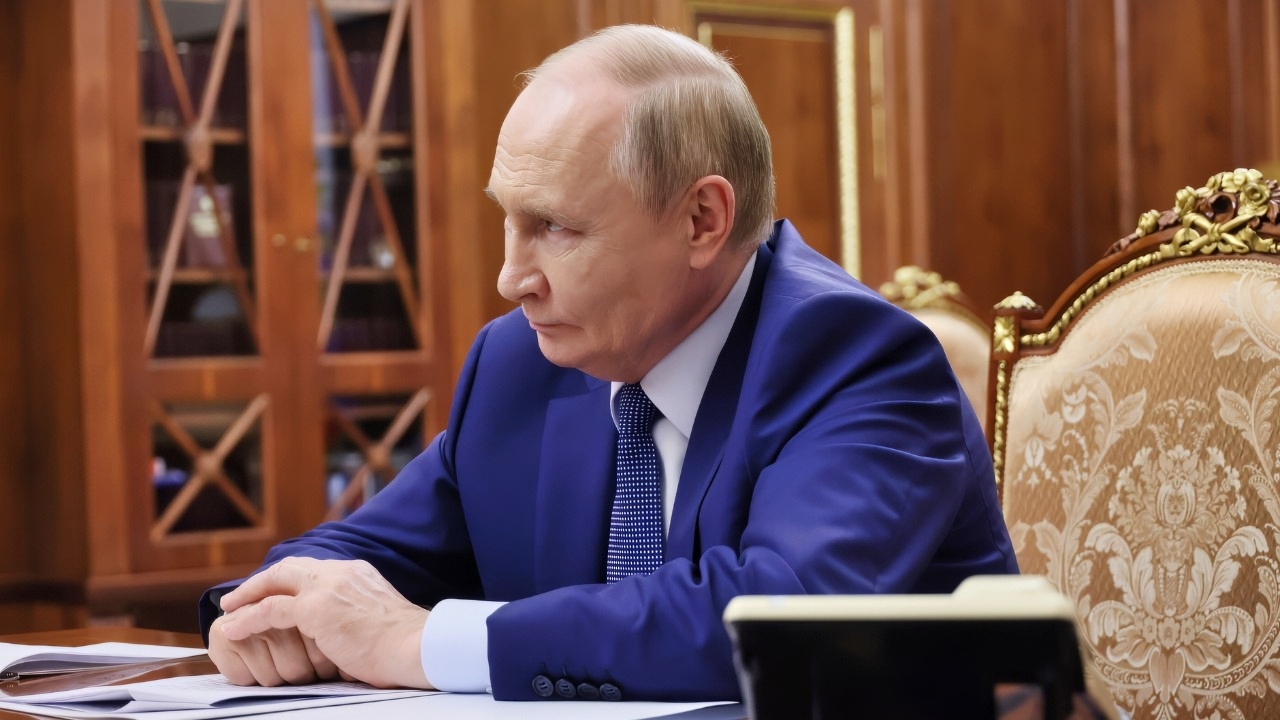
Putin in 2025 Looking Stern. Image Credit: Creative Commons.
The survey also found continued support for some of Russia’s military tactics. 57% of respondents said Russian strikes on Ukrainian energy infrastructure were justified, compared to 20% who considered them unacceptable. Among supporters of the strikes, the most common justification was that the strikes are “retaliatory” and that Russia did not start the conflict, according to the poll. Others said the attacks were necessary to weaken Ukraine’s military potential or force Kyiv into negotiations.
The Generational Divide Is Growing
The poll also revealed major demographic splits within Russia, particularly between younger Russians and older generations, with the latter more supportive of the Kremlin’s messaging. Support for peace negotiations was strongest among Russians under 25, where 79% favored talks. Women, poorer Russians, rural residents, and people who disapprove of Putin were also significantly more likely to support negotiations. Meanwhile, support for continuing the war was strongest among older Russians and wealthier respondents, as well as those who rely primarily on television or Russian state-controlled media platforms for their news.
Only 20% of respondents under 25 said they were closely following events around Ukraine at all, compared to 61% among Russians aged 55 and older.
The media divide is particularly interesting, too. Russians who rely on social media and YouTube channels for information showed substantially lower support for the war than those who primarily consume state television.
That split could represent a transformation that is underway inside Russia, where younger Russians increasingly consume information from global platforms – and the Kremlin has little control over digital information ecosystems that challenge its narrative. Perhaps, then, the most striking part of this new poll is not that Russians are turning against Putin – they’re not – but that Russia could be a very different place in the coming decades once older generations die and younger people, who consume global media, come to power.
The Kremlin Should Be Concerned
The poll does not indicate a population preparing for a revolt. Putin’s approval ratings remain high, and support for the military operation still outweighs – significantly – outright opposition. But the numbers may still concern the Kremlin for another reason: public disengagement.
Levada described February’s level of attention to the war as “minimum,” recorded since observations began, and a growing share of Russians are no longer closely following the conflict at all. That’s a problem for an authoritarian system that relies on passive public acceptance. If a population becomes exhausted or detached, it can cause long-term political problems. And with young people thinking differently, it’s only a matter of time before the current system comes under pressure.
About the Author: Jack Buckby
Jack Buckby is a British researcher and analyst specializing in defense and national security, based in New York. His work focuses on military capability, procurement, and strategic competition, producing and editing analysis for policy and defense audiences. He brings extensive editorial experience, with a career output spanning over 1,000 articles at 19FortyFive and National Security Journal, and has previously authored books and papers on extremism and deradicalization.


Swamplaw Yankee
May 28, 2026 at 3:40 am
Is this op-ed actually have the same tone as the op-ed that come from Professor Alexander Motyl, who is featured here once in a while?
Do the Yankee readers rejoice that Professor Motyl is proven correct in his many years of op-ed that as a diaspora Ukrainian, he might know a little something about Ukrainians?
You think?