


Vladimir Putin signed a revised Russian nuclear doctrine on November 19, 2024 — exactly 1,000 days after the full-scale invasion of Ukraine began. The new doctrine declares that any conventional attack on Russia by a non-nuclear state with the support of a nuclear power will be treated as a joint attack on Russia, providing the legal basis under Russian law for nuclear retaliation. The revision also extends Russian nuclear protection to Belarus, lowers the threshold for nuclear use from threats to the “existence” of the Russian state to threats to its “sovereignty” or “territorial integrity,” and declares that Russia may launch nuclear weapons in response to “reliable information on the massive launch of aerospace attack weapons” crossing the Russian border.
The Tactical Nuclear Weapons Dilemma

Russian Mobile ICBM Nuclear Weapons. Image Credit: Creative Commons.
The revised doctrine is the document Putin operates under as of today, May 27, 2026. It substantially expanded the set of scenarios under which a Russian nuclear strike could be legally and doctrinally justified inside the Russian state apparatus. The question is no longer whether Russian doctrine permits nuclear use against Ukraine and the West. It is whether the political, military, or personal conditions Putin himself identifies as triggers will produce a decision to actually employ those weapons.
The Defense Intelligence Agency’s 2025 assessment, quoted in current Congressional Research Service reporting, concluded that “Russia is very unlikely to use nuclear weapons in the conflict unless Russian leadership judged it faced an existential threat to the regime.” The same DIA assessment noted Russian capabilities for tactical nuclear use have substantially expanded, including the establishment of tactical nuclear weapons storage facilities in Belarus, the training of Belarusian crews to handle the weapons, and the development of Russian operational doctrine that envisions limited employment scenarios short of strategic nuclear exchange.
Below are the ten scenarios under which Putin might cross the threshold and actually use tactical nuclear weapons against Ukraine or Western forces supporting Ukraine.

Iskander-M. Image Credit: Creative Commons.
Battlefield Collapse That Cannot Be Reversed By Conventional Means
The first and most analytically credible scenario is that Russian conventional forces face an imminent strategic defeat that cannot be reversed through additional mobilization, foreign weapons procurement, or political negotiation.
A sustained Ukrainian breakthrough across multiple Russian defensive lines, particularly one that produced the operational encirclement of major Russian formations in eastern Ukraine, would present Putin with the choice between accepting catastrophic battlefield defeat or escalating to nuclear use. The Bulletin of the Atomic Scientists’ analysis, published in early 2025, identified the autumn 2022 Ukrainian counteroffensive as the historical precedent — a scenario in which Russian forces were pushed back substantially and the Russian leadership privately considered nuclear options.
Loss Of Crimea Or A Direct Threat To The Peninsula
Putin has identified Crimea as a Russian red line over the past four years. The peninsula was formally annexed in 2014 and has been treated as sovereign Russian territory under Russian constitutional law since the September 2022 annexation decrees were extended to cover the four mainland Ukrainian oblasts.
A Ukrainian operation that physically threatens to retake Crimea — through amphibious assault, large-scale destruction of the Kerch Bridge combined with ground operations, or sustained interdiction of Russian supply lines to the peninsula — would be framed by the Kremlin as an attack on Russian sovereign territory. Under the revised 2024 doctrine, that framing provides the legal basis for nuclear retaliation.
Russian Regime Threat Producing Internal Political Pressure
The third scenario operates at the intersection of battlefield outcome and Putin’s personal political survival. If Russian battlefield failure produces internal political pressure that threatens Putin’s hold on power, a tactical nuclear strike could be deployed as a desperate measure to rally Russian nationalist support, suspend further internal dissent under emergency wartime conditions, and force the West into negotiations on Russian terms.
The DIA’s framing of the existential threshold focused specifically on threats to “the regime” rather than to the Russian state as such — recognizing that Putin personally is the decision-maker and his personal survival concerns are the operative driver of any nuclear decision.
Coercive Use To Force A Negotiated Settlement
The escalate-to-de-escalate framework has been the most analytically debated concept in Russian nuclear doctrine over the past two decades. The basic theory is that limited tactical nuclear employment can compel a conventional opponent to halt operations and accept Russian terms in negotiations.
The Arms Control Association’s recent review of Russian nuclear posture noted that the extent to which escalate-to-de-escalate is official Russian doctrine remains contested among Western analysts — but that the decision would in practice be made by Putin alone, making the doctrinal debate less important than the personal political calculation.
A demonstration strike or limited tactical employment designed to shock Ukraine and the West into accepting a Russian-favorable settlement falls squarely in this category.
Direct NATO Conventional Intervention In Ukraine
Western intelligence services have consistently assessed that the single most likely trigger for Russian nuclear use would be direct NATO conventional intervention in Ukraine in a combat role. The 2025 DIA assessment noted that “Russia almost certainly seeks to avoid direct conflict with NATO because it assesses it cannot win a conventional military confrontation with the alliance.”
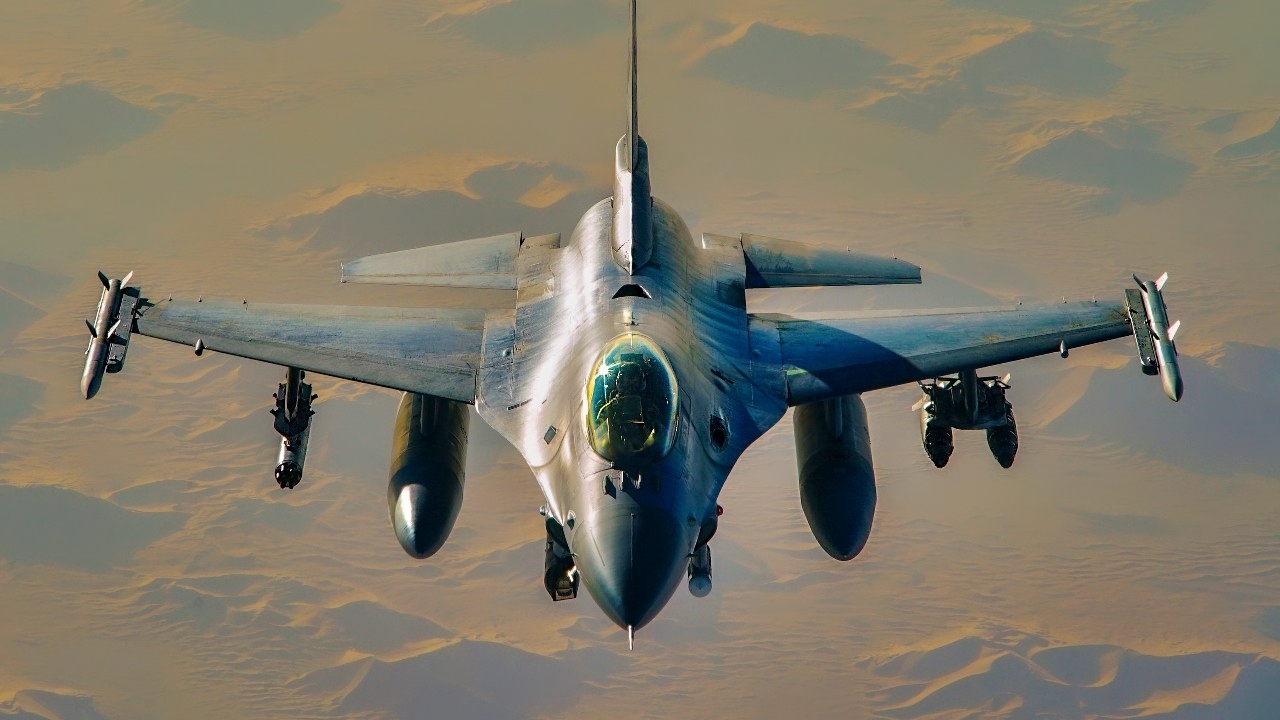
A U.S. Air Force F-16 Fighting Falcon based in the Central Command area of operations conducts armed aerial patrols in Somalia in support of Operation Octave Quartz, Jan. 9, 2020. The F-16s support to OOQ demonstrates the U.S. military’s reach and power projection across vast distances to hold adversaries such as al-Shabaab at risk with flexible, precise and lethal force that is capable of rapidly responding anywhere on the globe. The mission of OOQ is to reposition U.S. Department of Defense personnel from Somalia to other locations in East Africa. (U.S. Air Force photo by Staff Sgt. Taylor Harrison)
That conclusion cuts in two directions. Russia is unlikely to provoke direct NATO intervention. But if NATO forces enter Ukraine in a combat role — through a French expeditionary deployment, a Polish ground intervention, or any similar scenario — Russia’s inability to win conventionally would create exactly the kind of asymmetric pressure that could trigger nuclear escalation. Tactical nuclear use would be presented as a deterrent signal to halt further NATO involvement.
Ukrainian Long-Range Strikes Crossing The Revised Doctrine Threshold
The November 2024 doctrinal revision explicitly identified the “massive launch of aerospace attack weapons” crossing the Russian border as a nuclear-use trigger. The Russian Oreshnik intermediate-range ballistic missile launch against Dnipro on November 21, 2024 — two days after Putin signed the revised doctrine — was widely interpreted as Russia testing how the doctrinal language would translate into operational signaling.
Sustained Ukrainian strikes using Western-supplied ATACMS, Storm Shadow, or future long-range weapons deep into Russian territory could be invoked under the revised doctrine as the basis for a tactical nuclear response. So far, Western experts, including University of Maryland Professor Steve Fetter have assessed that the revised doctrine is more bluff than operational policy — but the doctrinal basis is now in place if Putin chooses to invoke it.
Strikes On Russian Strategic Nuclear Infrastructure
Ukrainian operations against Russian strategic nuclear sites, early warning radars, or nuclear command and control infrastructure would fall under the existential threat threshold by any credible reading of Russian doctrine.
Ukraine has so far avoided targeting these assets despite operational opportunities, which has helped maintain the implicit Russian-Ukrainian understanding that nuclear infrastructure is off-limits.
Any breakdown of that understanding — whether through Ukrainian decision, third-party action, or accidental damage — could provide Putin with the doctrinal justification for nuclear response that Western analysts have so far assessed as absent.
Putin’s Personal Political Survival Calculation
The eighth scenario is the one Western intelligence services have the hardest time assessing because it depends on Putin’s individual psychology rather than on observable institutional or military factors.
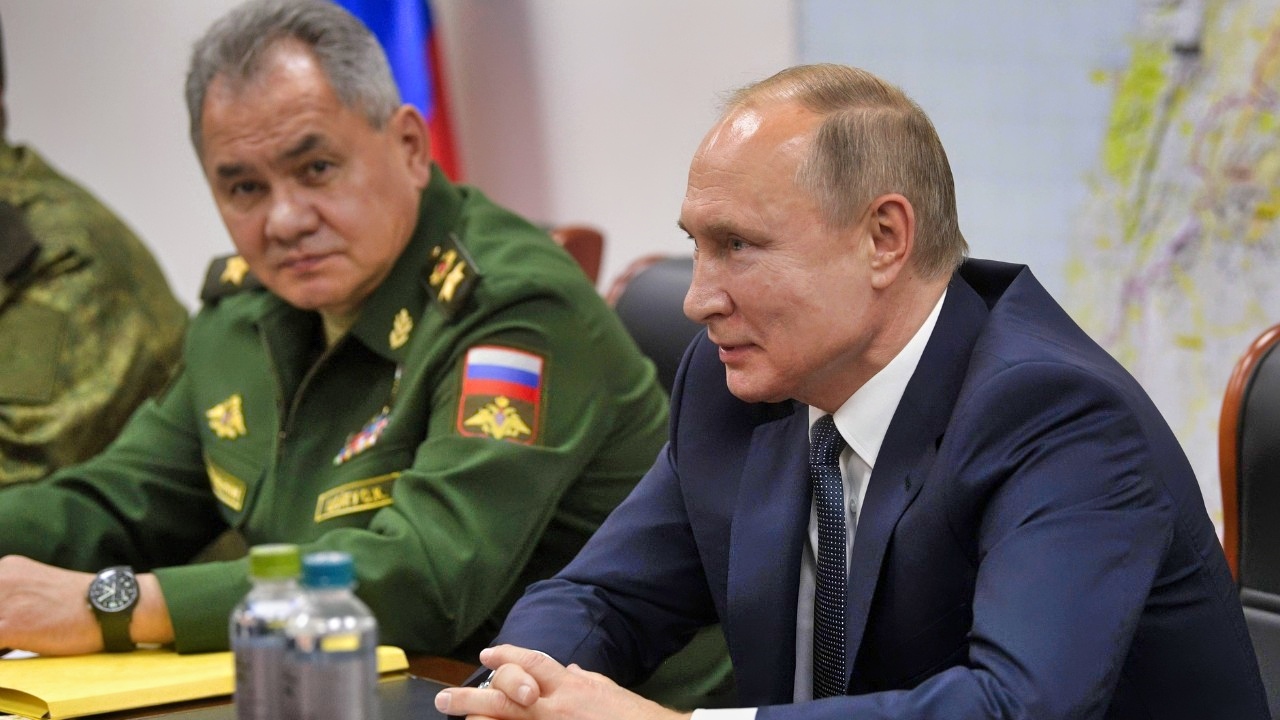
Vladimir Putin in Syria. Image Credit: Creative Commons.
If Putin personally concludes that conventional defeat in Ukraine guarantees his removal from power — whether through coup, internal Russian political collapse, or some combination — he may calculate that nuclear use, even at extreme international cost, offers a better chance of personal political survival than accepting defeat.
The Jamestown Foundation’s assessment of Russian nuclear posturing across 2024 and 2025 noted that Putin’s nuclear messaging has been driven substantially by personal political calculations rather than by Russian state institutional decision-making. A Putin facing personal political destruction operates under different incentives than a Putin operating from a position of relative political security.
Demonstration Strike Rather Than Battlefield Use
A demonstration strike falls between conventional escalation and full nuclear use. Putin could detonate a tactical nuclear weapon over an uninhabited area — the Black Sea, an unpopulated stretch of Ukrainian territory, or a high-altitude airburst — designed to send a coercive signal to the West and to Ukrainian leadership without inflicting mass casualties.

Tu-95 Infographic from Russia Government.
The strategic logic is that demonstration use crosses the nuclear threshold and breaks the post-1945 taboo on nuclear employment, while limiting the immediate humanitarian and political consequences. The risk for Putin is that demonstration use does not necessarily achieve the intended coercive effect and could instead trigger conventional NATO retaliation against Russian assets in occupied Ukrainian territory or against the Black Sea Fleet.
Health, Cognitive, Or Succession-Related Decisions
The tenth scenario is the one that defies analytical modeling because it depends on factors Western intelligence cannot reliably observe. Putin’s personal health has been the subject of sustained speculation by Western intelligence agencies over the past several years. Cognitive deterioration, succession-related instability within the Kremlin, or the rise of factional rivals advocating harder-line action against Ukraine could lead to a nuclear decision that a stable, healthy Russian leadership would not make.
The fact that the Russian nuclear decision rests with one man means it is structurally vulnerable to individual factors — health, mood, cognitive state, personal political calculation — in ways that institutional decision-making would not be. Western intelligence services have so far assessed that Russian institutional safeguards on nuclear use are robust enough to prevent unilateral decisions driven by these factors. That assessment is not a guarantee.
What Happens Next in the War in Ukraine?
The cumulative analytical picture across these ten scenarios is that Russian nuclear use remains a low-probability but non-zero outcome. Western nuclear policy experts have consistently assessed that the probability of any specific nuclear-use scenario occurring is small. What concerns the most experienced Russia analysts is that the cumulative probability across all ten scenarios is meaningfully higher than the probability of any single trigger, and that the trigger conditions are not independent of one another. A battlefield collapse that produced a regime threat could simultaneously activate scenarios 1, 2, 3, and 8 — compounding the pressure on Putin to escalate.
The November 2024 doctrinal revision lowered the formal threshold for Russian nuclear use. The continued Russian rhetorical investment in nuclear signaling across 2025 and into 2026 indicates that Putin still believes nuclear threats are useful coercive instruments even when they do not produce immediate Western concessions. The Russian nuclear posture today is structured to enable tactical nuclear use under a substantially wider range of conditions than at any point since the end of the Cold War.
Putin has so far chosen not to cross the nuclear threshold despite repeated opportunities to do so. The decision to cross or not cross is being made by one man, under conditions that are deteriorating from the Russian conventional military perspective and may continue to deteriorate over the next eighteen months. The reasons listed above are not predictions. They are the conditions under which the decision could be made.
The Western response to the possibility of Russian nuclear use has historically been deterrent — the implicit warning that nuclear employment would produce massive conventional NATO retaliation against Russian assets in occupied Ukrainian territory and against Russian forces operating outside Russian sovereign territory. That deterrent has held so far. Whether it continues to hold for the remainder of the war depends on factors that no Western analyst can fully observe or model.
The probability of Russian tactical nuclear use in Ukraine remains low. It is not, however, zero. And it has not been zero for four years.
About the Author: Harry J. Kazianis
Harry J. Kazianis (@Grecianformula) was the former Senior Director of National Security Affairs at the Center for the National Interest (CFTNI), a foreign policy think tank founded by Richard Nixon based in Washington, DC. Harry has over a decade of experience in think tanks and national security publishing. His ideas have been published in the NY Times, The Washington Post, The Wall Street Journal, CNN, and many other outlets worldwide. He has held positions at CSIS, the Heritage Foundation, the University of Nottingham, and several other institutions related to national security research and studies. He is the former Executive Editor of the National Interest and the Diplomat. He holds a Master’s degree focusing on international affairs from Harvard University.


