

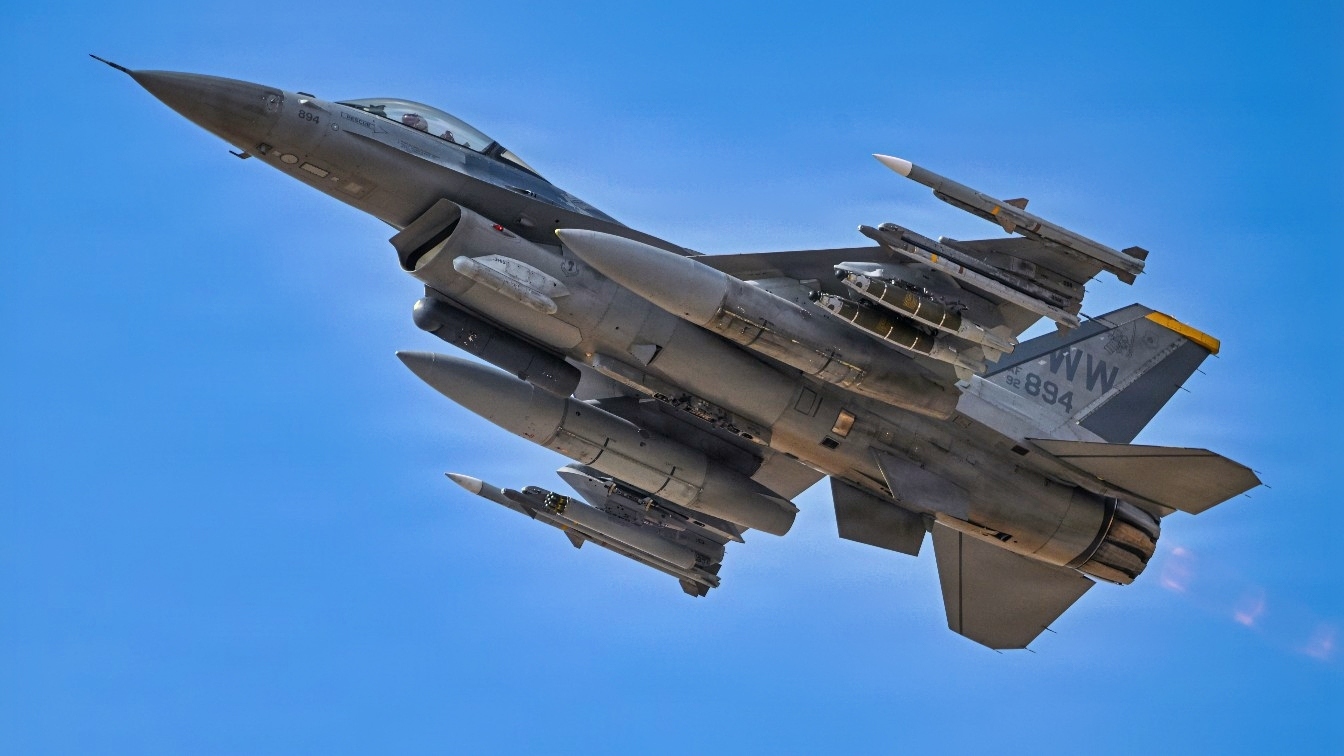
Summary and Key Points: Iran’s Revolutionary Guard Corps struck a U.S. base in Kuwait on May 28, after American forces hit Iranian military infrastructure in Bandar Abbas. The Iran War ‘ceasefire’ is collapsing into a sustained tit-for-tat exchange. Negotiators remain deadlocked over Iran’s nuclear program and control of the Strait of Hormuz. President Trump campaigned on avoiding ‘forever-war traps’ in the Middle East, but the conflict shows no sign of ending — and could be entering its next phase.
The Iran War Might Not Be Over
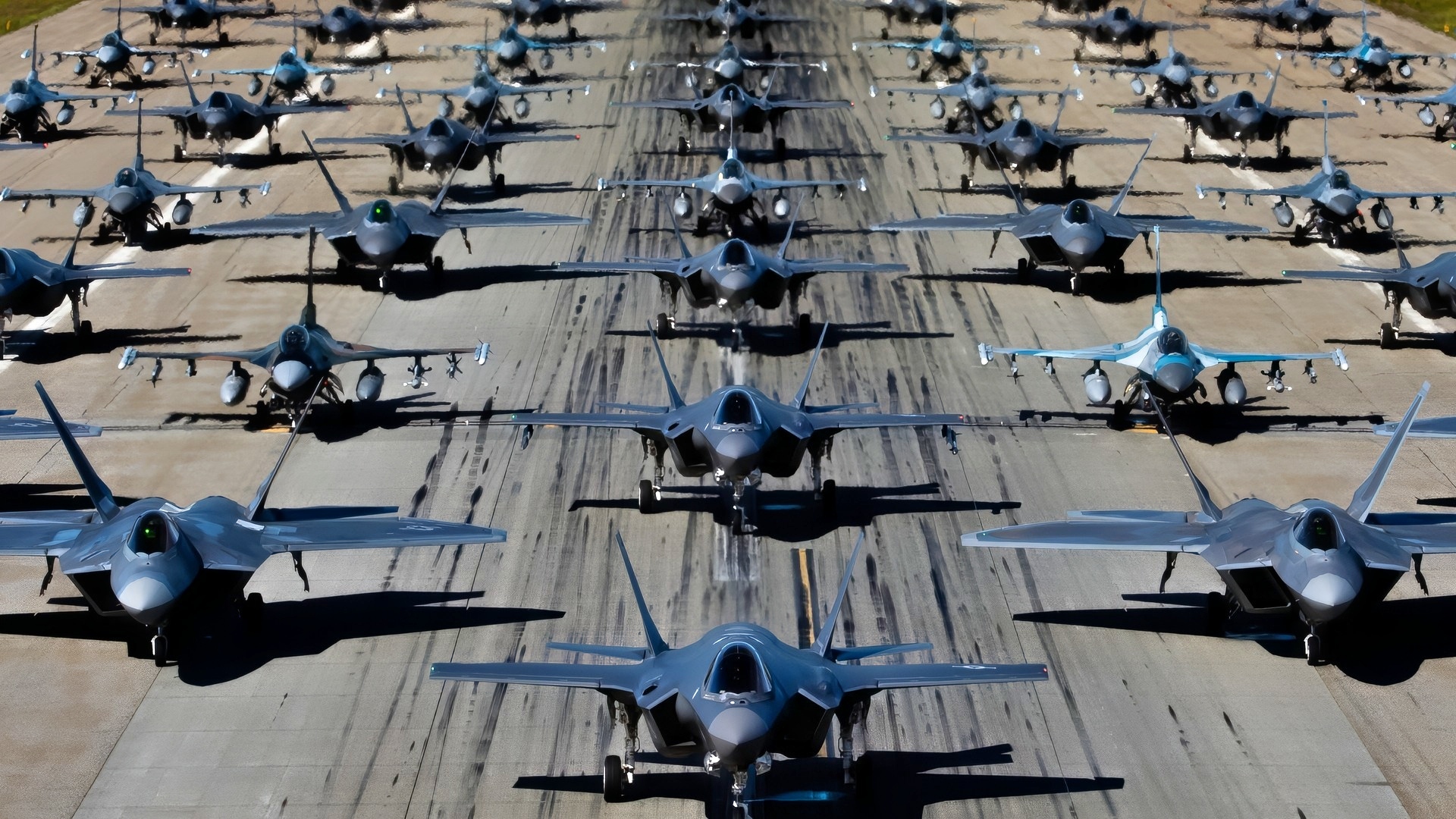
The 354th Fighter Wing conducts a 75-fighter jet formation at Eielson Air Force Base, Alaska, Aug. 12, 2022, in honor of the U.S. Air Force’s 75th Anniversary. This capabilities demonstration included F-35A Lightning II, F-16 Fighting Falcon and F-22 Raptor aircraft from across Pacific Air Forces. (U.S. Air Force photo by Senior Airman Gary Hilton)
“Someday this war’s going to end,” said Robert Duvall to Martin Sheen in the 1979 movie Apocalypse Now. The same could be said for the conflict in Iran that was instigated by President Donald Trump as a war of choice that just can’t seem to come to a decisive conclusion. Are we entering into another open-ended quagmire in the Middle East? Trump campaigned on avoiding these “forever war traps,” but it seems that history is repeating itself in the region
The Kinetic Missile Fight Won’t Go Away
The latest developments for those who wish for a just and lasting peace against Iran are frustrating. The United States and Iran are still participating in what I call the “Kinetic Missile Fight.” This is the next phase of modern warfare: large-scale combat driven by long-range missiles, drones, and cruise missiles, as well as defensive interceptors, rather than close-range aerial dogfights or large-scale ground offensives.
The Kinetic Missile Fight is still rearing its ugly head in the Middle East. Iran’s Islamic Revolutionary Guard Corps (IRGC) just won’t quit. The IRGC said on May 28 that it attacked an American air base in the Middle East to answer U.S. “defensive strikes” against Iran last night and earlier this week.
The IRGC missile strike happened against a facility in Kuwait. The Kuwaitis said they intercepted at least one Iranian missile and a one-way attack drone. The IRGC believes that it should defend itself after the United States fired on Iranian military infrastructure in the important Bandar Abbas port city in southern Iran.
How Can This State of Affairs Be Called a Cease-Fire?
This is the second time that the Americans have attacked Iran this week. What does this mean for the ceasefire? It appears that the fragile truce has ended. These tit-for-tat strikes are in no way a means of conducting diplomacy. The Iranians and Americans cannot seem to wrap their strategic heads around a peace plan.
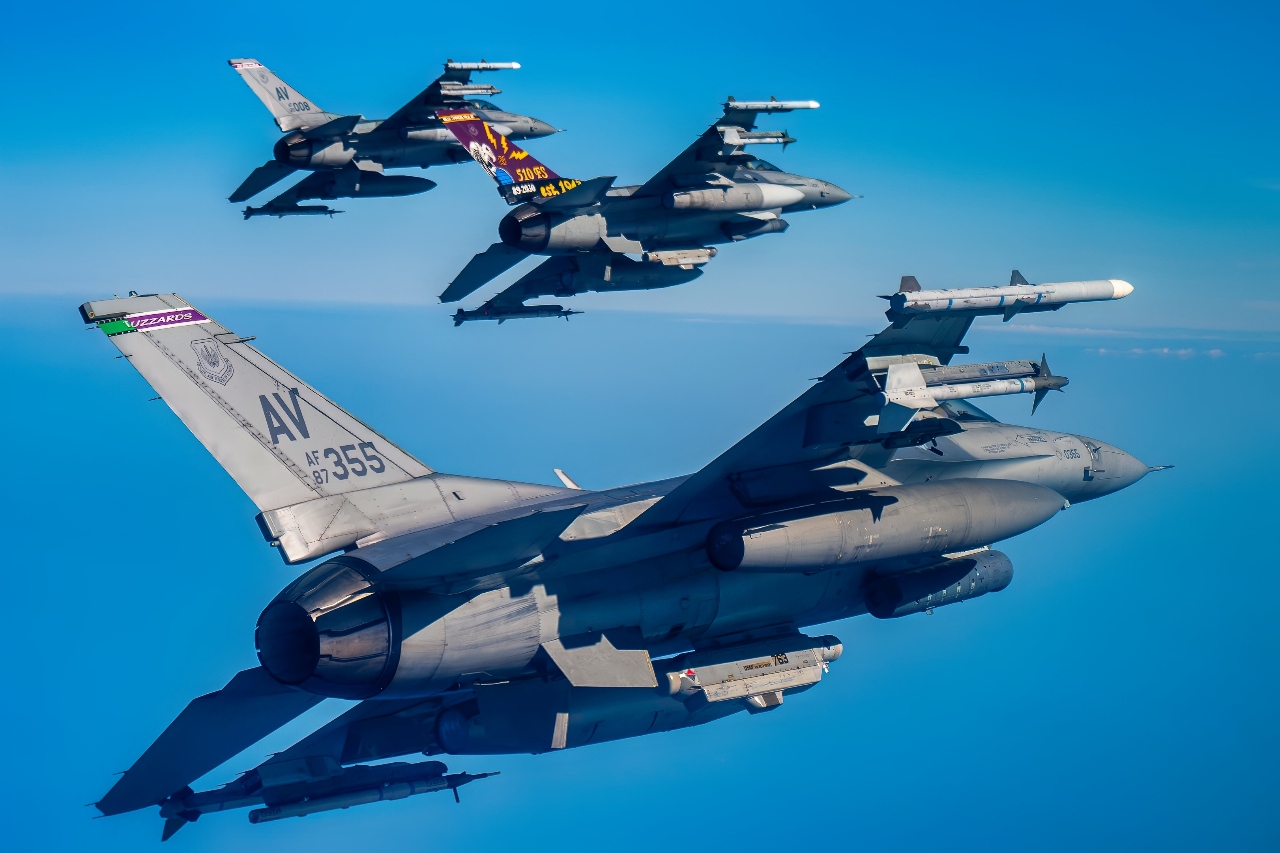
Three U.S. Air Force F-16 Fighting Falcons assigned to the 31st Fighter Wing at Aviano Air Base fly in formation during Exercise Combined Strike 25 along the coast of Italy, August 18, 2025. Integration flying training is key to enhancing interoperability with NATO partners and increasing our readiness capabilities. (U.S. Air Force photo by Senior Airman Zachary Jakel)
Both Sides Are Still Far Apart
It seems that both countries are opposed to each other’s strategic requirements. Iran wants a nuclear device and a program that enriches uranium to weapon-grade status. The United States wants a friendly coalition to make sure the enriched material is destroyed or removed. Iran counters and says it would like to send the uranium to Russia or China. The Americans say this is unacceptable.
Another stumbling block that has flummoxed negotiators is the future of the Strait of Hormuz. Iran wants to control the strategic waterway. If they cannot attain this objective, the Iranians prefer that the Americans remove warships from the region. This is unacceptable to the United States.
One Battle After Another
Every day, we hear that a peace plan has been agreed to – almost. Then the attacks happen. Biding by a cease fire means just that – stop fighting. But these two countries cannot agree on the basics. There can be no more strikes between the two adversaries, or we’ll never get anywhere.
U.S. Central Command described its actions as “measured, purely defensive, and intended to maintain the ceasefire,” according to the BBC.
What Does This Rhetoric Really Mean?
This statement doesn’t make sense. Shooting weapons during a ceasefire means that the ceasefire no longer holds. There should be no Kinetic Missile Fight actions if you want peace in the first place.
New Negotiators Needed
Perhaps the United States needs a new team of negotiators. Trump’s son-in-law, Jared Kushner, and Special Envoy Steve Witkoff are experienced at Middle East talks and have won important negotiations in the past, but it may be time to change horses in the middle of the stream.
The SECDEF Needs to Lead By Example
Secretary of Defense Pete Hegseth needs to cool it, too. His hawkish commentary and irrational need for attention and media coverage need to stop. Trump could try being silent for a change, too. Central Command must communicate peaceful messages.
The IRGC Can Still Fight On
The IRGC is by no means defeated. That’s another problem. The United States may be over-confident during this peace process and could be overplaying its hand.
We Are Seeing Armed Diplomacy, But Is It Effective?
This all comes from the top. Trump should respect the ceasefire and stop the attacks while negotiations are held. I’m all for armed diplomacy, which is operating from a position of military strength, but this is getting ridiculous. I can’t see how you can call what is going on a ceasefire. The first step is to quit fighting so the talks can grow some green shoots, or we are heading into a forever-war status.
Mounting Frustrations
This war has been frustrating to those of us who wanted to see a Trump administration that would avoid foreign entanglements that cost blood and treasure. He promised no more foolish wars, and this one doesn’t have to be this way. Let’s hope cooler heads can prevail and that there will be some type of lasting peace in the region.

Littoral Combat Ship USS Cooperstown NSJ Photo Taken On October 14, 2025.
The current status quo is unacceptable, or the Kinetic Missile Fight will never end. Diplomacy must win the day, and we are seeing the peace process die every time there is a new missile or drone strike.
It’s time for what the Republicans always preach – peace through strength.
About the Author: Brent M. Eastwood, PhD
Author of now over 3,500 articles on defense issues, Brent M. Eastwood, PhD, is the author of Don’t Turn Your Back On the World: A Conservative Foreign Policy and Humans, Machines, and Data: Future Trends in Warfare, plus two other books. Brent was the founder and CEO of a tech firm that predicted world events using artificial intelligence. He served as a legislative fellow for US Senator Tim Scott and advised the senator on defense and foreign policy issues. He has taught at American University, George Washington University, and George Mason University. Brent is a former US Army Infantry officer. He can be followed on X @BMEastwood.


John
May 28, 2026 at 5:32 pm
Okay, then. Exactly what should be the appropriate number of explosive mines we should allow Iran to place? Are 50 mines okay and we keep negotiations going? Or once they place 75 mines should we break off talks with these terrorists?!??!