
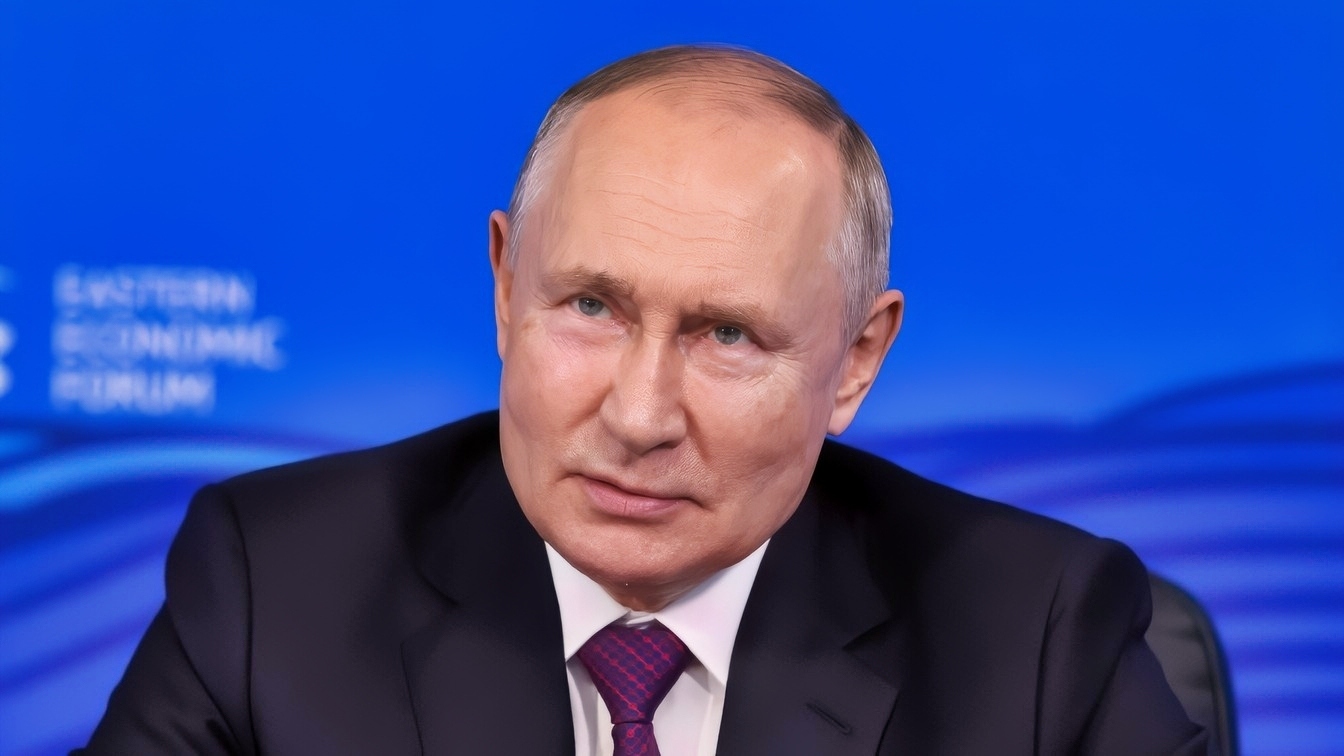
Ukraine’s campaign of “long-range sanctions” is working, with economic and political pressure now mounting for Russian President Vladimir Putin.
According to polling conducted by organizations aligned with the Russian state, a combination of fuel shortages and rising prices is now hurting the president’s approval ratings.
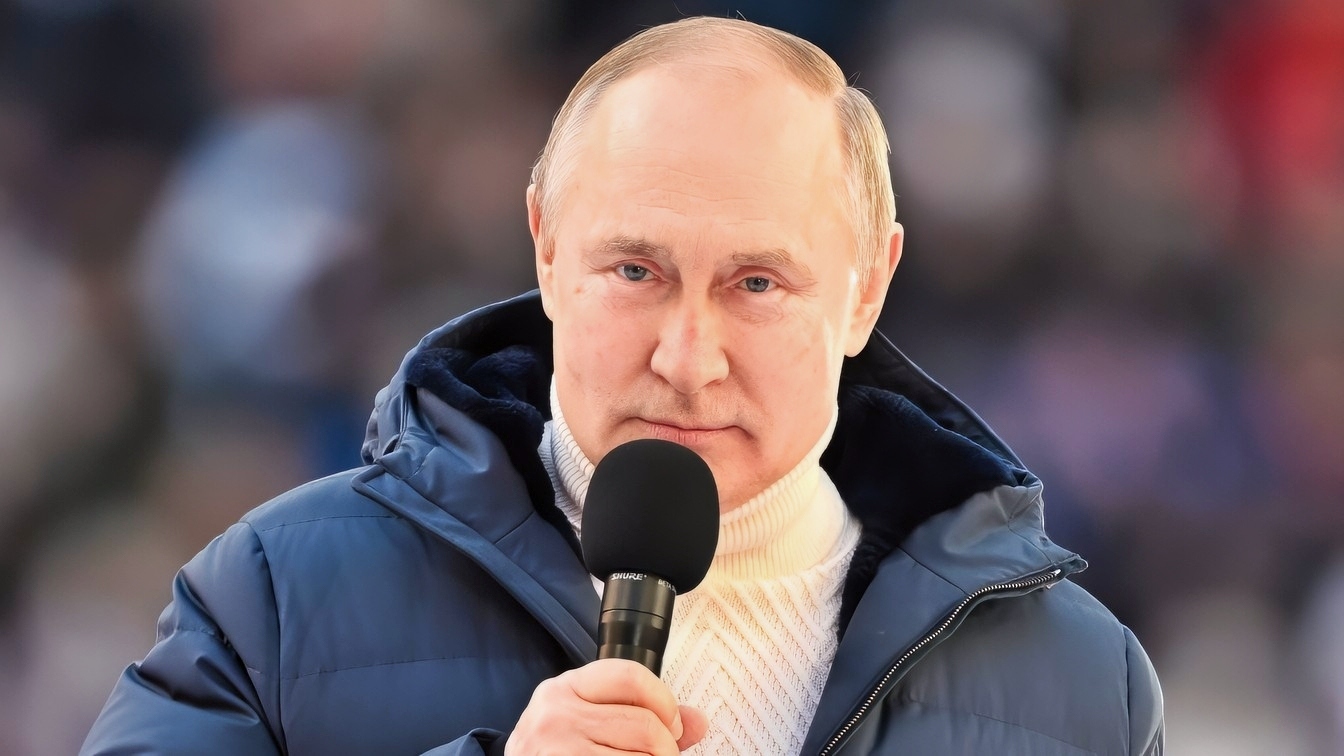
Putin in March 2022. Creative Commons Image.

Putin Meeting with Indian Leaders Creative Commons Photo 2021
The Public Opinion Foundation, commonly known by its Russian initials FOM, recorded a five-point decline in assessments of Putin’s performance in a single week in July.
Some 66% of respondents said he was performing well, down from 71%, while the share assessing his performance negatively rose to 16%.
Russian Public Opinion Research Center (VTsIOM) has also reported a similar trend, with the president’s approval rating standing at 65.13% on July 19.
The figures still suggest that the president has a strong majority in terms of support. These, after all, are numbers that many Western leaders could only dream of.
But they’re also a sign that Ukraine’s sustained long-range strike campaign is eroding support for the Russian president.
It also suggests that, should the strikes continue and Russia’s economy continue to decline, Putin could soon face immense political and domestic pressure to end the war.
What the State Polls Show
Soon after Russian forces invaded Ukraine in February 2022, President Vladimir Putin’s approval ratings increased.
The Kremlin positioned the war as one that protected the country against Western expansion while liberating Russians in Ukraine from the rule of so-called “Nazis” in Kyiv.
VTsIOM measured Putin’s approval at 78.9% in April 2022, compared with 64.3% shortly before the invasion.
That rally remained largely intact for much of the war, supported by state television, repression of political opposition, and heavy government spending.
But the decline has become particularly visible this year, with VTsIOM reporting in April that Putin’s approval had fallen for seven consecutive weeks, reaching 65.6% from 73.3% in March. Trust in the president also fell from above 77% to around 71%.
Are the Figures Really Accurate?
Again, these are numbers that most Western leaders could only ever dream of – but it’s important to note that polling in Russia is difficult to accurately interpret.
Public criticism of the war in Ukraine, for instance, can lead to prosecution.
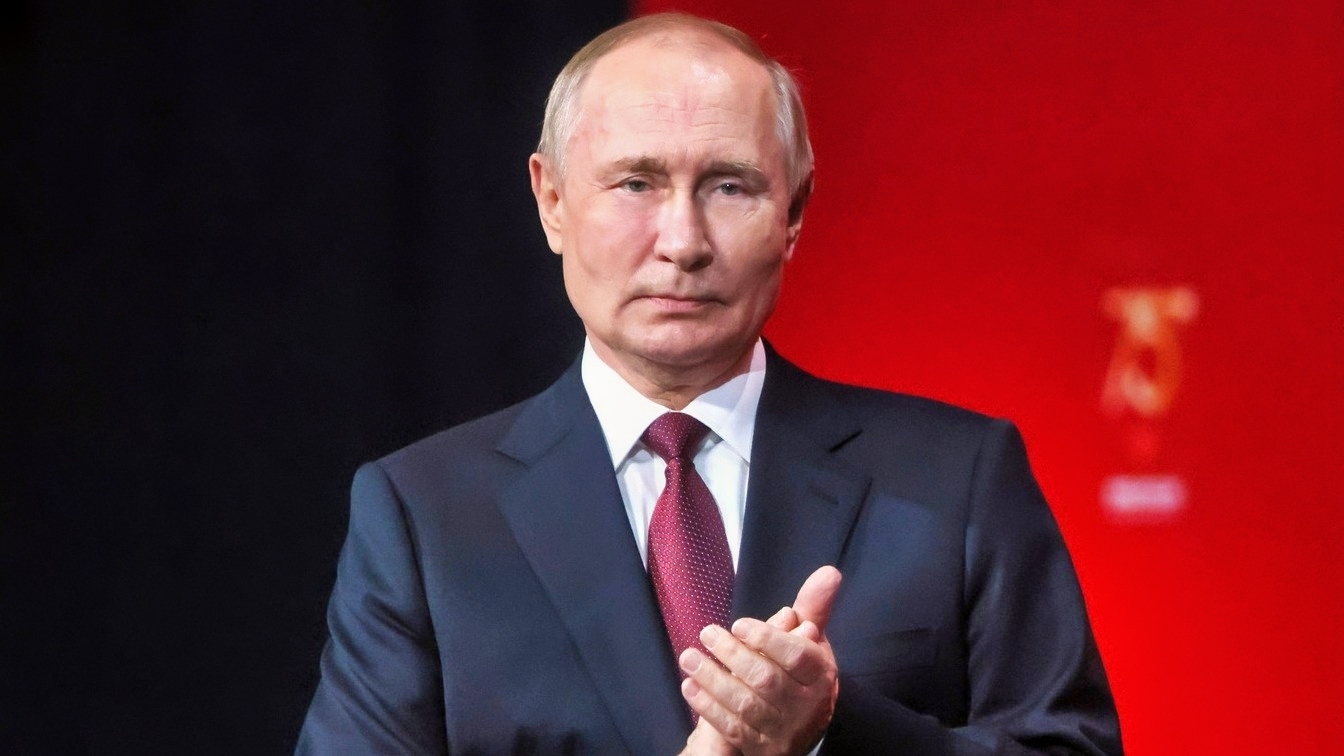
Putin at a Conference 2026. Kremlin Handout Photo.
Independent media has already been blocked or forced to move abroad, and respondents to polls may be reluctant to express views that are hostile to the Kremlin for fear of being arrested.
That partly explains why the numbers are so high.
Even so, the trend within the state pollsters’ own data is notable.
The figures do not establish the true level of support for Putin, but they do suggest that Russians are becoming more confident in expressing their discontent to telephone pollsters. And that’s a bad sign for Putin.
Ukraine’s Campaign Is Working
The polling figures suggest that Ukraine’s campaign to bring the war home to Russia is finally working, with long-range strikes now causing disruption to daily life in Russia with little to show for it.
Ukraine’s long-range strike campaign began to take shape in 2024, when domestically produced drones started to reach oil refineries and fuel depots inside Russia.
The attacks were infrequent at the time, but the campaign was formalized and significantly expanded on June 25, 2026, when Ukrainian President Volodymyr Zelenskyy said he had authorized the Security Service of Ukraine to conduct a 40-day campaign against targets inside Russia.
Zelenskyy described the campaign as an effort to pressure Putin to end the war.
Over the past month, the campaign has progressed from striking refineries and oil infrastructure, as well as conventional military targets, to targeting infrastructure that keeps the country’s economy moving.
More than half a dozen Wildberries logistics hubs and warehouses have now been hit, meaning Russia’s largest online retailer is struggling to properly cater for the tens of thousands of merchants that use it.
Seven affected facilities accounted for around 10% of the company’s storage capacity, disrupting nationwide deliveries and affecting the Russian economy in new ways.
The problem has become so severe that Wildberries founder Tatyana Kim said the losses have extended to businesses in 10 countries, forcing executives to consider moving storage facilities outside Russia.
Moscow Knows It’s In Trouble
Moscow appears to recognize the seriousness of the problems it faces. Kremlin spokesman Dmitry Peskov confirmed this week that the government is discussing possible financial support for Wildberries and the thousands of businesses affected by the strikes, while reports also suggest that state-controlled VTB Bank is expected to play a major role in any eventual rescue package, potentially through loans or other forms of financial assistance.
Whether that support ultimately materializes or not, the political challenge facing Putin now is becoming difficult to ignore.
Ukraine has shown that it can repeatedly strike targets deep inside Russia, including some of the country’s most critical energy infrastructure.
Kyiv is damaging key drivers of the Russian economy and affecting everyday life, and the steady decline in Putin’s approval rating could accelerate in the weeks and months ahead.
It means the pressure on the Kremlin will only increase unless something drastic changes the battlefield dynamics entirely.
About the Author: Jack Buckby
Jack Buckby is a British researcher and analyst specializing in defense and national security, based in New York. His work focuses on military capability, procurement, and strategic competition, producing and editing analysis for policy and defense audiences. He brings extensive editorial experience, with a career output spanning over 1,000 articles at 19FortyFive and National Security Journal, and has previously authored books and papers on extremism and deradicalization.


