


Trump’s Ceasefire Mirage Is Collapsing: and the War Is About to Return: The purported ceasefire between the United States and the Islamic Republic of Iran, which was always shaky, is breaking down in real time.
President Donald J. Trump has posted on his Truth Social an utterly delusional (typically long-winded) post that concludes with this bit of Pollyanna-like flair: “Just sit back and relax, it will all work out well in the end – It always does!”
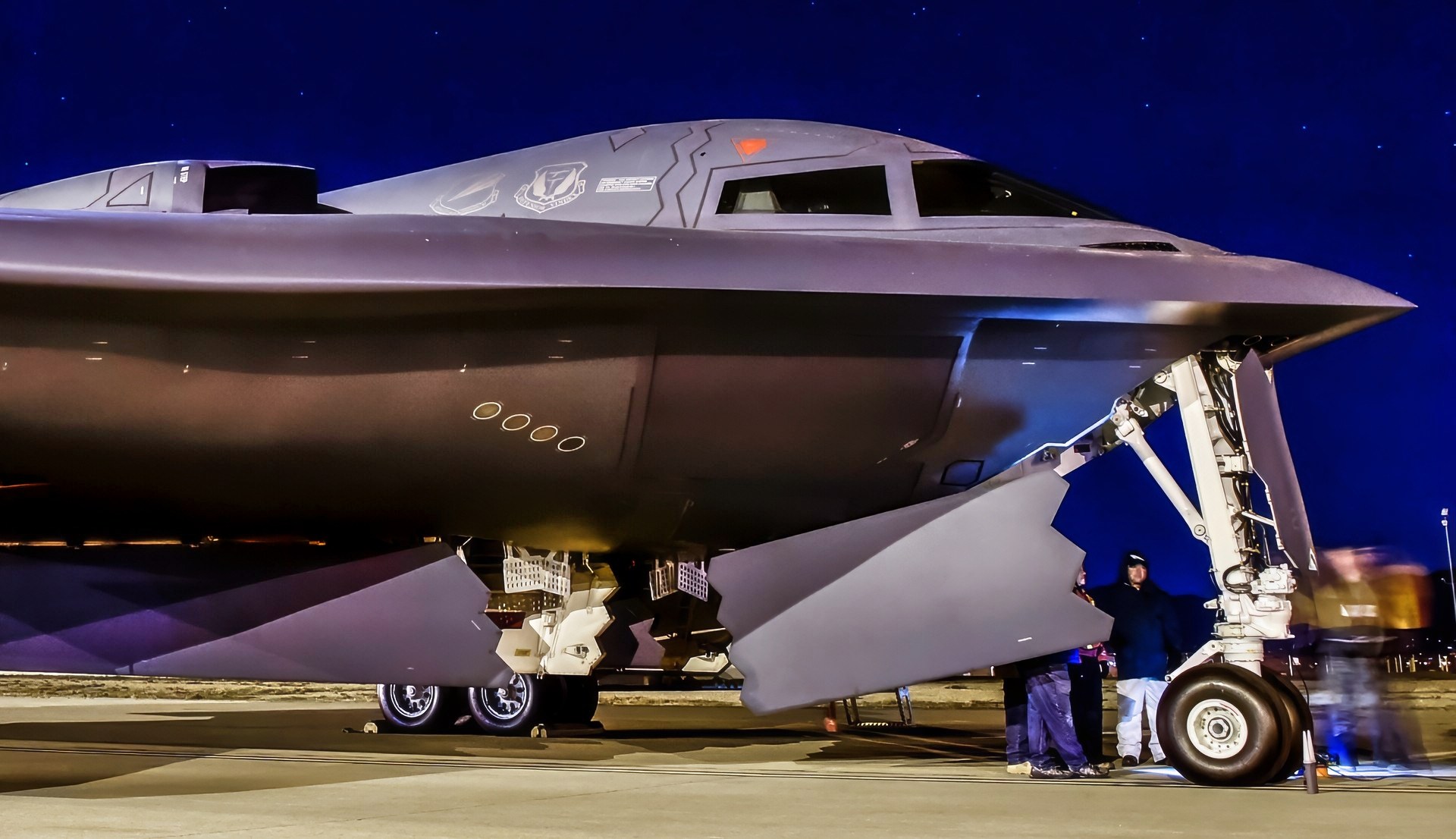
B-2 Spirit Stealth Bomber on Runway. Image Credit: Creative Commons.
The night before the caustic breakdown in the quasi-truce, Israel had struck deep inside Lebanon, extending their already stretched lines beyond the Litani River.
Celebrations among the Israeli Defense Forces (IDF) erupted as the Israelis captured an ancient fortress deep within Lebanon that dates back to the Crusades.
The capture of the ancient fortress was purely symbolic, meant to convey a message from the Israelis to the world: we’re not stepping back.
That move by the Israelis, of course, was the spark that lit the tenuous US-Iran ceasefire aflame.
You see, although the negotiations were exclusively between the US and Iran, the reality was far more complex.
Key outsiders were influencing this conflict—notably, Israel.

F-35I Adir. Image Credit: Creative Commons.
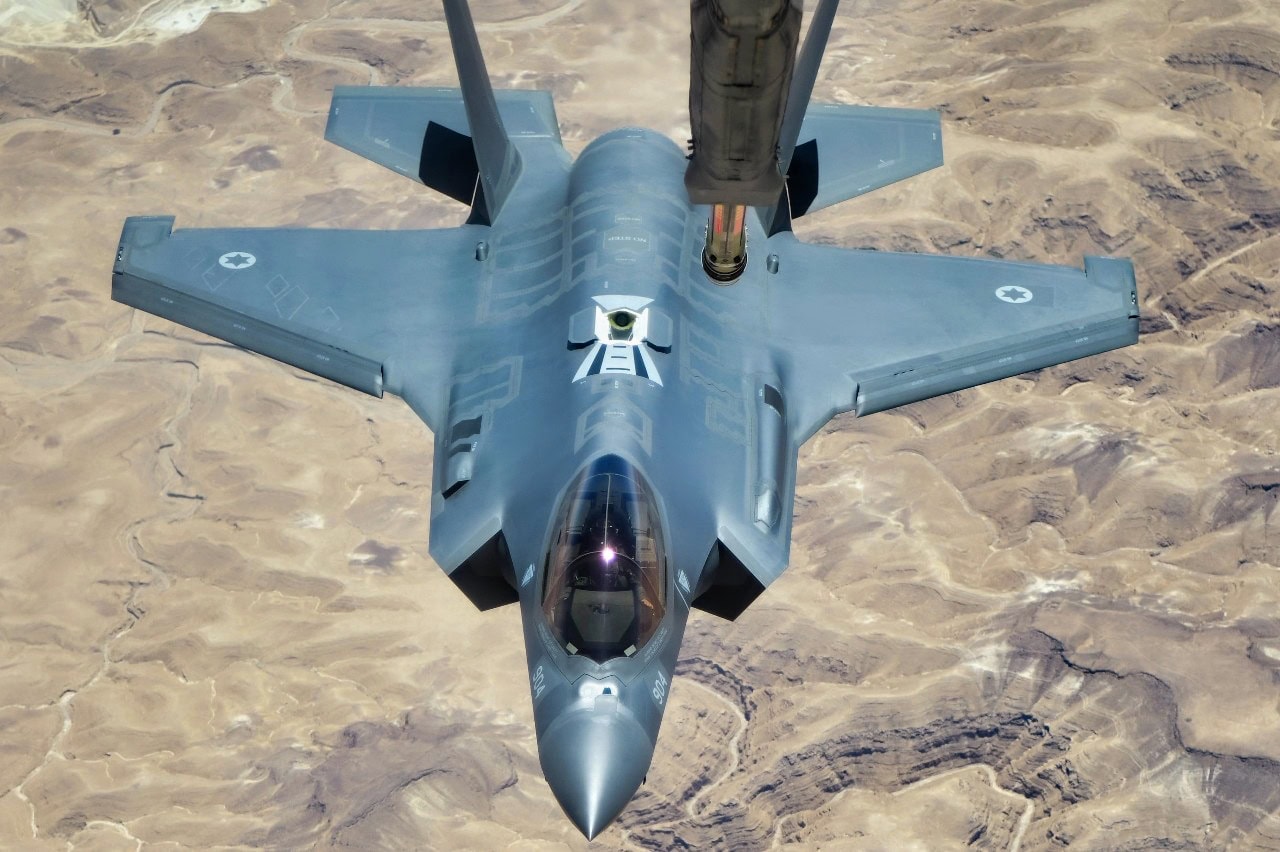
F-35I Adir. Image Credit: Creative Commons.
And since the beginning of ceasefire negotiations between Washington and Tehran, Tel Aviv has made clear its refusal to abide by any ceasefire that would constrain its strategic autonomy.
For Iran, Lebanon is an inextricable linkage that cannot so easily be severed.
Lebanon, Hezbollah, and the Unspoken Obstacle
The Shiite Lebanese terrorist organization, Hezbollah, is probably the Islamic Republic of Iran’s most important partner in the region.
Israel is attacking Southern Lebanon to curb the aggressive appetites of Hezbollah (even though there was no real evidence that Hezbollah was planning to open a front against Israel).
From the outset of negotiations with the United States, Tehran made it clear that negotiations could not succeed unless the ceasefire between the US and Iran extended to Lebanon.
Trump agreed in principle to this.
But his ally, Israeli Prime Minister Benjamin Netanyahu, did not.

Israel’s F-35I Adir Fighter. Image credit: Creative Commons
Rumors proliferated since Trump began negotiating with Iran’s leaders that Netanyahu was secretly fuming over the ceasefire.
He allegedly feared how any such ceasefire would both weaken his own embattled position atop the Israeli system while also fearing that it might somehow empower Hezbollah (which was already staying out of the fray with Israel).
Even though the Israeli government was never on board with the ceasefire negotiations, Trump persisted. “It will all work out in the end,” was his mantra. And it might have, if only the negotiations were between him and the Iranian leadership.
But Israel, as always, became the thorny complication. Iran wanted the US, as the primary backer of Israel, to take a more active role in curbing Netanyahu’s aggressive appetites in Lebanon.
But the US president, despite being the head of the purportedly sole remaining superpower, could not control his junior partner in Israel.
Instead, Netanyahu has exercised a bizarre amount of influence over Trump. In fact, he continuously disrespects the forty-seventh president by obviously undermining anything that the American leader does to try to end this war now.
The Strait of Hormuz Incident(s)
Shortly after Trump posted his daily motivational “Truth,” a Panamanian-flagged cargo ship in the Strait of Hormuz caught the attention of social media sleuths, as it had a gaping hole in its side with smoke billowing out. The conclusion was that the Iranians had struck the ship the moment the ceasefire broke down. Other, more conspiracy-minded folks online implied it was a “false flag.”
It was likely Iran, because they were upset by the Israeli actions in Lebanon. In recent days, the Iranians had already lobbed a missile at a US military facility in Kuwait, partly because the Americans had also defied the ceasefire and attacked Iranian targets.
At the end of the day, who launched the attack really doesn’t matter. What’s more important is the why. It was because of the ceasefire. If the Iranians struck that ship (likely), then it was because the ceasefire had so clearly ended the moment Israel launched its new round of offensives in Lebanon beyond the Litani River. If the conspiracy theorists are right, then Israel did it to scuttle the ceasefire forever.
In any event, there was never really any chance the ceasefire would last beyond the tentative 60 days set to begin upon signing a Memorandum of Understanding (MoU).
Now, it’s clear there won’t be any ceasefire.
And a permanent peace deal, which was always unlikely, is definitely off the table now.
One can anticipate the probability, short of a Trumpian miracle (always a possibility), that the situation deteriorates, the two sides begin climbing that escalation ladder once again, and the war resumes.
About the Author: Brandon J. Weichert
Brandon J. Weichert is the Senior National Security Editor at 19FortyFive.com. He also manages The Weichert Brief on Substack. Weichert hosts “National Security Talk” on Rumble. He is the author of four bestselling national security books, the most recent of which is A Disaster of Our Own Making: How the West Lost Ukraine (Encounter Books). Follow him via Twitter/X @WeTheBrandon.


dozy don
June 1, 2026 at 5:54 pm
US president Donald trump has no intention to give peace or even respite to Iran, as he’s operating on borrowed time.
Trump knows after November, his goose is cooked.
Thus, now is the time to slow-throttle iran, and aid netanyahu who’s right now, slaying his neighbors right and left.
The rest of the world will only be able to watch helplessly, as countries like Iran and Cuba, go under the water by trump’s hand.
But this trouble by trump is a great opportunity for Russia, to finally carve out victory in Europe.
Victory over the Nazis, and the euro NATOists, and their minions. Including Vladimir Putin.