

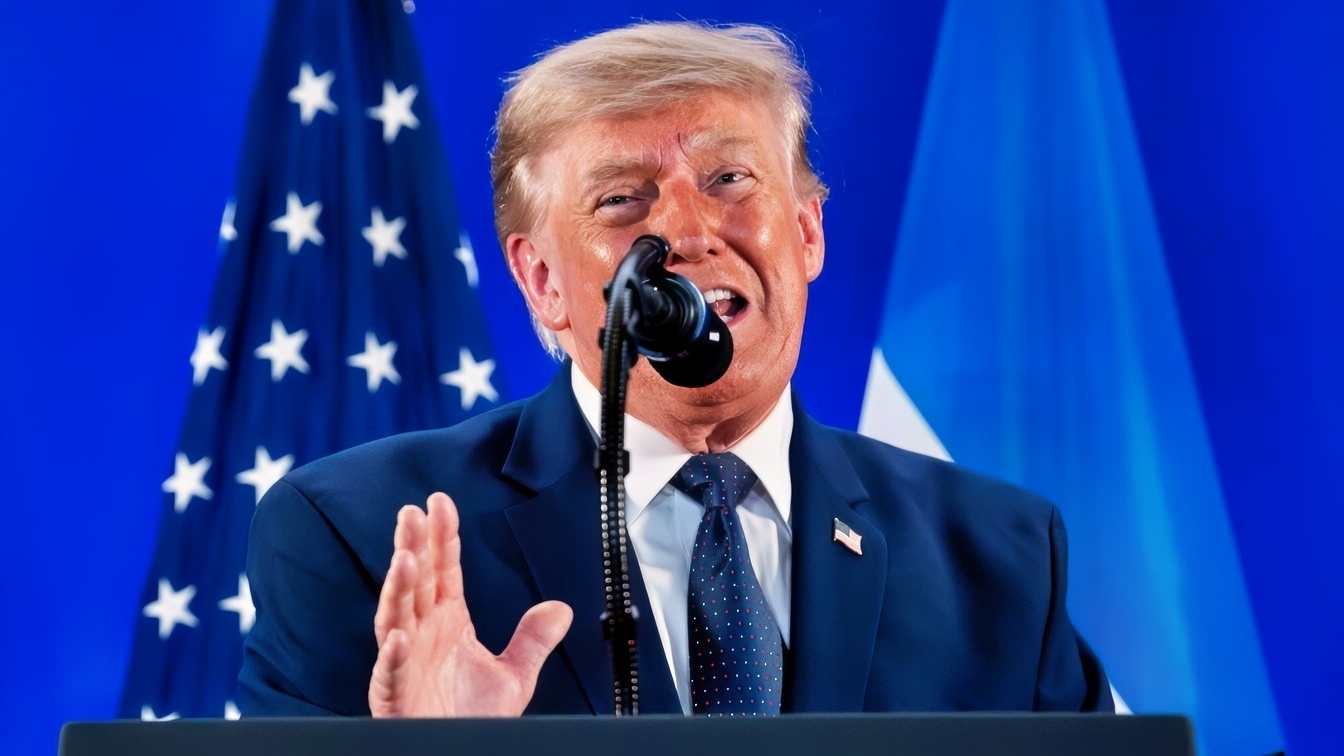
While many are breathing a sigh of relief over President Donald J. Trump’s apparent de-escalation with the Islamic Republic of Iran, there remain some fears that the war is not over.
In fact, one reason people are so worried is that this de-escalation is simply another pause (like the Memorandum of Understanding) rather than a real de-escalation that leads to an end of the war.
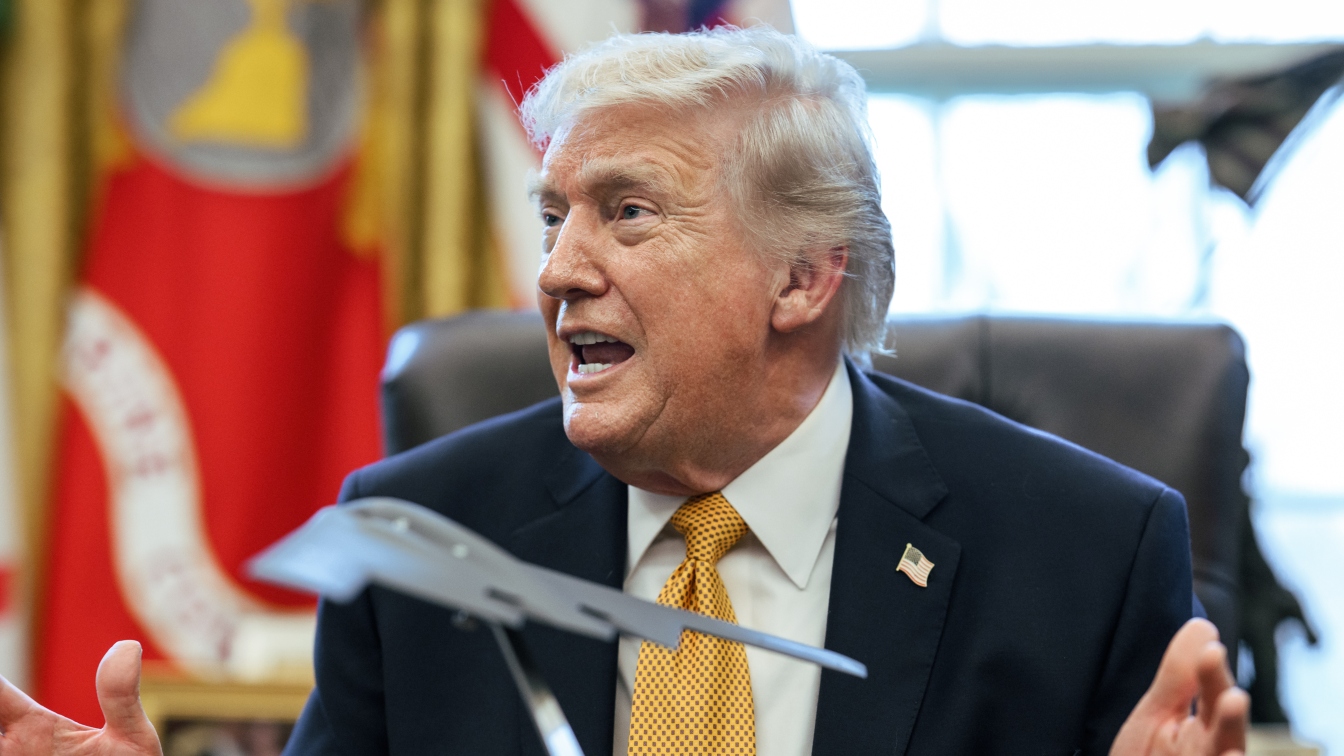
President Donald J. Trump signs an Executive Order creating an anti-fraud task force to be led by Vice President JD Vance, Monday, March 16, 2026, in the Oval Office. (Official White House Photo by Molly Riley)
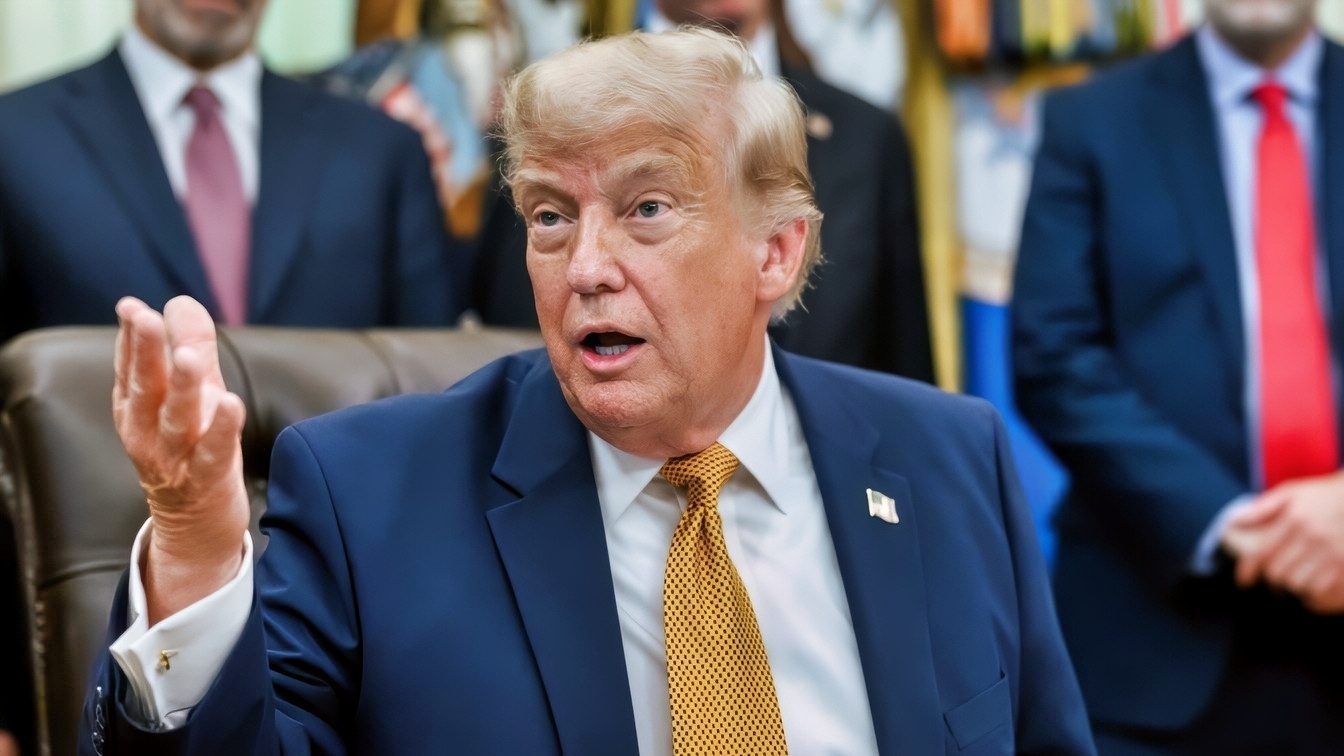
President Donald J. Trump, joined by Secretary of War Pete Hegseth, Physicist John M. Martinis, Science and Technology Policy Director Michael Kratsios, Secretary of Commerce Howard Lutnick, Secretary of Energy Chris Wright, OMB Director Russ Vought, and others, delivers remarks after signing an Executive Order on quantum computing in the Oval Office, Monday, June 22, 2026. (Official White House Photo by Joyce N. Boghosian)
One reason people fear this is that, on the face of it, President Trump seems to have lost the war.
The Background
Consider this: in January of this year, as the Iranian people were protesting deteriorating economic conditions in their country, threatening the Islamic Republic’s survival, Trump posted on his Truth Social that “Help is on the way!” The implication was that US military operations targeting the Islamic Republic in a bid to help the protesters were coming.
It did not come in time. The regime managed to disrupt the protests and either kill or imprison the leaders of the movement, thereby ending its threat to the regime’s survival.
Then President Trump initiated the war on February 28 on the apparently nonexistent intelligence that, if he did not start the war when he did, “Israel would have been blown off the face of the Earth.” That specious assertion implied that Iran was on the brink of nuclear weapons breakout.
Of course, that doesn’t make sense, considering that the Trump administration had launched airstrikes on suspected Iranian nuclear weapons development sites in the summer of 2025 that resulted, according to the Trump administration, in the obliteration (their word) of Iran’s nuclear weapons threat.
Come February 28, after Trump failed to take his promised military action against the regime in Iran when the protesters were raging in the streets, Trump then concocted the claim he went to war to end the allegedly imminent Iranian nuclear weapons threat.
As the war dragged on, Trump then moved the goalposts again. He began claiming success in the war because US forces had sunk the fearsome Iranian Navy and destroyed the mighty Iranian Air Force (with their third-generation F-4 Phantom IIs and F-14 Tomcats).
Then, Trump argued that the war was necessary because the US needed to obliterate all the Iranian ballistic missile and drone threats.
By May, the obsession within Washington became reopening the Strait of Hormuz (SoH), a critical strategic waterway that Iran had successfully blockaded.
Because of that blockade, the world was cut off from 20 percent of all its crude oil flows, another 18 percent of its natural gas, one-third of its agricultural inputs, and many of its important industrial inputs. And the United States Navy demonstrated an unwillingness — read, inability — to reopen the SoH.
The Iranians survived every iteration of the US and Israeli air war against them.
They survived previous attempts to overthrow their regime by popular revolt. Recognizing that the Americans lacked an adequate bite to break the Islamic Republic’s will, Tehran escalated in ways that it knew would maximize the harm to the US strategic position.
The regime not only successfully took control over the SoH, but it then conducted sustained attacks on the Gulf Arab states’ energy production infrastructure.
The Americans, despite their air war against Iran, had demonstrated an inability to end the Iranian threat in these areas, too.
On the Brink of Ruin
Now, the world economy is teetering as the war enters its sixth month. Iran insists there will be a new order governing the SoH. Already, the US position has moved closer to Iran’s, as Washington’s recent de-escalation is at least partly predicated on the proclaimed success of a recent Omani diplomatic initiative with Tehran.
That initiative involved a proposal to effectively split control of the contested SoH with Iran, wherein Iran would get one lane for ships entering the SoH, and Oman would get another lane for ships leaving the critical waterway.
While no tolls will be imposed, both sides will maintain a fund where shippers can voluntarily donate money to help maintain the two waterways that Iran and Oman manage.
Up until a week ago, though, the Trump administration opposed any serious changes to the way in which the SoH was managed. Trump administration officials insisted on restoring the SoH to the way it was before February 28.
The Iranians refused. So, even the current deal being brokered between Oman and Iran is a fundamental shift in both the sovereignty and management of the SoH that runs counter to the will of President Trump.
It remains to be seen if the usually egocentric and image-conscious President Trump can live with such a deal in which the war he began has not only met none of its stated objectives but leaves Iran in a more powerful status in the region (and weakens the Americans). But what can Trump do?
If he dares to escalate, as it seemed he was going to do this last weekend, then Trump risks totally draining critical US arsenals and depleting the Strategic Petroleum Reserve (SPR), which is one of the few things keeping the price of energy relatively low, despite the major disruptions ot the energy market because of the war.
He could escalate beyond an air war by invading some of the outlying Iranian islands or even the country’s southern coastline to conduct sea control operations from those captured territories.
Questions Remain
That would be a costly endeavor, and there are currently insufficient forces to accomplish such a task. Plus, the potential blowback from such a risky operation is great.
At the same time, the benefits are small (there is little proof that engaging in such a mission would fully reopen the SoH to its prewar status, which would be the only reason to land Marines and deploy Airborne elements there).
It remains to be seen if Trump can accept this off-ramp.
He has not accepted previous, better off-ramps. But we may have truly fought ourselves to depletion, and now Trump will spin this as a victory (even though it clearly isn’t). We’ll know more in a week, as negotiations likely intensify.
About the Author: Brandon J. Weichert
Brandon J. Weichert is Senior National Security Editor. He also manages The Weichert Brief on Substack. Weichert also hosts “National Security Talk” on Rumble. He is the author of four bestselling national security books, the most recent of which is A Disaster of Our Own Making: How the West Lost Ukraine (Encounter Books). Follow him via Twitter/X @WeTheBrandon.


