

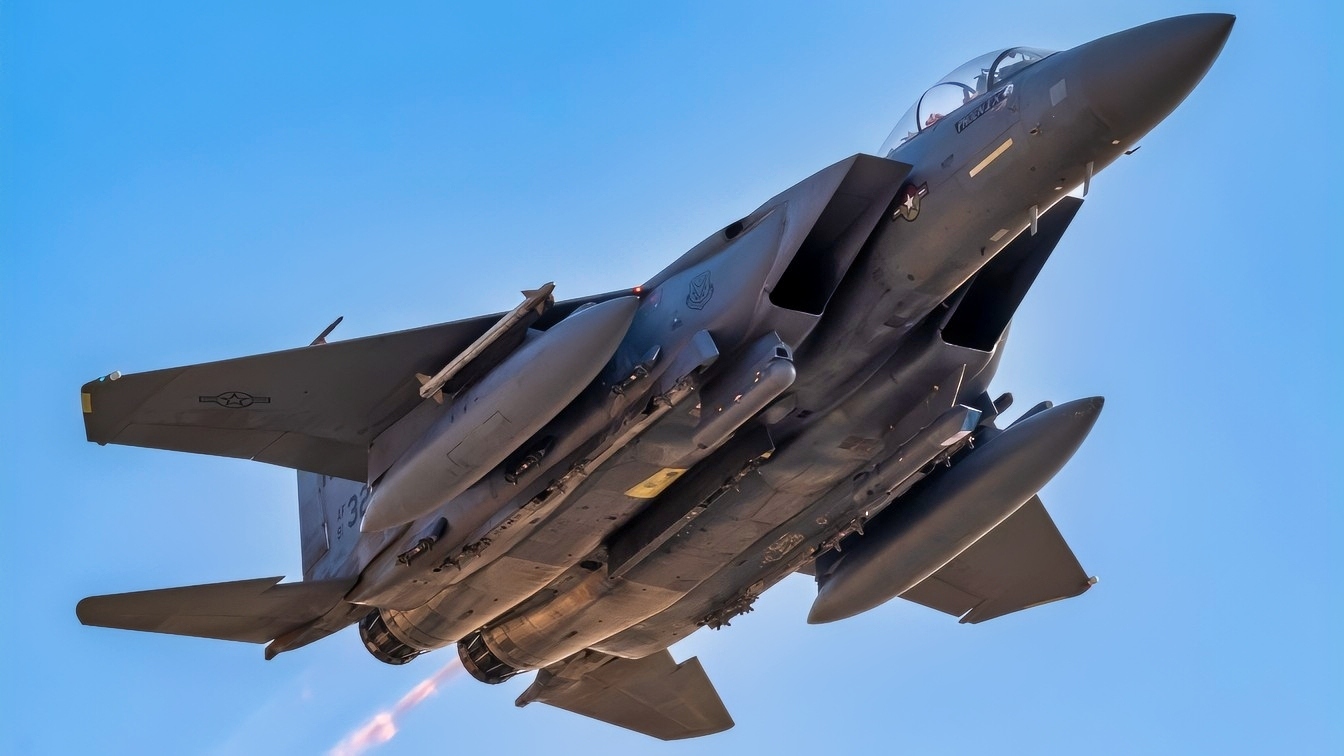
Summary and Key Points: A U.S. F-15E Strike Eagle was shot down over Iran in April — the first U.S. fighter downed by ground fire in decades. Many experts suspect the weapon was a Chinese-made shoulder-fired missile cued by a Chinese radar built to detect American jets, though no hard evidence has emerged, and the attribution remains far from definitive.
-Beijing denies supplying Iran, even after Xi Jinping assured President Trump it would send none. The shootdown has complicated fragile U.S.-Iran peace talks.
Chinese Missiles Might Have Been the Reason Iran Shot Down an F-15E Strike Eagle
A US F-15E Strike Eagle fighter (see our original photos and video of various F-15 fighters in this article) that was shot down over southwestern Iran in early April 2026 required a massive effort to rescue one of the downed pilots. It took seven hours to rescue the rear-seat Weapon Systems Officer (WSO), but before extracting the airman, two days were required to first locate him.
While no hard evidence has emerged as of yet, many experts suspect the F-15E was hit by a missile made in the People’s Republic of China (PR).
Reports indicate that the weapon was likely a Man-Portable Short Range Air Defense (SHORAD) system – a shoulder-launched infrared-guided (IR) missile in the same class as the US-made Stinger missile or the Polish-made Mesko Grom system.
Many experts suspect the following: the US aircraft’s coordinates might have been provided to the Iranian military personnel on the ground firing the missile by a PRC-made YLC-8B long-range early-warning radar that Tehran might have been operating. The radar system is produced in the PRC by China Electronics Technology Corporation, Ltd. (CETC), one of the country’s major defense industrial conglomerates.

F-15C Fighter at Smithsonian National Security Journal Photo
This radar, particularly the “8B” version, is designed specifically to detect US aircraft that are either stealthy or have “managed signatures,” in which modifications are made to the airframe and inlets to minimize their radar cross-section (RCS).
The F-15E Strike Eagle is in the latter category. Its radar utilizes a mix of advanced semiconductors – gallium arsenide or GaN-based – for its AN/APG-82 AESA radar. The radar’s array is set inside a fiberglass-epoxy radome to permit radio frequencies to pass through, and carbon-based radar-absorbent materials (RAM) to minimize its RCS.
Beijing is reported to have delivered both these missiles and the radar to the Iranians during the very first few days of the conflict with the US and Israel, but, to be clear, it is far from definitive at the moment.
The circumstances surrounding the shootdown of the F-15E are still being analyzed. But this will be the first time in decades that a US fighter aircraft was downed by enemy ground fire.
The Washington-Beijing Dialogue
When and if exactly Iran took delivery of these PRC weapons is still not certain.
But Iran, having possibly used these PRC weapons to shoot down one of the most expensive US fighter aircraft in inventory – not to mention putting the lives of aircrew at risk – creates a potential controversy at an inopportune time.
US President Donald Trump has sought out the Chinese Communist Party (CCP) General Secretary, Xi Jinping, to secure his support in convincing Iran to end the conflict. Negotiations to end the war are still ongoing, but the US continuing to launch “defensive” attacks on Iranian naval bases and shore-launched missile emplacements complicates these efforts significantly.

F-15 Fighter at US Air Force Museum National Security Journal Photo. Taken on 7/19/2025 in Dayton, Ohio.
Trump’s administration originally brokered a ceasefire with Iran ahead of a two-day summit in Beijing with Xi earlier this month and seemed to be looking for Beijing to assist in making it last.
As the largest customer for Iranian oil exports, the PRC leadership has said numerous times that the war must come to an end. But, the US Secretary of State Marco Rubio has said Trump is not relying on Xi, insisting, “We’re not asking for China’s help. We don’t need their help.”
Iran has since responded to the US attacks with fresh strikes of its own on US bases in retaliation. In another matter than has equally good chances of derailing any peace efforts, a separate report claims that Oman would join Iran in managing a reopened Strait of Hormuz.
Last week, Iranian state TV had reported some sections of what it called a draft agreement between Iran and the US. That plan was suspected to include Oman working with Iran to charge a “toll” on any ship passing through the Strait, an arrangement the US strongly opposes.
In response, the US president told reporters later during a cabinet meeting, “Oman will behave just like everybody else, or we’ll have to blow them up.”
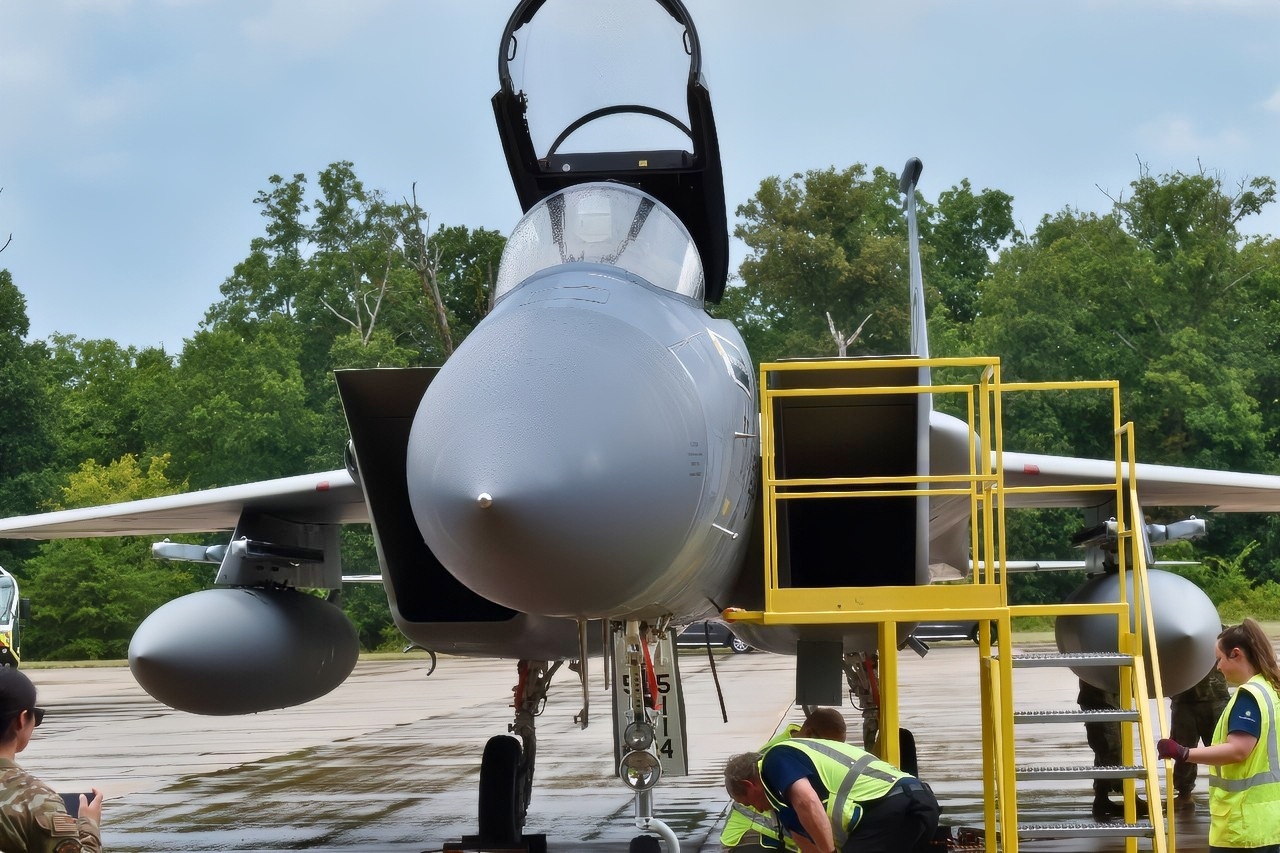
Rain on F-15C Fighter at Smithsonian National Security Journal Photo.
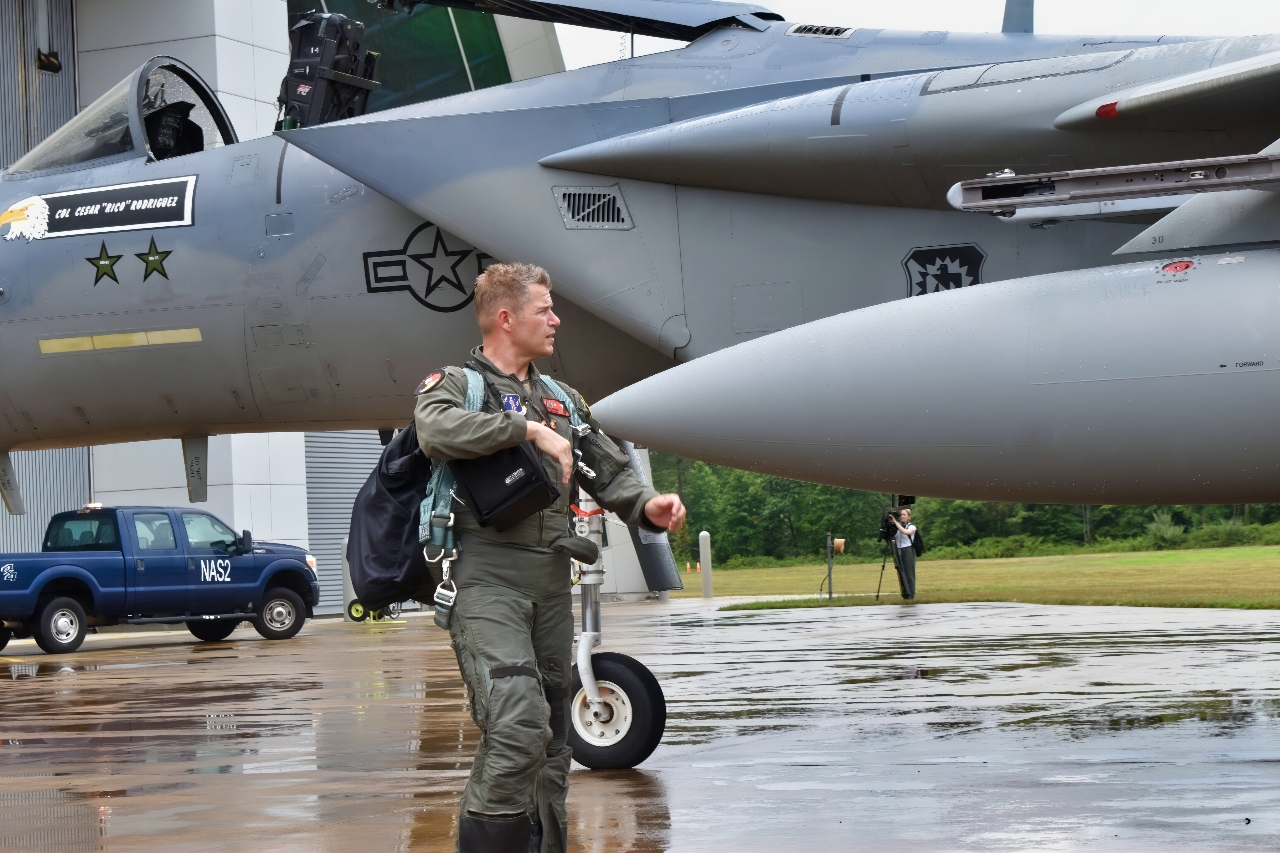
F-15C Pilot National Security Journal Photo. Image Credit: Brent M. Eastwood/National Security Journal.
The Chinese Missile That Might Have Brought Down the Strike Eagle
When the F-15E was originally shot down last month, the US president said it had been struck by a shoulder-launched missile.
However, in a Fox News interview, Trump stated Xi had assured him that the PRC would not provide military equipment to Iran, and last week, in remarks he made to reporters at the White House he said: “President Xi has promised me that he’s not sending any weapons to Iran. That’s a beautiful promise. I take him at his word. I appreciated it.”
When asked about the shootdown of the F-15E, a spokesperson for the Chinese Embassy said in a statement: “China always acts prudently and responsibly on the export of military products, and exercises strict control in accordance with China’s laws and regulations on export control and due international obligations. China opposes groundless smear and ill-intentioned association.”
US officials who spoke to NBC News stated the US intelligence on the PRC planning to provide more weapons to Iran in the coming weeks might have been leaked to the media, which may have been a pre-emptive strike of sorts – an effort to expose China’s plans and to cause them to cancel any other forthcoming deliveries.
About the Author: Reuben F. Johnson
Reuben F. Johnson has thirty-six years of experience analyzing and reporting on foreign weapons systems, defense technologies, and international arms export policy. Johnson is the Director of Research at the Casimir Pulaski Foundation. He is also a survivor of the Russian invasion of Ukraine in February 2022. He worked for years in the American defense industry as a foreign technology analyst and later as a consultant for the U.S. Department of Defense, the Departments of the Navy and Air Force, and the governments of the United Kingdom and Australia. In 2022-2023, he won two awards in a row for his defense reporting. He holds a bachelor’s degree from DePauw University and a master’s degree from Miami University in Ohio, specializing in Soviet and Russian studies. He lives in Warsaw.


