


The Islamic Republic of Iran and Israel are again shadow boxing over the fate of Hezbollah in Lebanon.
Hezbollah has long been a proxy of Iran. More importantly, though, the Iranians have told the Israeli government to clear their civilians out of northern Israel if Tel Aviv does, in fact, continue with strikes directed at Southern Lebanon.
Obviously, Tehran is not going to wait for things to deteriorate.
The regime will act in defense of what it perceives as its interests.
In this case, Tehran has long viewed Hezbollah as an essential extension of its power base in the region, which makes sense given that Hezbollah is a Shiite militia in distant Lebanon, right on the border with Israel, Iran’s primary antagonist in the Middle East.
Just as everything appeared to be breaking down in the ceasefire between the US and Israel over Israel’s actions directed ostensibly against Hezbollah in Lebanon (there is some disagreement as to how serious a threat Hezbollah posed to Israel when Tel Aviv initiated its front against Lebanon), President Donald Trump apparently had a contentious call with Israeli Prime Minister Benjamin Netanyahu.
After that tense call, Netanyahu allegedly agreed to de-escalate in Lebanon.
At the time of this writing, Iran has not attacked any targets in Israel, although air raid sirens have been sounding throughout the target area of northern Israel for several hours. Trump says he got Netanyahu to stop the attacks on Lebanon.
There’s no response from Tel Aviv as to precisely what the Israelis are thinking of doing next. At this point, it could go either way.
My money is on hostilities resuming sooner rather than later, given the political dynamic in Israel (Netanyahu has hitched his political wagon to an endless war as a means to suppress domestic opposition to his rule).
What Happens If Iran Strikes Back?
So, what happens if Iran did launch massive attacks against Israeli targets in northern Israel? What if the Iranians decided to restart strikes on whatever US forces remained in their broken bases?
One thing that likely wouldn’t happen would be a victorious American and Israeli military response to those attacks. For starters, the United States lacks the requisite level of air defense interceptors in its depleting stockpile to effectively defend against incoming Iranian drone and missile swarms. Israeli stockpiles are not as badly depleted as American stockpiles, but Israel also lacks the amount of air defense interceptors needed to defend expansive territories against Iranian attacks reliably.
The Americans would have to simply accept more damage to their already damaged military facilities in the region. What would the Americans do by way of retaliation against those strikes?
The Air War Problem
Well, that’s where things get depressing from a US military point of view. They couldn’t do much of anything. As it turns out, the US military is ready only for an air war over Iran. But Iran’s air defenses are relatively capable. US standoff munitions have been drastically drained, resulting from the previous round of fighting, with little hope for sufficient numbers of replacements anytime soon.
US forces would need to use less sophisticated weapons and tactics to hit targets in Iran. That’d mean sending US warplanes inside the Iranian air defense envelope. Now, the Pentagon insists it has no problem suppressing Iran’s air defenses.
In fact, the US military points to its successful degradation strikes against Iran’s suspected nuclear weapons facilities last year with B-2 Spirit long-range stealth bombers as proof that US warplanes can get close to Iranian targets. Yet, the munitions employed in those airstrikes, the GBU-57, are even fewer in number than the other crop of standoff precision-strike munitions that we’re worried about running out of.
And the GBU-57 Massive Ordnance Penetrator (MOP) would be a critical weapon to use against suspected underground Iranian military facilities. Lacking requisite precision-guided standoff munitions, if the Iranian strikes were massive enough against US and/or Israeli targets, then the US would have no choice but to risk its warplanes by getting closer to the targets inside Iran using less sophisticated weapons, of which we had greater numbers.
Anyway, there are no viable air-based military options for the United States if Washington deems it necessary to restart the conflict.
Why a Ground Invasion Would Be Worse
What about ground troops?
Well, that’s an even nastier prospect. Where would US forces land? We’ve spoken about this on this site in great detail. Experts and social media influencers discussed Kharg Island extensively at the start of the war.
The Pentagon nixed that plan because, if the US Navy is unwilling to send its warships through the contested Strait of Hormuz for simple escort duty, why on Earth would the Navy or Marines want to deploy ships semi-permanently into the Strait of Hormuz to support Marine landings on Kharg Island? It’d be the American equivalent of the failed British (and Australian and New Zealand) landings at Gallipoli.
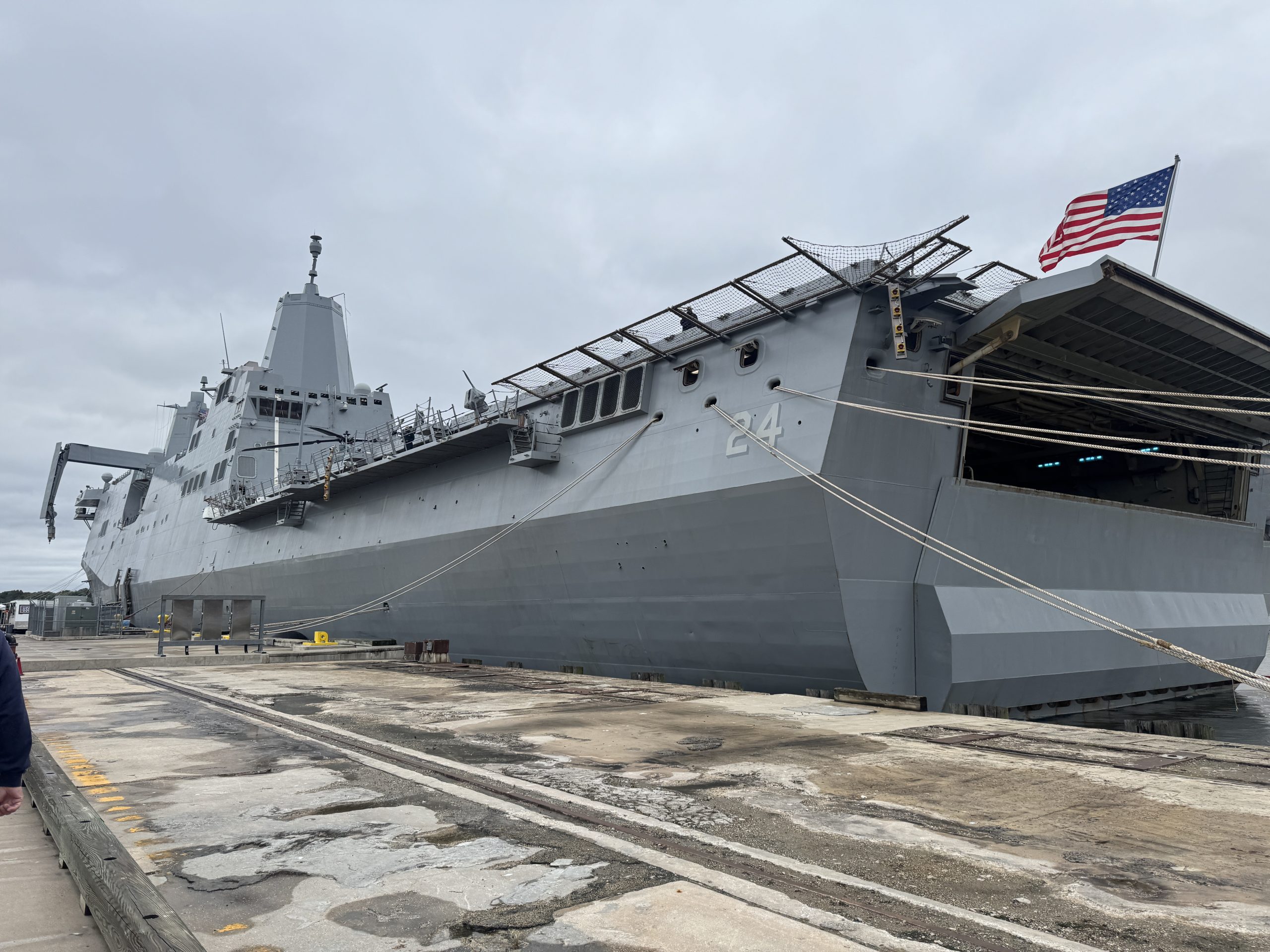
USS Arlington. National Security Journal Image Taken by Stephen Silver During Fleet Week 2025.
Qeshm Island is another target. Well, that island has a population of 150,000, and it is home to one of the most hardened underground military facilities in all of the Islamic Republic of Iran. Frankly, any of the outlying islands or coastal regions of Iran would be a nightmare for US ground forces to land on. That’s because Iran has a sweeping, comprehensive, layered web of hardened defenses that could easily rebuff any attempted US landing force at any strategic point along its coast.
The Paratrooper and Special Forces Fantasies
Other experts have floated the possibility of launching paratrooper landings. Let’s run through the math on that. Those forces would enter heavily contested airspace, deep inside enemy territory, aboard C-130J transport planes.
Those planes carry only about 90 paratroopers each.
And the more planes one sends into that hot landing zone, the greater the chance of losing large numbers of planes full of US paratroopers. Then, there’s the added problem of not having enough C-130Js to risk losing. Across the United States Air Force, Navy, Marine Corps, and Coast Guard combined, there are between 580 and 590 C-130J Super Hercules transport planes. The kind of operation that would require paratroopers over Iran would demand multiple birds of this class to bring in troops, helicopters, and other heavy equipment.
We already got a taste of how that’ll go when the US military conducted a daring raid inside Iran to rescue a US Air Force pilot and Weapon System Officer (WSO) whose F-15E Strike Eagle got clipped by Iranian air defenses. While the two men got out of Iran, the Iranians caused damage amounting to half a billion dollars’ worth of US military equipment being lost, including the C-130s that landed at a makeshift airstrip.
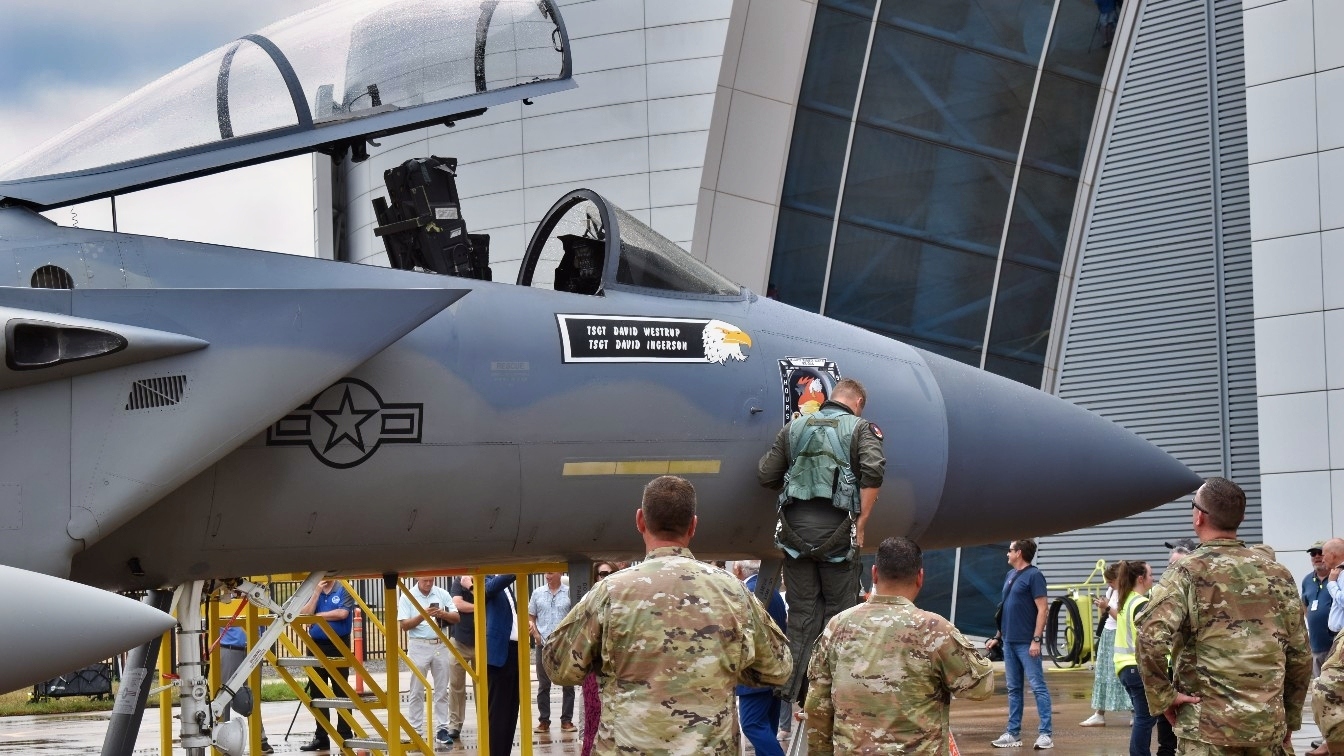
F-15C Fighter National Security Journal Image Taken by Dr. Brent M. Eastwood in late 2025.
And that’s not mentioning the significant blow that losing hundreds, if not thousands, of US paratroopers would be in an ill-fated paratrooper landing over Iran.
Some have ruminated about launching sweeping Special Forces operations meant to hunt the uranium and other nuclear material–the so-called “nuclear dust”-that undergird Iran’s alleged nuclear weapons program. This scenario is an even more ridiculous concept than the paratrooper scheme.
Israel’s Dependence on American Support
As for Israeli attacks, if the US doesn’t want Israel to retaliate against Iran, thereby escalating the conflict and ruining any chance of a ceasefire (the chances of a ceasefire remain low, by the way), the US can simply refuse to refuel Israeli warplanes on their way to and from Iran. What’s more, neither Saudi Arabia nor Qatar will likely permit Israeli planes to overfly their territory, given the costs that continuing the war will impose on their economies.

An Israeli Air Force pilot climbs into an F-35I Adir prior to a Red Flag-Nellis 23-2 mission at Nellis Air Force Base, Nevada, March 16, 2023. Red Flag is an opportunity to build on the success of JUNIPER OAK 23-2, JUNIPER FALCON, and additional combined exercises to enhance interoperability with Israel, strengthen bilateral cooperation, and improve capabilities in ways that enhance and promote regional stability and reinforce the United States’ enduring commitment to Israel’s security. (U.S. Air Force photo by Airman 1st Class Trevor Bell)

An Israeli Air Force pilot walks to an F-35I Adir prior to a Red Flag-Nellis 23-2 mission at Nellis Air Force Base, Nevada, March 15, 2023. Red Flag is an opportunity to build on the success of JUNIPER OAK 23-2, JUNIPER FALCON, and additional combined exercises to enhance interoperability with Israel, strengthen bilateral cooperation, and improve capabilities in ways that enhance and promote regional stability and reinforce the United States’ enduring commitment to Israel’s security. (U.S. Air Force photo by Airman 1st Class Trevor Bell)
Even if they did, the Israelis would need midair refueling.
It is doubtful that the Arab states would permit the Americans to refuel. In other words, the US would refuel Israeli planes over Iraq. There are some concerns about refueling over Iraq, namely the presence of Iranian-backed Shiite militias operating there. They could potentially shoot down American refuelers. In fact, that is precisely what happened at the start of the war.
The Strategic Endgame
Lacking any viable military options, if the Americans needed to restart hostilities, the result would not be the destruction of the Islamic Republic of Iran. It would be another round of violence, ending as inconclusively as the previous one. Or worse, the next round of fighting will end with defeat. One way or another, though, the US military juggernaut is depleted and can no longer have the strategic impact it once did.
At the end of the conflict, whenever Washington finally realizes that it cannot win the way it wants to for a variety of reasons, the Americans will be forced into a strategic withdrawal from the wider Middle East. This humiliation will eventuate in a new regional order that is both post-American and decidedly anti-Israel.
About the Author: Brandon J. Weichert
Brandon J. Weichert is a National Security Editor. He also manages The Weichert Brief on Substack. Weichert hosts “National Security Talk” on Rumble, too. He is the author of four bestselling national security books, the most recent of which is A Disaster of Our Own Making: How the West Lost Ukraine (Encounter Books). Follow him via Twitter/X @WeTheBrandon. The opinions expressed in this op-ed are the author’s own.


Gene
June 2, 2026 at 7:50 pm
This guy is one our experts? Wow!!!