


This morning, I went on my hometown radio station, 99.7 WPRO, in Providence, Rhode Island, to talk about the war in Iran and the opening of the Strait of Hormuz. Let’s just say I was not a fan favorite when I explained that we could soon be looking at $6.00 gasonline prices and a global oil shortage if the situation isn’t resolved soon.
Clearly, time is running out to avoid an energy shock; the American people aren’t feeling it in full just yet, thanks to the drawdown of the Strategic Petroleum Reserve. Three months of airstrikes, a naval blockade, more than 120 destroyed Iranian vessels, and the launch of Project Freedom have not reopened the Strait of Hormuz to normal commercial traffic.
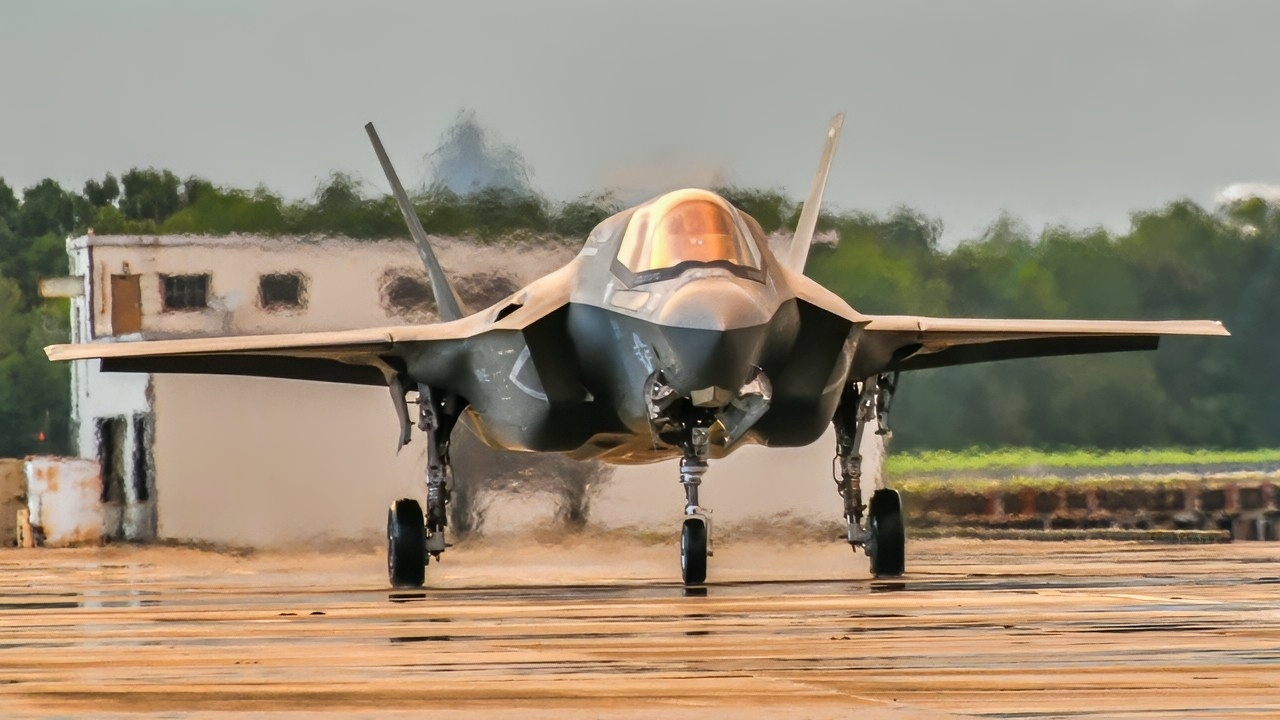
(Aug. 07, 2024) An F-35B Lightning II assigned to Marine Fighter Attack Squadron 122 at Yuma, Ariz., taxis after landing at Naval Air Station Jacksonville as part of the aircraft’s temporary transfer to Fleet Readiness Center Southeast (FRCSE). The jet is the first F-35 ever inducted into the depot and is part of a readiness improvement initiative to support corrosion mitigation efforts for the U.S. Marine Corps (USMC). (U.S. Navy photo by Toiete Jackson/Released)
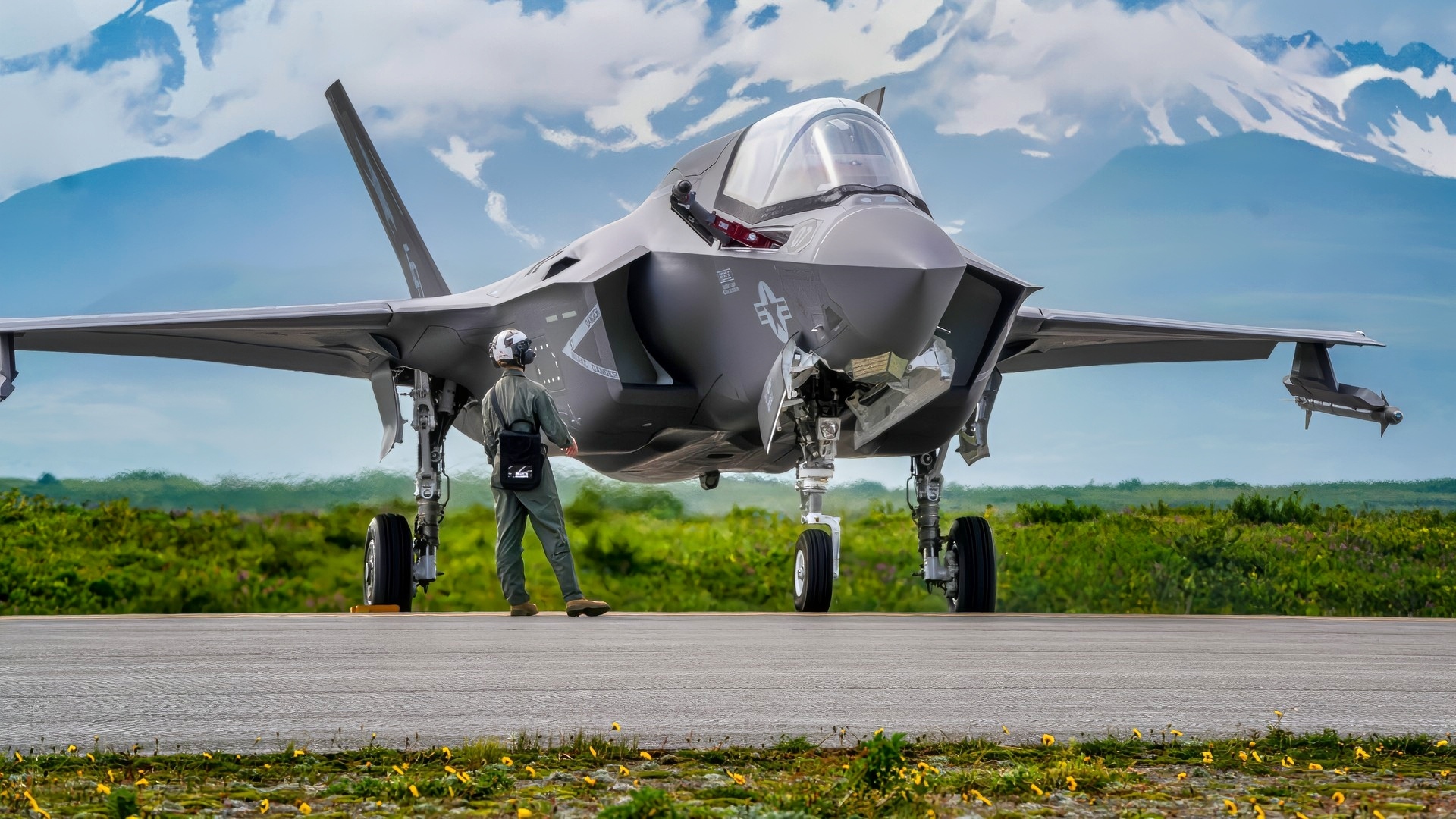
A U.S. Marine Corps F-35B Lightning II Joint Strike Fighter assigned to Marine Corps Air Station Beaufort, parks on a runway for a forward armed and refueling point (FARP) for ARCTIC EDGE 2025, August 18, 2025, at Cold Bay Airfield, Alaska. AE25 provided Special Operations Command North the opportunity to test a range of capabilities and response options to deter, disrupt, degrade, and deny competitor activity in the Arctic in support of globally integrated layered defense of the homeland. AE25 is a NORAD and U.S. Northern Command-led homeland defense exercise designed to improve readiness, demonstrate capabilities, and enhance Joint and Allied Force interoperability in the Arctic. (U.S. Air Force photo by Airman 1st Class Gracelyn Hess)
The Strait of Hormuz Problem Isn’t Going Away
As of this morning, May 28, 2026, U.S. forces struck an Iranian ground control station at Bandar Abbas overnight and shot down four Iranian one-way attack drones that threatened shipping in the strait, the latest in a continuous series of engagements that have kept the waterway contested but not open. President Trump told a Cabinet meeting on Wednesday that no one would be allowed to control the Strait of Hormuz, through which roughly 20 percent of the world’s oil flowed before the war, and warned that even Oman would be dealt with harshly if it interfered.
The one option the administration has not yet exercised is the one military planners consider both the most decisive and the most catastrophic: a ground operation to physically seize and hold the Iranian coastline and islands that dominate the strait.
The forces required for that operation are already in the theater.
Whether they would actually solve the problem is the question that should give the White House pause.
And the problem with that, at least as I see it, and talking to military experts around the world, is simple: it won’t reopen the Strait of Hormuz anyway.
The Forces Already In Position
The amphibious power needed for a coastal assault is staged and waiting. Two Amphibious Ready Groups built around the assault ships USS Tripoli and USS Boxer have converged on the region, carrying the 31st and 11th Marine Expeditionary Units in what amounts to the largest Marine amphibious force assembled in the Middle East in years. The Tripoli alone carries roughly 2,200 Marines, up to 20 F-35B stealth fighters, and MV-22 Osprey tilt-rotor aircraft. The Boxer Amphibious Ready Group with the 11th MEU was accelerated from the West Coast to join it.
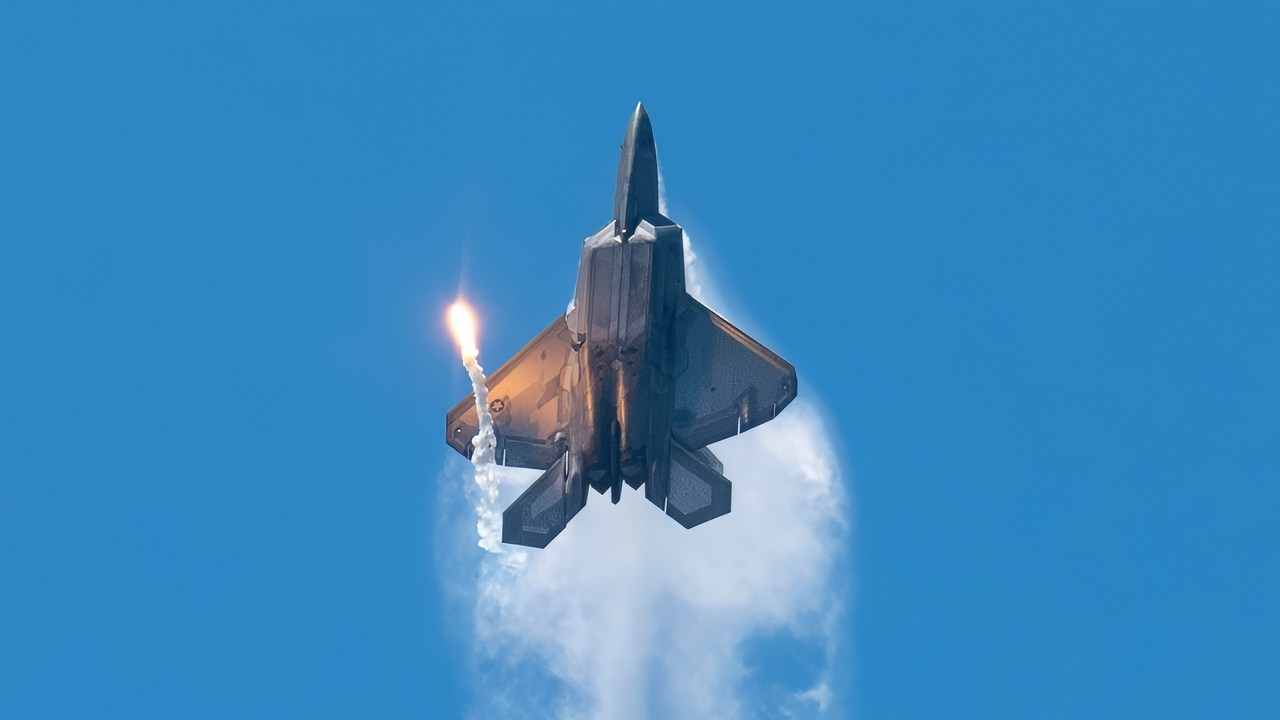
An F-22 Raptor assigned to the 1st Fighter Wing F-22 Demo Team, performs an aerial routine during the Wings Over Wayne Air Show at Seymour Johnson Air Force Base, North Carolina, May 20, 2023. Wings Over Wayne provides an opportunity for North Carolina residents and visitors from around the world to see how SJAFB builds to the future of airpower and displays a history of aircraft innovation and capabilities. (U.S. Air Force photo by Senior Airman Kevin Holloway)
The Tripoli’s embarked force of roughly 5,000 personnel is trained for expeditionary operations in contested littoral environments, supported by F/A-18E Super Hornets flying from carrier decks and MQ-9 Reaper drones conducting persistent surveillance along the Iranian coast. The Trump administration has also reportedly discussed deploying elements of the 82nd Airborne Division’s Immediate Response Force. The force posture is built for exactly the kind of coastal seizure operation under discussion.
How The Assault Would Be Conducted
The geography dictates the method. The strait’s navigation channels are narrow and highly constrained, and the Iranian coast facing the waterway is dominated by mountainous terrain that favors the defenders. Rather than risk a conventional amphibious landing against mined beaches and entrenched coastal defenses, military planners favor vertical insertion — using aircraft to bypass the mines and small boats entirely.
U.S. forces would likely insert Marines by air, approaching at low altitudes using MV-22 tilt-rotor aircraft, with elements from the 82nd Airborne Division and select Special Forces detachments joining the raids. The vertical insertion approach minimizes the exposure of large amphibious platforms in the strait itself, where they would be most vulnerable to Iranian anti-ship missiles. The Marines’ core mission would be controlling key terrain, neutralizing coastal threats, and enabling naval forces to safely clear and secure the waterway.
Marine Expeditionary Units could conduct heliborne assaults to seize Iranian missile and radar sites, capture strategic islands used for surveillance or anti-ship weapons, and establish forward positions to deny Iran the ability to target shipping lanes. The sequence would begin with strategic bombers and carrier-based aircraft suppressing Iranian gun, missile, and drone emplacements, followed by helicopter and tilt-rotor insertions of ground forces onto the seized terrain, with Aegis-equipped destroyers providing ballistic missile defense and counter-drone systems protecting the arriving troops.
The Casualty Reality
A ground operation against Iranian forces defending their own coastline would not resemble the rapid, low-casualty strikes the administration has conducted so far. Iran is a regime fighting for its survival, and it will not allow a U.S. amphibious force to pass through the strait unopposed.
The tactical problem is brutal in its simplicity. The amphibious assault ships carrying the Marines are large, valuable, and vulnerable targets in exactly the kind of constrained littoral environment where Iran has concentrated its anti-ship capability, and Navy crews would have only seconds to react to an inbound missile or drone swarm in the confined waters of the strait. Iranian forces defending the coastal high ground would be fighting on home terrain they have fortified for decades, under a Revolutionary Guard Corps doctrine built specifically around denying the strait to a superior naval power.
Even a senior member of the House Armed Services Committee publicly stated in April that he did not believe mobilizing ground troops in Iran would be necessary to open the strait. The bipartisan consensus, including among Trump’s own defense allies, is that a ground war in Iran would be a catastrophic escalation with unpredictable consequences.
Why It Still Would Not Fully Work: Drones and Missiles Have Longer Ranges
Here is the part that makes the entire ground-invasion calculus so frustrating for military planners. Even a successful seizure of the Iranian coastline and the strategic islands around the strait would not guarantee the safe passage of commercial shipping, because Iran’s offensive reach extends far beyond the immediate coast.
Iran’s one-way attack drones have ranges measured in hundreds of miles. The drones U.S. forces shot down near the strait this week were launched from ground control stations that can be relocated and dispersed across the entire depth of Iranian territory.
A U.S. ground force could seize and hold Bandar Abbas, Qeshm Island, and the coastal mountains overlooking the strait and still face drone and missile attacks against tankers launched from Iranian territory dozens or hundreds of miles inland — territory that no amphibious assault force could realistically occupy. Iran has already demonstrated this reach, having struck a UAE oil storage facility during the Project Freedom engagement earlier this month.
The fundamental military problem is that reopening the strait requires neutralizing not just the coastal defenses but the entire Iranian capacity to project force into the waterway from anywhere in the country. The Washington Institute’s assessment concluded that even after destroying more than 130 Iranian vessels and dozens of coastal targets, the Navy cannot guarantee safe commercial passage without an open-ended commitment that exceeds its capacity. Naval analysts have assessed that even a successful escort operation — a far less ambitious undertaking than a ground assault — might restore only about 10 percent of pre-war traffic through the waterway.
A ground operation can seize the coast. It cannot seize all of Iran. And as long as Iran retains long-range drones and missiles launched from its interior, the tankers transiting the strait remain at risk regardless of who holds the beaches and the mountains overlooking them.
The Calculation Trump Faces
This is why the diplomatic framework that reached Tehran this week matters more than any military option on the table. The ground invasion that would most decisively address the coastal threat is also the operation most likely to produce mass American casualties, trigger broader regional war, and still fail to guarantee the safe commercial transit that the entire effort is meant to restore.
The strait will most likely be reopened by negotiation or not reopened at all. The ground invasion is the option that looks decisive on a map and falls apart the moment the first long-range Iranian drone launches from two hundred miles inland toward a tanker the Marines on the beach cannot protect.
About the Author: Harry J. Kazianis
Harry J. Kazianis (@Grecianformula) was the former Senior Director of National Security Affairs at the Center for the National Interest (CFTNI), a foreign policy think tank founded by Richard Nixon based in Washington, DC. Harry has over a decade of experience in think tanks and national security publishing. His ideas have been published in the NY Times, The Washington Post, The Wall Street Journal, CNN, and many other outlets worldwide. He has held positions at CSIS, the Heritage Foundation, the University of Nottingham, and several other institutions related to national security research and studies. He is the former Executive Editor of the National Interest and the Diplomat. He holds a Master’s degree focusing on international affairs from Harvard University.


