


Summary and Key Points: The Iran War ceasefire is coming apart, and a second round may be weeks away. But one national security analyst argues that whatever happens on the battlefield, Iran has already found the war it can actually win — and it isn’t a military one.
-Tehran’s real play, he writes, is to turn the entire Middle East into an economic weapon: choking off the oil, the fertilizer, even the helium the world depends on, until the pressure forces Washington’s hand.
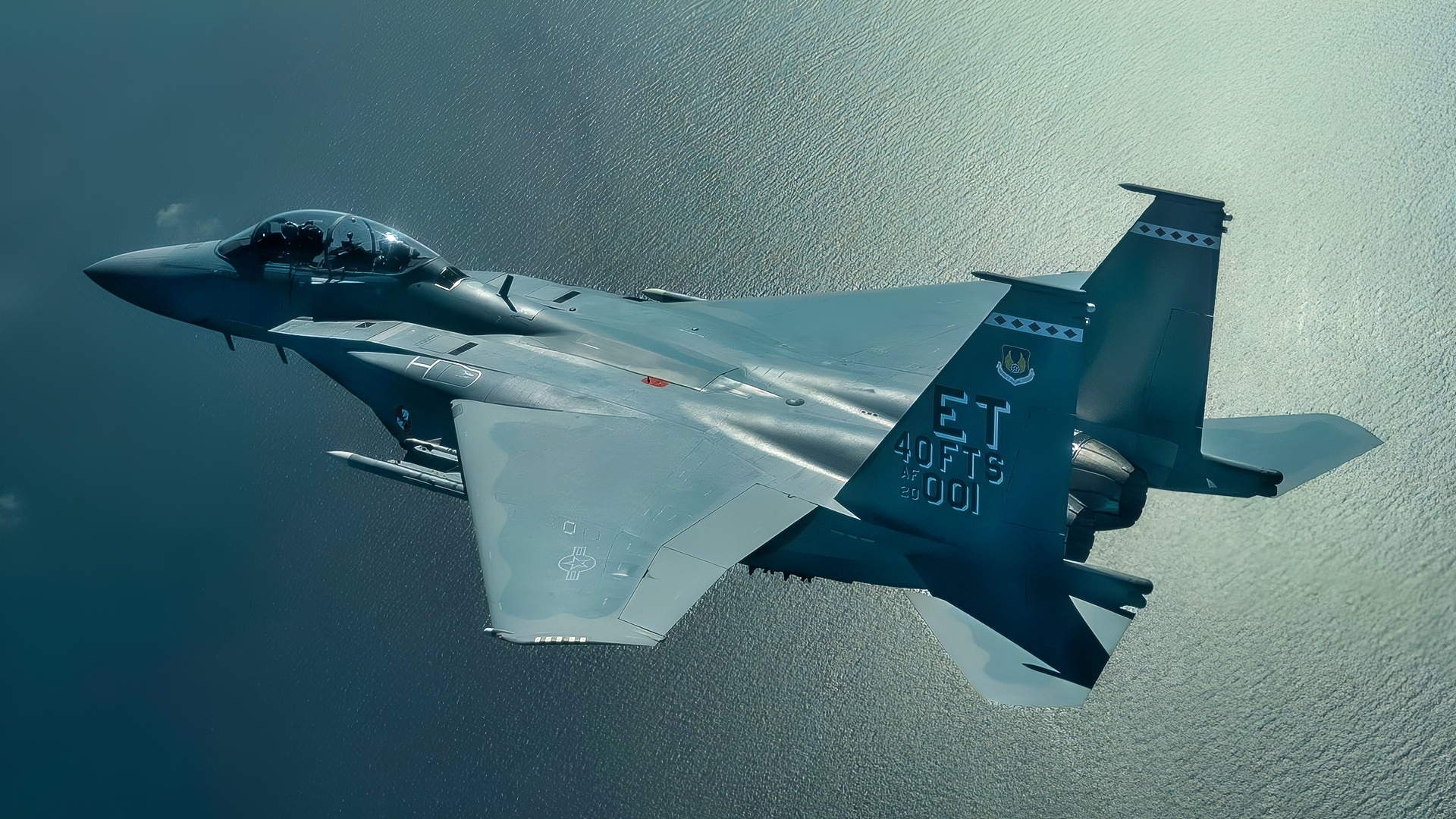
U.S. Air Force Lt. Col. Richard Turner, 40th Flight Test Squadron commander flies 40 FLTS Senior Enlisted Leader, MSgt Tristan McIntire during a test sortie in the F-15EX Eagle II over the Gulf of Mexico on Jun. 14, 2022. Assigned to the 96th Test Wing at Eglin Air Force Base, Fla., the F-15EX Eagle II is the Air Force’s newest 4th generation fighter being tested at the 40 FLTS. (U.S. Air Force photo by Tech. Sgt. John McRell)
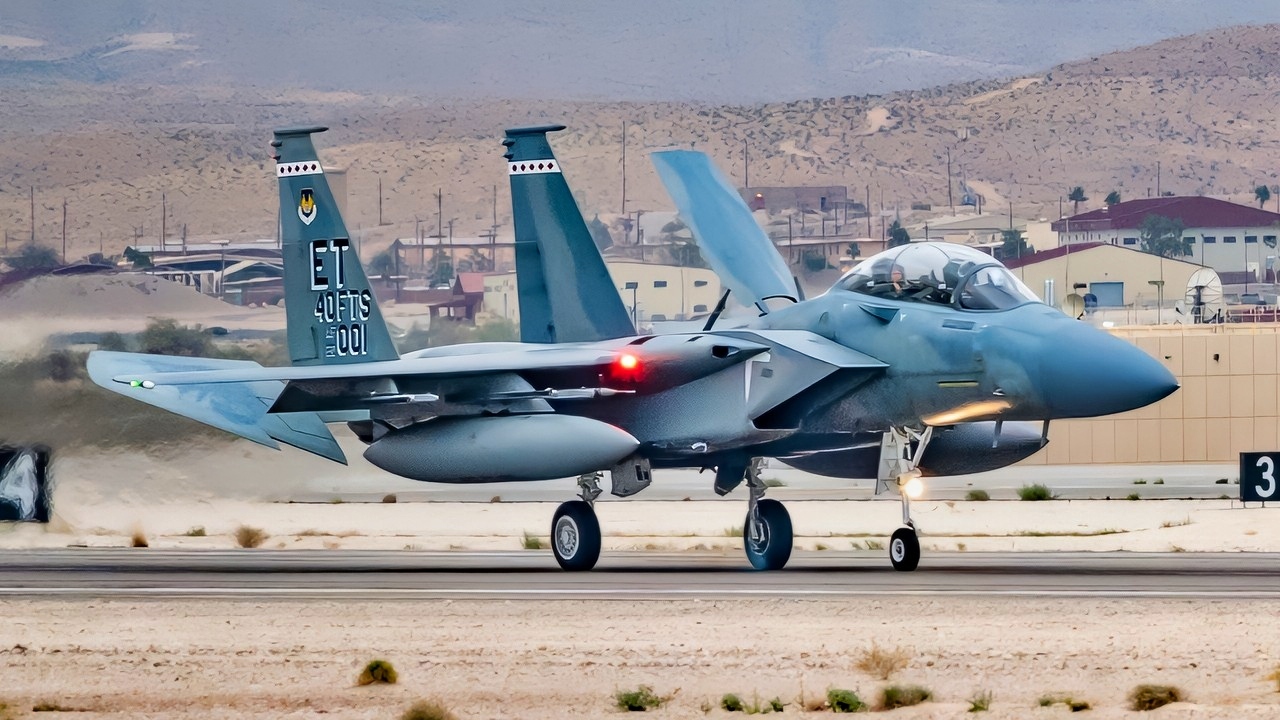
An F-15EX Eagle II lands on the flight line after a training operation at Nellis Air Force Base, Nevada, Nov. 15, 2023. The aircraft is able to fly at a speed of Mach 2.5, constituting it as the world’s fastest fighter jet. (U.S. Air Force photo by Airman 1st Class Elizabeth Tan)

Two U.S. Air Force F-15EX Eagle IIs assigned to the 85th Test and Evaluation Squadron, Eglin Air Force Base, Florida, taxi after landing at Kadena Air Base, Japan, July 16, 2025. Local units conducted integration and familiarization training with the F-15EX. (U.S. Air Force photo by Airman 1st Class Arnet Shayne Tamayo)
The Iran War Isn’t What You Think
The world is nearing a resumption of the Iran War, as the already tenuous ceasefire between the United States and the Islamic Republic of Iran breaks down. The reason it is breaking down, of course, has nothing to do with either the United States or Iran. It’s Israel.
Why Israel Refuses to Separate the Lebanon Front
Iran has consistently told the Trump administration that, if Washington wants a lasting ceasefire followed by peace negotiations and denuclearization talks (which Trump insists is what he desires), then any temporary ceasefire between the two warring parties must extend to Israeli actions in Lebanon.
Tel Aviv will have none of it. In fact, it looks increasingly like Israel’s leadership, especially Prime Minister Benjamin Netanyahu, cannot survive politically without the conflict raging somewhere.
Plus, there are many Israelis who believe that the threat posed to them by Hezbollah in Lebanon and Iran is existential. They might be right.
Yet, the Islamic Republic is not an existential threat to the United States, nor is Hezbollah (which hasn’t taken violent action against the United States since the early 1980s, and even then its ire was directed against US military personnel and intelligence operatives stationed in Lebanon).
Anyway, the ceasefire will not hold. The only question, therefore, is what will happen next?
What Iran Wants In a Second Round of Fighting
It’s necessary to assess Iran’s strategic objectives in a renewed round of warfare with America and the United States’ strategic objectives in that new round of fighting.
Iran’s objective would be to make the Gulf unusable as part of a larger denial strategy directed at stunting US military power projection into its part of the world. The earlier phases of the war have already degraded those capabilities. Iran would want to continue weakening the US military presence.
Iran would apply additional pressure to the Americans by further mining the contested Strait of Hormuz and maintaining a total blockade of the waterway (except for ships Tehran favored for passage). Iranian proxies in neighboring Iraq would likely be activated as well.
More importantly, Iran would target the Arab states of the region, as well as Israel, in the hopes that they could break the US-Israel-Arab alliance in the region.

Master Sgt. Tristan McIntire, 40th Flight Test Squadron, marshals the F-15EX, the Air Force’s newest fighter aircraft, to a stop at Eglin Air Force Base, Fla. March 11, 2021. The F-15EX will be the first Air Force aircraft to be tested and fielded from beginning to end through combined developmental and operational tests. (U.S. Air Force photo by Samuel King Jr.)
America’s Goal: Reopen the Strait of Hormuz
The United States would attempt to destroy Iran’s maritime assets. They’d target the navy, coastal radars, drone control stations, missile launchers, mine-laying vessels. Even after the ceasefire was in place, the United States launched attacks against the Iranian Navy’s facility at Bandar Abbas. The US military would attempt to expand on those strikes. The Americans would further target command nodes. All these actions by the United States would aim to achieve Washington’s primary strategic goal: reopening the Strait of Hormuz.
Alas, there is a mismatch in any renewed fighting.
For starters, the Americans (and the rest of the world) cannot afford to have the situation resolved militarily. Indeed, another round of fighting would only exacerbate the crisis the world is facing due to the ongoing closure of the Strait of Hormuz. The reason that the Trump administration fixated on reopening the strait is that the rest of the world’s economy is about to collapse.
That includes the American economy, as the world’s energy supplies disappear, the world’s fertilizer is in short supply during the growing season, and other critical materials–such as helium–are disrupted by the Iran War and the closure of the Strait.

An Israeli F-35I Adir assigned to 140 Squadron, Nevatim Air Base, taxis out for a mission during Red Flag-Nellis 23-2 at Nellis Air Force Base, Nevada, March, 15 2023. Red Flag is an opportunity to build on the success of JUNIPER OAK 23-2, JUNIPER FALCON, and additional combined exercises to enhance interoperability with Israel, strengthen bilateral cooperation, and improve capabilities in ways that enhance and promote regional stability and reinforce the United States’ enduring commitment to Israel’s security. (U.S. Air Force photo by William R. Lewis
Iran, too, is feeling the economic squeeze from the war.
The Economic Clock is Ticking
But Tehran has moves that the Americans and the rest of the world do not.
They can transport at least part of their excess energy products overland on railways they share with China, while also shipping those goods to Russia via the Caspian Sea route. For the rest of the world, though, they’re empty. Very little maneuvering room remains for the rest of the world to survive the coming catastrophic shortages already occurring due to the war.
If the Americans and Iranians resume hostilities, the shortages will intensify.
Then there’s the matter of American military depletion. If another round of fighting with Iran occurs, then the Americans lose those stockpiles of critical weapons. Replacements for these key weapons will not be available for at least four years. In the meantime, American targeting of Iranian naval capacity sounds doable until one realizes that the Pentagon claimed it had obliterated Iran’s navy at the start of the war.
If that were the case, why are they still obsessing over the perceived threat this aspect of the Iranian Armed Forces poses to the wider region?
The Limits of American Airpower Against Iran
Beyond that, the notion that the United States will have much luck in reducing Iran’s missile launch and drone launch capabilities is risible, considering that US intelligence has already issued a stark reassessment of its initial claims regarding the destruction of Iran’s missile capability.
Indeed, the US military has struggled to destroy Iranian missile launch capabilities because Tehran has so thoroughly buried those weapons underground and can launch those weapons from protected underground bases.
In fact, the Iranian defense industrial base, which is mostly in protected underground facilities, hasn’t really been touched by the American air war. Another round of the air campaign is unlikely to change this reality. It will only further deplete America’s critical weapons stockpiles.
Nevertheless, the Trump administration may believe it has no choice but to try its hand at another round of fighting. It will end as inconclusively as the previous round. The Iranian strategy is working better than the American one simply because Tehran’s leaders understand their enemy’s pressure points and are better at exploiting them than the Americans.
Iran’s Real Strategy: Turn the Mideast Into an Economic Weapon
Iran doesn’t have to win in a military-to-military fight against the United States. They just need to convert the entire Middle East into a massive economic weapon that drains the global economy, breaks the back of the Arab states, and ends with US forces depleting their critical stockpiles, forcing Washington to abandon this misadventure in the Middle East.
Iran is far closer to achieving their objective than the Americans are to achieving their aims (which include reopening the Strait, denuclearizing Iran, regime change in Tehran, reducing Iran’s missile and drone capabilities, and annihilating Iran’s navy and air force).
About the Author: Brandon J. Weichert
Brandon J. Weichert is Senior National Security Editor. He also manages The Weichert Brief on Substack. Weichert hosts “National Security Talk” on Rumble, too. He is the author of four bestselling national security books, the most recent of which is A Disaster of Our Own Making: How the West Lost Ukraine (Encounter Books). Follow him via Twitter/X @WeTheBrandon.


