

Summary and Key Points: A day after Iran declared its talks with the U.S. over, something shifted. Tehran is now quietly reviewing a deal that could reopen the Strait of Hormuz — and Trump, fresh off talking Israel out of a ground push into Lebanon, says it could be signed within days.
-Even Iran’s reclusive Supreme Leader, unseen in public, is reportedly engaging behind the scenes. But one demand has stalled every round of talks, with no sign Iran will give it up.
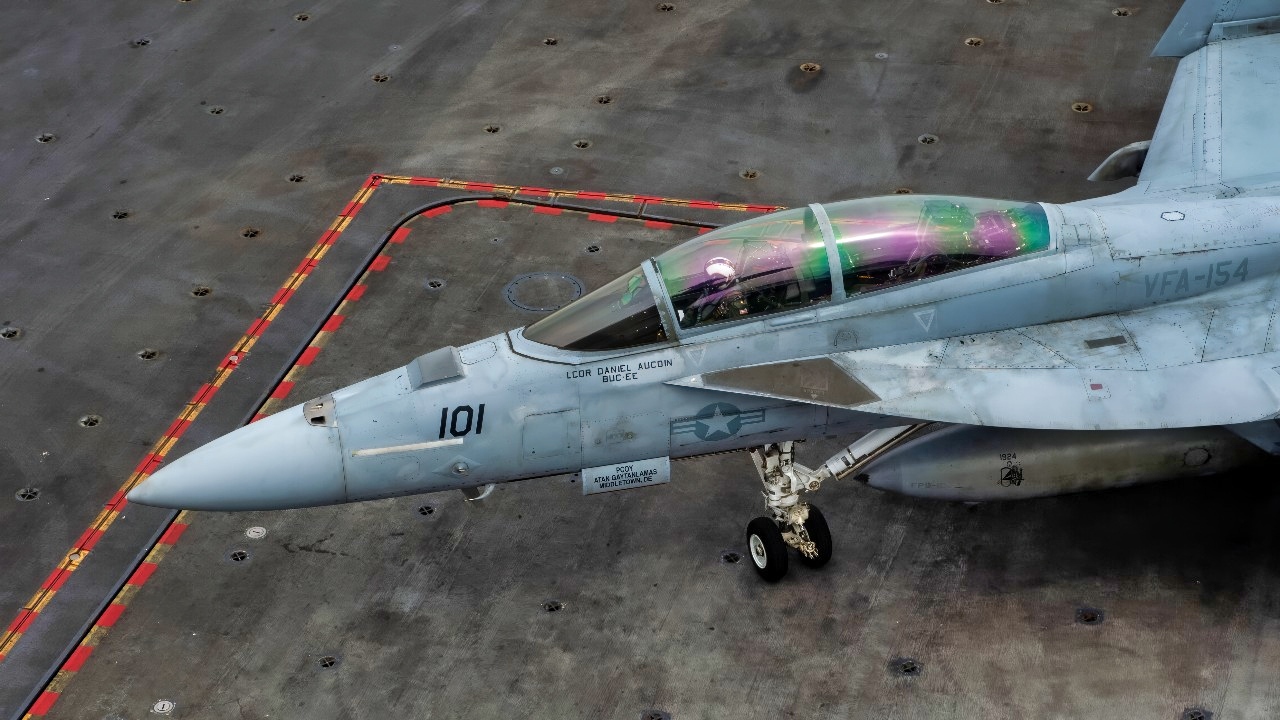
(July 24, 2025) – A U.S. Navy F/A-18F Super Hornet, assigned to the “Black Knights” of Strike Fighter Squadron (VFA) 154, transits the flight deck of Nimitz-class aircraft carrier USS Theodore Roosevelt (CVN 71), July 24, 2025. Theodore Roosevelt, flagship of Carrier Strike Group (CSG) 9, is underway conducting exercises to bolster strike group readiness and capability in the U.S. 3rd Fleet area of operations. (U.S. Navy photo by Mass Communication Specialist Seaman Maddix Almeyda)
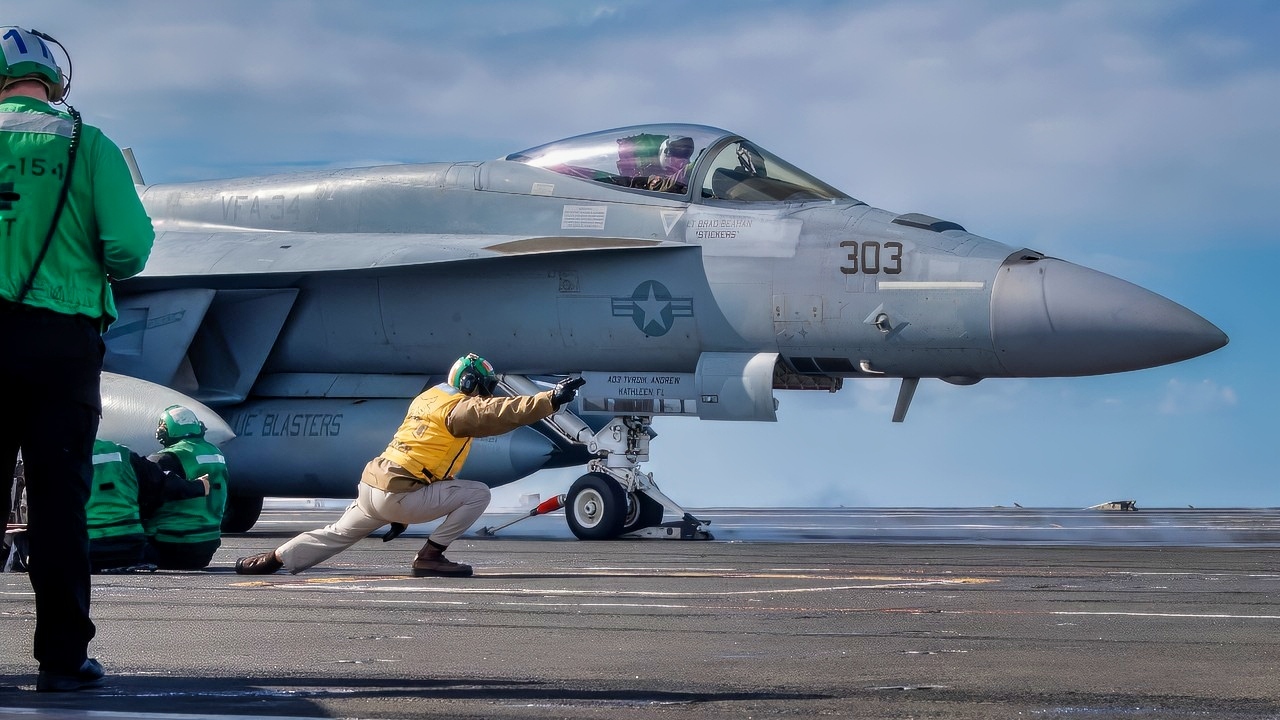
U.S. Navy Lt. Andrew Bentley signals an F/A-18E Super Hornet, assigned to the “Blue Blasters” of Strike Fighter Squadron (VFA) 34, to launch from the flight deck of the Nimitz-class aircraft carrier USS Theodore Roosevelt (CVN 71), Nov. 30, 2023. Theodore Roosevelt, the flagship of Carrier Strike Group Nine (CSG 9), is conducting integrated training exercises in the U.S. 3rd Fleet area of operations. (U.S. Navy photo by Mass Communication Specialist 3rd Class Adina Phebus)
Iran Signals Interest In Deal, Supreme Leader Responding
Iran is reportedly reviewing a proposed agreement with the United States that would extend the ceasefire agreed in April and potentially reopen the Strait of Hormuz, according to Iranian media reports.
The news comes a day after President Donald Trump sought to calm rising tensions with Iran, following the announcement from Tehran that its negotiators would cease cooperation with mediators.
President Trump said Monday that negotiations would continue and expressed confidence that a deal could still be reached within a matter of days.
Iran Signals Interest In New Deal
Negotiations have intensified in recent weeks, with Secretary of State Marco Rubio indicating last week that a deal could arrive in a “few more days.” Those days have passed, and Iran has still not responded to a proposed final text of a temporary deal. According to the Iranian Mehr News Agency, Tehran continues to take a “stern” approach to the negotiations.
When Iran announced that indirect negotiations would end on Monday, June 1, this outlet proposed that the news may have been an effort to gain additional leverage in the final moments of the deal, specifically regarding ongoing Israeli strikes in Lebanon. The most recent news from Iranian news media could indicate that this was indeed the case.
According to the Fars agency, which cited an unnamed source, messages between the U.S. and Iran stopped a few days ago, with the last communication from Tehran being a “clear message” over the Lebanon issue. On Monday afternoon, President Donald Trump announced that he had made an agreement with the Israeli government to end strikes in the region while a deal is hashed out.
“I had a very productive call with Prime Minister Bibi Netanyahu, of Israel, and there will be no Troops going to Beirut, and any Troops that are on their way, have already been turned back,” Trump wrote on Truth Social. “Likewise, through highly placed Representatives, I had a very good call with Hezbollah, and they agreed that all shooting will stop.”

U.S. Navy Aviation Boatswain’s Mate Aircraft Handling 2nd Class Kyle Darmanin, from Mooresville, North Carolina, assigned to air department’s flight deck crash and salvage division, signals an F/A-18E Super Hornet, attached to Strike Fighter Squadron (VFA) 27, on the flight deck of Nimitz-class aircraft carrier USS George Washington (CVN 73) while underway in the Timor Sea in support of Talisman Sabre 2025, July 14, 2025. Talisman Sabre is the largest bilateral military exercise between Australia and the United States advancing a free and open Indo-Pacific by strengthening relationships and interoperability among key allies and partners, while enhancing our collective capabilities to respond to a wide array of potential security concerns. (U.S. Navy photo by Mass Communication Specialist 2nd Class Tyler Crowley)
Nuclear Remains Central to Discussions
When President Donald Trump announced military strikes against Iran, he explicitly stated that his goal was to ensure that Iran never has a nuclear weapon. That is a consistent position the president has held since the 1980s. The Iranian side, however, is as consistent as Trump, with officials insisting that it is their “sovereign right” to enrich uranium and build nuclear technologies.
That stalemate is at the center of the negotiations and has been, for the most part, the reason they continue to stall. However, Secretary Rubio told lawmakers on Tuesday that Iran was beginning to negotiate aspects of its nuclear program that it had previously refused to even discuss. He did warn, however, that the negotiations were still fragile.
“Talks with Iran are not like talks with Switzerland,” he told the Senate Foreign Relations Committee, adding that they always “require the use of intermediators.”
On the topic of the country’s nuclear program, Rubio said that they were discussing matters that Iran refused to discuss “just a month ago, just a year ago.” However, there was no clear indication that Iran was explicitly open to ending its nuclear program entirely. If it were, a deal would likely have already been made.
What Does Iran Want?
The Iranian side has never wavered on its position, despite its Navy being “obliterated” and much of its firepower destroyed. Chief among its most adamant demands is that it has the right to enrich uranium on its own soil.
In February, Foreign Minister Abbas Araghchi reiterated that uranium enrichment is a “non-negotiable” element of Iran’s nuclear program and described it as a matter of national sovereignty – and not for the first time, either. Similar remarks have been made by himself and other officials throughout the negotiations, with Tehran consistently rejecting any proposals that would require it to dismantle its enrichment infrastructure entirely.
Iran is also looking for economic relief, arguing that any lasting agreement must include the removal of U.S. sanctions and the restoration of normal oil exports – a move that would effectively boost the Iranian economy and allow it to profit from what is easily its most stable industry. Iran is also seeking guarantees that Iranian commercial shipping can once again operate freely through the Strait of Hormuz, meaning President Trump would need to back off his current blockade.
Khamenei “Increasingly Engaging”
Also on Tuesday afternoon, Secretary Rubio said that Iranian Supreme Leader Mojtaba Khamenei is “increasingly engaging at some level” in negotiations with the United States, despite not having been seen in public.
He told legislators that there are indications he is now engaging in some way with his negotiating team.
Rubio also revealed that Iranian negotiators frequently need “three to five days” to receive a response from Iranian leadership – news that could suggest why, every time there is a supposed breakthrough, White House officials indicate that news could arrive in a “few more days.”
About the Author: Jack Buckby
Jack Buckby is a British researcher and analyst specializing in defense and national security, based in New York. His work focuses on military capability, procurement, and strategic competition, producing and editing analysis for policy and defense audiences. He brings extensive editorial experience, with a career output spanning over 1,000 articles at 19FortyFive and National Security Journal, and has previously authored books and papers on extremism and deradicalization.


