


Summary and Key Points: It stretched nearly two football fields and carried twenty ballistic missiles tipped with as many as 200 nuclear warheads — all, by one account, once aimed at the United States. The Soviet Typhoon remains the largest submarine ever built and one of the most feared weapons of the Cold War. Yet for all its menace, it was quietly outmatched by an American rival with even more firepower. And stranger still, despite its size, it could run quieter than boats a fraction as large. What finally sank the giant wasn’t a torpedo — it was a budget.
Russia’s Typhoon-Class Was Massive

Russia’s Typhoon-Class Submarine. Image Credit: Creative Commons.
Russia’s Typhoon class nuclear-armed submarines may not serve anymore, but they are referred to as one of the most “feared” weapons during the Cold War.
Although the submarines are no longer actively patrolling the Northern Seas, they remain the world’s largest submarines ever to exist.
The Typhoon-Class: Sizeable Adversary
Not only were the Typhoon-class submarines nearly two football fields long at 574 ft, but the weapons they threatened the West with were extremely substantial and lethal.
The Typhoon-class submarines could carry up to twenty long-range ballistic missiles with, as an interesting article from the Federation of American Scientists describes it, “200 nuclear warheads that were once aimed at the United States.”
“The submarine (Typhoon) is equipped with the D-19 launch system with 20 solid-fuel propellant R-39 missiles, which have a range of up to 10,000 km. They are arranged in silos in two rows in front of the sail between the main hulls. The Typhoon has an automated torpedo and missile loading system including 6 torpedo tubes with calibres of 650 and 533 mm,” the FAS essay states.
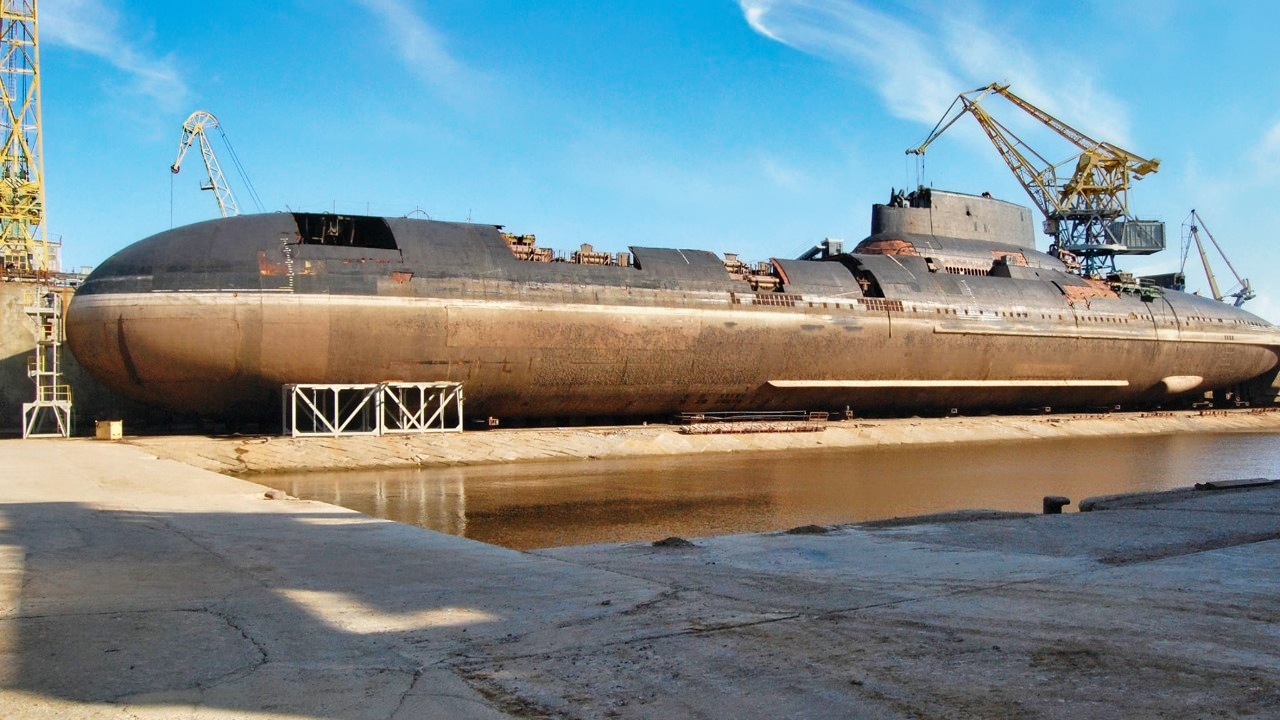
Typhoon-Class Submarine. Image Credit: Creative Commons.
Ballistic Threat
R-39 RiF nuclear weapons presented a significant threat to the U.S. and NATO, given that they could fire from ranges up to 8,200 miles and hold U.S. targets at risk from more than 5,000 miles away.
Depending upon which dark corners of the undersea Typhoon submarines were lurking in, they certainly could hold vital U.S. targets at risk. Specifics listed in MissileThreat.com say the R-39s operate with as many as 10 Multiple-Reentry Vehicles capable of delivering a 200 Kiloton warhead.
Outclassed
However, despite the significance of the threat they present, the R-39 armed Typhoon-class submarines were not as threatening as the U.S. Navy’s Ohio-class ballistic missile submarines, which could fire as many as 24 Trident II D5 submarine-launched nuclear missiles out to ranges beyond 6,500 miles.
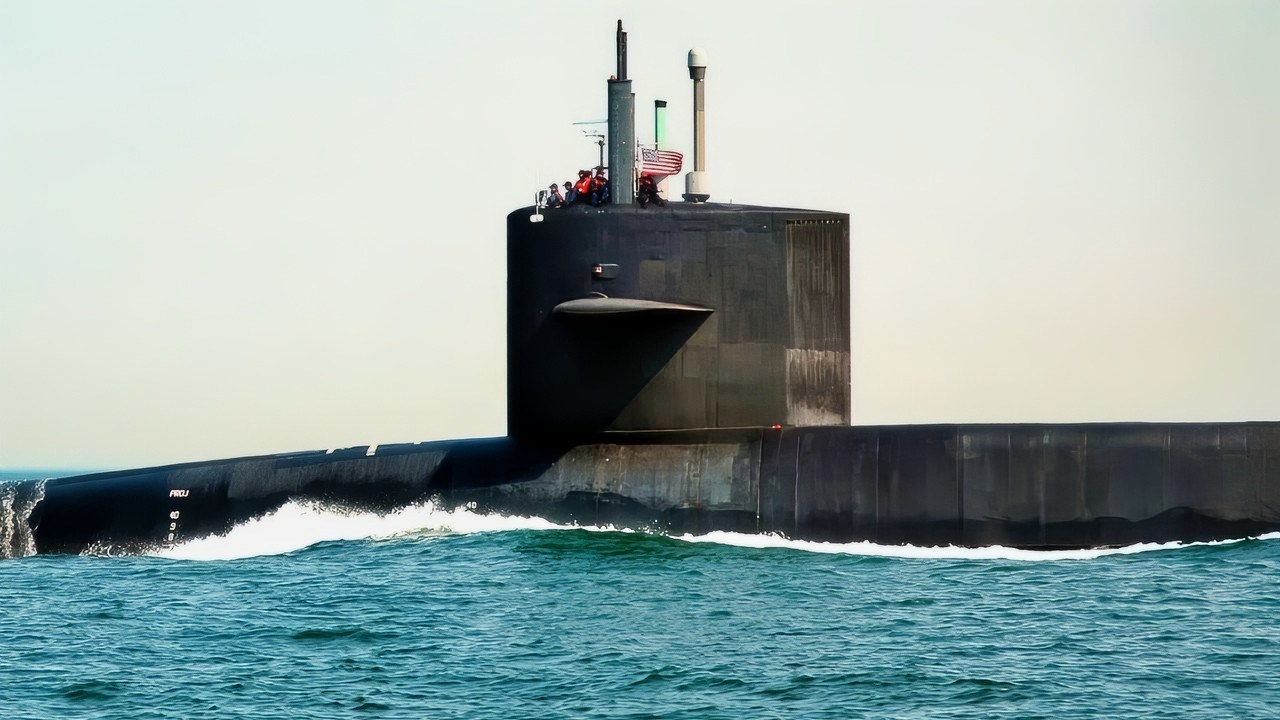
(March 31, 2006) – The guided missile submarine USS Florida (SSGN 728) conducts sea trials off the coast of Virginia. Florida will be delivered to the Fleet in April, and a Return To Service ceremony is scheduled for May 25 in Mayport, Fla. As the second of four SSBN submarines to be converted to SSGN, this nuclear-powered submarine will have the capability to: launch up to 154 Tomahawk cruise missiles; conduct sustained special warfare operations with up to 102 Special Operations Forces (SOF) personnel for short durations or 66 SOF personnel for sustained operations; and provide approximately 70 percent operational availability forward deployed in support of combatant mission requirements. U.S. Navy photo by Chief Journalist (SW/AW) Dave Fliesen.
This slight disparity did not make a huge difference in many respects, given that the Typhoon-class submarines were specifically built to operate as part of Russia’s Northern fleet, meaning they would patrol the Northern Sea Route bordering the Arctic and operate in the Baltic Sea. As part of this strategic focus, the Typhoons were engineered for ice-breaking and traveling beneath the ice. The FAS report explains that the Typhoons operated with floating antenna buoys to relay satellite navigation data and targeting designations from beneath the ice.

Typhoon-Class Submarine. Image Credit: Creative Commons.
“The Typhoons are equipped with the ‘Slope’ hydroacoustic system that consists of four hydroacoustic stations. The ‘Slope’ system allows tracking 10-12 vessels simultaneously. It also employs two floating antenna buoys to receive radio messages, target designation data and satellite navigation signals at great depth and under an ice cover,” FAS states.
A surprising element of the Typhoon-class boat is that, despite its massive size, it was actually somewhat quiet and stealthier than many smaller submarines. Coating materials and shock absorption can reduce the boat’s acoustic signature.
“To reduce the acoustic signature a two-spool system of rubber-cord pneumatic shock-absorption is employed as well as a block layout of gears and equipment, a new sound isolation and andrihydroacoustic coating,” FAS writes.
Despite posing this kind of threat, Russia’s Typhoon-class modernization program was canceled in 2012 for cost reasons, as the Borei-class was reportedly cheaper.
About the Author: Kris Osborn
Kris Osborn is the President of Warrior Maven – Center for Military Modernization. Osborn previously served at the Pentagon as a Highly Qualified Expert with the Office of the Assistant Secretary of the Army—Acquisition, Logistics & Technology. Osborn has also worked as an anchor and on-air military specialist at national TV networks. He has appeared as a guest military expert on Fox News, MSNBC, The Military Channel, and The History Channel. He also has a Master’s Degree in Comparative Literature from Columbia University.


