


Summary and Key Points – For years, the economists’ watchlist was the same: AI, debt, trade, and demographics. The OECD just rewrote it. Its new assessment names the single biggest force now shaping the global economy as the war in the Middle East — and lays out two starkly different futures depending on how long the Strait of Hormuz stays contested. One is bumpy but survivable. The other is somewhere economists dread: a stagflationary spiral in which the usual policy tools stop working, and a downturn rivaling that of 2008. America, a major energy producer, is better insulated than Europe — but insulated isn’t immune, and the OECD’s U.S. inflation numbers are sobering. What decides which future arrives may be the one thing no economist can model: whether the war ends.
The OECD Just Confirmed Trump’s Economic Nightmare Is Here
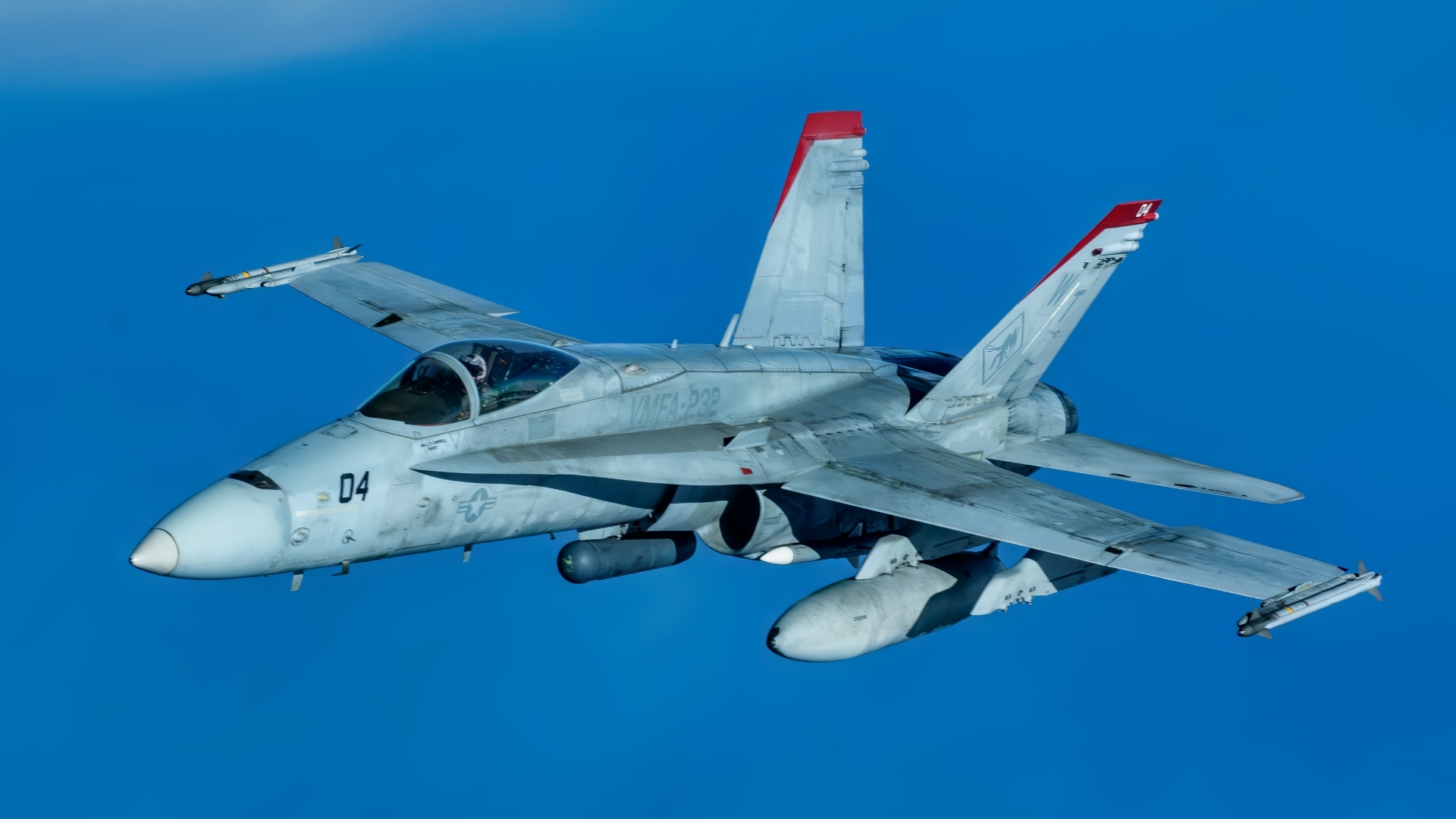
A U.S. Marine Corps F/A-18 Hornet pulls away from a U.S. Air Force KC-135 Stratotanker from Kadena Air Base after refueling over the Pacific Jan. 3, 2024. Conducting joint operations enhances the lethality and readiness of U.S. forces and its ability to project superior airpower to the Indo-Pacific region. (U.S. Air Force photo by Senior Airman Cedriue Oldaker)
When Donald J. Trump became president for his second non-consecutive term, it was in the doldrums of a high-inflation, low-growth economy.
The American people wanted change. They wanted something better than what the Democratic Party had been offering. And Trump billed himself as the economic savior of the American people. He was going to do it all. Reverse the economic decline. Restore American jobs. Lower the inflation rate. Make everything affordable again. And reduce those obnoxious interest rates.
Two years into his second term, the results are not good.
Today, the economy (despite what government officials claim) is in horrible shape. More people cannot find employment today or are chronically underemployed than at any time since the Great Recession of 2008.
Oh, and prices are higher now for many goods that Americans require than they were when Joe Biden left office. Those high prices are being propelled into the stratosphere by the inflation rate, which is today higher than it was when Biden shuffled out of the Oval Office and into the presidential retirement home.
More ominously, there appears to be little abatement in this new economic paradigm of slow growth, high prices, low employment, and explosive interest rates.
And this negative economic reality is the result of President Donald Trump’s war of choice in Iran. Specifically, the new painful economic reality that Americans (and the world) are experiencing stems from the closure of the Strait of Hormuz, which occurred because of Trump’s ill-advised Iran War.
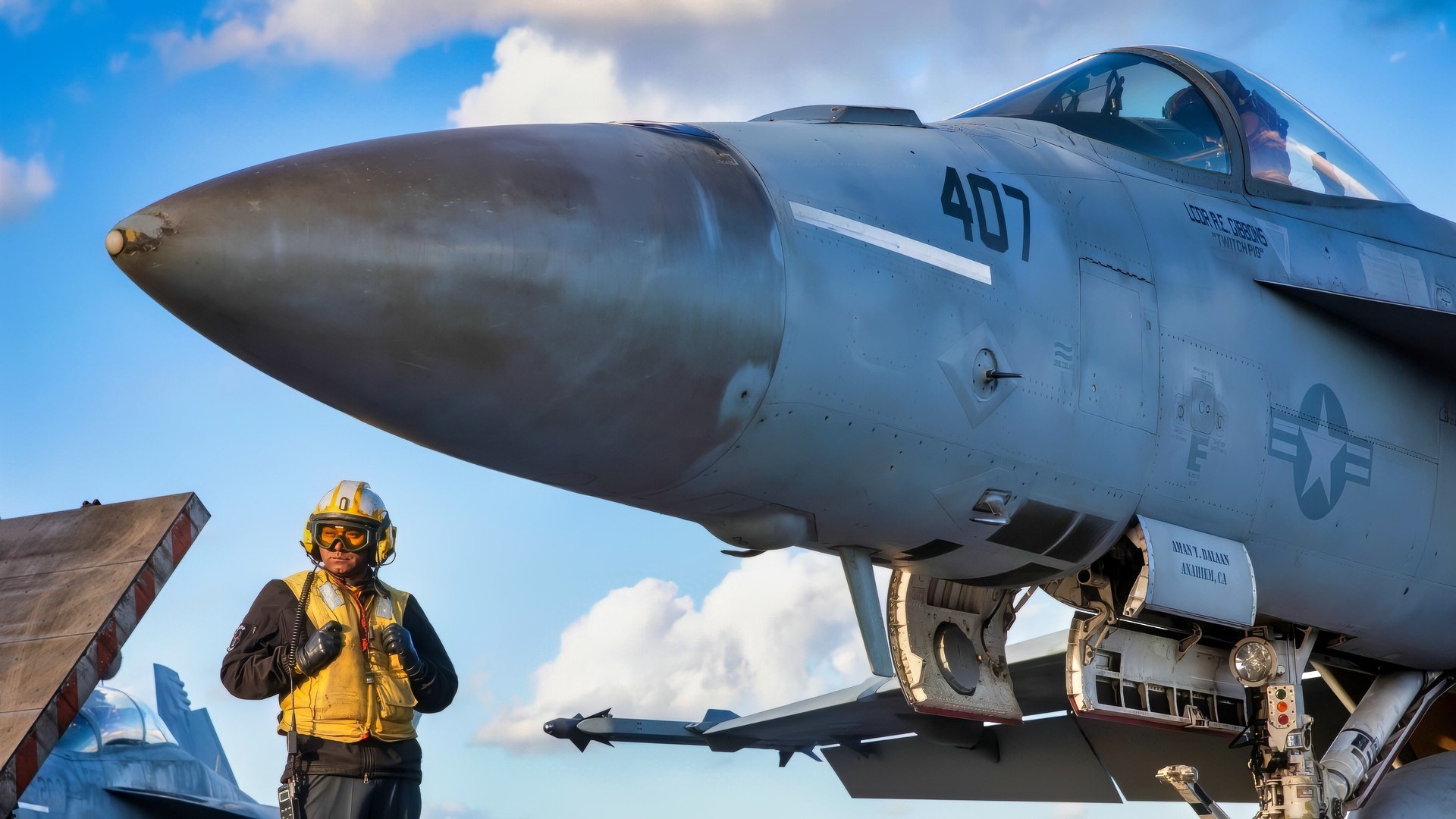
Aviation Boatswain’s Mate (Aircraft Handling) 1st Class Jose Mejiacastro, assigned to Air Department aboard the world’s largest aircraft carrier, USS Gerald R. Ford (CVN 78), prepares to signal to a Carrier Air Wing 8 F/A-18E Super Hornet attached to Strike Fighter Squadron 87 on the flight deck, Sept. 26, 2025. Gerald R. Ford, a first-in-class aircraft carrier and deployed flagship of Carrier Strike Group Twelve, is on a scheduled deployment in the U.S. 6th Fleet area of operations to support the warfighting effectiveness, lethality and readiness of U.S. Naval Forces Europe-Africa, and defend U.S., Allied and partner interests in the region. (U.S. Navy photo by Mass Communication Specialist 2nd Class Mariano Lopez)
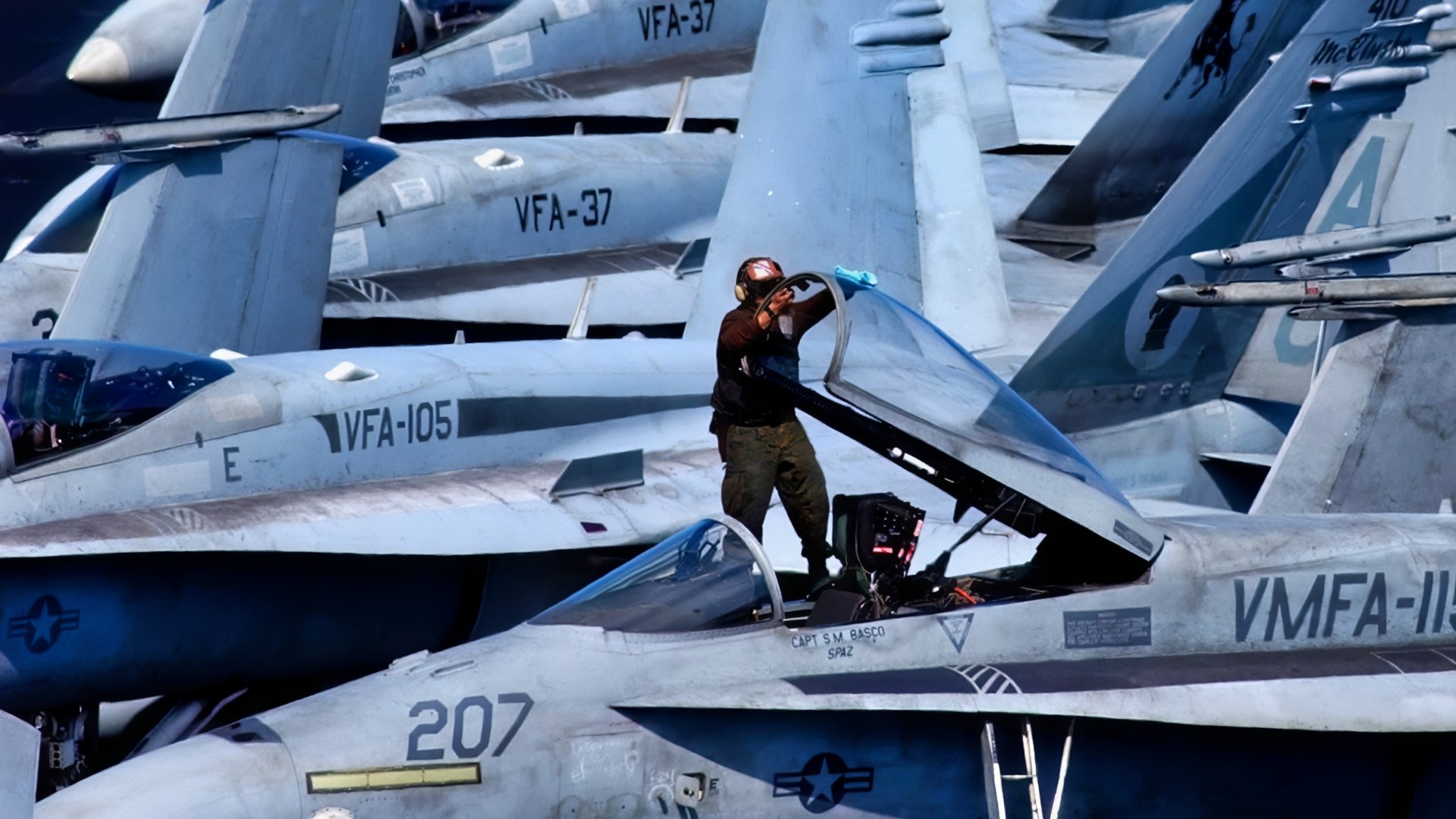
Marine Cpl. Rodger Lagrange cleans the canopy of a Marine F/A-18A+ Hornet onboard the USS Harry S. Truman (CVN 75) while the aircraft carrier operates at sea on Feb. 14, 2005. The Truman Strike Group and Carrier Air Wing 3 are conducting close air support, intelligence, surveillance, and reconnaissance missions over Iraq. Lagrange is attached to Marine Fighter Attack Squadron 115 deployed from Marine Corps Air Station Beaufort, S.C.
(DoD photo by Airman Philip V. Morrill, U.S. Navy. (Released))
A New Misery Index
Now comes the topper for this rising misery index.
According to CNBC, the Organization for Economic Cooperation and Development (OECD) believes the global economy faces two very different futures. On the one hand, the best-case scenario is that the war stabilizes, Gulf oil and gas exports gradually return to the world market, and energy markets normalize.
Under that rosy scenario, global growth slows from 3.4 percent in 2025 to 2.8 percent in 2026. Growth ultimately recovers in 2027 to around 3.1 percent. Inflation, meanwhile, remains elevated but manageable.
Then there’s the worst-case scenario.
The Iran War drags into 2027, and the Strait of Hormuz remains disrupted, if not outright closed, for that entire time. In this scenario, global growth collapses to 2.1 percent in 2026. But, in 2027, global growth crashes to a paltry 1.8 percent. Inflation, too, surges. Central banks, therefore, are required to keep interest rates higher, further suppressing economic growth–all of which ends with a major global recession.
Here we have an important point.
Growth around two percent globally is generally associated with periods of economic stress, such as during the 2008 financial crisis or the pandemic-era downturn. As the shaky ceasefire between Tehran and Washington breaks down in the Middle East, it looks increasingly as though the worst-case scenario will play out.
Why the OECD Is So Concerned
The OECD’s primary concern is multifaceted. Rather than focusing merely on the immediate (and growing) energy crisis resulting from the closure of the Strait of Hormuz, the OECD fears the war’s cascading effects.
After all, between the closure of the Strait and the Iranian attacks on key infrastructure throughout the region, the war has disrupted the flow of crude oil, liquified natural gas (LNG) products, fertilizer supplies (during the planting season), sulfur exports, helium supplies, and the war has spiked the cost of shipping, due to the closure of the Strait by both the Iranians and the United States.
Because of these disruptions, global industrial production, agriculture, transportation, and consumer prices have all been negatively affected.
According to MarketWatch, a popular financial news publication, the OECD specifically warns that inflation and slower growth could occur simultaneously. In other words, we’re entering a stagflationary environment. And in that situation, the usual tools that policymakers have to ameliorate economic crises no longer work. Suppose central banks try to reduce unemployment, prices, and slow economic growth. Should central bankers try to bring down high prices, the other two factors increase.
Ditto on addressing economic growth.
Stagflation, once it sets in, becomes persistent and difficult to overcome with policy. In fact, the only thing one can do in the long term to overcome stagflation is to outgrow it. That takes a long time. And in the span between when stagflation hits and whenever one can outgrow it, the economic pain and loss are real.
What It Means for America
One of the more interesting findings is that the United States is somewhat insulated from Europe and parts of Asia because it remains a major energy producer. But “insulated” does not mean immune. The OECD still anticipates slower consumer spending, weaker real income growth, elevated inflation, and slower economic expansion.
The OECD assesses that US inflation will reach 4.2 percent and American economic growth will slow to two percent before easing further in 2027.
OECD’s analysts believe that America may avoid an outright recession, but it is unlikely to avoid the economic pain entirely. At this rate, that is the actual best-case scenario for the United States. And that’s a far cry from what the forty-seventh president promised us in 2024.
What the OECD Isn’t Saying
In fact, the most important aspect of the OECD’s report is what it didn’t say. You see, unlike other apocalyptic assessments, the OECD is not projecting a total collapse of global trade. It’s also not assuming World War III. Nor is the OECD predicting a permanent closure of the Strait of Hormuz. What the report isn’t saying–but one must read into nonetheless–is that the OECD fears the downside risks of this war if the situation deteriorates further.
Indeed, despite its muted optimism, the OECD clearly considers the Middle East conflict the dominant factor shaping the global economic outlook over the next several years. That’s remarkable, considering we are living in the second Trump term–the man who began his political career in 2016 rightly denounced irresponsible Mideast wars of choice, initiated on lies.
For years, economists have focused on artificial intelligence, trade policy, demographics, debt, and monetary policy as the most important aspects of global economic development.
Now, per the OECD’s own assessment, it all comes down to whether the war in the Mideast ends and the blockade of the Strait of Hormuz ends before it becomes a long-range feature of the international system. The OECD is cautiously optimistic that this crisis will end soon. I am not. There is no indication that the three primary actors in the war–the United States, Iran, and Israel–are interested at all in negotiating a real end to the war. Instead, they keep returning to their maximalist aims.
About the Author: Brandon J. Weichert
Brandon J. Weichert is the Senior National Security Editor at 19FortyFive.com. He also manages The Weichert Brief on Substack. Weichert hosts “National Security Talk” on Rumble, too. He is the author of four bestselling national security books, the most recent of which is A Disaster of Our Own Making: How the West Lost Ukraine (Encounter Books). Follow him via Twitter/X @WeTheBrandon.


