


Summary and Key Points: For more than a decade, the U.S. military ran war game after war game simulating a conflict with Iran, and almost every one ended the same way: Tehran blockades the Strait of Hormuz and sends the global economy reeling. One infamous 2002 simulation went further, with Iran defeating the United States outright. What’s unfolding now was among the most foreseeable outcomes imaginable, which makes the real puzzle how it caught Washington flat-footed. Part of the answer is how Iran actually closed the Strait: not with the mines and speedboats everyone expected, but with a weapon the U.S. helped pioneer. The rest is a harder question about who should have seen it coming.
Trump Walked ‘Strait’ Into Iran’s Hormuz Trap–We’re All Going to Pay For It

President Donald Trump plays golf in the Senior Club Championship at Trump National Golf Club Jupiter, Sunday, April 6, 2025, in Jupiter, Florida. (Official White House Photo by Molly Riley)
Sometimes life comes at you fast. You have to adapt. One must be able to roll with the punches, as the saying goes. But one must also have the wisdom to anticipate certain complications in life and make plans to deal with those complications–or, better yet, to avoid them entirely.
That’s why the ongoing closure of the Strait of Hormuz is so mind-boggling to many experts. The US military, along with Israel’s military, initiated the Iran War on February 28.
Yet, the Trump administration acted surprised that Iran almost immediately blocked the Strait of Hormuz.
It is, frankly, a stunning turn of events that the United States military and the Trump administration apparently had no plan–or even anticipated–the fact that Iran would blockade the Strait of Hormuz once hostilities began.
For more than a decade, the US military has wargamed a fight with Iran. Almost every simulation ended with Tehran blockading the Strait of Hormuz and effectively collapsing the world economy until the Iranians reopen the Strait (or the Americans figure out how to employ sufficient force to reopen the Strait).
An infamous wargame from 2002 demonstrated that not only would Iran shut down the Strait, but the Islamic Republic would likely defeat the US military in war. In every iteration of the wargame between the United States and the Islamic Republic, the Iranian side ultimately blocked the Strait of Hormuz.
So, it begs the question, why did Washington initiate this war of choice with Iran without any credible plan for what came after the US and Israeli missiles started landing on targets in Iran?

Donald Trump. Image Credit: The White House.
Why the Strait of Hormuz Matters
Remember, the Strait of Hormuz is one of the world’s seven most important oil transit chokepoints. Major oil and liquefied natural gas (LNG) producers–Saudi Arabia, Kuwait, Qatar, the United Arab Emirates, and Iraq–depend on the safe passage of their energy products through the Strait. Roughly 20 percent of the world’s global oil flows through the Strait. Another 18 percent of its LNG passes through the Strait of Hormuz, too.
That’s to say nothing of the nearly one-third of agricultural goods, especially fertilizers, that must move through the Strait unimpeded.
It just so happens, as even the most geographically ignorant people have learned, that the Strait cuts through waters that abut Iran’s coastline. In fact, at its narrowest point, shipping lanes are but a few miles wide. Think of the Strait as a funnel for the world’s most precious commodities to get from the Middle East to the rest of the world in a timely, reliable manner. Prices in the global energy market rely on the perceived stability and reliability of the Strait of Hormuz, a major oil transit chokepoint.
Yet, for more than 40 years, the US and the Islamic Republic have been enemies. For more than 40 years, Washington and Tehran have traded barbs, waged proxy wars against each other, and essentially driven each other mad with geopolitical rivalry.
But the Iranians have always stated that, if actual war erupted between the United States and Iran, one of the first things they’d do is close the Strait. Everyone in the region and in Washington knew. And they told Donald Trump, too.

President Donald Trump sits for an interview with Fox News journalist Rachel Campos Duffy, Monday, April 14, 2025.(Official White House Photo by Daniel Torok)
An Existential War Changes Everything
And yet, the Strait is closed.
The world economy is going to collapse if this holds. You are already seeing the outlines of the coming crash resulting from the prolonged disruptions to these foundational goods for the global economy. The economic shocks won’t be confined only to foreign nations. Americans will feel the pain, too. As the blockade persists, the economic crisis will be more protracted and widespread (and harder to end).
President Trump wants everyone to believe that the Americans have already achieved their strategic objectives in the Iran War. His comments are divorced from reality. Indeed, they might indicate underlying psychosis. Because the Americans and Israelis initiated the war by conducting massive decapitation strikes against the Islamic Republic, Tehran perceived the war as existential. In past rounds of fighting, such as during the 12-Day War, Iran avoided taking the escalatory step of blockading the Strait.

A B-2 Spirit stealth bomber assigned to Whiteman Air Force Base takes off from Oscoda, Michigan, Aug. 5, 2025. Maintainers and pilots conducted a flight crew changeover during Exercise Northern Strike, a National Guard Bureau sponsored training event designed to build readiness with joint and partner forces in all domains of warfare. (U.S. Air National Guard photo by Staff Sgt. Whitney Erhart)
During the current conflict, though, US-Israeli goals, regardless of what the leaders of those two states tell their media, were clearly aimed at overthrowing the Islamic Republic. Under these conditions, as I have noted repeatedly at this site and elsewhere, Iranian calculations shift from worrying about economic damage to self-preservation.
Tehran must, therefore, maximize the economic costs on the rest of the world and ensure long-term strategic damage to the United States and Israel, even if it means crashing the tenuous Iranian economy resulting from the blockade of the Strait.
Where Were the Adults in the Room?
Trump, who remains a naif on many foreign policy matters despite his station, does have people around him who should have known better, who should have anticipated that the Iranians would have sealed the Strait of Hormuz. There were men like the Chairman of the Joint Chiefs of Staff, US Air Force Gen. Dan “Razin’” Caine, who tried to warn the president on the eve of the war about the dangers he was exposing the US military to. Trump did not care, according to most reports, having resolved to initiate the war.
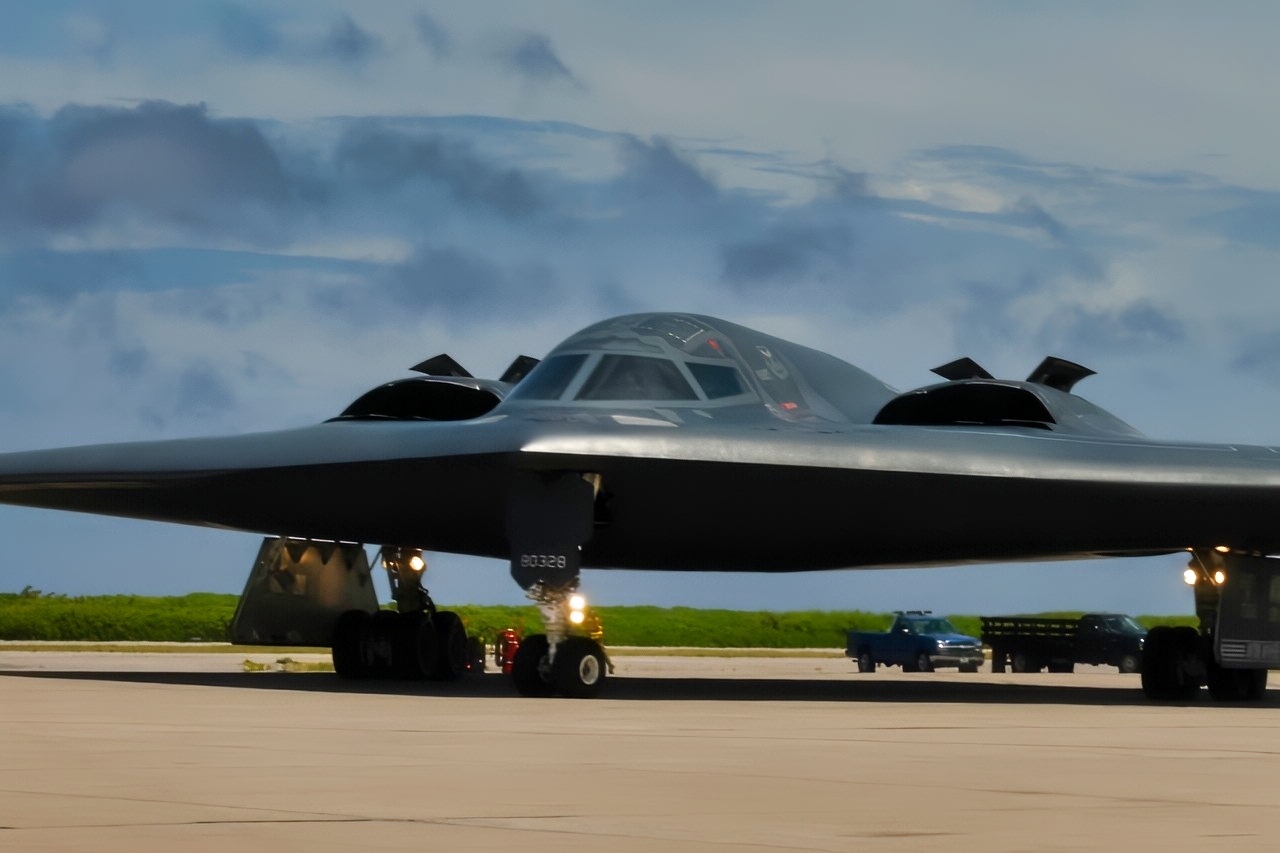
A B-2 Spirit Stealth Bomber, deployed from Whiteman Air Force Base, Missouri, taxis for take off at Naval Support Facility Diego Garcia, in support a Bomber Task Force mission, Aug. 26, 2020. BTF missions allow U.S. Strategic Command to provide persistent, long-term bomber presence to aid in U.S. Indo-Pacific Command’s commitment to a free and open Indo-Pacific. (U.S Air Force photo by Tech. Sgt. Heather Salazar)
What about the current Secretary of Everything, Marco Rubio, though?
Surely, a man who spent his career as a senior, widely respected senator who engaged almost exclusively with matters relating to foreign policy would have known that the Iranians would have blockaded the Strait in the event of a major war against them. The closure of the Strait and the inability of any seasoned foreign policy hand around Trump to predict it is precisely the point that a recent New York Times essay raises. Where was Rubio during those discussions? Because I know for a fact that as a United States Senator, Rubio was privy to the multiple wargames the US military conducted to simulate a US-Iran conflict.
The Drone Revolution No One Planned For
Then there was the added problem faced by US and Israeli forces of Iranian drones. Shockingly, even though both the United States and Israel have experienced the drone revolution in modern warfare–and even pioneered the early technology–neither Washington nor Tel Aviv anticipated the way in which Tehran would use its drones to stymie the US-Israeli alliance militarily.
American wargames featuring a US-Iranian conflict focused on Iran potentially firing barrages of missiles, Iran possibly deploying massive amounts of naval mines, employing fast attack boats to harass ships passing by, and utilizing a rudimentary submarine capability to threaten ships further.
That’s not how the Iranians have played their hand in the Strait of Hormuz, though.
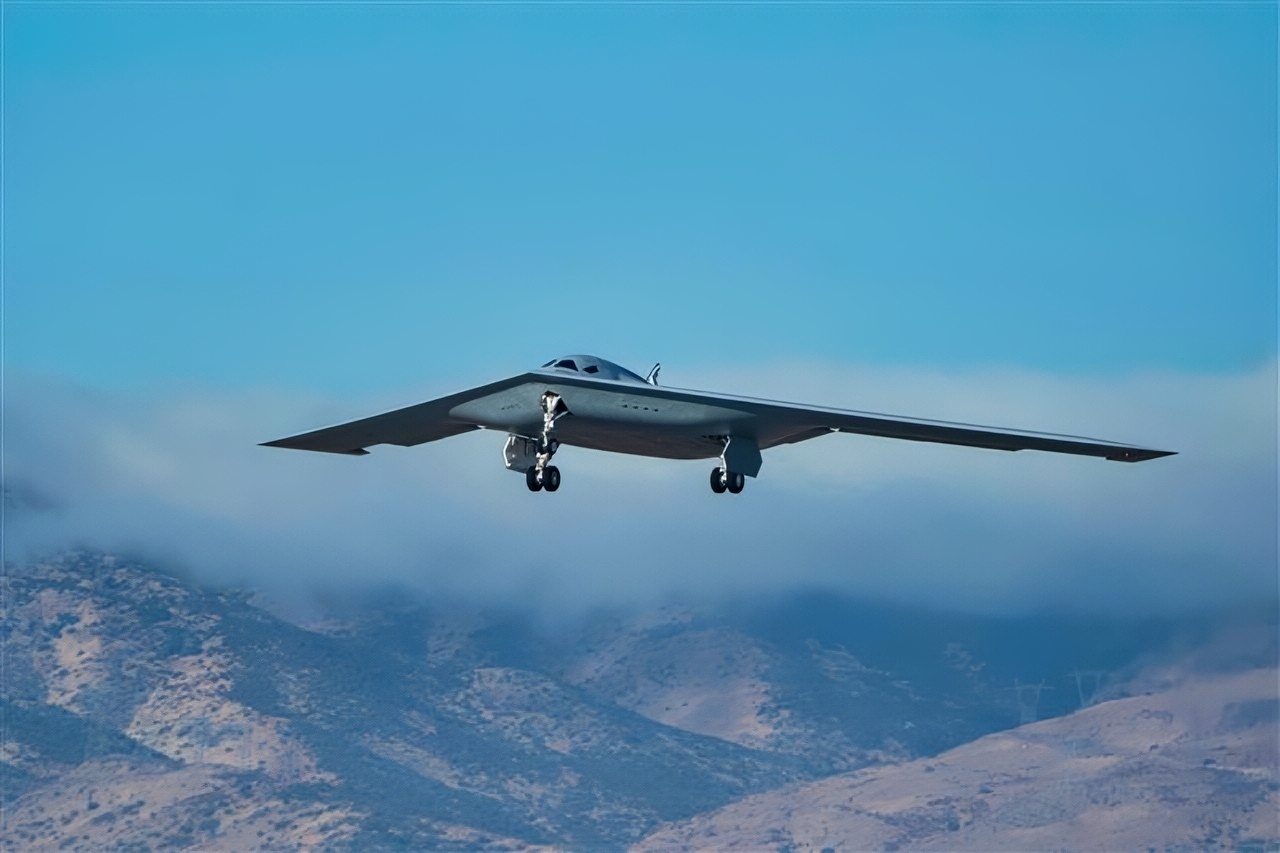
A second B-21 Raider, the nation’s sixth-generation stealth bomber, joins flight testing at Edwards Air Force Base, Calif., Sept. 11. The program is a cornerstone of the Department of the Air Force’s nuclear modernization strategy, designed to deliver both conventional and nuclear payloads. (Courtesy photo)
Instead, Iran leaned heavily into the drone revolution. They led with drones, then anti-ship ballistic missiles–even hypersonic weapons–and finally mines. There’s little evidence that Iran employed either their speedboat force or their submarine fleet in the conduct of their blockade of the Strait of Hormuz.
No Good Military Options Remain
The only way to end that threat, then, is either with an enormous land invasion, which is simply impossible under current conditions for a variety of reasons, ranging from lack of sufficient available ground forces to an inability by US forces to deploy ships into the Strait of Hormuz (without such deployment of ships, they could not land US forces on the Iranian coastline).
The US could try its hand once more at airstrikes against suspected Iranian missile batteries, it could once more try to attack coastal radar systems, to hit those drone launch sites, to conduct Special Forces raids, and expand upon maritime interception campaigns.
None of these alternatives would succeed, though. They had already tried in the earlier round of warfare with Iran and failed to achieve the objectives of reopening the Strait of Hormuz. It also cuts back to the shock among many analysts at how unprepared the Trump administration had been for the Iranian move against the Strait.
The Most Predictable Strategic Failure in Modern American History
That move by Iran against the Strait was the most obvious action Tehran could take. Nevertheless, we now find ourselves scrambling for any military option–no matter how bad–for fear of allowing the Iranians to either exercise permanent control over the Strait or to let them keep the vital waterway closed.
To say that the Trump administration blew the Iran War at the very start because of faulty assumptions, bad leadership, arrogance, and ignorance is the understatement of the century. Now, everyone will pay the price for it.
About the Author: Brandon J. Weichert
Brandon J. Weichert is the Senior National Security Editor at 19FortyFive.com. He also manages The Weichert Brief on Substack. Weichert hosts “National Security Talk” on Rumble, too. He is the author of four bestselling national security books, the most recent of which is A Disaster of Our Own Making: How the West Lost Ukraine (Encounter Books). Follow him via Twitter/X @WeTheBrandon.


Joel Bowling
June 3, 2026 at 4:18 pm
Epic failure on the Trump DoD to not destroy the Iranian command and control systems that can “allow” safe passage of tankers thru the Strait of Hormuz!!!
The US should have immediately seized the Kharg island oil terminal and adjacent Iranian islands with the US Marine Corps MEU that should have been in the area embarked onboard ships… a simultaneously launched attack with ground forces should have immediately coincided to secure the entire region around the Strait by our 82 Airborne and other fast deployment units… during all this, any Iranian ships should be destroyed to prevent further mine deployment in the waters…
another ground assault from the northern area of Iran by the willing and capable Kurds would have forced the Iranian regime to use ground forces and assets to fight against such, thus facilitating our efforts to secure the entire Strait of Hormuz and affecting regime change…
this would have resulted in the most strategic position of the US to ensure ship travel thru the Persian Gulf region while pressuring Iran 🇮🇷 to desirable terms for cessation of the war…
gerbums
June 5, 2026 at 1:17 am
Bibi set the timeline…not USA.
Pingback: How Could Iran Happen? An Autopsy. – TheBullPost