


Iran’s decision to walk away – breaking in the news right now – from the negotiating table and threatening to seal the Strait of Hormuz completely leaves Donald Trump facing a problem with no quick fix. As one former Senior Donald Trump offical who served in his first term on the National Security Council told me just minutes ago: “Trump’s Strait of Hormuz crisis is a problem looking for a solution. Trump has no good options anymore, and he knows that.” He also explained that he felt an oil crisis was coming, and that there was little that could be done to prevent, fix, or end it anytime soon.
The president has spent three months trying to force, bribe, and bomb the Strait back open, and the uncomfortable reality as of today is that the levers available to him are either too slow to matter, too expensive to attempt, or have already been tried and failed.

Donald Trump Pointing in Speech. Image Credit: White House.

President Donald Trump attends an event celebrating the 2025 NCAA Division 1 Men’s Basketball Champion Florida Gators, Wednesday, May 21, 2025, in the East Room of the White House. (Official White House Photo by Daniel Torok)
The strait has been effectively shut since late February, the emergency cushion that has masked the damage is draining fast, and every alternative the United States could reach for runs into a hard physical or economic wall.
Here is why the president is running out of room.
The Reserve Is Draining At A Record Pace
The single tool that has kept this crisis from becoming a full-blown price catastrophe is the Strategic Petroleum Reserve, and it is being emptied faster than at any point in its history.
The reserve has now posted consecutive record-breaking weekly drawdowns, with the EIA reporting 9.92 million barrels released for the week ending May 15, which broke the record set just one week earlier, which had itself broken the previous all-time high from September 2022.
That same week, total US crude inventories fell by roughly 17.8 million barrels, the largest weekly drop in the history of the data series going back to 1982.
The drawdown has pushed the reserve to its lowest level since July 2024, marking the eighth consecutive week of declines, and analysts who track the math warn that the bottom is closer than most people realize.
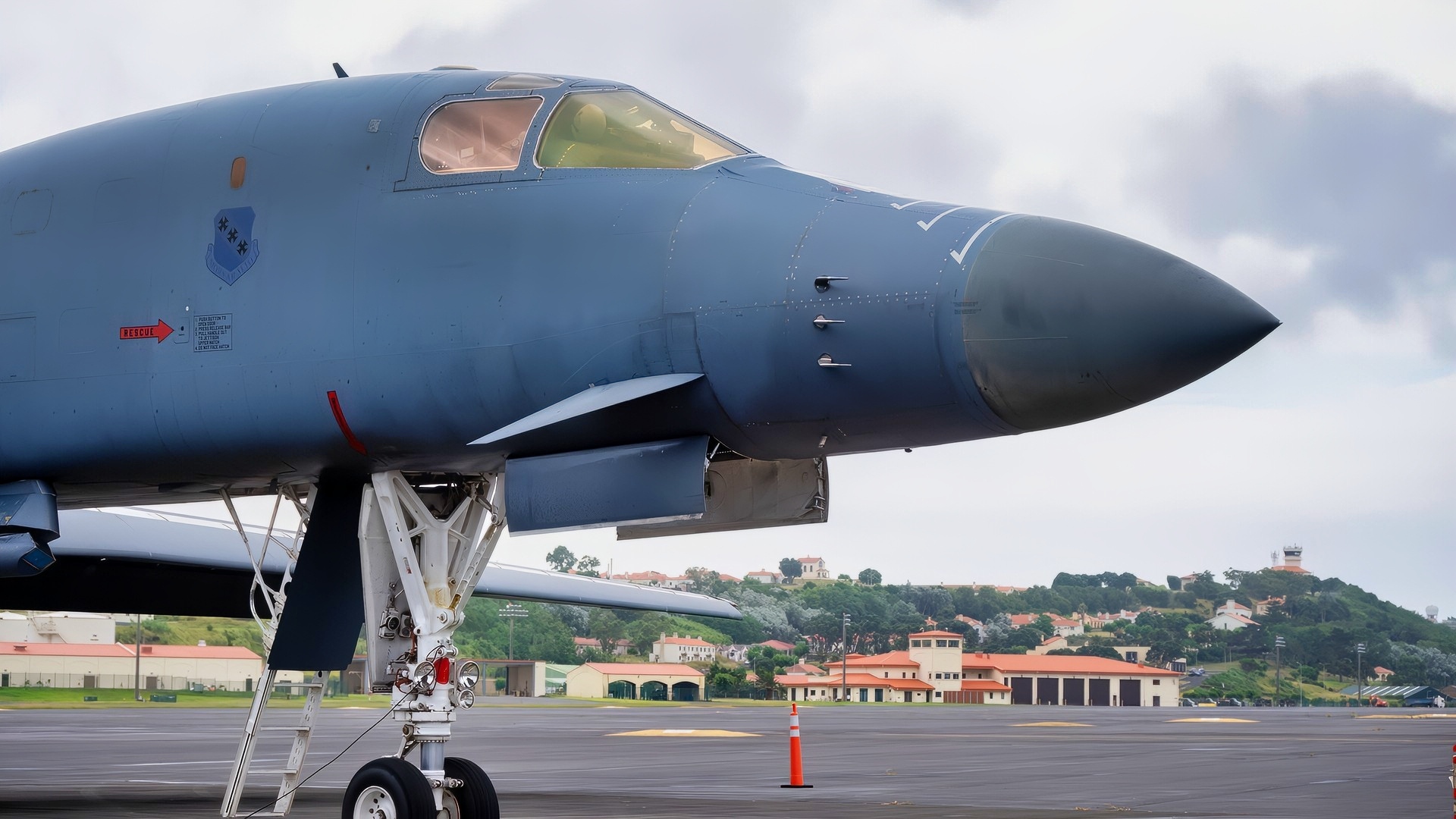
A U.S. Air Force B-1B Lancer sits on the flightline at Lajes Field, Azores, Aug. 22, 2025. The aircraft landed for a hot pit refuel during a Bomber Task Force Europe mission. (U.S. Air Force photo by Cristina Oliveira)
One detailed assessment found that the critical SPR thresholds of 252 million barrels, the legal minimum, and 150 million barrels, the practical geological floor below which the reserve cannot be drawn efficiently, could be reached within three to five months if current depletion rates persist.
The reserve is the shock absorber, and it is wearing out. Once it is gone, as one analysis put it, the market loses its cushion, and any further disruption hits with nothing standing in the way.
The deeper problem is that even this record drawdown is not big enough to fix the actual shortfall.
As one veteran fuel-price analyst bluntly noted, a record SPR decline does not come close to offsetting the 15 to 18 million barrels per day affected by the Hormuz closure.
The reserve is buying time, not solving the problem, and it is running out of time to buy.
You Cannot Pump Your Way Out Quickly
The instinctive answer to an oil shortage is to produce more oil at home, and the United States is the largest oil producer on earth.
But American production cannot be turned up like a faucet, and the barrels the country needs are not the ones it makes.
The crisis has exposed what analysts call a refinery mismatch: even though the US is a net petroleum exporter, it remains vulnerable because its refineries are configured for specific crude grades and its global allies depend on US exports. Much of the American refining base is built to process the heavier, sour crude that comes from the Persian Gulf and similar sources, not the light, sweet crude that US shale fields produce in abundance.

B-1B Lancer Bomber U.S. Air Force Display. Image Credit: National Security Journal.
Even setting the grade mismatch aside, shale production simply does not respond on the timeline a crisis demands. Bringing meaningful new volumes online requires capital commitment, rig mobilization, drilling, and completion, a process measured in many months to years rather than weeks.
A president facing an acute supply shock today cannot conjure a production surge that would arrive in time to matter, and the companies that would have to do the drilling have their own reasons to hesitate.
The Oil Companies Will Not Bet On A Crisis That Could End Tomorrow
Even if the physical timeline allowed for a production surge, the people who would have to fund it are wary, and for sound business reasons. A war-driven price spike is precisely the kind of event oil executives have learned not to chase, because the price can collapse the moment a ceasefire is signed, leaving anyone who invested heavily at the peak holding expensive, unprofitable wells.
The market itself is signaling that nobody expects these prices to last.
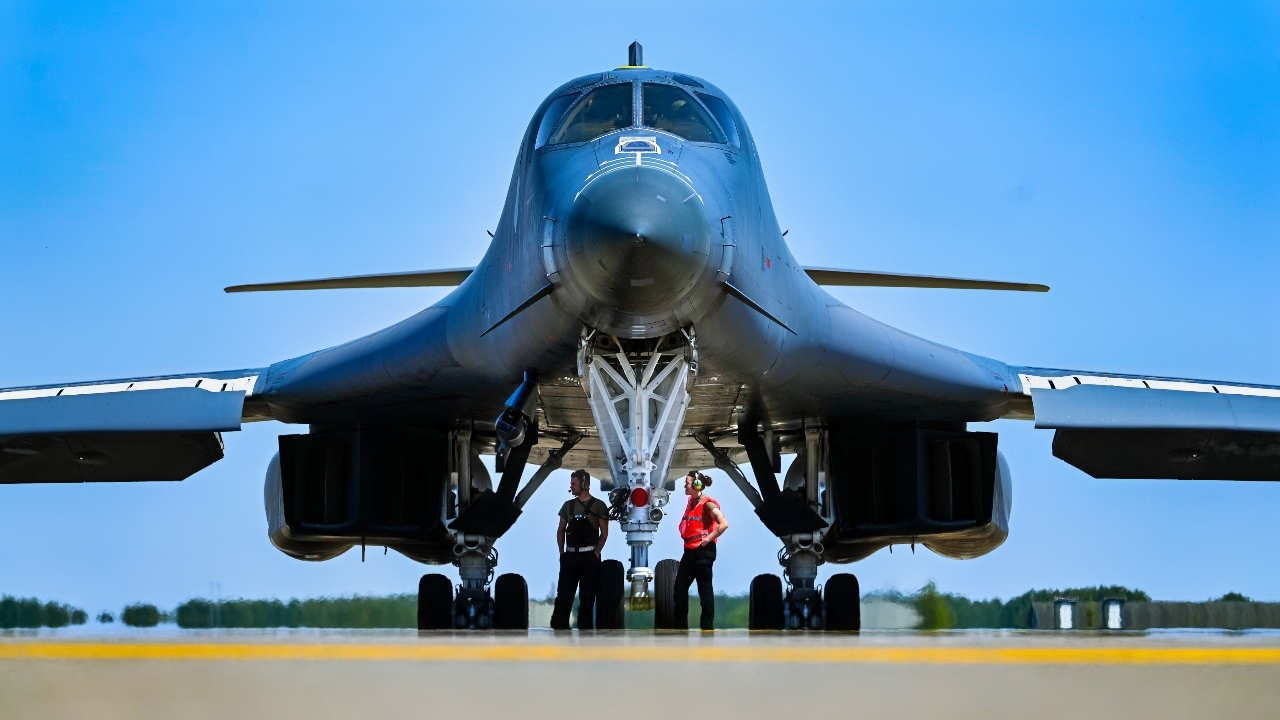
U.S. Air Force Senior Airman Colby Delia, 9th Expeditionary Bomb Squadron crew chief, and Airman 1st Class Olivia Ward, 9th Expeditionary Bomb Squadron crew chief, prepare for a B-1B Lancer to take off for a mission at Misawa Air Base, May 9, 2025. BTF missions provide opportunities to train and work with our allies and partners in joint and combined operations and exercises. (U.S. Air Force photo by Airman 1st Class Mattison Cole)
Crude had actually been falling in recent weeks (not counting today’s spike), with Brent and WTI retreating by double-digit percentages as investors grew optimistic that a deal would reopen the strait, before today’s collapse in talks reversed some of that.
When the forward market is betting prices will come down, no rational producer commits billions to a multi-year drilling program premised on prices staying up. The Trump administration’s own response to the crisis underscores the trap.
Rather than selling reserve oil outright, the Department of Energy structured an exchange program, releasing more than 170 million barrels for delivery during the summer driving season in return for repayment in kind with an 18 to 24 percent premium from late 2026 through 2029. That structure reveals the government’s own assumption that today’s tight market is temporary, the same assumption that keeps private drillers on the sidelines.
You Cannot Build Refineries Overnight, And The Reserve Releases Prove It
The refinery problem cannot be solved with construction, either.
A new refinery in the United States takes years and billions of dollars to permit and build, and no major new refinery has been built in the country in decades. The mismatch between what American refineries are built to process and what American wells produce is a structural feature of the energy system that no emergency measure can change in the span of a crisis.

President Donald Trump greets members of the Navy Midshipmen football team from the U.S. Naval Academy, Tuesday, April 15, 2025, in the State Dining Room of the White House. (Official White House Photo by Daniel Torok)
The evidence that domestic supply cannot plug the gap is visible in the reserve numbers themselves. Industry reporting found that massive SPR releases have been masking what would otherwise look like a far steeper domestic supply drawdown, with US commercial crude inventories erasing all the stockpile gains accumulated earlier in 2026 within just five weeks.
If American production and refining could simply absorb the loss of Hormuz crude, the reserve would not be hemorrhaging barrels at a record pace to keep the market supplied. The fact that it is draining this fast is proof that the domestic system cannot cover the shortfall on its own.
More Bombing Will Not Reopen The Strait
That leaves military force, the option Trump has leaned on hardest, and it is the one that has most clearly failed to deliver.
The problem is that the Iranian capabilities threatening the strait, the missiles, drones, and mine-laying assets, are largely buried where American airpower cannot reliably reach them. Iran has built deep underground “missile cities,” and US strikes on these sites generally hit entrances and ventilation shafts without destroying the missiles and drones inside. One such facility outside Yazd extends more than 1,500 feet into a mountain of granite capable of withstanding crushing pressures, and according to US intelligence, Iran has been able to dig out bombed entrances and return sites to full operation within hours of an attack.
The pattern has held throughout the campaign. A recent satellite-imagery investigation found at least ten construction vehicles clearing a tunnel entrance at an underground missile base near Khomeyn, and US intelligence assessments indicate Iran has already been rebuilding key capabilities, including restarting drone production and replacing missile launchers. Analysts at the Royal United Services Institute concluded that destroying these hardened facilities would require multiple strikes on the same point, detailed intelligence on internal layouts, and sustained follow-up attacks just to prevent rapid repair. Even after CENTCOM launched a large-scale precision strike on Kharg Island targeting more than 90 Iranian military sites, including naval mine and missile storage, the strait stayed shut. Bombing can degrade Iran’s arsenal at the margins, but it cannot bomb the threat to shipping out of existence, because the threat lives underground and regenerates faster than airstrikes can suppress it.

U.S. Air Force F-16 Fighting Falcons assigned to the 14th Fighter Squadron fly in formation waiting to refuel during an off-station training near Misawa Air Base, Japan, June 2, 2025. The F-16s were refueled by a KC-46A Pegasus assigned to the 60th Air Mobility Wing as part of an exercise to demonstrate its capability to traverse the Pacific Ocean and deliver fuel to fighters in the region. (U.S. Air Force photo by Senior Airman Robert Nichols)
Trump Can’t Easily Solve the Strait of Hormuz Crisis
Every road out of this crisis is blocked or slow.
The reserve that has held prices down is months from its floor, domestic production cannot ramp up in time and is aimed at the wrong crude, the companies that would drill will not bet on a spike they expect to vanish, new refineries take years that the crisis does not allow, and the bombs that were supposed to reopen the strait keep hitting mountains that heal overnight.
Trump has spent three months insisting the United States holds the cards. Iran just looked at the table, refused to play, and threatened to seal the Strait for good, and the hand the president is holding is weaker than the bluster suggests.
About the Author: Harry J. Kazianis
Harry J. Kazianis (@Grecianformula) was the former Senior Director of National Security Affairs at the Center for the National Interest (CFTNI), a foreign policy think tank founded by Richard Nixon based in Washington, DC. Harry has over a decade of experience in think tanks and national security publishing. His ideas have been published in the NY Times, The Washington Post, The Wall Street Journal, CNN, and many other outlets worldwide. He has held positions at CSIS, the Heritage Foundation, the University of Nottingham, and several other institutions related to national security research and studies. He is the former Executive Editor of the National Interest and the Diplomat. He holds a Master’s degree focusing on international affairs from Harvard University.


FRED T ADAMS
June 1, 2026 at 1:01 pm
The arguments miss one point. If present-day Iran can block Hormuz effectively and if closure of Hormuz is the disaster here described, then Iran won’t be allowed to continue in its present role. Neither the US nor the rest of the world can tolerate it. Nuclear weapons at Iran’s disposal are no worse than the dire oil shortage effects this author predicts. Given that, the present Iranian government, having defined itself, will die. The US is not, as claimed here, powerless.
Hujjathullah M.H.B. Sahib
June 1, 2026 at 1:18 pm
Quite atypically Kazianis is confusing in this elaborational write-up. The obvious discrepancy is that the east coast refineries are said to be geared to processing crude from the Persian Gulf and elsewhere and that the locally franked shale oil are a mismatch to these refineries. This being the widely acknowledged facts however make the SPR drawdowns all the more relevant here because they are primarily the non-franked, sour crude verity suitable for those east-coast refineries and also right through relevant even beyond the allegedly drawdown geological floor level. How can one be sure that this is not just a slow price waltz meant basically to fleece the unwitting domestic and allied markets ?