

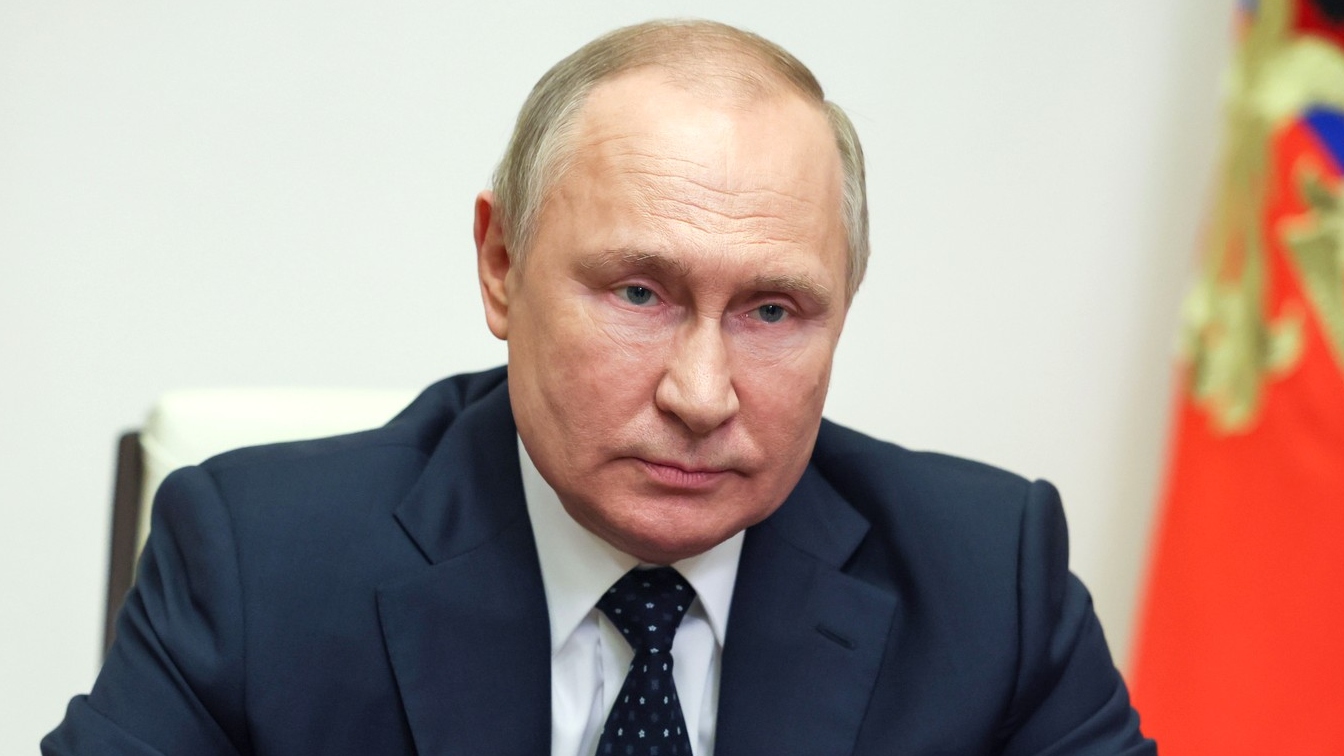
Summary and Key Points: For one week a year, St. Petersburg belongs to Vladimir Putin — host to a glittering economic forum built to remind the world of Russia’s wealth and reach. This year, the curtain went up on a column of black smoke: hours earlier, Ukrainian drones had slammed into the city’s oil terminal, a refinery, and a naval base, the haze drifting into view of the forum itself.
An Expanding Trend of Ukrainian Drone Strikes
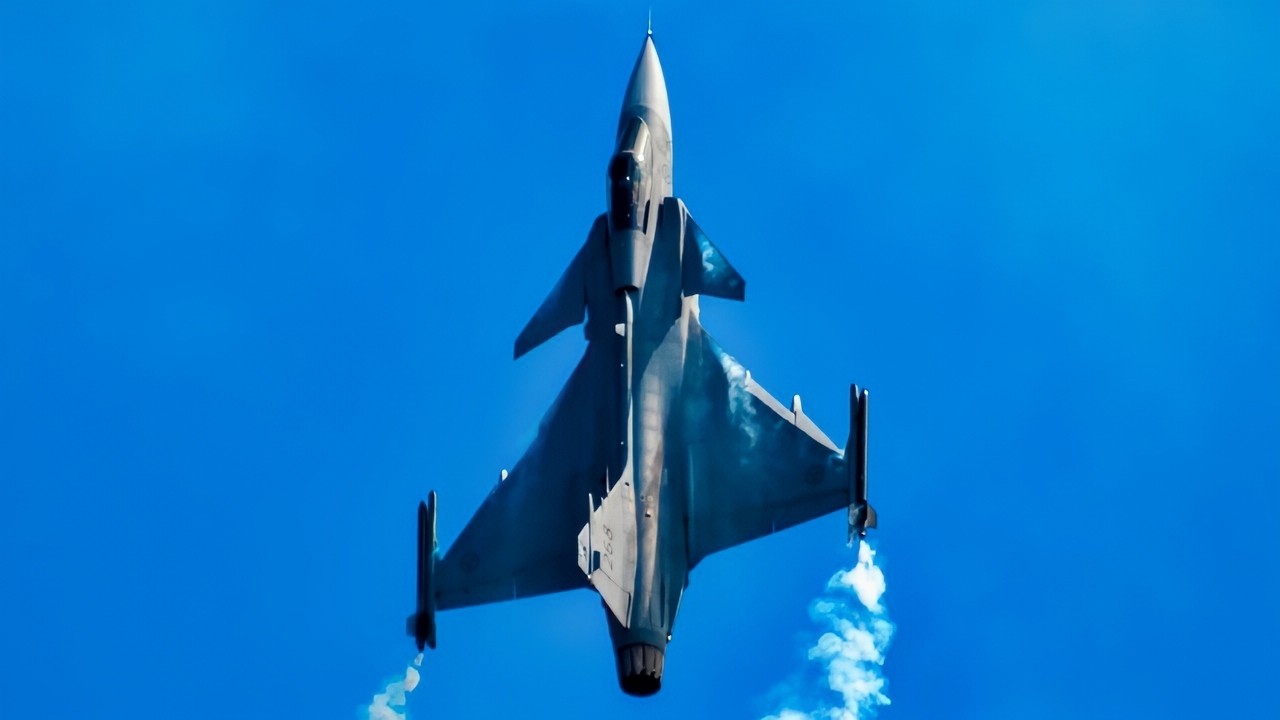
A Swedish Air Force Saab JAS 39 Gripen climbs during the 2019 Royal International Air Tattoo at RAF Fairford, England, July 20, 2019. This year, RIAT commemorated the 70th anniversary of NATO and highlighted the United States’ enduring commitment to its European allies. (U.S. Air Force photo by Tech Sgt. Aaron Thomasson)
Russia’s second city, St. Petersburg, found itself under attack on Wednesday after a cloud of Ukrainian drones struck targets throughout the metropolis ahead of the St. Petersburg International Economic Forum. Though held annually, the event has held special importance after Russia’s full-scale invasion of Ukraine in February 2022, when many world leaders avoided traveling to Russia, and global brands began withdrawing from the Russian market.
It is a trend that has been seen before. Early last month, Russian authorities opted for an abbreviated Victory Day parade on Moscow’s Red Square. Held annually since 1945, the parade commemorates the Soviet Union’s victory over Nazi Germany and is typically replete with military splendor.
In addition to goose-stepping troops in dress uniforms, armored cars, tanks, and other pieces of high-tech military kit, the event provided an opportunity for the Soviet Union, then Russia, to rattle its military saber. New and previously unknown military equipment, particularly advanced cruise and ballistic missiles as well as nuclear weapons, were known to make surprise appearances trundling over the Moscow parade ground.
Last May’s truncated ceremonies were thanks in large part to Ukrainian drones striking targets in and around Moscow, raising fears that Russian military prowess would face deep embarrassment in the face of a concerted Ukrainian drone campaign, should drones manage to land on Red Square in the middle of the anticipated spectacle.
The Strikes in St. Petersburg
Taking to social media, Ukrainian President Volodymyr Zelensky said that his country’s strikes on St. Petersburg targeted the Saint Petersburg Oil Terminal, an oil refinery, as well as the city’s Kronstadt military base, primarily a naval facility. Smoke — the results of the Ukrainian strikes — was reportedly visible from the St. Petersburg International Economic Forum. “Ukraine’s plan for long-range sanctions is being implemented exactly as needed to bring peace closer,” President Zelensky wrote in his social media post.
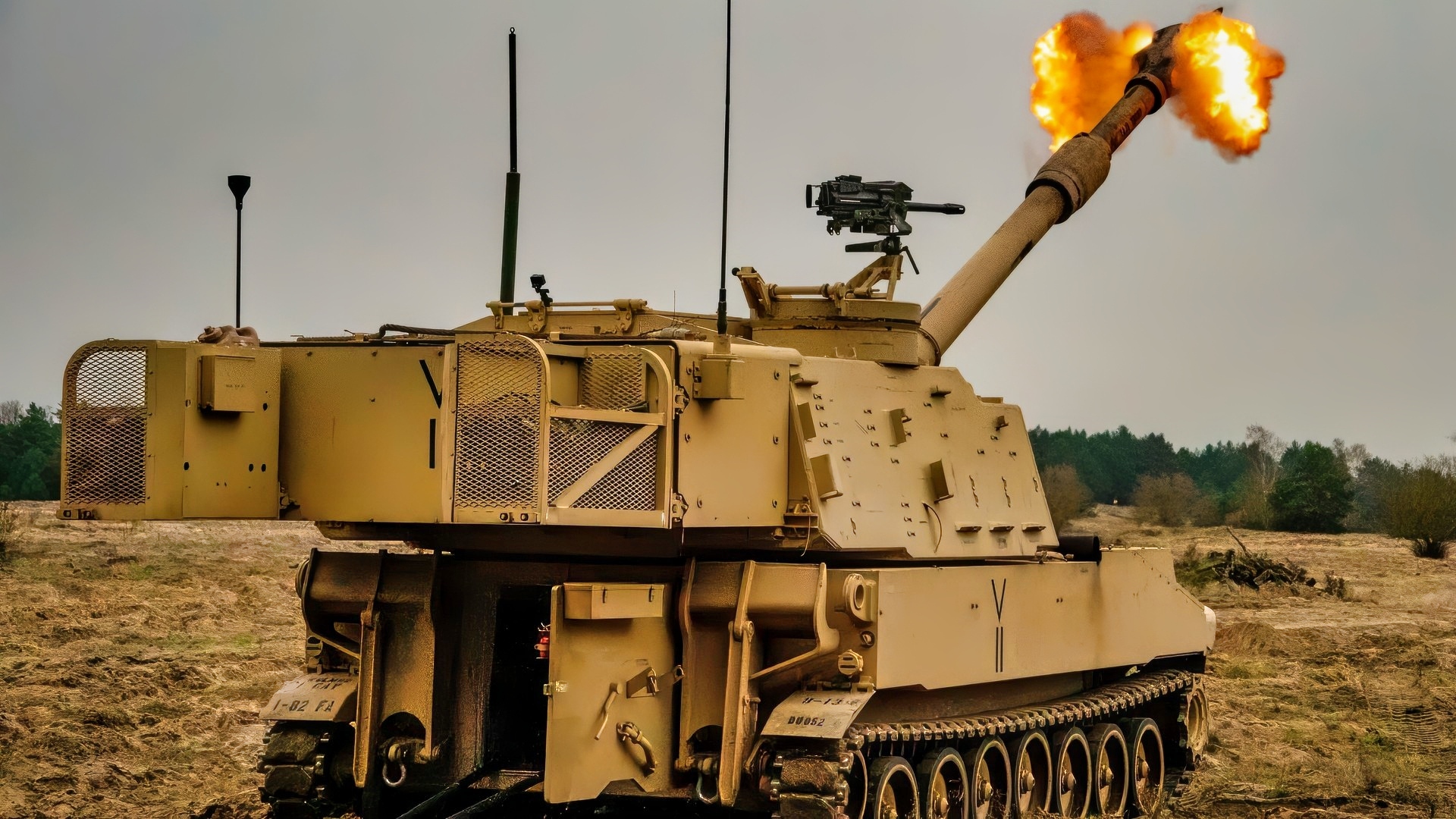
An M109 Paladin, assigned to 1st Battalion, 82nd Field Artillery Regiment, fires a round of high-explosive artillery during Dynamic Front on Forward Operating Site Torun, Poland, Nov. 19, 2024. Dynamic Front takes place from Nov. 4-24 in Finland, Estonia, Germany, Poland, and Romania, and demonstrates NATO’s ability to share fire missions, target information, and operational graphics from the Arctic to the Black Sea. It increases the lethality of the Alliance through long-range fires, builds unit readiness in a complex joint, multi-national environment, and leverages host nation capabilities to increase USAREUR-AF’s operational reach. Dynamic Front includes more than 1,800 U.S. and 3,700 multi-national service members from 28 Allied and partner nations. (U.S. Army photo by Spc. Julian Winston)
Though the strikes may have dampened the mood of the forum attendees, they did not ultimately cancel the event. “The Petersburg forum is opening with a nice plume of black smoke in the background after Ukrainian strikes,” Sergiy Sternenko, an adviser to the Ukrainian Defense Ministry, said.
The St. Petersburg Economic Forum
The multi-day event in St. Petersburg had, in the years prior to Russia’s full-scale invasion of Ukraine in 2022, served as an opportunity for Russia to put its economic might — and future economic potential — on full display for an international audience.
Firms from throughout the West, as well as further afield in Africa and Asia, were given the opportunity to take initial steps toward potential deals with Russia. But the event’s luster has since tarnished significantly.
In previous years, tens of thousands of visitors came to St. Petersburg. This year’s installment, however, saw only two heads of state appear in person, the leaders of Tanzania and Uzbekistan. And while the United States sent a group to the event, the deputation was headed by a relatively minor official, Rodney Mims Cook Jr., who serves as the Chairman of the Commission of Fine Arts.
Ukraine’s Long-range Sanctions
Though the ongoing Ukrainian strike campaign against Russian energy targets has certainly dealt an economic blow to Russia, the lasting effects of Ukraine’s drone strikes may be more difficult to quantify. The sense of invulnerability enjoyed by both St. Petersburg, Russia’s second city, and by Moscow, the capital, has been tarnished.
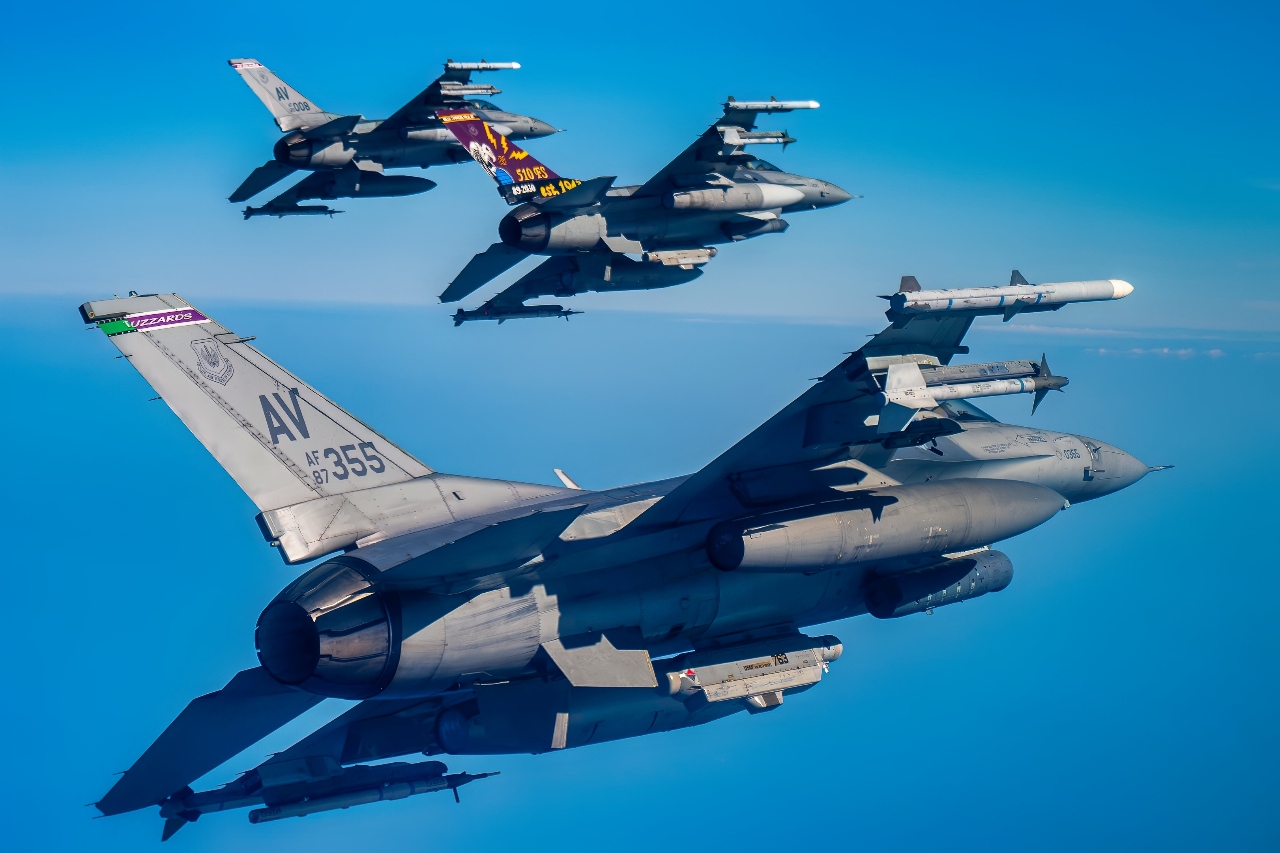
Three U.S. Air Force F-16 Fighting Falcons assigned to the 31st Fighter Wing at Aviano Air Base fly in formation during Exercise Combined Strike 25 along the coast of Italy, August 18, 2025. Integration flying training is key to enhancing interoperability with NATO partners and increasing our readiness capabilities. (U.S. Air Force photo by Senior Airman Zachary Jakel)
Russia is, of course, one of the world’s major oil-producing countries. But fossil fuel products the country extracts and refines are destined not for international oil markets, but for the domestic population clustered around the country’s two major cities. President Zelensky famously dubbed his country’s strike campaign part of a “long-range sanctions” regime.
Russian coffers have been somewhat buoyed, however, by the rise in global energy prices caused by the ongoing Israeli-American campaign.
Primarily a series of air and naval strikes, that joint initiative — called Operation Epic Fury — has added billions of dollars unexpectedly to the Russian war chest.
But Ukrainian strikes on Russian oil and gas nodes have provided a clear demonstration of how vulnerable Russia is and simultaneously highlighted Russia’s seeming inability to defend vital infrastructure from harm.
Troubling Times Ahead in the Ukraine War
Facing setbacks on the battlefield in Ukraine, the strikes on St. Petersburg also laid bare how vulnerable Russia appears to be on the home front, too. Though far from a collapse of the state, Russian strength appears increasingly to stand on shaky ground.
About the Author: Caleb Larson
Caleb Larson is an American multiformat journalist based in Berlin, Germany. His work covers the intersection of conflict and society, focusing on American foreign policy and European security. He has reported from Germany, Russia, and the United States. Most recently, he covered the war in Ukraine, reporting extensively on the war’s shifting battle lines from Donbas and writing on the war’s civilian and humanitarian toll. Previously, he worked as a Defense Reporter for POLITICO Europe. You can follow his latest work on X.


