

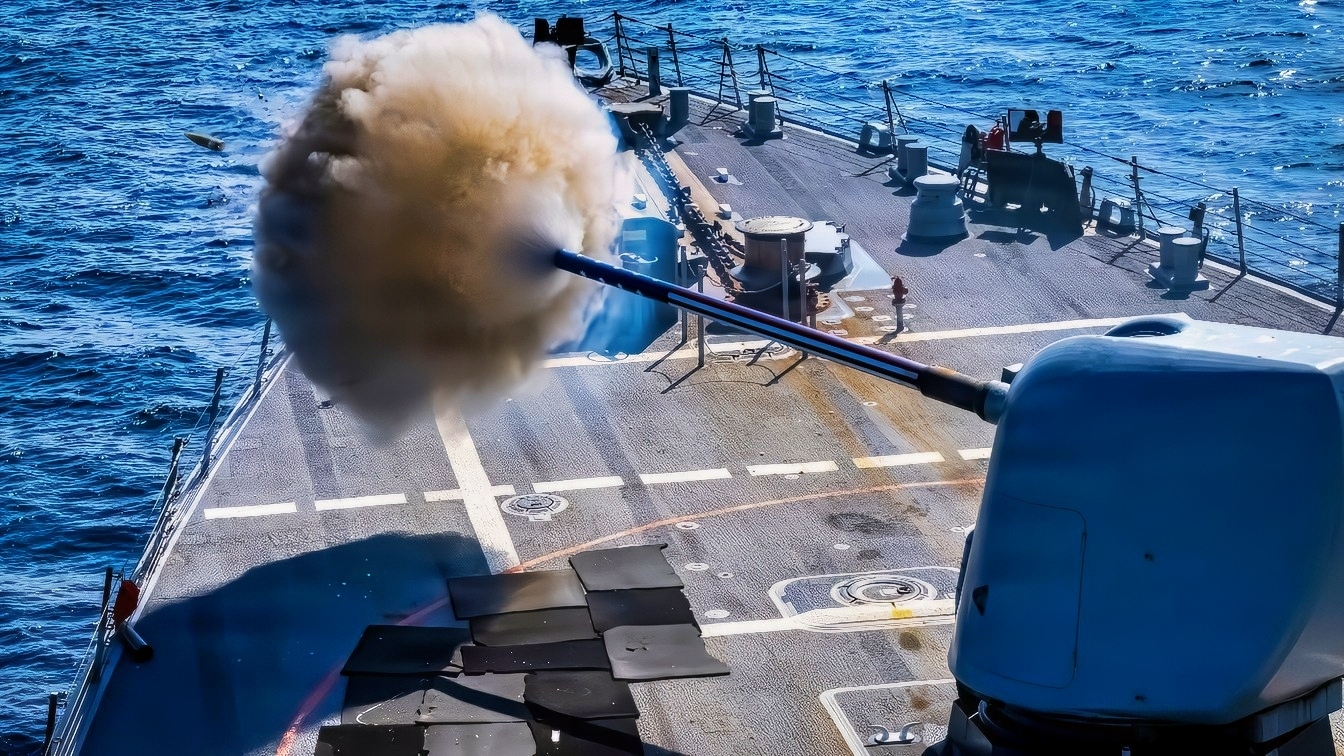
The United States has been effectively defeated by Iran in this year’s war. US President Donald Trump has been unable to coerce acceptable terms from Tehran. Tehran continues to drag out the negotiations, insisting on conditions – such as control of the Straits of Hormuz – which Trump cannot accept because of massive political opposition back home.
Trump himself likely does not care about these details. His passion is domestic affairs and his various Washington refurbishment projects. He clearly wants to get out of the war, even claiming that he is now ‘bored’ by the whole thing. But Trump’s domestic coalition of hawkish unilateralists and evangelical Christians, strongly committed to Israel, will object to any terms equivalent to or worse than the 2015 Iran deal struck by Barack Obama. And Trump himself would find such terms humiliating. Trump loathes Obama and withdrew the US, in his first term, from that deal, which he called the ‘worst deal ever.’
Trump’s response to this dilemma has been to insist that the US blockade of the Strait will compel Iran to deal in time. This seems unlikely. If Trump genuinely wants to win, he has to invade Iran and actually depose its government. That requirement has been obvious for months, but Trump is loath to do it, because it would likely evolve into a conflict worse than the US war in Iraq of 2003.
The other alternative is to capitulate and get out.
Military Power is Not a Theory of Victory
At a retrospective conference on the Vietnam War, a US officer noted that the Vietnamese never defeated the US on the battlefield in that long conflict. A Vietnamese officer replied, ‘True, but irrelevant.’ This is a useful insight into America’s problems in the Iran War and its wars in the Middle East more generally.
America has tremendous military capabilities. It can effectively, per the saying, ‘kill people and break things.’ But that is not enough. As the Vietnam War demonstrated, actually winning a conflict usually requires a broader political strategy rather than raw military capabilities. Wars like World War II, which end with the total capitulation of the enemy, are rare. More often, force is one element of a broader effort to push an opponent toward an acceptable political solution. That political outcome is the end-goal of the conflict, not military destruction itself. This is Clausewitz’s famous dictum that ‘war is politics by other means.’

F-4 Phantom II Fighter National Security Journal Image Taken Onboard USS Intrepid.
It is now painfully apparent that the Trump administration had no political strategy to resolve the war beyond strikes. Trump clearly believes that Iran would capitulate within a few days or weeks of bombing. His model seems to have been the quick elite replacement that Trump pulled off in Venezuela. When that didn’t work, the administration was adrift, testing various rationales to justify the war and hoping that US threats would compel Iran to bargain. That has not worked.
Getting Out of the Iran War Won’t Be Easy
Trump will likely struggle against the looming defeat he faces. He will bomb a bit more, order a tighter blockade, make more extreme threats, and so on. But if Iran were going to break, it likely would have done so by now. Trump’s only real choice – as it has been for months – is invasion or withdrawal. An invasion will destroy Trump’s presidency as it would likely evolve into a massive quagmire. Consequent Republican election defeats would be crushing.
Instead, Trump will pull back while calling it a great victory. This will be a gross exaggeration, but at this point, that is irrelevant. The alternatives – a massive ground war or an indefinite blockade, which would throw the global economy into a lengthy recession – are worse.
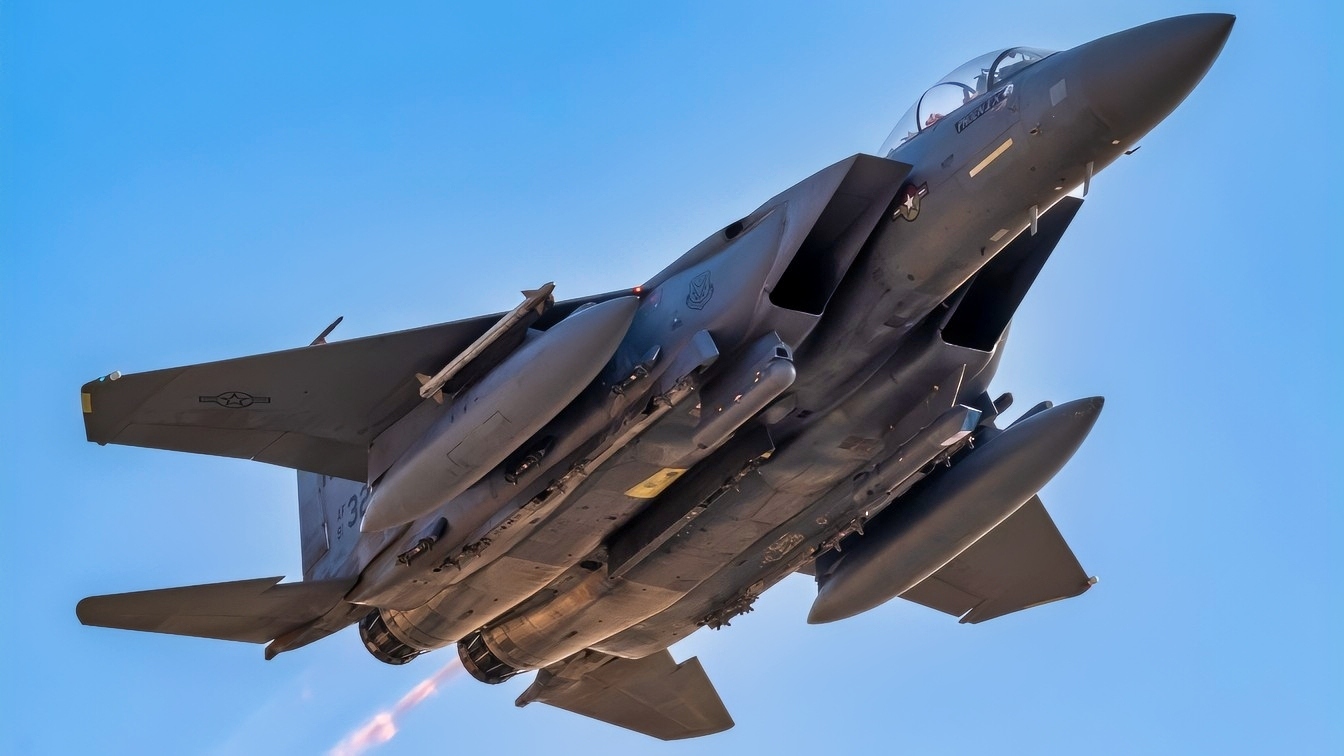
A U.S. Air Force F-15E Strike Eagle aircraft soars through the air during exercise Marauder Shield 26.1 within the U.S. Central Command area of responsibility, Nov. 11, 2025. Marauder Shield 26.1 emphasized a coordinated response to the growing threat of unmanned aerial systems. The exercise featured advanced counter-Unmanned Aircraft Systems integration between the U.S. and Kuwaiti forces, bolstering regional security and demonstrating a commitment to collaborative defense. (U.S. Air Force photo by Staff Sgt. Tylin Rust)
More importantly, Trump and America generally may finally learn from this debacle that the US is overstretched in the Middle East and should retrench. If defeat is what it takes to learn that, so be it. Defeat in Vietnam was necessary to convince the US not to over-extend itself by marching into every communist insurgency in the Third World. America’s military record in the Middle East is even worse. In the thirty-five years since victory in the 1991 Gulf War, the US has fought repeatedly but lost despite its capabilities.
It is time to recognize that the US cannot police the religious feuds of the region, cannot transform societies against their will, and is squandering resources better spent on the big geopolitical challenge of the future – China.
Adjustment is Not Disaster
Opponents and neoconservatives will claim that the US must stay for Israel, oil, and Islamic terrorism. None of that is true. Israeli security can be guaranteed with a far smaller US commitment. Oil will flow from the region whether the US stays or leaves.
Oil is no use to oil-exporters if it is unsold or left in the ground. And Islamic terrorism is far less of a problem now than it was twenty-five years ago.
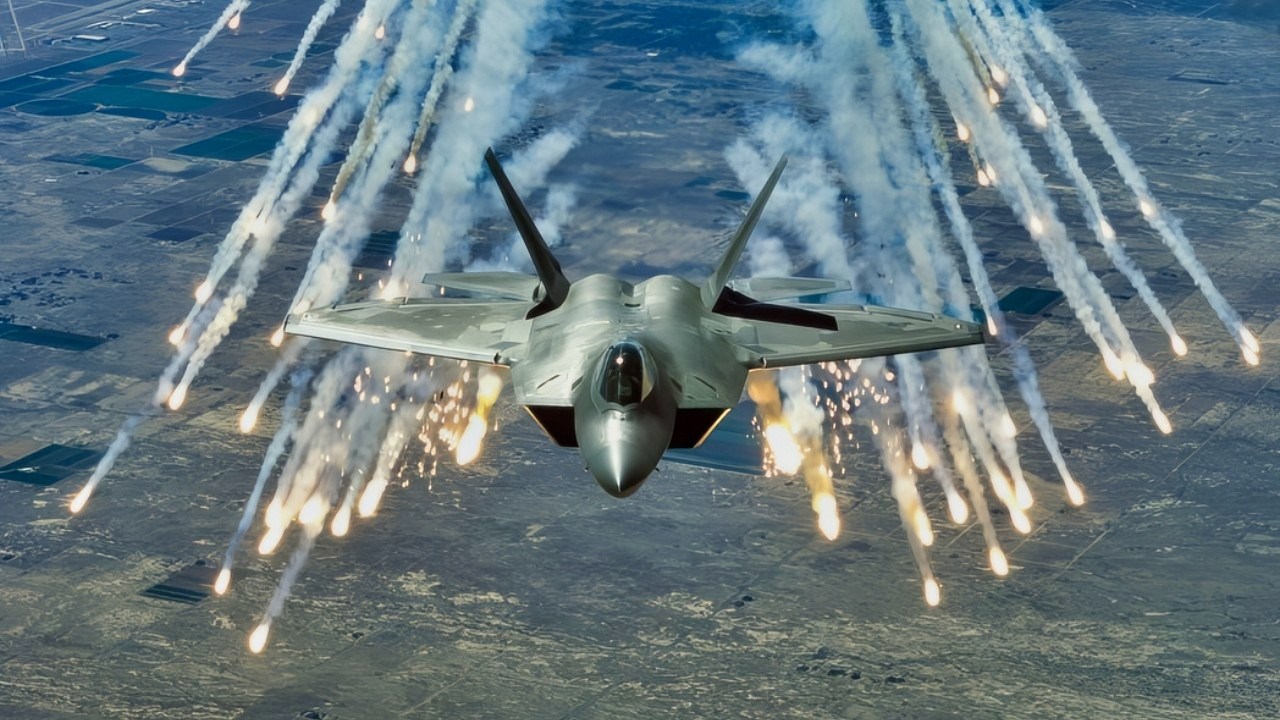
F-22 Raptor Firing Flares. Image Credit: Creative Commons.
Reordering the Middle East according to US preferences has proven to be a bridge too far. That should be painfully obvious after yet another inconclusive, expensive US war in the Middle East. It is time to retrench.
Author: Dr. Robert Kelly, Pusan National University
Dr. Robert E. Kelly is a professor of international relations in the Department of Political Science and Diplomacy at Pusan National University in South Korea. His research interests focus on Security in Northeast Asia, U.S. foreign policy, and international financial institutions. He has written for outlets including Foreign Affairs, the European Journal of International Relations, and the Economist, and he has spoken on television news services such as the BBC and CCTV. His personal website/blog is here; his Twitter page is here.


