


Here’s a not-so-fun fact: before the Trump administration and the Israeli government led by Prime Minister Benjamin Netanyahu initiated their war of choice against the Islamic Republic of Iran on February 28, American households were collectively $100 billion richer. The specific cost since February 28 has been around $750 per household.
But if you believe, as I do, that we are not getting normalization anytime soon between Iran, the United States, and Israel, that cost is going to increase over the next several months.
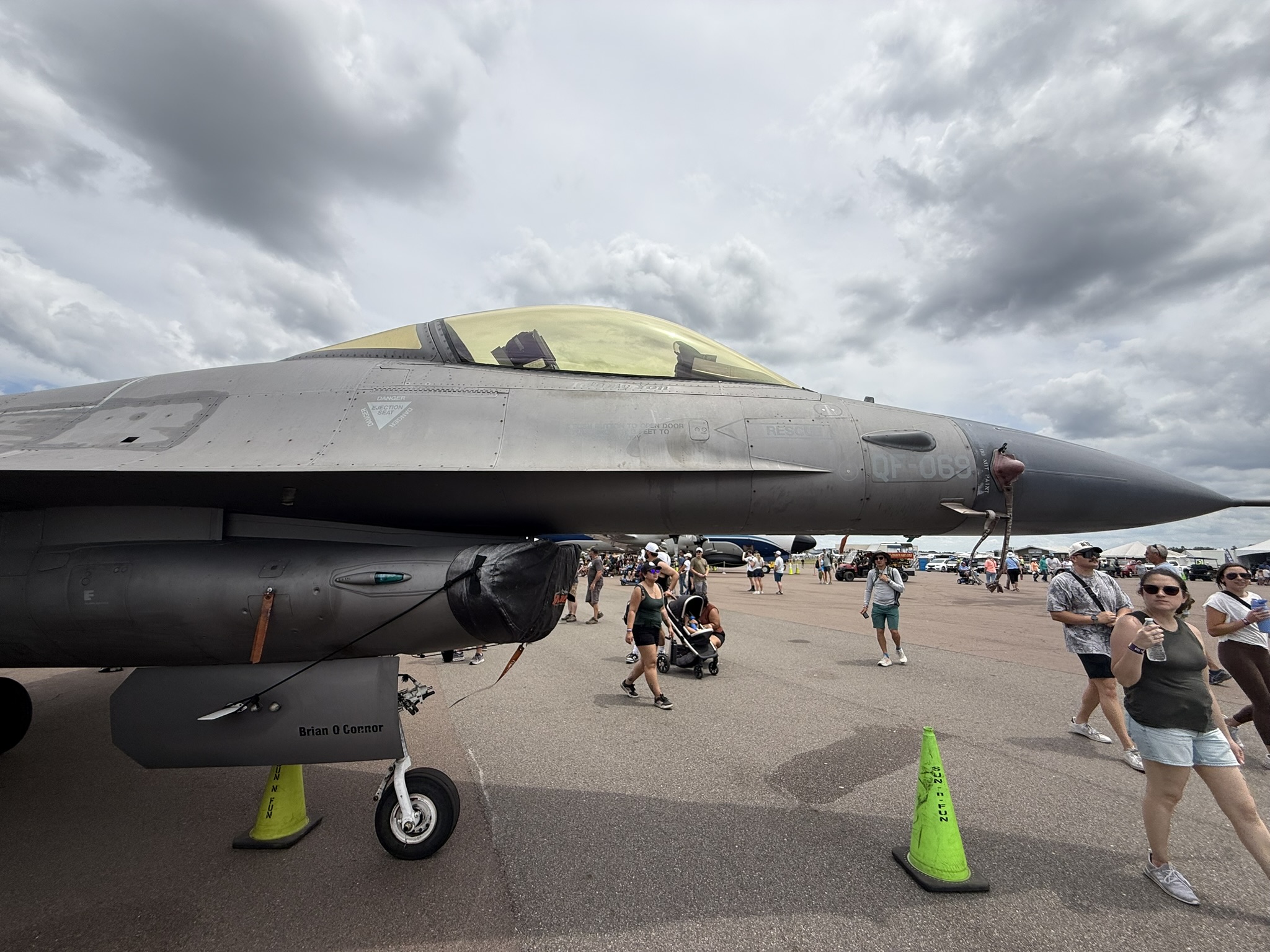
F-16 fighter from Lakeland, Florida Air Show. National Security Journal Original Photo.
Moody’s chief economist, Mark Zandi, is the man behind those stark figures, and he argues that the costs of the Iran War now threaten the fragile economy. His figure makes sense, as the noted economist calculated the combined cost that higher gas prices, higher diesel costs, increased jet fuel prices, and additional US military expenditures resulting from the ongoing conflict have had on the individual pocketbooks of American households.
Per Zandi, all the economic benefits from last year’s tax cut are gone, thanks to the war’s burdensome costs.
It’s About Energy Supplies, Stupid
During the 1992 presidential election, upstart (quasi-populist at the time) Democratic Party politician Bill Clinton upset the incumbent, stodgy Republican President George H.W. Bush with a simple, single mantra: “It’s the economy, stupid!” By keeping all his statements and policies grounded in that simple–brilliant–message, Clinton managed to defeat the president who had presided over the end of the Soviet Union, America’s victory in the Cold War, and the even more rapid defeat of Saddam Hussein in Desert Storm.
Today, however, the economy is clearly subordinate to energy.
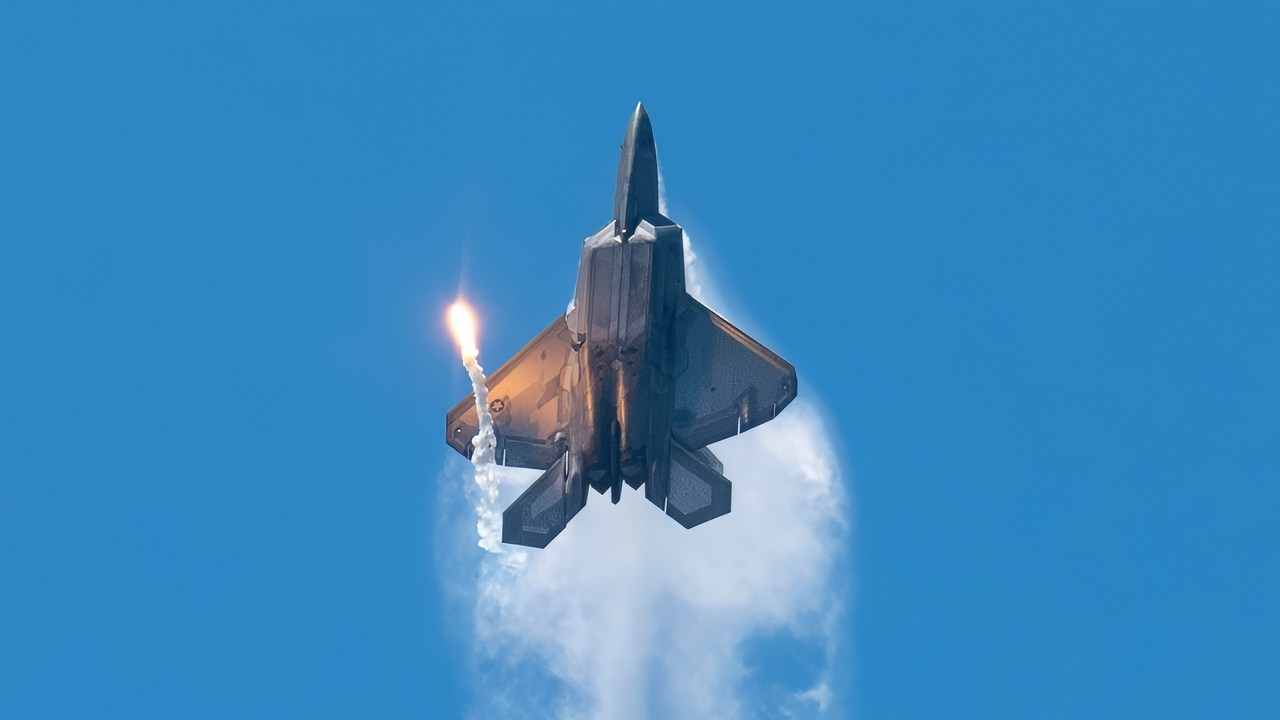
An F-22 Raptor assigned to the 1st Fighter Wing F-22 Demo Team, performs an aerial routine during the Wings Over Wayne Air Show at Seymour Johnson Air Force Base, North Carolina, May 20, 2023. Wings Over Wayne provides an opportunity for North Carolina residents and visitors from around the world to see how SJAFB builds to the future of airpower and displays a history of aircraft innovation and capabilities. (U.S. Air Force photo by Senior Airman Kevin Holloway)

Capt. Kristin “Beo” Wolfe, F-35A Lightning II Demonstration Team pilot and commander, banks hard left making vapor trails over and behind the wings during a practice demonstration at Hill Air Force Base, Utah, Mar. 23, 2021. The demonstration team is part of Air Combat Command and is assigned to the 388th Fighter Wing at Hill AFB. Capt. Wolfe grew up a military child as the daughter of retired Col. Jon Wolfe and has flown the T-6 Texan II, T-38 Talon, F-22 Raptor and now the F-35A Lightning II. (U.S. Air Force photo by Alex R. Lloyd)
That’s simply because everything in our economy runs on energy. And when the energy sector depends upon at least 20 percent of its oil and 18 percent of its liquefied natural gas (LNG) to pass through the Strait of Hormuz, if that strait closes down, energy prices will explode.
As energy prices rise, those increases ripple through the economy, distorting other markets and, if the economic distortions are strong enough, destabilizing the sociopolitical order, too.
Per Reuters, the Federal Reserve’s Beige Book has already noted broader inflation pressures tied to higher energy costs from the Iran War.
Even if Americans don’t immediately see $7 or $8 gasoline at the pump, the cumulative effect of elevated energy prices will show up everywhere else, dragging the overall economy with it.
Zandi’s Recession Warning
Zandi is not claiming the economy is already in recession. He’s saying that the economy is growing well below its potential. Zandi also noted the stagnation of real disposable income among most Americans. He points to a softer labor market than expected heading into 2026. More importantly, inflation is once again rising due to the war in Iran.
Earlier this year, Zandi estimated recession odds around 40% and 50%. He warned that sustained oil prices above roughly $125 per barrel could push the economy into contraction.
Not Everyone Agrees
Certainly, experts dispute Zandi’s analysis. Recent jobs data showed the US added 172,000 jobs in May, well above expectations, while unemployment remains at 4.3%. Some economists argue the labor market remains strong enough to absorb higher energy prices.
Research from the Federal Reserve Bank of Boston also suggests that modern oil shocks may have less impact on unemployment than they did during the 1970s. Let us hope, for all our sakes, these rosy predictions are correct.
The Iran War as an Inflation Shock
The immediate issue is not whether Americans can still fill up their cars this week or even next month. The issue is whether elevated prices persist long enough to keep inflation elevated, prevent interest rate cuts, weaken consumer spending, and push a slowing economy into recession.
Zandi’s view is that the American economy has enough resilience to survive a short-lived energy shock, but not necessarily a prolonged one. If oil prices remain elevated and the conflict drags on, the economic damage compounds over time.
I assess that unless the situation settles into something more predictable and the Strait is reopened immediately and completely, the energy sector will implode, bringing the American economy down with it. Most analysts singing a more hopeful tune are simply living under the swan song of normalcy bias. There is no going back to the way things were before February 28; the Iranians will never let that happen.
About the Author: Brandon J. Weichert
Brandon J. Weichert is the Senior National Security Editor at 19FortyFive.com. He also manages The Weichert Brief on Substack. Weichert hosts “National Security Talk” on Rumble, too. He is the author of four bestselling national security books, the most recent of which is A Disaster of Our Own Making: How the West Lost Ukraine (Encounter Books). Follow him via Twitter/X @WeTheBrandon.


