


Summary and Key Points: After years of delays turned its next frigate into an expensive disaster, the Navy made a hard call — and the Trump administration pulled the plug on the troubled Constellation-class program. Now the Navy is racing to fill the gap, and its solution is raising eyebrows: a new warship called the FF(X) that, stripped of the jargon, is essentially a militarized Coast Guard cutter.
Here Comes the FF(X)
After the disastrous cancellation of the Constellation-class frigate program, the U.S. Navy is now pivoting to an emergency stopgap solution: a militarized Coast Guard cutter called the FF(X).
Built on the existing Legend-class National Security Cutter hull, the FF(X) is a painful admission that the Navy can no longer produce complex warships in any meaningful way—and the consequences could be catastrophic.
The Navy’s New FF(X) Frigate Is Really Just a Militarized Coast Guard Cutter

An artist rendering of the U.S. Navy guided-missile frigate FFG(X). The new small surface combatant will have multi-mission capability to conduct air warfare, anti-submarine warfare, surface warfare, electronic warfare, and information operations. The design is based on the FREMM multipurpose frigate. A contract for ten ships was awarded to Marinette Marine Corporation, Wisconsin (USA), on 30 April 2020.
The United States Navy finds itself in a strategic pickle.
Its shipyards are overburdened, with a workforce at half-strength, capabilities strained, and an infrastructure undergirding those shipyards–along with a defense industrial base–that can no longer sustain the existing (declining) US Navy fleet.
To compound America’s problems, the Navy finds itself in one of the most dynamic strategic environments since the Cold War, tasked with doing more across multiple theaters worldwide with fewer capabilities.
Constellation-Class Collapse: The Failure That Force FF(X)
Naval planners had wanted a new frigate to augment their surface warfare capabilities.
But the Constellation-class frigate turned out to be an unmitigated disaster. The Trump administration finally canceled the program after years of languishing in what the Hollywood types would describe as “Development Hell”. Another victim of the grave mismatch between strategic priorities, force requirements, and grand ambition in Washington.
Yet a severe capabilities gap now exists due to the cancellation of the Constellation-class frigate. To fill that gap, the Navy has proposed a shockingly aggressive development timeline for the new FF(X), an augmented variant of the Legend-class National Security Cutter.
Described as a fast-track frigate stopgap, the Navy is desperately moving whatever resources it can to get hulls in the water.
To show you how aggressive the timeline is, the US Navy has the program starting in Fiscal Year 2027 (next year) and launching in the first quarter of FY 2029, with delivery in Q3 of FY 2030.
That’s unheard of for today’s Navy.
Unlike many other previous naval designs in the post-Cold War era, the FF(X) timeline is believable because it’s not an entirely new warship.
Enter FF(X): A Fast-Tracked Stopgap Built on a Coast Guard Hull
By reusing an existing hull design, leveraging pre-built components (from a canceled cutter), and minimizing early design changes (which was the real killer of the Constellation-class frigate), the Navy is prioritizing production over design.
In other words, the Navy is returning to the way it procured platforms before the end of the Cold War. That’s a good thing.
Of course, the new FF(X) is not a panacea. The Navy has much different requirements and needs than does the United States Coast Guard (USCG), which employs cutters. The new FF(X) is essentially just a militarized Coast Guard cutter. That’s better than nothing, but there will be downsides.
For instance, the new FF(X) will lack the all-important Vertical Launch System (VLS) that Navy surface warships employ to fire Tomahawk Land Attack Missiles (TLAMs) at enemy targets. Nevertheless, there will be some important features to make this ship more than just a glorified Coast Guard ship.
For instance, the Navy is installing its powerful combat systems and defensive gear on the FF(X). So, these boats will have a point-defense system using the Rolling Airframe Missile (RAM). She’ll come with the SPS-77 radar, as well as a modular payload space rather than traditional weapons (further separating the Navy’s version of the Legend-class National Security Cutter from the original Coast Guard version).
These ships can conduct escort missions in permissive environments (so, not the Strait of Hormuz), provide maritime security (for operations of the kind that US forces are engaged in throughout Latin America), and the new FF(X) will conduct drone and undersea vehicle (USV) integration experiments that will have profound implications for the Navy’s future development.
Sadly, this tiny ship will not be very useful against a near-peer rival, such as China or even Russia.
Flight I Reality: A Frigate in Name Only
But the Navy is not simply planning to accept this paradigm as permanent. Instead, the maritime branch is already signaling that the Flight I variants of the FF(X) will be little more than a placeholder. A placeholder for what? Not another big-ticked platform, like the Constellation-class. Instead, a placeholder for Flight II of the FF(X).
In that Flight II variant, the Navy intends to install a VLS that will possess the Navy’s full VLS missile suite. What’s more, the Navy will include anti-submarine warfare (ASW) capabilities. There’s even discussion about the Navy incorporating its legendary Aegis-based systems in Flight II models.

Arleigh Burke-class guided-missile destroyer USS Michael Murphy (DDG 112) sails alongside Nimitz-class aircraft carrier USS Abraham Lincoln (CVN 72) on Dec. 8, 2025. USS Abraham Lincoln (CVN 72), flagship of the Abraham Lincoln Carrier Strike Group, is underway conducting routine operations in the U.S. 7th Fleet area of operations, demonstrating the U.S. Navy’s long-term commitment to a free and open Indo-Pacific. (U.S. Navy photo by Mass Communication Specialist 3rd Class Nathaly Cruz)

Arleigh Burke-Class. Image Credit: Creative Commons.
What the proposed FF(X) indicates, however, is the painful realization on the part of naval planners that the naval shipyards have reached terminal decline. The maritime branch can no longer rely on its industrial base to effectively produce more complex systems. Nor can the Navy trust its own acquisitions process not to overcomplicate the design and production of more advanced systems, such as what happened during the design phase of the failed Constellation-class frigate.
Because of these clear industrial failures in the US Navy’s shipyards and within the Navy’s acquisitions bureaucracy, the Navy is adapting a makeshift warship to meet the tragic reality that it simply cannot produce the warships it needs in an affordable, reliable manner. So, the Navy is going to take the Coast Guard cutter model and adapt it over three flights to ensure they eventually come out with the warship that they need.
In the FY27 budget request, the Navy makes clear its intention to possess 55-60 units of the augmented cutter, with the bulk of those units being upgraded variants. The Navy, therefore, wants $1.4 billion for the lead ship and an additional $212 million for research and development. It’s not a side project for the Navy. This stopgap has now become the core of the future fleet’s architecture.
Quantity Over Quality: The New Logic of Naval Warfare
What’s more, the Navy’s decision to embrace the augmented cutter model highlights how quantity is now going to trump quality in future combat. Drones, missile saturation, and attrition warfare demonstrated in the Ukraine and Iran Wars highlight the shift that has already occurred. Plus, the Chinese navy’s development reinforces this notion. Thus, the US Navy requires more hulls rather than a handful of exquisite ones.
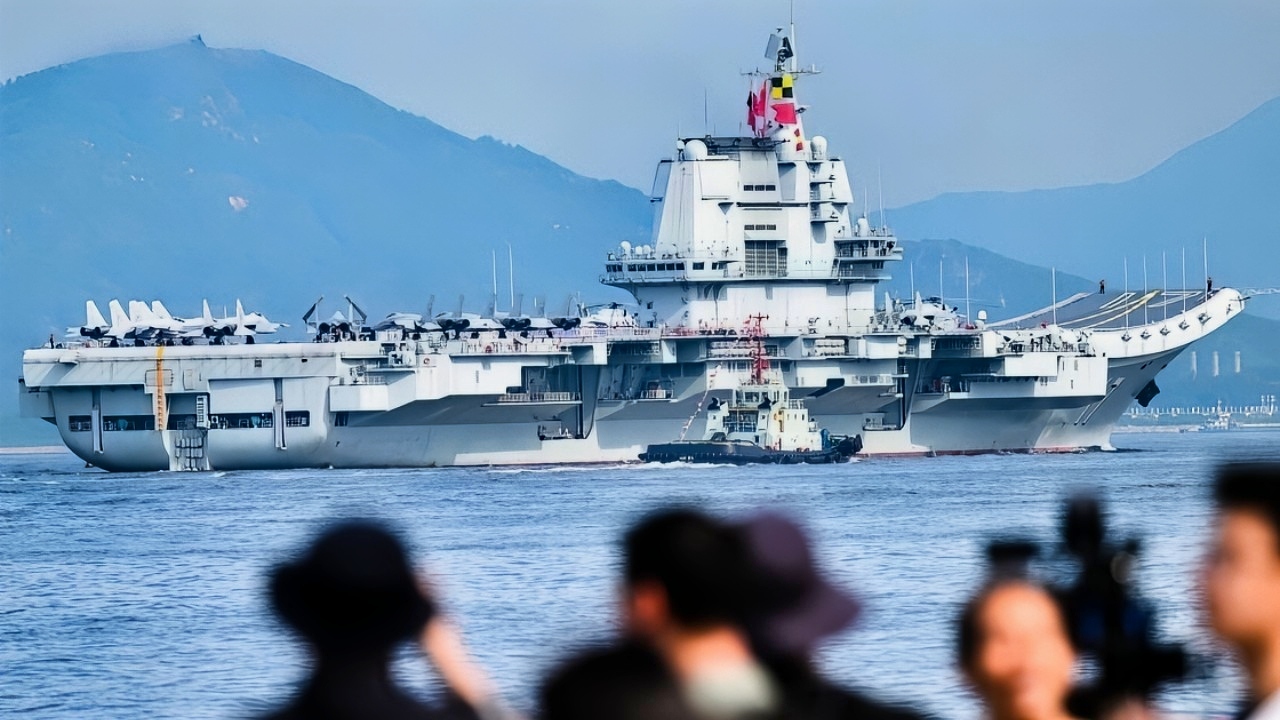
China Aircraft Carrier in Port. Image Credit: Chinese Navy.

China Aircraft Carrier Operations. Image Credit: Chinese Navy.
Of course, the problem remains one of timing.
Even these less advanced hulls will still take more time to develop and deploy than what may be available to the US military, given that it increasingly seems World War III could begin at any minute. Despite these ships being simpler than the Constellation-class, the Navy’s plan for them assumes a smooth production ramp, that successful upgrades will come later (and in a timely fashion), and that there will be no major redesign shocks.
That all sounds highly optimistic, given the previous failures of American naval shipbuilding projects.
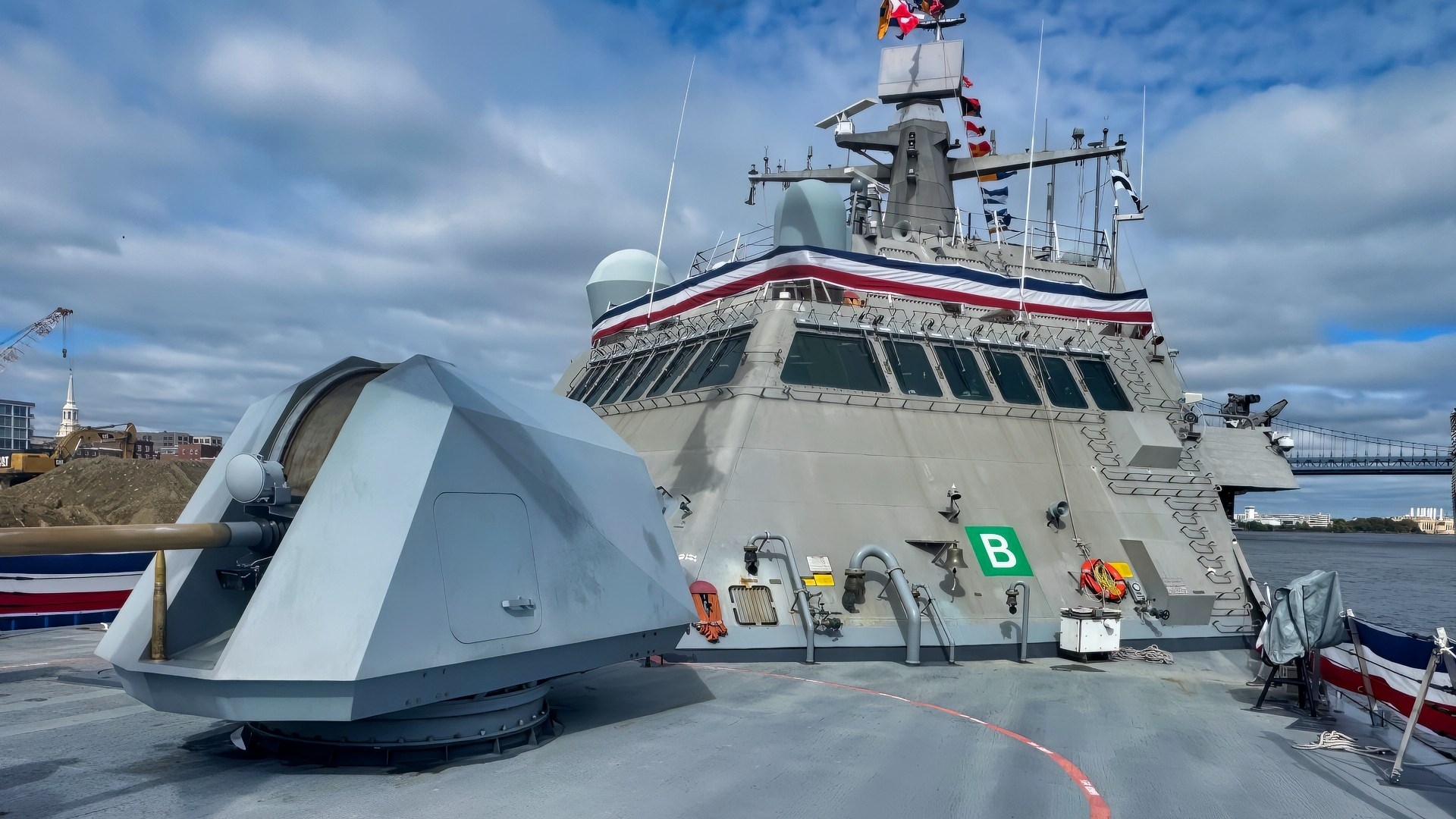
Top of USS Cooperstown Littoral Combat Ship. Taken by National Security Journal on October 14, 2025.
All the FF(X) program does is highlight how far the US industrial base has fallen since its heyday in the Second World War. It’s a painful admission that the Navy simply cannot build warships anymore in any meaningful way.
A Navy Adapting to Decline, Not Dominance
Further, the decline from the Constellation-class frigate to the FF(X), a glorified Coast Guard cutter, highlights how panicked the Navy is, as it is totally unprepared for the next big war at sea, which might come at any moment, against rivals who are far more numerous than the American forces.
The US really backed itself into a corner ever since embracing the deindustrialization craze of the 1970s.
The Navy cannot simply reverse terrible industrial policy after decades of those terrible policies being the norm. Still, it’s welcome news that the Navy has embraced the reality of US industrial policy by promoting the FF(X).
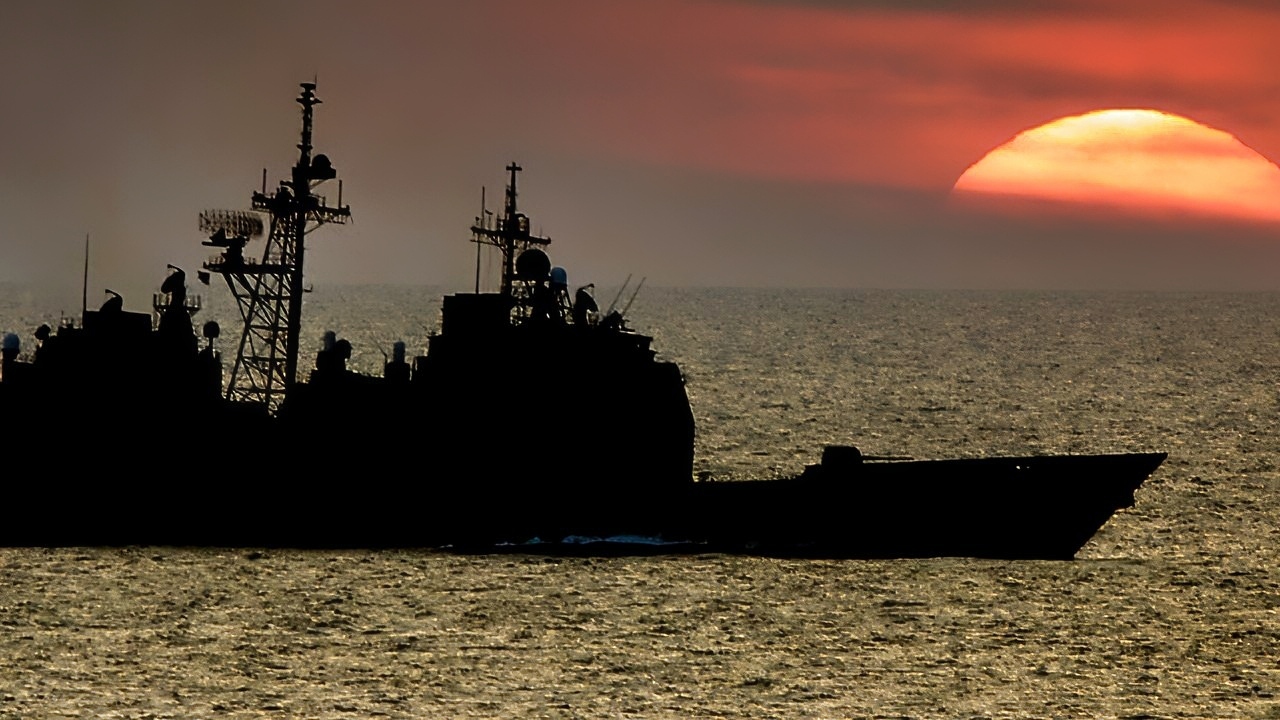
The Ticonderoga Class Cruiser USS Normandy (CG 60) steams at sunset in the Atlantic Ocean while operating with the USS George Washington battle group on May 18, 2000. The Normandy, homeported in Norfolk, Va., is participating in a Joint Task Force Exercise with the battle group.
(DoD photo by Petty Officer 2nd Class Shane McCoy, U.S. Navy. (Released))
Is all this too-little-too-late? Only time will tell.
About the Author: Brandon J. Weichert
Brandon J. Weichert is a Senior National Security Editor. Recently, Weichert became the editor of the “NatSec Guy” section at Emerald. TV. He was previously the senior national security editor at The National Interest. Weichert hosts The National Security Hour on iHeartRadio, where he discusses national security policy every Wednesday at 8 pm Eastern. He hosts a companion show on Rumble entitled “National Security Talk.” Weichert consults regularly with various government institutions and private organizations on geopolitical issues. His writings have appeared in numerous publications, among them Popular Mechanics, National Review, MSN, and The American Spectator. And his books include Winning Space: How America Remains a Superpower, Biohacked: China’s Race to Control Life, and The Shadow War: Iran’s Quest for Supremacy. Weichert’s newest book, A Disaster of Our Own Making: How the West Lost Ukraine, is available for purchase at any bookstore. Follow him via Twitter/X @WeTheBrandon.


