


As the French fabulist and poet Jean de la Fontaine once wrote, “a person often meets his destiny on the road he took to avoid it.” This quote quite nicely sums up the Constellation-class program. Following the troubled Littoral Combat Ship (LCS) program, the United States Navy launched the Constellation-class project to build a new lightweight surface ship on an existing design. Despite efforts to avoid the mistakes of the LCS, the program quickly spiraled out of control, running into many of the same issues that nearly crippled its predecessor. Ironically, the Constellation-class suffered a worse fate than the LCS, with all but two ships of the class getting canceled before construction even started.
Design of the Constellation-class

An artist rendering of the U.S. Navy guided-missile frigate FFG(X). The new small surface combatant will have multi-mission capability to conduct air warfare, anti-submarine warfare, surface warfare, electronic warfare, and information operations. The design is based on the FREMM multipurpose frigate. A contract for ten ships was awarded to Marinette Marine Corporation, Wisconsin (USA), on 30 April 2020.
Following the LCS project, the Navy decided to base the Constellation-class on a pre-existing design already in service. After reviewing several proposals, the Navy settled on the proven Franco-Italian FREM. In 2020, a contract was awarded to Fincantieri Marinette Marine to build the ships in the United States. The idea was to adapt an existing, proven design to avoid the pitfall that frequently plagues clean-slate programs.
On paper, this was a logical conclusion to draw after the Littoral Combat Ship, or LCS, program. The plan initially called for at least 20 ships, and early expectations were that only modest modifications would be required to tailor the FREMM design to U.S. specifications.
The design of the Constellation-class was influenced by the shortcomings of the LCS ships.
The LCS was criticized for being too lightly armed for any large-scale conflict. As a result, the Constellation-class was designed to field advanced systems such as an Aegis-derived combat system, the Enterprise Air Surveillance Radar, and a 32-cell Mk 41 Vertical Launch System capable of firing a variety of missiles.
These features would allow the ship to perform a wide range of missions from air defense to anti-submarine warfare. The frigate was intended to serve as a more survivable and capable successor to the LCS.
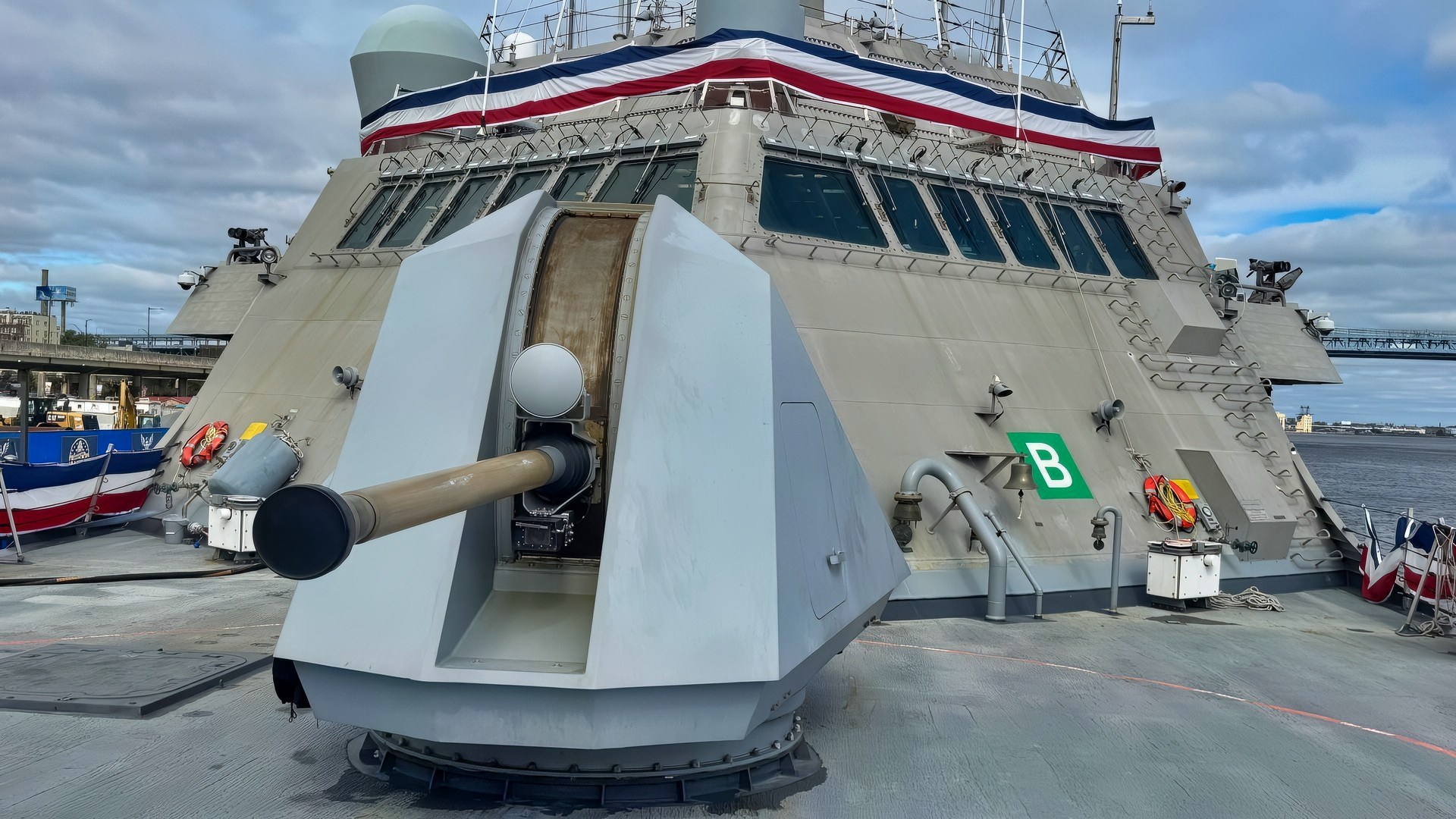
Littoral Combat Ship USS Cooperstown. Image Taken By National Security Journal October 14, 2025.
Where Everything Went Wrong
Despite efforts to avoid the pitfalls of the LCS, the Constellation-class soon encountered trouble. The most fundamental issue was that the Navy’s modifications to the FREMM design proved far more extensive than planned.
The program’s requirements kept changing as the Navy sought to bring the FREM up to U.S. survivability and cybersecurity standards. This naturally led to changes to the platforms and eroded the advantages of using an existing design in the first place. What had started as a relatively straightforward adaptation evolved into a heavily reworked configuration that bore less and less resemblance to the original FREMM.
To make matters worse, construction on the lead ship, USS Constellation, began before the design had been finalized. Any changes made to the design had to be incorporated or removed during construction, leading to constant delays.
As a result, the design was critically unstable. This practice contradicted basic shipbuilding principles and became the most defining problem of the program. The changing requirements and the rapidly changing design were the two greatest issues facing the Constellation-class; everything else flowed downstream of these two major flaws.
Too Big and Too Expensive
Weight growth was another issue eerily reminiscent of the LCS program. As new systems were incorporated and structural modifications were made, the ship’s displacement increased significantly, in some cases by hundreds of tons.

Littoral Combat Ship Deck National Security Journal Image by Stephen Silver.
This had cascading effects on performance, engineering complexity, and cost. A vessel that had originally been intended to be a relatively small and simple frigate began to drift toward the characteristics of a much larger and more expensive combatant, without achieving the same level of capability.
As the ship’s weight increased, so did its cost. The need to redesign major portions of the ship, combined with the inefficient nature of the program, led to billions of dollars in additional expenses. The cost per ship approached that of an Arleigh Burke-class destroyer, despite offering a fraction of the capabilities. This rising price tag made it much harder to justify to Congress, which was already skeptical of the program.
Dead Upon Arrival
By 2025, the combination of delays, cost overruns, and design challenges led the Navy to reevaluate the program. At the same time, the DoD was attempting to reform its procurement process to hopefully increase the size of the fleet in a much smaller timeframe.
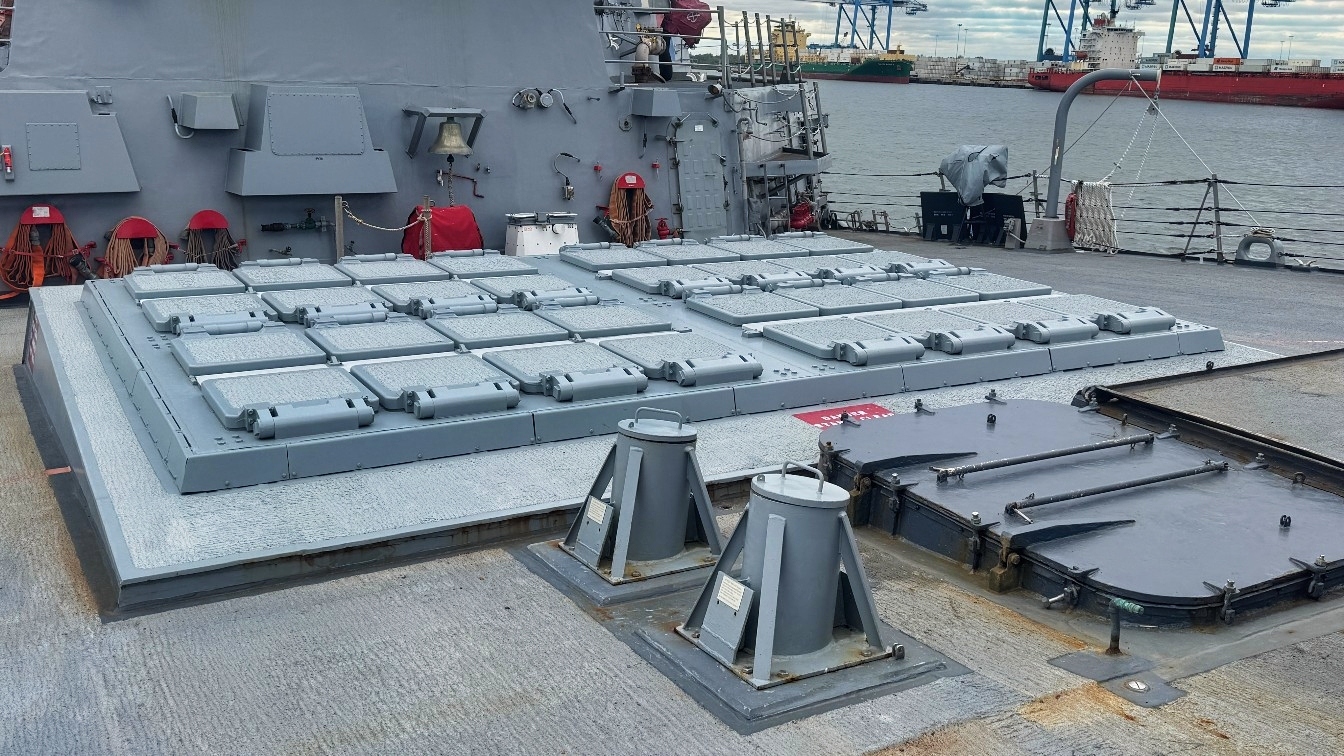
USS Lassen Missiles National Security Journal Photo Taken During Fleet Week 2025 by Stephen Silver.
In this context, the Constellation-class, which was already hanging on by a thread, was deemed unnecessary by the top brass. Officials concluded that continuing the program in its existing form would consume resources without delivering the needed operational benefits in a timely manner.
The decision to drastically curtail the program was announced in November 2025. Under the plan, only the first two ships, the USS Constellation (FFG‑62) and the USS Congress (FFG‑63), would continue construction, mostly to sustain the industrial base and avoid disruption to the workforce.
The remaining planned ships were terminated before construction began. The Navy had basically ended up back where it began more than a decade ago after wasting several billion dollars.
Third Times the Charm
Following this decision, the Navy redirected its focus toward a new initiative known as FF(X), which is expected to produce a simpler class of frigates based on the Coast Guard’s National Security Cutter design in a more timely manner.
The intent is to avoid the pitfalls of the Constellation program, which was itself intended to avoid the pitfalls of the LCS. This new approach aims to deliver a larger number of ships in a shorter time frame, in accordance with the DoW’s new procurement priorities.
About the Author: Isaac Seitz
Isaac Seitz, a Defense Columnist, graduated from Patrick Henry College’s Strategic Intelligence and National Security program. He has also studied Russian at Middlebury Language Schools and has worked as an intelligence Analyst in the private sector.


