

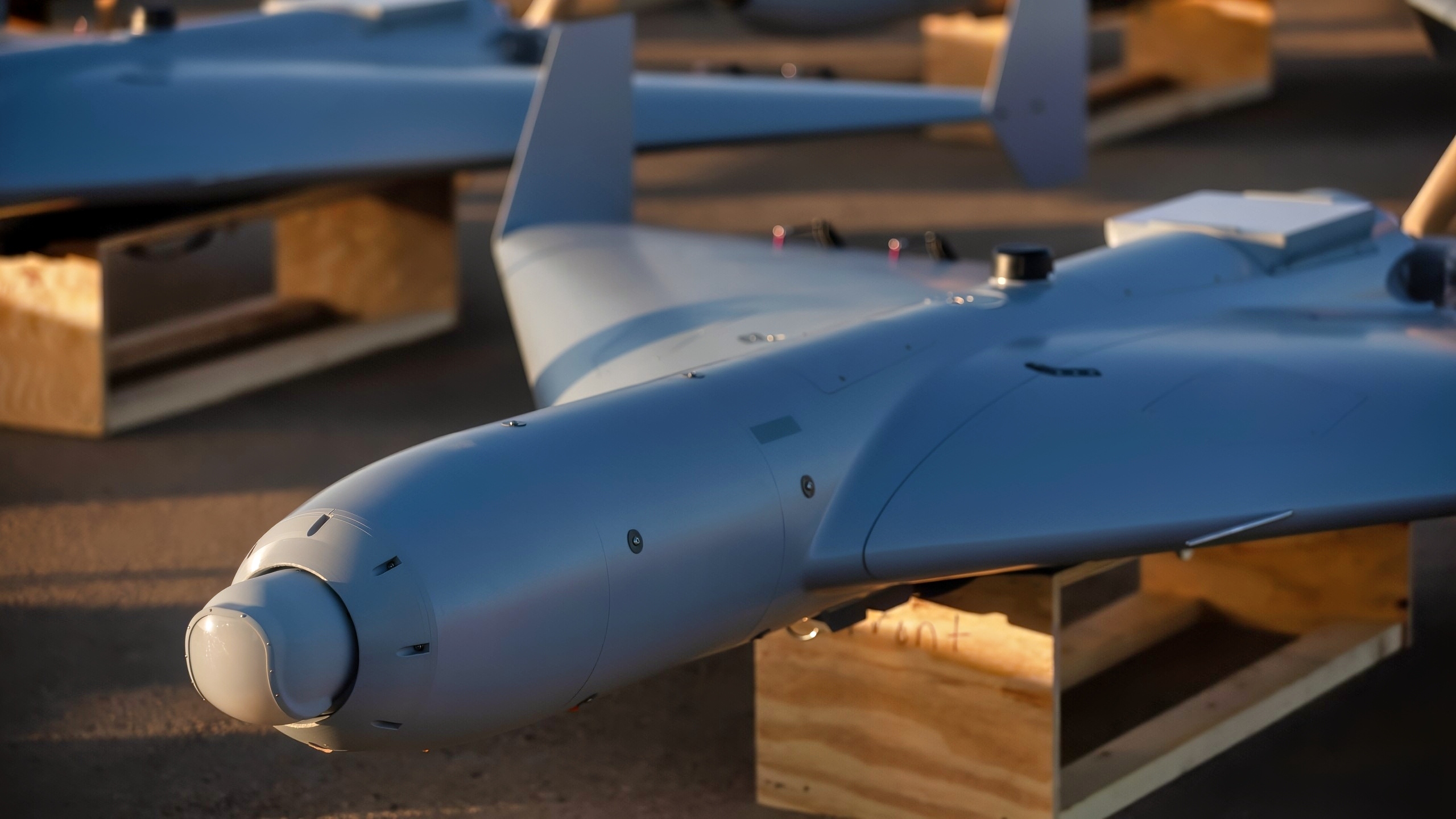
The future of warfare will not be decided solely by who has the most advanced systems, but by who can afford to lose them, replace them, and scale them faster than their adversary.
For decades, the United States followed a twentieth-century playbook built around “exquisite” platforms—billion-dollar capabilities that are as lethal as they are difficult to replace. Quantity was traded for quality, rooted in the belief that a small number of high-tech systems could offset a larger force.
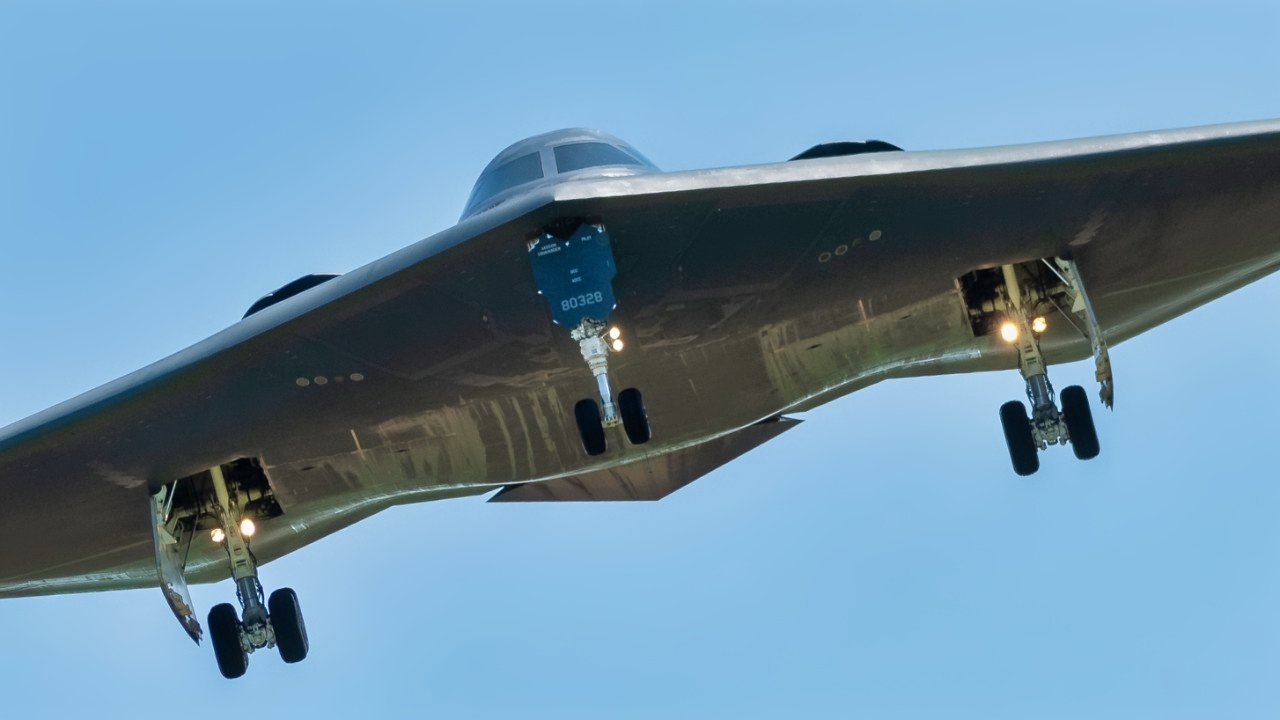
A B-2 Spirit returns to Whiteman Air Force Base, Missouri, from a deployment to Diego Garcia, British Indian Ocean Territory, May 9, 2025. The 509th Bomb Wing and its fleet of B-2 aircraft serve as part of the U.S. Air Force’s conventional and strategic combat force with the capability to project U.S. airpower anywhere around the world. (U.S. Air Force photo by Senior Airman Devan Halstead)
That assumption is now under strain. Technology is no longer a substitute for scale; increasingly, it is an enabler of it. The Russo-Ukrainian War and the recent Iran War illuminate the tension between the “quality versus quantity” trade-off. Low-cost, attritable systems enabled by software and autonomy are reshaping how combat power is generated and sustained.
While exquisite systems provide precision and strategic effect, true strategic dominance depends on pairing these high-end capabilities with attritable mass—the marriage of sophisticated artificial intelligence (AI) with low-cost, expendable volume. While critical, it is no longer about having the most expensive toy on the playground. It is also about fielding enough systems to overwhelm, adapt to, and sustain pressure over time.
China has already made this shift by investing and integrating AI and industrial capacity to produce “informationized” or “intelligent” warfare, while the United States has traditionally been tethered to a legacy of scarcity, even as it has begun to take important steps to adapt.
Now, with President Trump’s US fiscal year 2027 budget request of $1.5 trillion in national defense spending, with substantial funding for weapons procurement and research and development, the United States has an opportunity to produce both mass and technology at scale. Washington, plainly, should embrace what scholars have hailed as “precise mass.”

A B-2A Spirit bomber assigned to the 509th Bomb Wing conduct aerial operations in support of Bomber Task Force Europe 20-2 over the North Sea March 12, 2020. Bomber missions enable aircrews to maintain a high state of readiness and proficiency, and validate U.S. global strike capability. (U.S. Air Force photo/ Master Sgt. Matthew Plew)
Precise Mass
The shift toward precise mass is essential and driven by an increasingly unsustainable inversion of the cost-per-kill ratio.
In twentieth-century doctrine, exquisite platforms were expected to neutralize multiple lower-tech threats. But in modern conflict, such platforms are no longer insulated from risk—low-cost systems can threaten them at scale.
The early stages of the Russo-Ukrainian War and the more recent Iran War have exposed this new reality.
In Ukraine, the arrival of $10-15 million Western tanks such as the M1 Abrams was initially hailed as a game-changer. Yet the proliferation of $500-$3,000 “FPV drones” (with FPV standing for “first-person view” because the pilot controls the drone as if he were sitting inside a cockpit) and ubiquitous electronic warfare (EW) quickly turned these tanks into high-stakes targets.
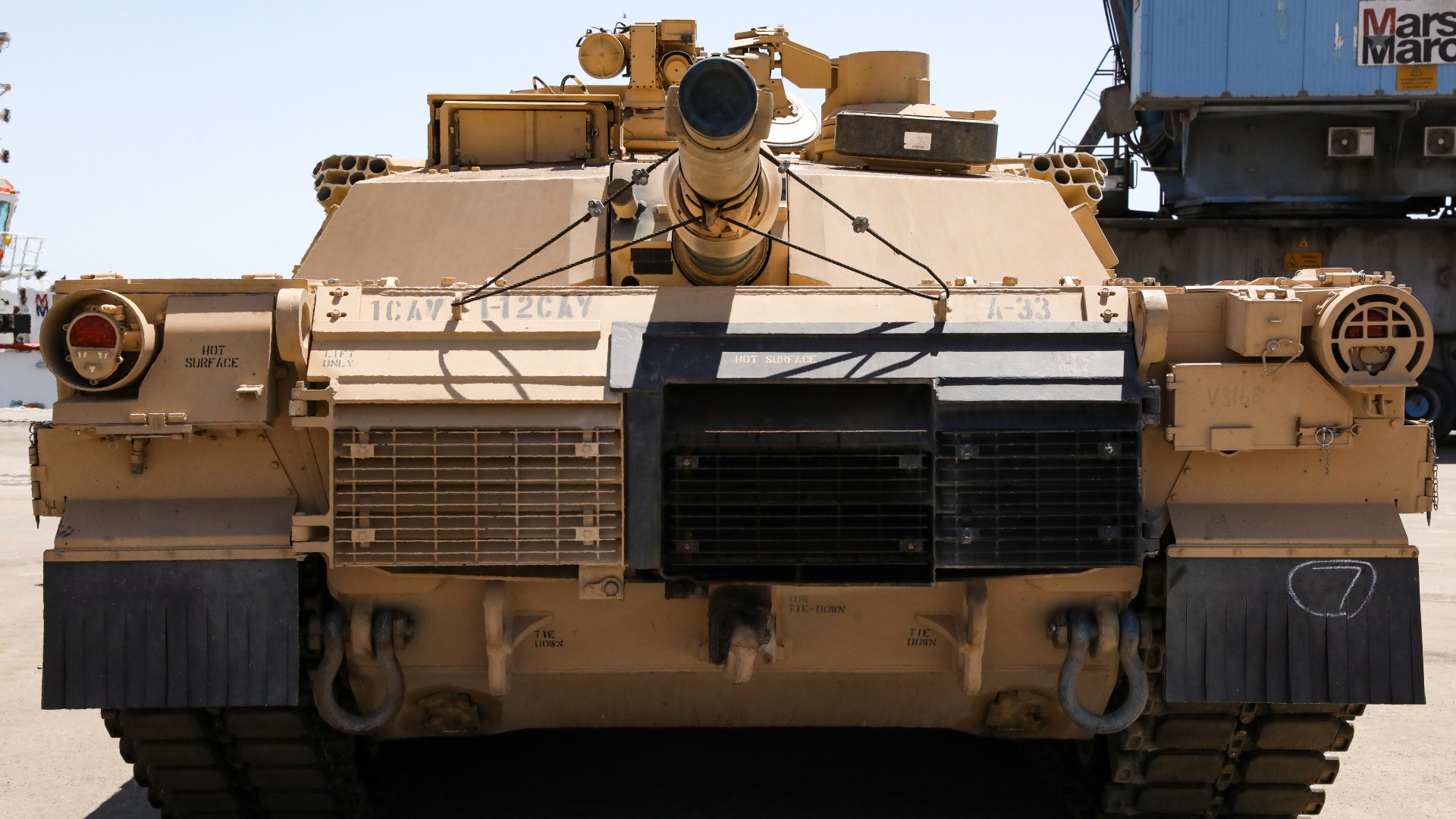
A U.S. Army M1A3 Abrams Tank from the 1-12 Cavalry Squadron, 1st Cavalry Division waiting to be guided onto a loading vehicle and secured for transport at the Port of Agadir, June 3, 2022, Agadir, Morocco. African Lion 2022 is U.S. Africa Command’s largest, premier, joint, annual exercise hosted by Morocco, Ghana, Senegal and Tunisia, June 6 – 30. More than 7,500 participants from 28 nations and NATO train together with a focus on enhancing readiness for U.S. and partner nation forces. AL22 is a joint all-domain, multi-component and multinational exercise, employing a full array of mission capabilities with the goal to strengthen interoperability among participants and set the theater for strategic access. (U.S. Army photo by PFC Donald Franklin)
The Iran War sharpened this problem at a regional scale. Tehran’s “decentralized mosaic defense” is effectively a “saturation” or “swarm” doctrine that utilizes waves of low-cost loitering munitions. While Aegis-equipped destroyers have achieved high intercept rates, they have done so by firing multi-million-dollar missiles against drones costing less than a used car, placing significant strain on high-end weapon systems that could be needed elsewhere, notably in the Indo-Pacific. For Iran, that strategy has been an attempt to achieve attrition through accounting, in which a superior force can be rendered combat-ineffective by exhausting its expensive interceptors before the adversary runs out of cheap targets.
Precise mass solves this problem by making hardware a commodity and software the differentiator. The name of the game is now “software-defined warfare,” where a system’s value lies not in its physical frame, but in its autonomy stack—the layered architecture of sensors and software that enables it to sense, decide, and act without human input. This is essential because, as Eric Schmidt has explained, “The next battles will be fought based on software supremacy.”
The software-defined warfare approach utilizes attritable platforms—systems designed to be lost. In this model, the “brain” is a line of code replicated at zero marginal cost, while the “body” is a low-cost shell requiring no specialized labor to replace. The advantage of this model is that it forms a network of software and data that allows a thousand disparate units to act as a single, coordinated force. This model does not mean a retreat from technology but, rather, a doubling down on it to enable a new kind of industrial scale.
Ukraine is serving as the premier laboratory for this transition. Having recognized the limits of expensive Western platforms, Kyiv has pivoted to a decentralized, software-first industrial base that produces millions of autonomous systems annually. By integrating real-time battlefield data with “terminal autonomy” AI⎯weapon systems that can guide themselves in the final phase of their flight without a human operator, Ukrainians have bypassed traditional EW through rapid, code-based iteration. They are the first to demonstrate that cheap drones, such as the AQ-400 Scythe, can neutralize assets worth thousands of times their price, operationalizing precise mass to survive a war of attrition against a much larger power. They are so far ahead of the game that they have even deployed elite EW and drone specialists to the Middle East to help US and Gulf forces restructure their air defenses against Iranian-made threats.
The future of warfare, then, is not just high-tech. It is also high volume. To prevail, a superpower must thus reimagine the military-industrial complex by increasing high-velocity output of a digital assembly line. The victor will be the side that can out-produce, out-code, and out-cycle its adversary in a way that renders traditional defenses obsolete.
China’s “Intelligentized” Dominance: The Industrial Leviathan
China’s current lead in the mass-tech paradigm is a product of military doctrine as much as of its status as the world’s “Industrial Leviathan.”
For the past decade and a half, Beijing has been executing a military-civil fusion (MCF) strategy designed to turn its massive commercial manufacturing base into a scalable engine of power. That strategy is the heart of what the People’s Liberation Army (PLA) calls “informationized” or “intelligent” warfare—the belief, which dates back to the early 2000s but was first codified in Beijing’s 2019 white paper on “China’s National Defense in the New Era,” that the side with the most integrated, AI-driven industrial ecosystem will win the war of attrition.

CH-7 Drone from China. Image Credit: Creative Commons.
The most visible manifestation of this dominance is China’s stranglehold on the global drone supply chain, even though per the recent update of the Australian Strategic Policy Institute’s “Critical Technology Tracker” Beijing is also moving toward a monopoly in many other major technology fields. By controlling roughly 90% of the commercial drone market through giants like DJI and Autel, Beijing has achieved a full-stack industrial advantage, both of final assembly and of the “guts” of the machines. China dominates the production of high-torque brushless motors, flight controllers, lithium-polymer batteries, and the rare-earth magnets required for stealth and efficiency.
In a conflict, this approach allows the PLA to treat sophisticated autonomous systems as consumables. While a Western prime contractor might take years to scale the production of a new loitering munition, a factory in Shenzhen can pivot from producing agricultural sprayers to kamikaze drones much more quickly, utilizing the same workforce and existing logistics hubs.
China’s dominance is also anchored in its geographic “innovation clusters.” In cities like Ganzhou and Baotou, the entire lifecycle of a weapon system—from the mining of raw materials to the coding of the AI and the final factory rollout—happens within a single municipal footprint. Such proximity eliminates the geographic problem that plagues the US defense industry, which relies on a fragmented web of sub-tier suppliers scattered across fifty states. In his recent book Breakneck: China’s Quest to Engineer the Future, Dan Wang explains that after they are done designing a product in their research lab, US engineers “hand it off” to a factory miles away, even possibly located in another country, whereas Chinese engineers can just walk from their desk to the factory floor to see if a product design works in real time. This integration allows Beijing to out-cycle its competitors, moving from a prototype to a thousand fielded units before a Western committee has approved a budget line.
Beyond hardware, China excels in the “intelligentization” of mass through its integration of national-scale Big Data, which Beijing calls “military metaverse” or “meta-war.” The MCF strategy mandates that commercial AI breakthroughs in facial recognition, autonomous driving, and logistics must be shared immediately with the PLA. This requirement has created a data-rich environment for training military AI. While US developers often struggle with limited, sanitized datasets, Chinese firms have access to a vast, unregulated sea of real-world data to refine their computer vision and swarm coordination models. The result is a force that has “bodies” increasingly capable of navigating complex, GPS-denied environments through algorithmic repetition.
Finally, China’s advantage is solidified by its own saturation doctrine, which has its roots in the Maoist “People’s War” philosophy⎯the practical application of the ancient Chinese “struggle” concept. Beijing understands that quantity has a quality of its own. The Chinese have industrialized the production of cheap, autonomous systems designed to force an adversary to deplete their high-end munitions. One study even notes that China can produce autonomous assets 10 to 100 times cheaper and faster than the United States can produce defensive interceptors, and that Washington would likely exhaust its entire theater supply of upper-tier interceptors within the first 24 hours of a localized conflict over Taiwan. By fielding ten thousand “good enough” drones for every single exquisite US interceptor, China is thus positioning itself to win by exhausting the US arsenal, as opposed to via a single, decisive blow.
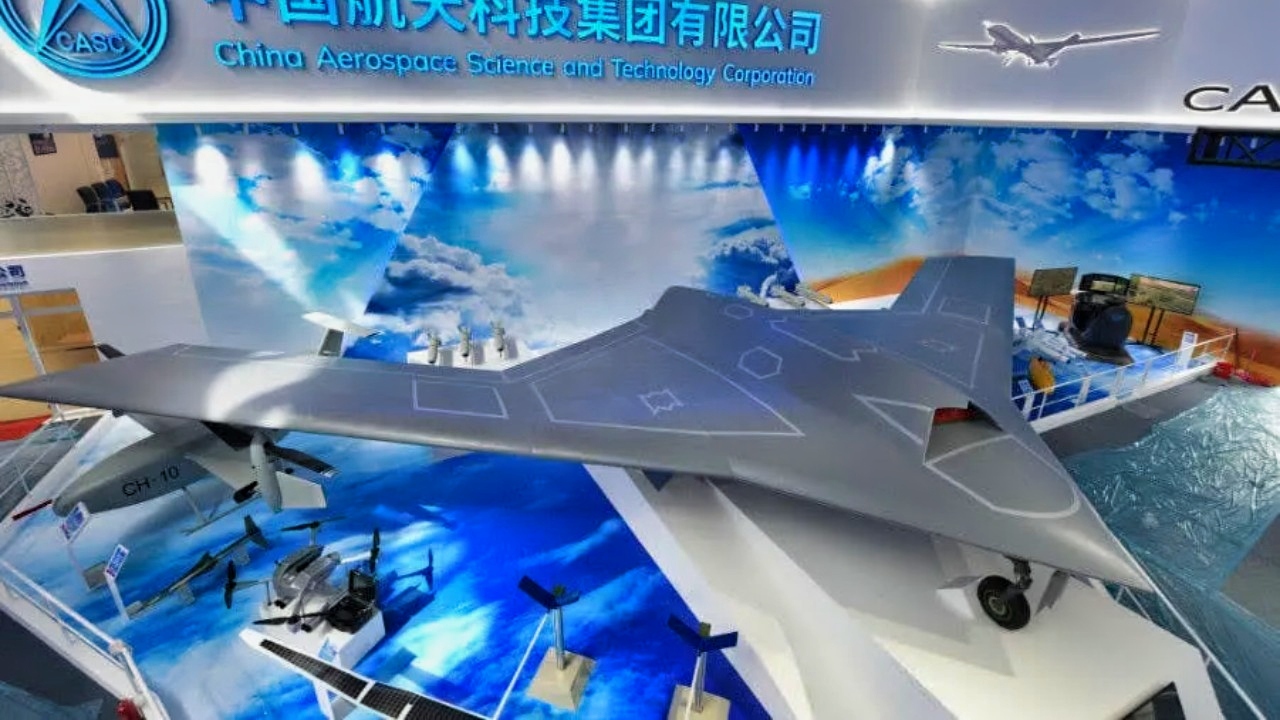
CH-7 Drone from China. Image Credit: Creative Commons.
The Industrial Leviathan is not just building a better weapon. It is building a system that can challenge advanced missile defense systems or other exquisite defenses. Today, the technology and manufacturing factory is as much a weapon of war as the frontline, and China currently dominates that ecosystem and supply chain.
The United States: The Software and Diffusion Leader
While China seeks to win through the sheer mass of its industrial Leviathan, the United States is pivoting toward a strategy of scaling precision through software, data, and rapid deployment and adaptability. Washington’s bet is that in a conflict defined by attrition, the edge does not belong to the one that has the most hardware today, but to the one who can reprogram their entire force the fastest tonight to have “decision advantage.”
The US Department of War is now launching a comprehensive “AI-First” Acceleration Strategy designed to weaponize the US tech sector’s greatest strength: the ability to iterate at speed.
The US edge is currently anchored in a “frontier model” lead that is 18-to-24 months ahead of Beijing’s capabilities. The idea is not merely about having smarter chatbots; it is about “Edge AI”—the ability to run AI algorithms directly on a local device or platform rather than sending the data to a centralized cloud server for processing.
In that spirit, US systems, such as those developed under the Replicator and Swarm Forge initiatives, are increasingly capable of on-board reasoning. While Chinese swarms have traditionally relied on massed, centralized command-and-control—making them susceptible to electronic jamming—US autonomous systems are designed for decentralized edge autonomy, allowing individual units to adapt and execute missions independently in highly contests environment. They can recognize targets in such environments, coordinate complex maneuvers without a mother ship, and autonomously shift frequencies to bypass the most advanced EW domes.
US leadership is also defined by “software-defined diffusion”—a method used to predict and manage how data traffic moves through a network in real time. Realizing that its traditional procurement cycles were too slow for the digital age, the Pentagon has moved toward a “modular open systems approach.” This shift is meant to design systems that are highly adaptable, cost-effective, and easy to upgrade: it decouples the hardware “shell” from the software “brain.” The United States is no longer just buying a drone but a standardized autonomy stack that can be flashed onto a thousand different low-cost, commercially available airframes within hours.
This development has been vividly demonstrated during the Iran War, where US special operations teams used a fast-track system called “Ender’s Foundry” to push vital EW updates to troops. This rapid response is something the slower, more rigid Chinese government bureaucracy struggles to match.
Furthermore, the United States is leveraging its unique private-sector dynamism through a new unified innovation model. Rather than relying solely on traditional defense giants, the Department of War has consolidated contracts into massive enterprise agreements with “Silicon Valley-DNA” firms such as Anduril. By integrating platforms like the Lattice AI-mesh into the broader command structure, the United States is building a living battlefield network. This network engages the adversary and learns from every engagement. This “sensor-to-shooter” feedback loop ensures that the lessons in a skirmish are quickly converted into a software update for the entire theater.
The US strategy is thus a gamble on quality-at-speed. While China dominates the “body” of the new mass-tech approach, the United States is securing the “mind.” By treating software as a named capability and diffusion as a warfighting mission, Washington aims to out-cycle Beijing’s industrial scale.
To be sure, problems remain. Critics argue that the Replicator and Swarm Force initiatives, for example, suffer from geographic range deficiencies that are poorly suited for the vastness of the Indo-Pacific and are bottlenecked by China’s control over critical microelectronic supply chains. Moreover, the Pentagon faces severe software hurdles, including ethical and safety disputes with commercial AI developers, as well as organizational issues to update military doctrine and train forces to manage thousands of decentralized drones.
Still, the US goal is to ensure that, even if outnumbered, US systems are smarter, more resilient, and capable of evolving faster than the hardware trying to overwhelm them. In today’s high-volume wars, the United States is plainly betting that the most powerful weapon is not a factory but a code repository.
Looking Ahead: The Path to Victory for the United States
To prevail in the age of precise mass, the United States should embrace a model in which sophisticated algorithms turn cheap, expendable hardware into a relentless, unmanageable tide. Winning the attrition race against China requires more than just better software. It requires a fundamental restructuring of the US military-industrial ecosystem.
Over the next decade, the goal is less to out-build China than it is to out-cycle, out-connect, and out-economize it through four critical pillars of reform.
First, the United States should continue industrializing the autonomy stack. Historically, the Pentagon bought closed, tightly integrated platforms where software was tightly bound to the hardware and controlled by a single vendor. It is now moving toward a more modular software-centric approach, where capabilities can be continuously upgraded and scaled across systems. By standardizing the software layer for autonomous systems, hardware can be produced more easily. Doing so will allow the United States to buy attritable frames from a thousand different commercial vendors while flashing them with a unified, superior US AI. This approach will negate China’s vertical integration advantage by making the hardware disposable and the software universal.
Second, the United States should invert the cost-per-kill ratio. It is unsustainable to continue defending $10,000 threats with $2 million interceptors. Once it becomes technologically possible (and effective), the United States should pivot toward defenses that use physical impact (kinetic interceptors) or light or radio waves (directed energy). The goal is to create a protective layer that matches its adversary’s scale, i.e., reach a cost-imposition equilibrium where it is more expensive for the adversary to attack than it is for the United States to defend. If a laser shot costs one dollar in electricity, the saturation doctrine of the adversary collapses under its own weight.
Third, the United States should embrace “fail-fast” procurement and wartime iteration cycles—buy the hardware quickly and cheaply and ensure that the software is constantly evolving to stay ahead of the adversary’s countermoves. The United States should move from ten-year acquisition cycles to ten-week update cycles. Doing so requires a “digital forge” approach, which is a subset of the software-defined warfare model: a continuous feedback loop where data from the frontline is fed back to Silicon Valley developers, patched into an algorithm, and pushed back to the theater via satellite in real-time. Such reciprocity (a policy in which approval of software in one area is accepted by others) and diffusion (the speed at which the approved software spreads across the entire force) ensure that the United States is always evolving faster than its adversary.
Finally, the United States should reshore and friend-shore the sub-tier supply chain. Washington should prioritize domestic production of critical components and not be dependent on Chinese motors, magnets, and batteries, and it should lead an allied industrial coalition to build a redundant, high-capacity manufacturing base for mass-tech components. By creating both a domestic and shared, secure supply chain that excludes adversarial influence, the United States and its allies can achieve the industrial scale necessary to sustain a long-term conflict of attrition.
The United States should not give up on its exquisite systems, which are needed to open the fight, penetrate advanced defenses, strike key nodes, and engage in high-intensity combat if escalation occurs. But to win the attrition race, the United States should recognize that the way of war is an exercise in structured sustainment and resilience. It should thus adapt accordingly. To succeed, it does not just need more “stuff” than China. It needs “smarter stuff” that can be produced, updated, and replaced faster than China can destroy it. By merging its software culture with a modernized, modular industrial base, the United States can transform its force into an unstoppable mass.
About the Authors:
David Santoro and Kimberly Lehn are, respectively, President/CEO and Executive Director and Head of National Security and Defense at the Honolulu-based Pacific Forum. They run the annual Honolulu Defense Forum (HDF), an event that seeks to facilitate dialogue and solutions between a wide range of actors from the public and private sectors to bolster US and allied deterrence in an increasingly contested security environment.
All statements of fact, opinion, or analysis expressed are those of the authors and do not reflect the official positions or views of the US Government. Nothing in the contents should be construed as asserting or implying US Government authentication of information or endorsement of the author’s views.


rosy dawn
June 8, 2026 at 3:17 am
Somewhat incorrect, or maybe, a bit incorrect.
Future warfare, or the wars of the future, or simply the War of big apocalyptic events, is actually the war long secretly prepared and planned by the US deep state.
What’s that.
The high-end war, or the thermonuclear war.
Thermonuclear war has still not happened today, in our history of modern mankind.
Truman nuked japan in 1945, but those nukes he used were ping pong atomic bombs, not thermonuclear bombs.
In the coming high-end war, or war to clear the way for utter global domination, stratcom and USAF global strike com will employ or use tactical nukes to open the way for marines and rangers and special forces to cut through the main front door.
How exactly will stratcom and global strike achieve their goals.
By using the b61-13 air-launched weapin and the LRSO air-launched weapin.
For example, the b61-13 packs the explosive wallop of 24 truman-era A-bomb dropped on hiroshima. In one go.
Nobody on Earth, nobody, absolutely no one, can survive that kind of wallop.
Dr. Hujjathullah M.H.Babu Sahib
June 8, 2026 at 3:30 am
This is a highly revealing article, excellently written with undoubtable patriotism. After taking stock of battle-front realities in both Ukraine and Iran, where it witnessed how quality was overwhelmed by quantity and how this was subsequently countered by “qualified-quantity” or what is now hurriedly billed as precise mass. The trouble is, precise mass as currently configured in the U.S. and by friend-shoring elsewhere as alluded to here, would still be diversified and be dependent on the private-sector. This may help efficiency and expediency but would still expose precise mass to greed if not also corruption. The PRC may easily tackle the centralized software augmented by diversified hardware response and reaction loop by devising its own “WAH-LAN” counter-strategies !