


New intelligence suggests that Iran has retained roughly 70 percent of its prewar missile inventory—despite months of Epic Fury. Even more concerning: Iran has reportedly restored access to 30 of its 33 missile sites along the Strait of Hormuz, which cuts against the public narrative that Epic Fury crippled Iran’s ability to threaten the region or the global energy market. And while Epic Fury undoubtedly destroyed thousands of targets, important strategic questions remain unresolved. If Iran can regenerate its missile force so quickly, it suggests that Epic Fury may have failed to solve the problem it was designed to solve.
Mission Accomplished?

A B-52 Stratofortress lands at Patrick Space Force Base, Florida, April 15, 2021. The aircraft was featured at the Cocoa Beach Air Show April 17 – 18. The B-52 is is a long-range, heavy bomber capable of flying at up to 50,000 feet. (U.S. Space Force photo by Tech. Sgt. James Hodgman)
Epic Fury was intended to degrade Iran’s missile arsenal, cripple drone production, and generally reduce Iran’s coercive power over the region. America followed a trusted blueprint: identifying and destroying infrastructure, which logically results in a reduced military capability. Indeed, the logic has worked well enough in the past, that is, against conventional militaries with centralized industrial systems. But whether the logic works against distributed drone networks, underground facilities, or decentralized production chains is less clear.
Quick Rehab for Iran
Iran reportedly retains approximately 70 percent of its missile inventory. If true, that means months of sustained strikes and billions of dollars invested failed to remove even half of the threat.
A months-long strategic bombing campaign is built to generate a decisive degradation. But if Iran retains 70 percent of its missile stock, then it is still capable of regional strikes, saturation attacks, and deterrence operations, meaning Iran may not have suffered a decisive degradation.
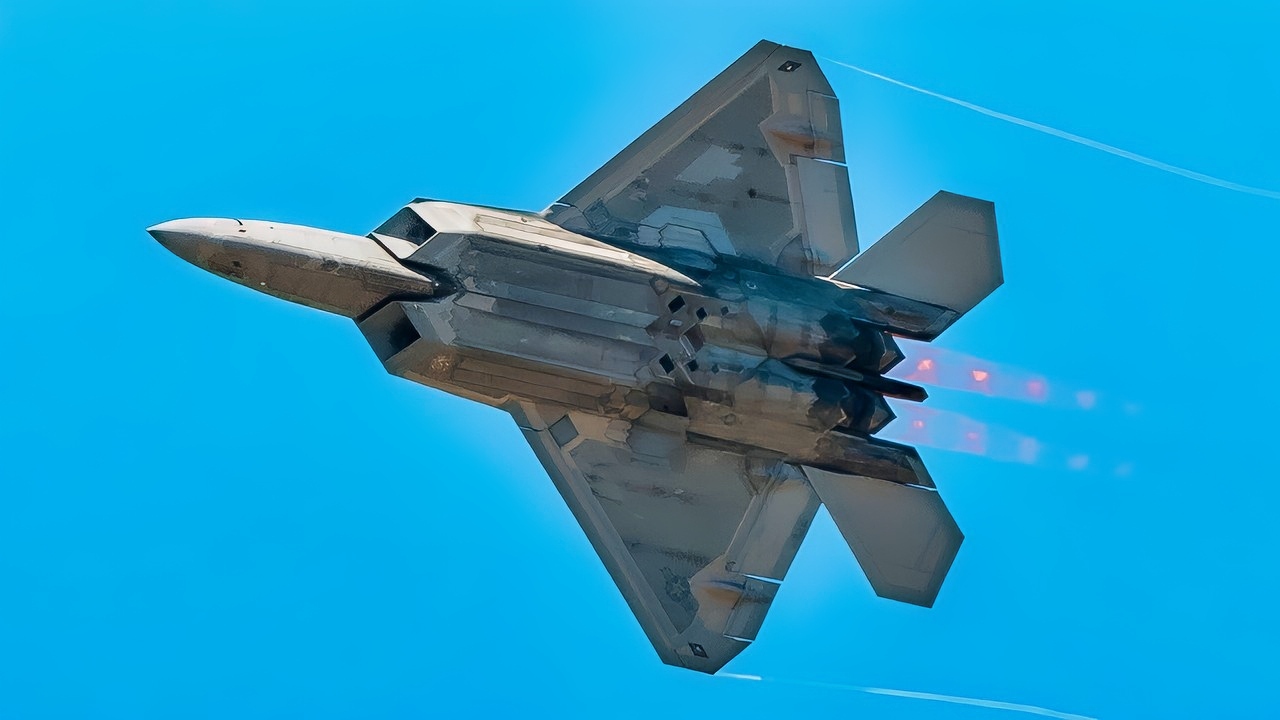
A U.S. Air Force F-22 with the F-22 Raptor Demo Team performs aerial stunts at the 2022 Kaneohe Bay Air Show, Marine Corps Air Station Kaneohe Bay, Marine Corps Base Hawaii, Aug. 12, 2022. The air show provided an opportunity to demonstrate the capabilities of a Joint Force in the Indo-Pacific Region. The Kaneohe Bay Air Show, which contained aerial performances, static displays, demonstrations and vendors, was designed to express MCBH’s appreciation to the residents of Hawaii and their continued support of the installation. (U.S. Marine Corps photo by Cpl. Patrick King)
Bad Economics
Epic Fury seems to have been a bad fiscal investment. Iranian drones, often costing a few thousand dollars, were intercepted with Patriot and SM-6 systems costing millions of dollars per shot.
At scale, a ten-thousand-dollar drone being intercepted by a three-million-dollar missile is economically painful for the interceptor. Iran has effectively found a way to force the US into an unsustainable spending cycle here; the drones are successful even when they are destroyed mid-flight.
Lessons Learned
Epic Fury also gave Iran an opportunity to adapt. Before Epic Fury, Iran had large missile sites at known facilities with fixed infrastructure. But now, Iran is reportedly shifting toward mobile launchers, truck-based systems, dispersed workshops, underground facilities, etc.—stuff that is harder to find and harder to destroy.

FORT MOORE , Ga. Maneuver Center of Excellence hosts the 2024 Armor Week media day on Harmony Church Mar. 14, 2024. The event featured live-fire demonstrations with the M1 Abrams Main Battle Tank, and an opportunity to get up close and hands-on with M1 Abrams and M2 Bradley Fighting Vehicle. Armor Week, April 29 to May 3, and the 2024 Sullivan Cup competition requires mastery of individual tasks, technical and tactical competence, and the ability to demonstrate an array of maneuver, sustainment, and gunnery skills. The competition focuses primarily on the performance of the Soldiers functioning as a crew. (U.S. Army photo by Patrick A. Albright)
Epic Fury may have encouraged Iran to adopt a more survivable model. In the future, this could pose a profound intelligence challenge for the US or other adversaries, who previously only had to find one factory but now must find dozens of small workshops to achieve the same industrial impact.
Rapid Reconstruction
Iran’s reconstruction timelines are compressed relative to US intelligence predictions. Drone production has reportedly resumed quickly, thanks to commercial electronics, dual-use components, and localized manufacturing.
Iran may be able to restore full UAV capacity in less than six months, meaning the Epic Fury damage will be fully reversible—at least in terms of Iran’s drone industry.
Moving Forward
The US will need to gather several lessons from Epic Fury and Iran’s rapid rehabilitation. Shock-and-awe campaigns may be less effective against networked adversaries. Also, the West’s defense-industrial base, calibrated to produce exquisite systems like the Tomahawk and the Patriot, may be ill-suited to the cost asymmetries of the drone era.
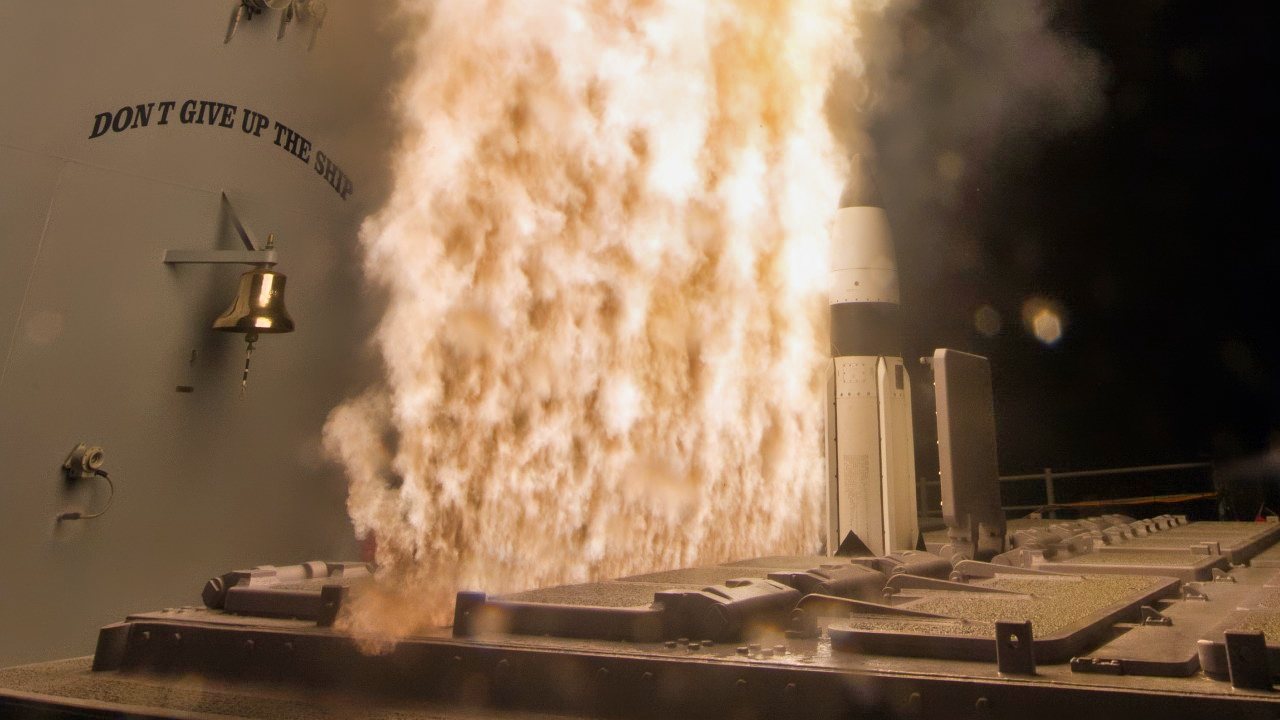
(Feb. 13, 2013) A Standard Missile-3 (SM-3) Block 1A interceptor is launched from the guided-missile cruiser USS Lake Erie (CG 70) during a Missile Defense Agency and U.S. Navy test in the Pacific Ocean. The SM-3 Block 1A successfully intercepted a target missile that had been launched from the Pacific Missile Range Facility, Barking Sands, Kauai, Hawaii. (U.S. Navy photo/Released)
And of course, potential future adversaries are watching, paying attention to the strategies and cost dynamics of Epic Fury. If most of Iran’s missile launch sites are already back online, then Iran retains leverage over global shipping and energy markets, which will need to be calculated for in all future dealings.
Epic Fury did impose a cost on Iran—destroying facilities, disrupting operations, setting them back. But emerging intelligence suggests that the blood and treasure invested in Epic Fury had limited strategic impact.
The US’s military power is well-suited for destroying infrastructure—but may not be well-suited for destroying knowledge or networks, or decentralized production.
If Iran can absorb the full weight of the US and Israeli militaries—and still retain its missile force—then it suggests shock and awe bombing campaigns are not a decisive solution against adaptive adversaries.
About the Author: Harrison Kass
Harrison Kass is a writer and attorney focused on national security, technology, and political culture. His work has appeared in City Journal, The Hill, Quillette, The Spectator, and The Cipher Brief. He holds a JD from the University of Oregon and a master’s in Global & Joint Program Studies from NYU. More at harrisonkass.com.


