

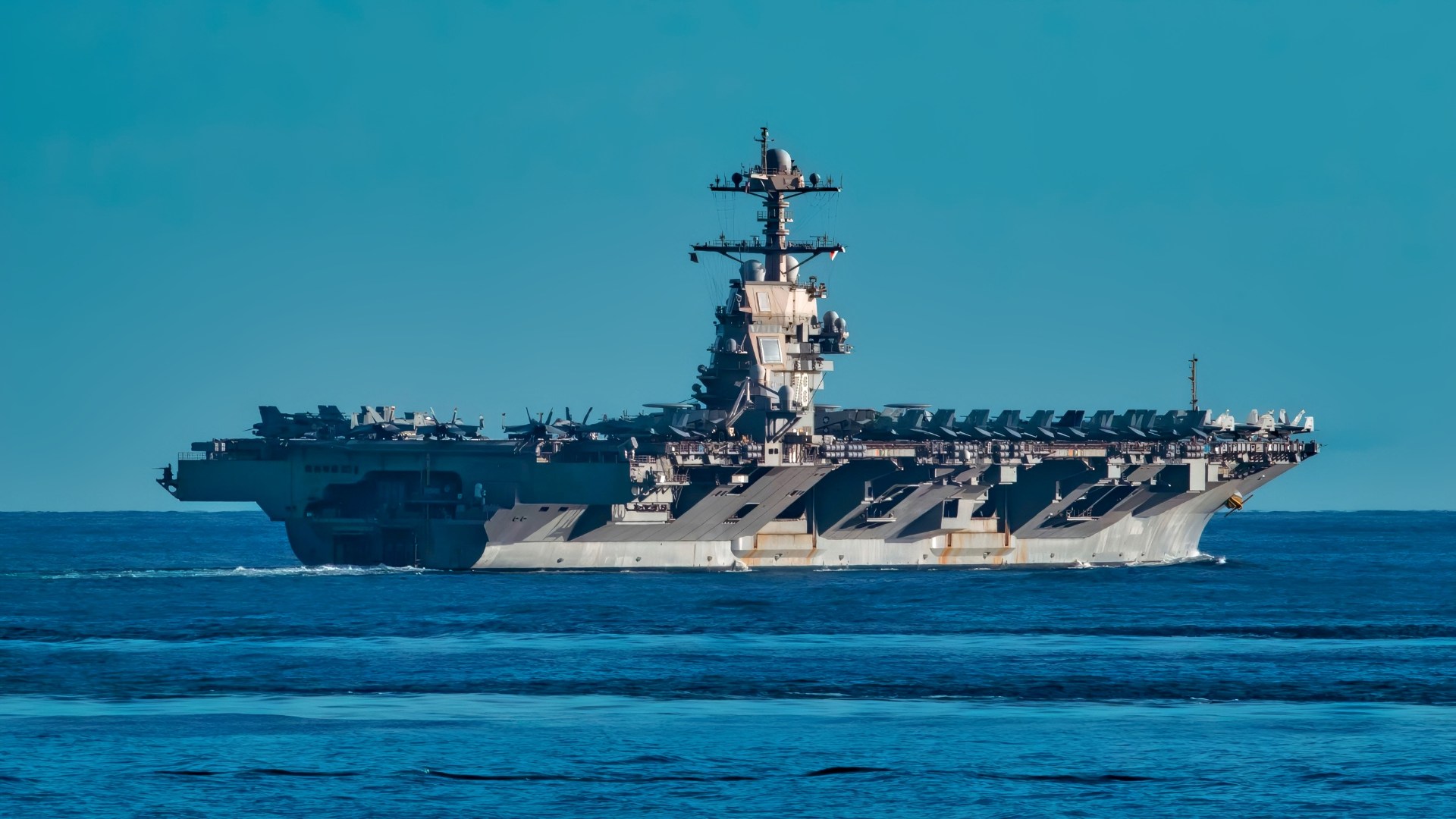
Summary and Key Points: The USS Gerald R. Ford supercarrier just finished the longest U.S. carrier deployment since Vietnam. But a laundry-room fire, the Navy downplayed, nearly cost the crew the ship — the $13 billion aircraft carrier’s fire-suppression system failed. “I seriously thought we were going to lose the ship,” a sailor said. Repairs could take two years.
The USS Gerald R. Ford: The Almost Lost Aircraft Carrier?

Ford-Class. Image Credit: Creative Commons

The Ford-class aircraft carrier USS Gerald R. Ford (CVN 78) and the Italian aircraft carrier ITS Cavour (CVH 550) transit the Atlantic Ocean March 20, 2021, marking the first time a Ford-class and Italian carrier have operated together underway. As part of the Italian Navy’s Ready for Operations (RFO) campaign for its flagship, Cavour is conducting sea trials in coordination with the F-35 Lightning II Joint Program Office’s Patuxent River Integrated Test Force to obtain official certification to safely operate the F-35B. Gerald R. Ford is conducting integrated carrier strike group operations during independent steaming event 17 as part of her post-delivery test and trials phase of operations. (U.S. Navy photo by Mass Communication Specialist 3rd Class Riley McDowell)
The USS Gerald R. Ford (CVN-78) recently completed a historic 326-day (roughly 11-month) deployment, returning to Naval Station Norfolk on May 16, 2026. This deployment marks the longest for a U.S. aircraft carrier since the Vietnam War.
The Ford’s record deployment saw it support the ouster of Venezuelan strongman Nicolás Maduro and support the opening of the latest air campaign against Iran.
However, a fire in the supercarrier’s laundry room caused extensive damage that left 600 sailors without places to sleep and forced lengthy repairs on the Greek island of Crete before she returned home.
Newly surfaced footage from CNN and crew accounts revealed that the fire aboard the USS Gerald R. Ford was significantly more severe than the Navy initially portrayed.

Aviation Boatswain’s Mate (Equipment) 3rd Class Mark Ruiz, assigned to Air Department aboard the world’s largest aircraft carrier, USS Gerald R. Ford (CVN 78), prepares a Carrier Air Wing 8 F/A-18E Super Hornet attached to Strike Fighter Squadron 37 for launch on the flight deck, Aug. 1, 2025. Gerald R. Ford, a first-in-class aircraft carrier and deployed flagship of Carrier Strike Group Twelve, is on a scheduled deployment in the U.S. 6th Fleet area of operations to support the warfighting effectiveness, lethality and readiness of U.S. Naval Forces Europe-Africa, and defend U.S., Allied and partner interests in the region. (U.S. Navy photo by Mass Communication Specialist 2nd Class Mariano Lopez)
During The Blaze, It Was “Fight Or Die” for this Supercarrier
“I seriously thought we were going to lose the ship,” one sailor aboard the USS Ford told CNN, describing how he felt while fighting the fire. “It’s either fight or die.”
“It shouldn’t have gotten that bad. The fire-suppression system built into the ship should have put it out,” the sailor said, speaking on the condition of anonymity. “Everybody — me included — helped put the fire out.”
The ship’s fire-suppression system failed to work, leaving the sailors scrambling to put out the blaze, according to the sailor and a senior US official, who told the news service.
The official added that the Navy’s public statement downplayed the impact the fire had on the Ford as it was in the Red Sea supporting US military operations against Iran.
When the fire broke out in March, the Navy issued a statement saying the blaze had been contained, that two sailors had received treatment for non-life-threatening injuries, and that the carrier remained “fully operational.”
The blaze most definitely had a significant impact on the Ford’s capabilities. It was two days before the Ford was able to fly sorties again, Chief of Naval Operations Adm. Daryl Caudle said in April.
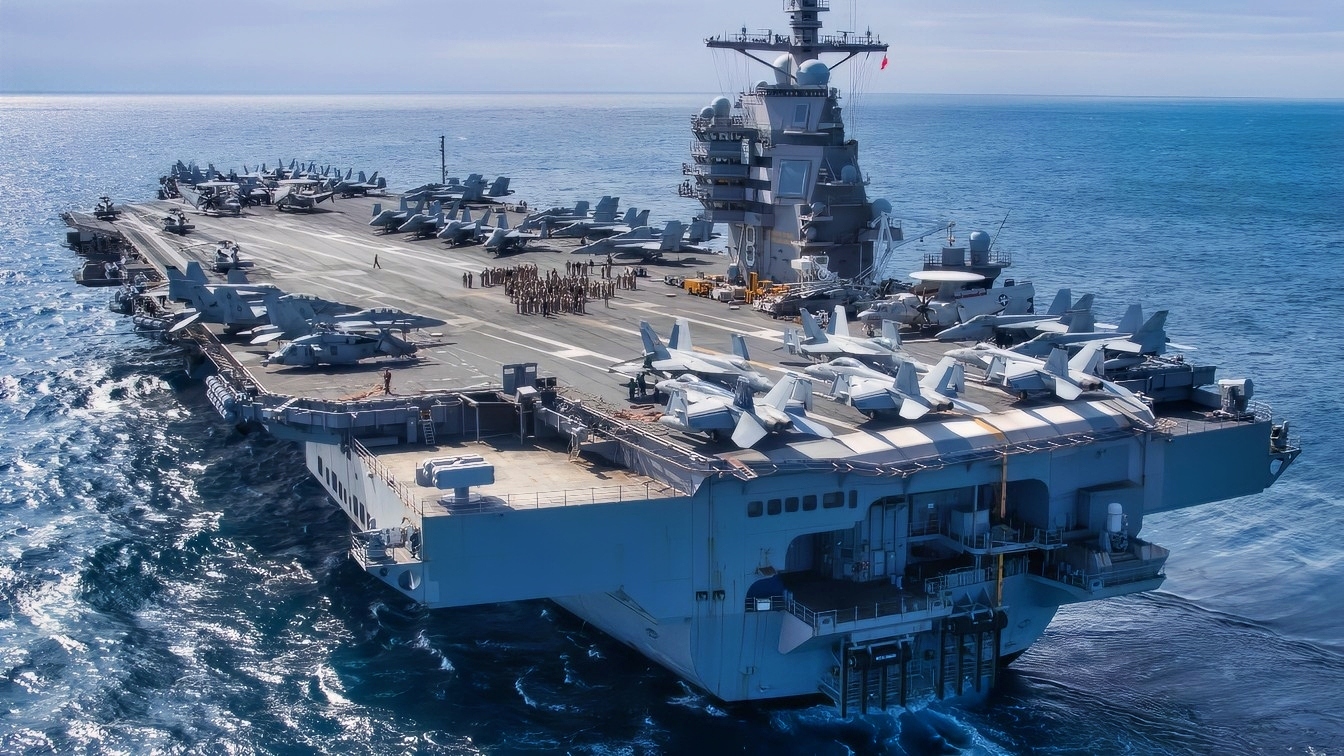
The first-in-class aircraft carrier USS Gerald R. Ford (CVN 78) transits the Atlantic Ocean, March 19, 2023. Ford is underway in the Atlantic Ocean executing its Composite Training Unit Exercise (COMPTUEX), an intense, multi-week exercise designed to fully integrate a carrier strike group as a cohesive, multi-mission fighting force and to test their ability to carry out sustained combat operations from the sea. As the first-in-class ship of Ford-class aircraft carriers, CVN 78 represents a generational leap in the U.S. Navy’s capacity to project power on a global scale. (U.S. Navy photo by Mass Communication Specialist 2nd Class Jackson Adkins)
The Fire Originated In The Laundry Room
The inferno started in the laundry where the washing machines and dryers were located, according to Navy officials.
“Big fires are always a challenge, and this was significant — laundry and dryer-based fire,” Admiral Caudle said to CNN after the carrier returned to its home port in Virginia.
“The crew handled that so well, and they fought it brilliantly and courageously, and basically were back in the fight within a matter of days.”
Damage Control Is The Most Important Function Of Warships
The Navy prides itself on its damage control procedures, as fire is the biggest threat to a warship.
For instance, after being crippled by Japanese dive bombers around noon on June 4, 1942, the USS Yorktown slowed to a stop with dead boilers after suffering three bomb hits.
Thanks to intensive damage control, her crew extinguished the fires and relighted four boilers in roughly one to two hours, getting the carrier back underway at about 20 knots.
In this case, fighting the fire, cleaning up debris, and preventing it from reigniting took 30 hours.
But the new $13 billion carrier also faced issues with the EMALS (electromagnetic launch system) and its toilets.
A sailor said, “If you were in the forward section of the ship, you’d have to walk all the way to the aft section just to find a toilet that worked.”
Long Sea Deployments Hurt Readiness, Maintenance, And Morale
Prolonged sea deployments profoundly affect the U.S. Navy by straining sailors’ mental health, increasing the risk of shipboard accidents, disrupting maintenance schedules, and causing significant emotional distress for military families.
Extended periods underway significantly increase the risk of depression, anxiety, and PTSD among crew members. The monotonous shipboard environment, constant noise, demanding sleep schedules, and isolation from a normal support system add severe psychological strain.
Fatigue and burnout during deployments that extend well beyond the standard 6–9-month window increase the likelihood of operational accidents, particularly on high-tempo flight decks.
As Admiral Caudle stated, extended deployments create immense difficulties for military spouses and children, who shoulder increased responsibilities at home and endure prolonged absences of their loved ones during major life events.
Effects on Ships’ Maintenance And Future Readiness
Long, extended deployments often accelerate wear and tear on operating systems and equipment. Operating ships outside their planned cycles leads to accelerated deterioration and more frequent breakdowns.
Maintenance backlogs are frequently encountered. Extended deployments mean critical components that weren’t anticipated to require repair, increasing the maintenance workload and delaying return-to-service dates due to reduced downtime.
Extended deployments disrupt planned maintenance periods (such as post-deployment availabilities), affecting the readiness of the entire fleet, not just the deployed ship. In the case of the USS Ford’s carrier strike group, all of the ships will suffer from the lack of maintenance downtime.
While US shipyards already operate under a very tight schedule, with maintenance far behind what is needed to maintain fleet numbers, the extended deployment of the Ford Carrier Strike Group will not just affect the Ford and her ships, but also other carriers already in queue for future maintenance.
Supercarrier Missing: The Ford’s Downtime Will Be Significant
The expected repairs and overhaul work on the carrier will be extensive and will stretch 12-to-24 months at a minimum.
Unlike the normal repairs done after a long deployment, the Ford will require structural work to replace damaged compartments, wiring, and a failed fire-suppression system that failed when needed.
The toilet/sewage system will also need serious work, in addition to working on all of the normal wear and tear that takes place on a normal sea deployment, which this was not, taking part in two separate combat actions.
With the state of the Navy’s shipyards, two years sounds like a very optimistic view of the expected repairs.
About the Author: Steve Balestrieri
Steve Balestrieri is a National Security Columnist. He served as a US Army Special Forces NCO and Warrant Officer. In addition to writing on defense, he covers the NFL for PatsFans.com and is a member of the Pro Football Writers of America (PFWA). His work was regularly featured in many military publications.


