


The Joint Strike Missile (JSM) is a weapon specifically designed to fit inside the F-35 Lightning II’s internal weapons bay while preserving that fifth-generation multirole warplane’s stealth characteristics. The contract, designed by Kongsberg Defense & Aerospace, is worth $240.9 million. The contract covers missile production, containers, test hardware, and support equipment. Work will run through late 2028 on this new system.
What is the JSM?
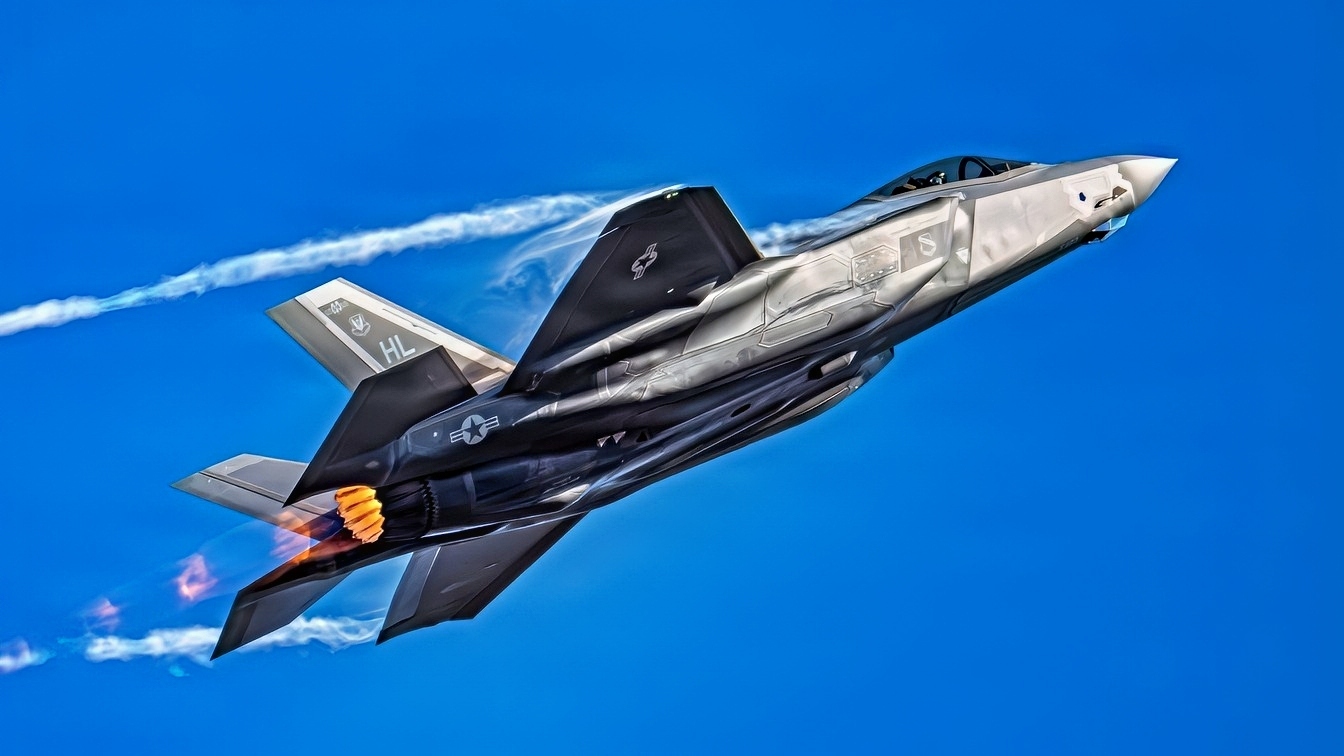
U.S. Air Force Maj. Sean “Rambo” Loughlin, pilot for the F-35A Lightning II Demonstration Team, performs aerial maneuvers during a practice flight at Hill Air Force Base, Utah, Jan. 6, 2026. The flight supported Loughlin’s training as the team’s new demonstration pilot as he prepares for the upcoming air show season. (U.S. Air Force photo by Staff Sgt. Nicholas Rupiper)
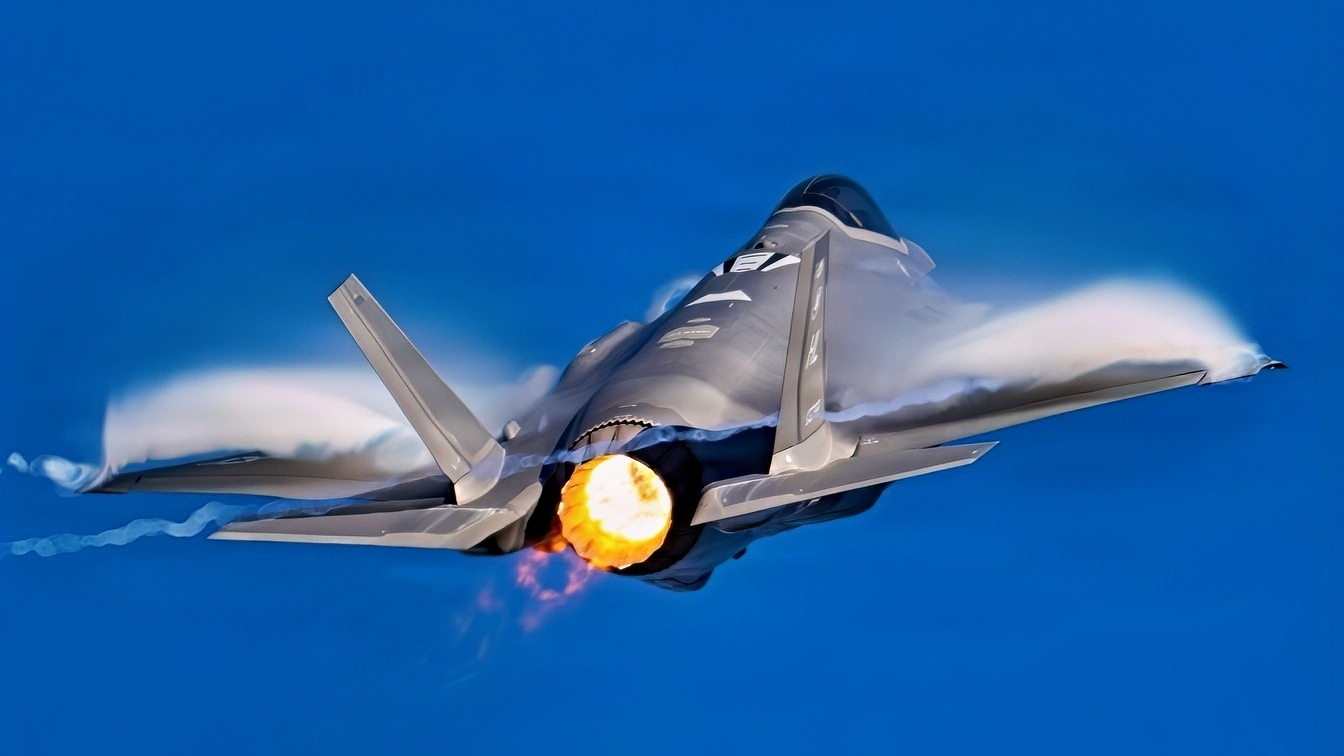
A U.S. Air Force F-35A Lightning II assigned to the F-35A Lightning II Demonstration Team performs a maneuver during the Feria Internacional del Aire y del Espacio (FIDAE) over Santiago, Chile, April 8, 2026. The F-35A Demonstration Team showcases the aircraft’s advanced performance and versatility through dynamic aerial maneuvers. (U.S. Air Force photo by Staff Sgt. Zachary Rufus)
The Kongsberg Defense & Aerospace JSM is the air-launched companion to the iconic Naval Strike Missile (NSM). Unlike older cruise missiles that require external carriages for launch, the JSM fits within the F-35’s internal weapons bays. That means an F-35 can remain low-observable while carrying a serious long-range precision-strike weapon.
JSMs are designed to attack surface warships, land targets, air defense systems, and high-value infrastructure. A combination of GPS, inertial navigation, terrain matching, and an imaging infrared seeker ensures the weapon’s accuracy as it travels from the F-35 to its intended target.
Why the Air Force Wants It
The Air Force’s biggest problem is how to overcome the vast distances that define the Indo-Pacific area of responsibility (AOR). Washington believes it will soon be at war with the People’s Republic of China (PRC).
To best fight this threat, the Air Force must therefore have the capability to overcome the distances that define the Pacific, especially since China possesses a world-class anti-access/area-denial (A2/AD) capability specifically aimed at stunting US airpower projection into its near-abroad during war.
Most American tactical aircraft must operate hundreds or even thousands of miles from their targets. Flying directly into dense Chinese air defenses is increasingly dangerous. That is why the JSM exists. To change that dynamic and, possibly, restore the advantage to US attackers.
An F-35 can launch from outside the coverage of China’s vast array of A2/AD systems, release the JSM, and allow that missile to penetrate deeper toward the target. The aircraft doesn’t need to expose itself as much to enemy radars or surface-to-air missile (SAM) batteries.
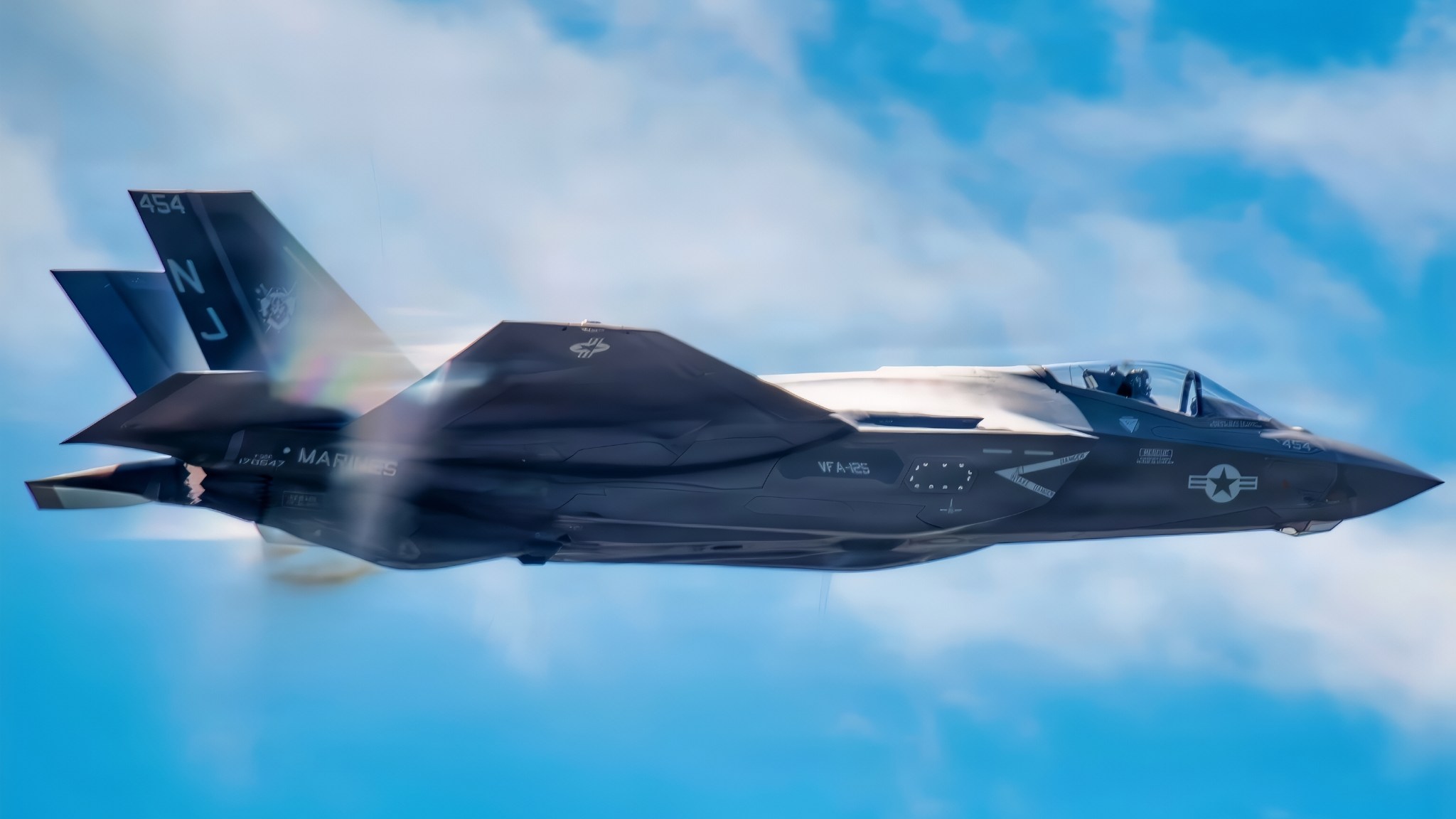
A U.S. Navy F-35A Lightning II with the U.S. Navy F-35C Airshow Demonstration Team performs an aerial demonstration over Rickenbacker International Airport during the Columbus Air Show, Aug. 24, 2025. This year’s event featured more than 20 military and civilian planes, including a KC-135 Stratotanker from the 121st Air Refueling Wing, which served as the base of operations for military aircraft participating in the show. (U.S. Air National Guard photo by Staff Sgt. Ivy Thomas)

Canada F-35 Fighter Display. Image Credit: Creative Commons.
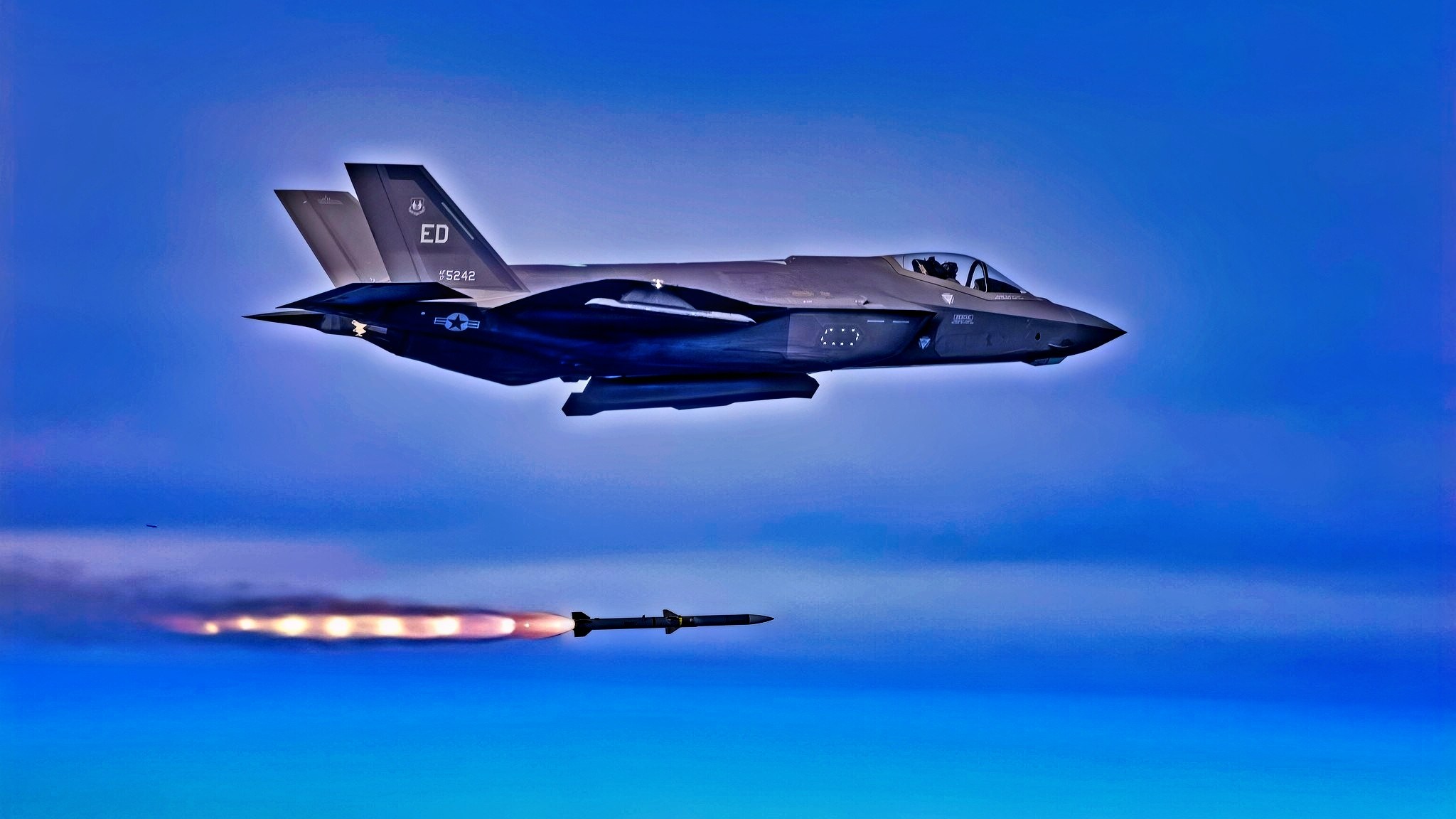
An F-35A with the 461st Flight Test Squadron, 412th Test Wing, conducts a TR-3 AIM-120 live fire mission over the Pacific Test Range on January 22, 2025. The F-35 Integrated Test Force at Edwards is responsible for developmental testing of all three F-35 aircraft variants across the joint-services. (Courtesy Photo)
The Anti-Ship Angle
Many observers focus on the JSM as a land-attack missile. It will, supposedly, perform that function well. But the more important role for the JSM, especially considering that US forces would likely wage war against Chinese forces if Beijing attempted an amphibious landing on Taiwan, is its function as an anti-ship weapon.
For years, the US military struggled with how to give stealth aircraft a serious anti-ship capability. China has invested heavily in its growing naval power, including aircraft carriers, amphibious ships, cruisers, destroyers, and logistics vessels.
A stealth F-35 carrying JSMs can hunt ships without sacrificing its stealth profile. That converts the F-35 into a real naval strike platform.
The Importance of the F-35 as a Naval Strike Platform
Konsberg Defense & Aerospace has only a $240.9 million contract. That sounds like a lot of money to you and me. But for what they’re trying to accomplish, it is only part of what’s required. But this contract is clearly part of a much larger effort to fundamentally transform the Air Force’s F-35A into a true anti-ship platform. Think of this initial contract as merely a proof of concept. If it works, the Pentagon wants to scale it.
The Air Force has previously outlined plans to acquire hundreds of JSMs over many years. Even before deployment, JSMs are becoming a core precision weapon for the F-35 fleet.
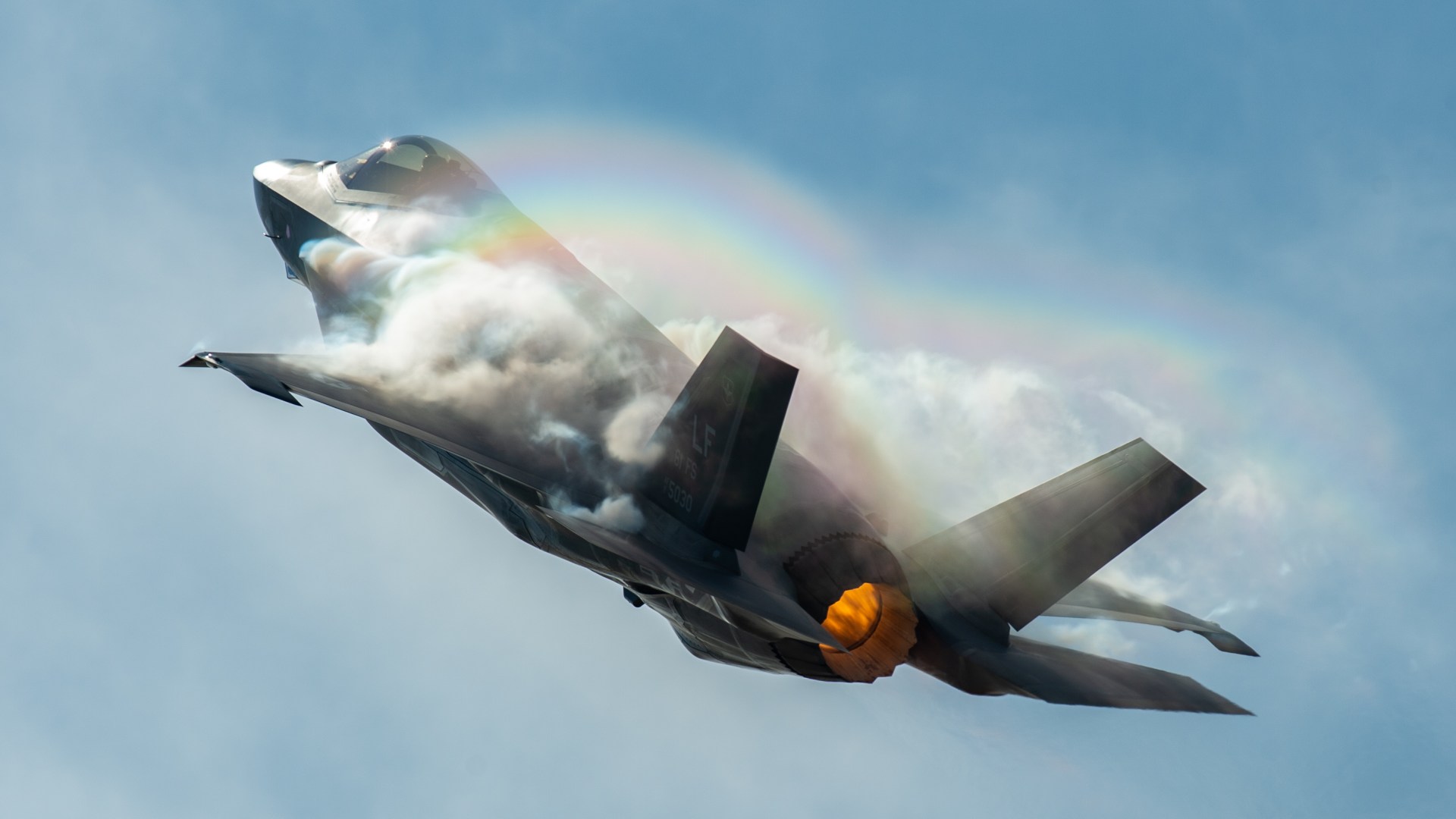
Capt. Andrew “Dojo” Olson, F-35 Heritage Flight Team pilot and commander performs a vertical climb in an F-35A Lightning II during the Bell Fort Worth Alliance Air Show Oct. 14, 2018, in Fort Worth, Texas. The F-35A Lightning II’s F-135 single-engine contains 43,000 pounds of thrust. (U.S. Air Force photo by Senior Airman Alexander Cook)
And it’s all part of a wider transformation of the F-35 that sees it evolve from a stealth fighter to a long-range strike platform capable of killing ships from afar, while also serving as a networked sensor-shooter node. JSM further strengthens interoperability with US allies. Norway developed it, while Japan, Australia, Germany, Belgium, and other allies operating the F-35 are either procuring or evaluating it for widescale procurement.
So, allied F-35 fleets could potentially employ the same missile in a coalition campaign.
A Necessary Development
Washington clearly anticipates waging future wars beyond visual range. The horrid experiences of the Ukraine War and the ongoing Iran War inform these assumptions. The Air Force, meanwhile, is investing in weapons that will allow the F-35 to strike at farther distances and against seaborne threats.
In any Pacific conflict, that’s huge.
Konsberg Defense & Aerospace’s JSM contract with the Pentagon is another indicator that the Defense Department is building a larger anti-China strike architecture–one that’s centered on stealth aircraft, standoff munitions, and distributed precision fires rather than massed formations operating close to enemy defenses.
In other words, the Air Force is ensuring that every F-35 in existence becomes a stealth ship-killer in anticipation of a major conflict with China for control of the First Island Chain (the territories running from the Kamchatka Peninsula through Japan and Taiwan down to the Philippines and the South China Sea).
About the Author: Brandon J. Weichert
Brandon J. Weichert is Senior National Security Editor. He also manages The Weichert Brief on Substack. Weichert hosts “National Security Talk” on Rumble, too. He is the author of four bestselling national security books, the most recent of which is A Disaster of Our Own Making: How the West Lost Ukraine (Encounter Books). Follow him via Twitter/X @WeTheBrandon.


