

President Donald Trump insists that an agreement to end the war with Iran is within reach. Speaking to reporters, Trump said that negotiators are in the “final throes” of securing a major diplomatic breakthrough – yet even as he projected optimism on Tuesday morning, Israeli warplanes were again striking targets in southern Lebanon that same morning.
Despite urging Israeli Prime Minister Benjamin Netanyahu to show restraint, the Tuesday morning strikes on targets in the southern Lebanese city of Tyre forced an evacuation warning and affected the port’s Christian quarter for the first time. It’s bad news for Washington, and raises the question of whether the White House can deliver a peace deal while Israel continues its military operations – justified or not.

F-35I Adir Fighter from Israel. Image Credit: Creative Commons.
Trump’s Latest Comments on Iran War and Israel
Speaking to reporters, the U.S. president offered a strong indication that negotiations with Tehran are ongoing despite the escalation over the weekend.
“We’re in the final throes of what will be a very, very good deal,” Trump said. The president went further, stating that the agreement would reopen the Strait of Hormuz – and thereby begin the process of straightening out the global economy – and ensure that Iran would never obtain nuclear weapons “in any way, shape or form.”
“I think we’re very close to having a very, very good, strong, powerful deal,” he continued, adding that whatever agreement comes out of the negotiations would be “stronger than doing the bombing,” referring to the possibility of continued U.S. strikes on Iran.
When asked if there were any major obstacles remaining, the president also said that he does not believe there are any “sticking points.”
The comments are interesting given the recent escalation, but they are barely any different from those made in recent weeks. The Trump White House has been teasing a possible deal since at least the end of May – but the sudden exchanges of fire between Israel, Iran, and Lebanon complicate the picture.

F-35I Adir. Image Credit: Creative Commons.
The Weekend That Almost Restarted the War
The crisis over the weekend began when Iran launched nearly 30 ballistic missiles toward Israel – the first direct exchange between the two countries since the April ceasefire was agreed upon.
According to Israeli statements, the missiles targeted military facilities in central and northern Israel. Iran’s Islamic Revolutionary Guard Corps took credit for the strikes and described them as retaliation for Israeli strikes on Beirut’s southern suburbs – strikes that President Trump actively warned Israel against conducting.
Israel responded to the strikes with their own airstrikes inside Iran, with Israeli aircraft striking military targets across multiple locations, including military infrastructure and air-defense sites. Iranian media confirmed that the Israeli strikes killed two members of an air defense unit.
The exchange prompted fears that months of diplomacy could have come completely undone – and even now, it’s not certain the conditions have not changed. The primary reason to believe the negotiations are not stalling is that the White House claims they aren’t. Immediately after the strikes, reports suggested that both sides had stepped back from the brink – but Tuesday morning’s strikes suggest otherwise.
Immediately following the hostilities over the weekend, President Trump had suggested Israel would stop.
“He was hit, and he hit back, and I can’t blame him for that,” Trump said, adding that both parties had “agreed, through me, to stop.”
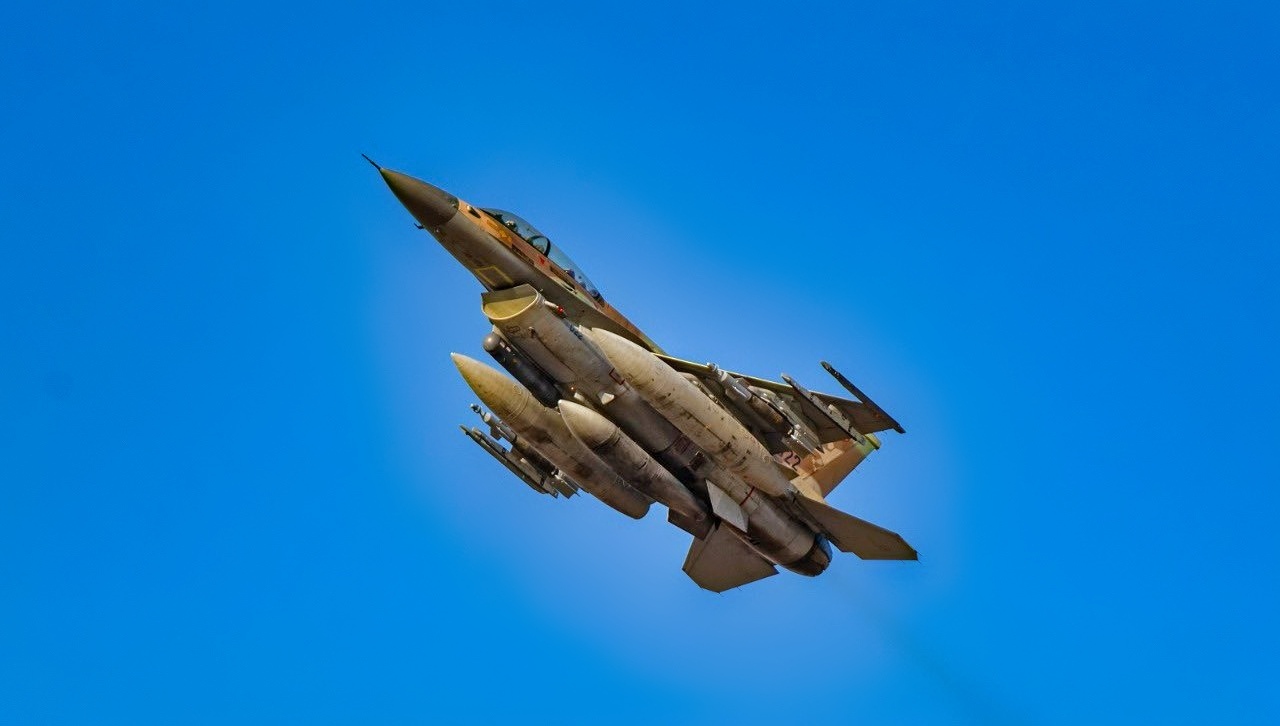
F-16I from Israeli Air Force. Image Credit: Creative Commons.
The Latest Lebanon Strikes
The June 9 strikes in Lebanon could prove consequential for the White House’s efforts to bring peace to the region. While both Tehran and Jerusalem appeared willing to step back after exchanging fire, Israel’s operations against Hezbollah continue, despite the regime in Tehran generally considering strikes against its proxies to be attacks against Iran.
On Tuesday morning, the Israeli military issued evacuation orders covering parts of Tyre, the fifth-largest city in Lebanon. The warnings extended into the city’s Christian quarter for the first time during this phase of the conflict. According to the Israeli military, Hezbollah infrastructure was operating in the region.
Lebanese media outlets then reported heavy strikes on the city, with images appearing on social media showing large plumes of smoke above residential buildings and neighborhoods.
Continued Conflict
The strikes also came less than 24 hours after the Lebanese Health Ministry reported that an Israeli raid near a Red Cross center in Tyre killed five people and wounded eight, including four paramedics.
The Israeli military also reported troops near the Lebanese border had come under fire on Tuesday, with soldiers returning fire and killing a terrorist.
Speaking to CNN on Monday, Lebanese President Joseph Aoun said that he would not meet with the Israeli Prime Minister until an agreement to end the war had been reached.
“I will not meet with Netanyahu before an agreement is reached to end the war. We say to the Israeli government that a military solution will never provide security for northern Israel,” President Joseph Aoun said. “We have no option but to negotiate and we are trying to take advantage of President Trump’s personal interest in ending this conflict. What is being proposed is a non-aggression agreement or a security agreement, but as for a peace agreement, we are part of the Arab Initiative.”
A deal may still be possible, but for now, we’ll simply have to take the White House’s word for it.
About the Author: Jack Buckby
Jack Buckby is a British researcher and analyst specializing in defense and national security, based in New York. His work focuses on military capability, procurement, and strategic competition, producing and editing analysis for policy and defense audiences. He brings extensive editorial experience, with a career output spanning over 1,000 articles at 19FortyFive and National Security Journal, and has previously authored books and papers on extremism and deradicalization.


David Torney
June 9, 2026 at 12:24 pm
Don has a bad way with words.