


Logistics and supply chains are everything in warfare. Without “beans and bullets,” it is difficult, if not impossible, to be successful in warfare. Of course, military supplies have become much more advanced since World War Two, when America pursued its “Arsenal of Democracy” strategy, which helped win the global conflict. The Russo-Ukraine war has seen a depth and breadth of logistical needs in Europe not seen since the 1940s.
The supply requirements in Ukraine and Russia have been under-reported during media coverage of the war. But Peter Beaumont of The Guardian conducted an investigation into just how much logistics has changed in modern warfare, as missiles and drones have come to dominate the battlefield.
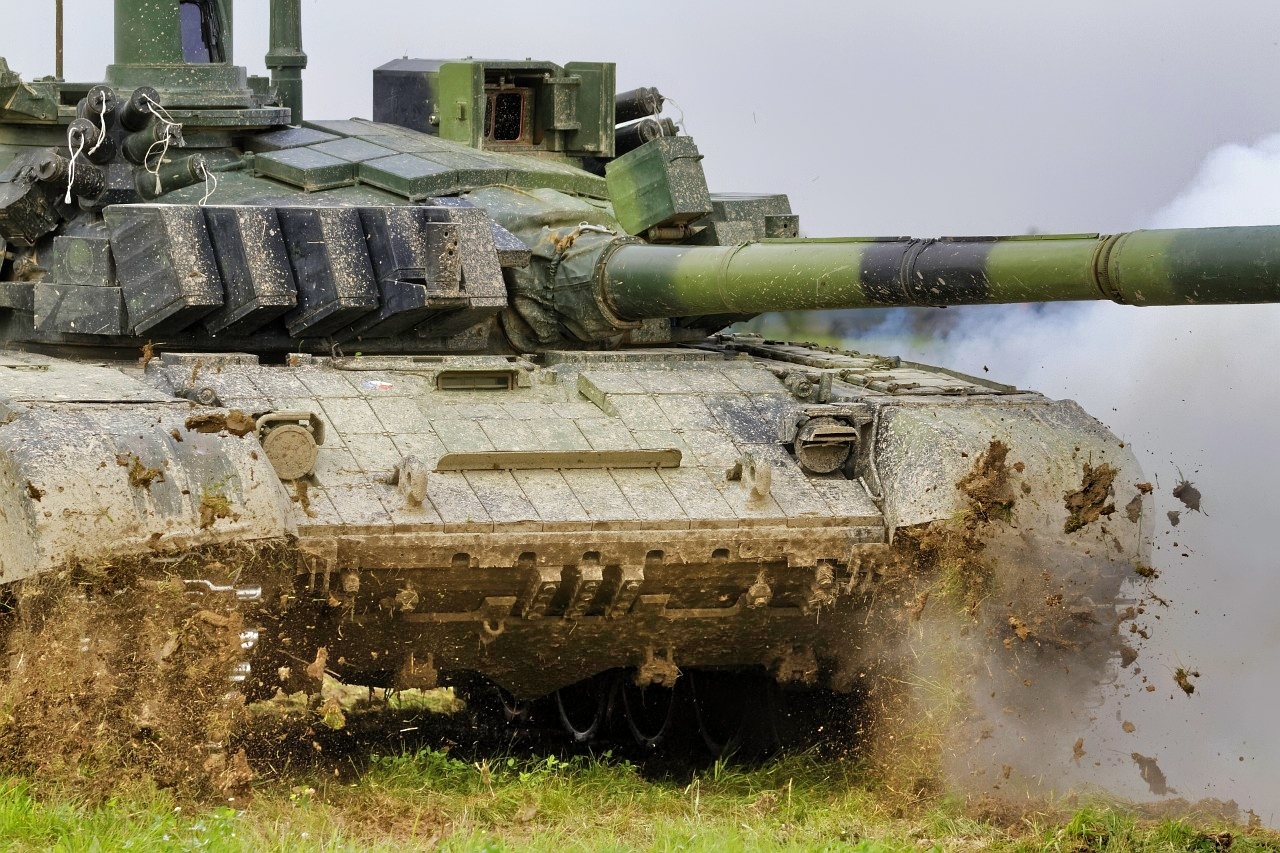
T-72 Tank. Image Credit: Creative Commons.
What Is the Road in Question?
Beaumont identified a critical artery for Russia to resupply its army. “Russian forces call it the ‘Novorossiya’ route, the crucial main supply line that snakes through the Ukrainian territories under Moscow’s occupation, linking Rostov-on-Don in Russia to Melitopol, Mariupol and Crimea via the Sea of Azov coastline.”
Due to extensive Ukrainian loitering munitions and kamikaze unmanned attacks, this road, officially known as the R-280, is now being called the “Highway of Death.”
Ukraine Is Punishing Russian Logistics Convoys Without Mercy
Russia needs R-280 badly. The invaders cannot use the Kerch Bridge to Crimea for resupply, and that leaves only the Highway of Death to transport weapons and food by truck to the Russian troops in the southern region. But Ukraine has punished the supply trucks without mercy. The line of vehicles lacks sufficient air defenses to prevent Ukrainian drones from taking out the transports on the ground.

T-90 Tank from Ukraine War. Image Credit: Creative Commons.
Russia Doesn’t Know How to React
The Russians have absorbed so many losses that they have recently closed the Chonhar Bridge, hampering further resupply efforts. This is a key part of the passage that Ukraine has attacked mightily. This closure will affect Russian logistics as the invaders ponder ways to prevent drone strikes from destroying transportation efforts.
Ukraine Introduces a Denser Fog of War
Ukraine’s 1st Separate Assault Regiment said on June 9 that “we see all movements and totally control the enemy’s repair works. We are ready to make our long-range adjustments at any moment,” Reuters reported.
Ukraine is calling this operation the “Middle Strike Campaign.” It has devastated transport vehicles and fuel carriers that supply Russian tanks and armored personnel carriers.
Zelesnky Hatched This Campaign Months Ago
This new strategy of hurting the Russians in the rear echelons comes from the top, as Volodymyr Zelensky has ordered his generals to develop plans to punish Russian transportation to keep them from resupplying enemy troops. Zelensky said these efforts have “quadrupled” since February, according to the Guardian.
“There are now twice as many strikes at distances of 20km-plus compared with March,” Zelensky said on May 5, “and four times as many compared with February. And there will be even more. This is a priority area.”
More and More One-Way Drones Enter the Fray
Ukraine has executed after-action reports of the rear echelon attacks and has devised a system to make the crossing of the Highway of Death even more dangerous for the Russians. Whichever drone control team has the most success, the high command supplies these units with even more kamikaze unmanned craft and personnel to run them.

T-90M from Russia. Image Credit: Creative Commons.
The Russians don’t seem to have an answer for the attacks. This carnage is another example of how drones have changed modern warfare. All parts of the battlefield are now endangered. Russia is losing key supplies of materiel that would allow it to take the fight to Ukraine, but now these efforts will be diminished.
Locking Down Enemy Logistics
Beaumont interviewed Ukraine’s Defense Minister, Mykhailo Fedorov. “Our task now, as directed by the president, is to maximize the middle strike and, in coordination with the military, create a complete logistics lockdown for the enemy,” Fedorov said. His formula is straightforward. “The enemy “will no longer feel safe even at a great distance from the frontlines.”
This Is Better Than Ambushes with IEDs and Roadside Bombs
The use of drones to destroy supply chains is a new practice. During the Second Gulf War, American logistical convoys were often ambushed by roadside bombs and improvised explosive devices. But this necessitated an enemy counter-insurgency operation that required painstaking effort to make IEDs quickly and efficiently. U.S. special operations forces were attacking the bomb-making facilities, which hampered the insurgents’ efforts to ambush convoys.
Drones have changed this equation. They are easy to produce, cheap, and plentiful. Soldiers are skilled at operating them. The first-person view models are especially effective.
What Can Putin’s Generals Do?
Russia may have to rethink the way it resupplies its troops, as it’s unable to stop the Ukrainian drone use and production. Trucks and tankers are easy to target, and this could spell trouble for Russia’s war effort.
“Robert Brovdi, the commander of Ukraine’s Unmanned Systems Forces, said military cargo traffic along the highway had fallen by 71 percent over the past two weeks,” the Kyiv Post reported.
Russia never foresaw that it would be so flummoxed over attacks in the rear echelon. Every day, it seems there are more reports of how Ukrainian drones have taught Vladimir Putin and his generals another lesson on how 21st-century warfare has evolved.
Now the Kremlin’s military honchos will have to report to Putin that his resupply efforts in the south are being constricted on the Highway of Death. Word will spread about the dangers, and that will strike the fear of God in the drivers of the vehicles. A simple resupply mission can now create ample death and destruction from the sky.
About the Author: Brent M. Eastwood, PhD
Author of now over 3,500 articles on defense issues, Brent M. Eastwood, PhD, is the author of Don’t Turn Your Back On the World: A Conservative Foreign Policy and Humans, Machines, and Data: Future Trends in Warfare, plus two other books. Brent was the founder and CEO of a tech firm that predicted world events using artificial intelligence. He served as a legislative fellow for US Senator Tim Scott and advised the senator on defense and foreign policy issues. He has taught at American University, George Washington University, and George Mason University. Brent is a former US Army Infantry officer. He can be followed on X @BMEastwood.


