
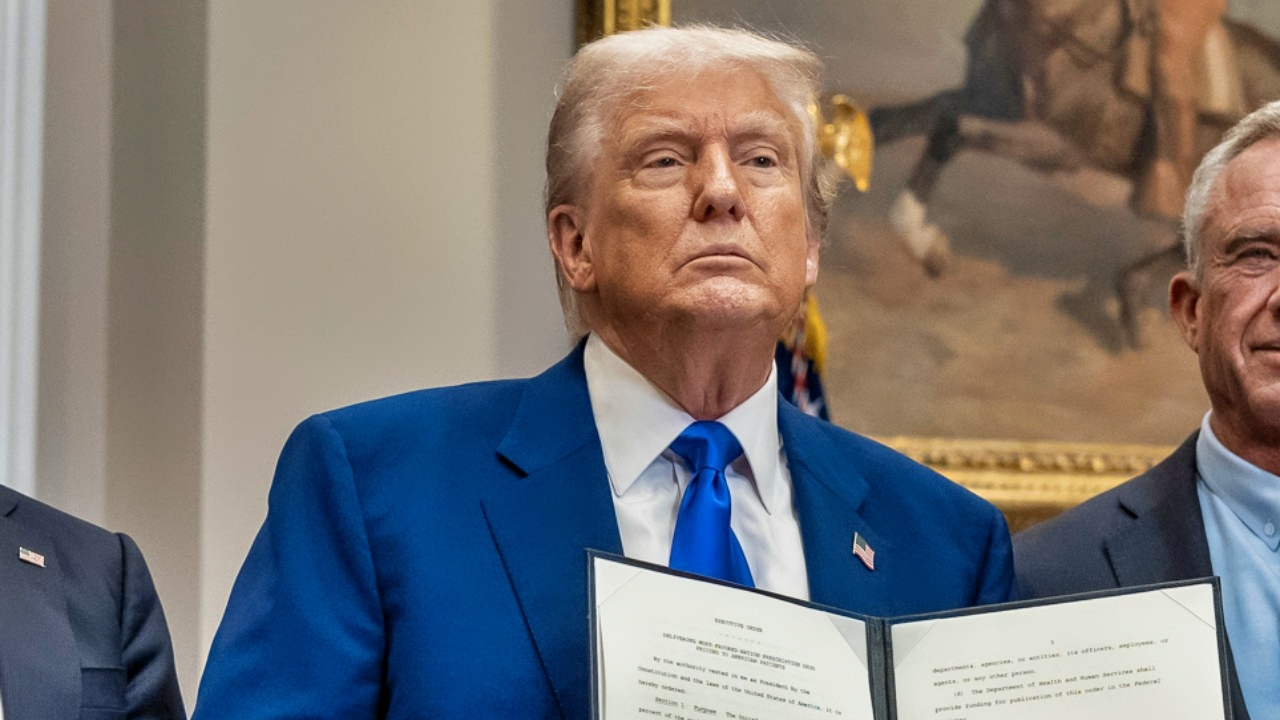
The new Federal Reserve chair, Kevin Warsh, is expected to hold interest rates steady this week, but that might only last so long. As U.S. households struggle to cope with the impact of the war in Iran and the oil crisis that may or may not have just been averted, the chances of a rate hike seem to be getting higher.
It’s bad news for the president from multiple angles, too.
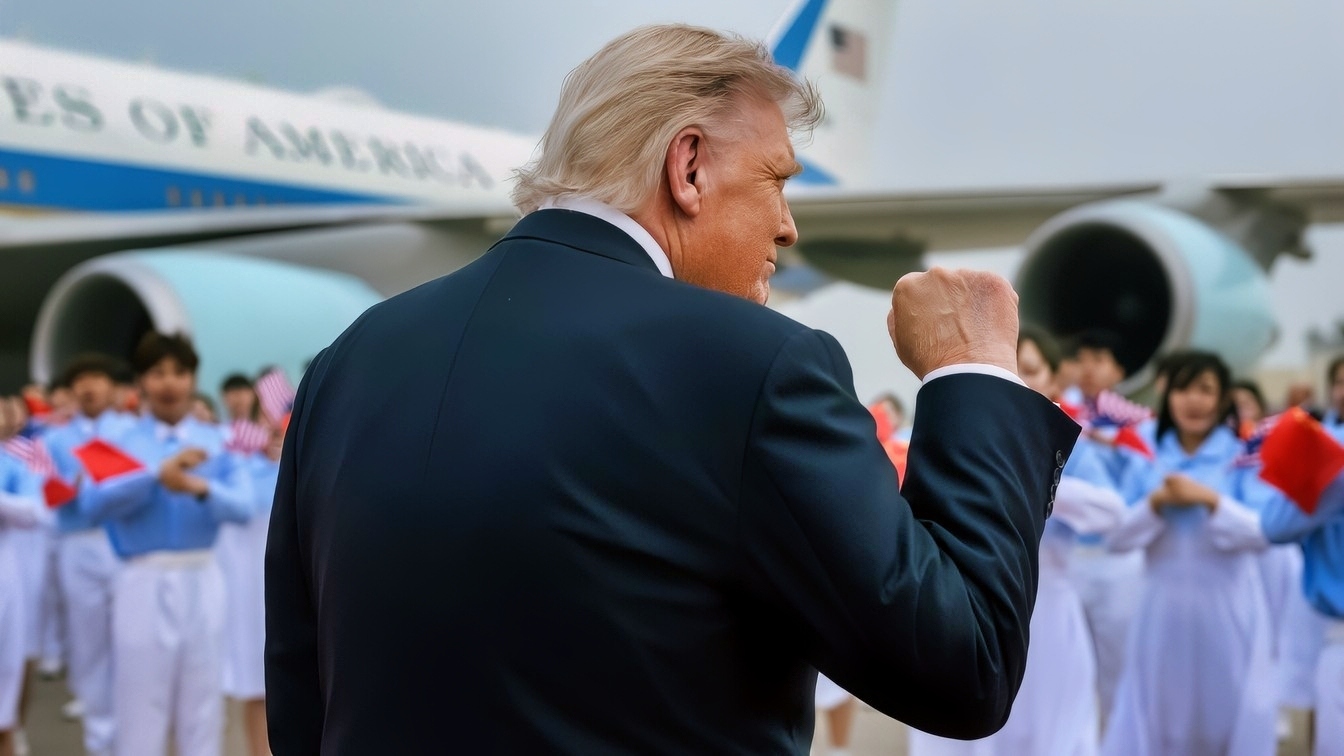
President Donald J. Trump greets Ambassadors David Perdue and Xie Feng, Executive Vice Minister of Foreign Affairs Ma Zhaoxu and Minister of Foreign Affairs Wang Yi at Beijing Capital International Airport, China on Friday, May 15, 2025, before boarding Air Force One en route Washington, D.C. (Official White House Photo by Daniel Torok)
Not only did his pick to lead the central bank initially indicate that he would like to cut rates – something for which the president has been pushing since the day he returned to the White House – but the reversal comes just before critical elections that determine how much power the president has during his final two years in office.
Here’s What to Expect
Warsh’s scheduled press conference, due after the upcoming June 17 meeting, will reveal a lot about what comes next – not just in terms of interest rates but also his plans to reduce the Federal Reserve’s balance sheet.
We’ll find out whether the Fed intends to change the benchmark interest rate that influences everything from mortgages to credit card payments.
The decision will be the first major test for the new Fed Chair, who inherited an economy grappling with persistent inflation and strong job growth but now faces major uncertainty after months of conflict with Iran.
Most economists and investors expect no immediate change. The current federal funds rate is between 3.50% and 3.75%, and financial markets expect it to remain there for now.
But it’s what comes in the period after that decision that really matters – and what comes when the Fed publishes its updated economic forecasts.
Those forecasts will reveal how the Fed views inflation, unemployment, and economic growth, and how they will fare after the next meeting.
The stakes are significant for the general public as well as for the president.
Holding rates steady would provide short-term stability for borrowers, but if there is any suggestion that higher rates may be needed in the future, it could translate into more expensive mortgages and car loans.
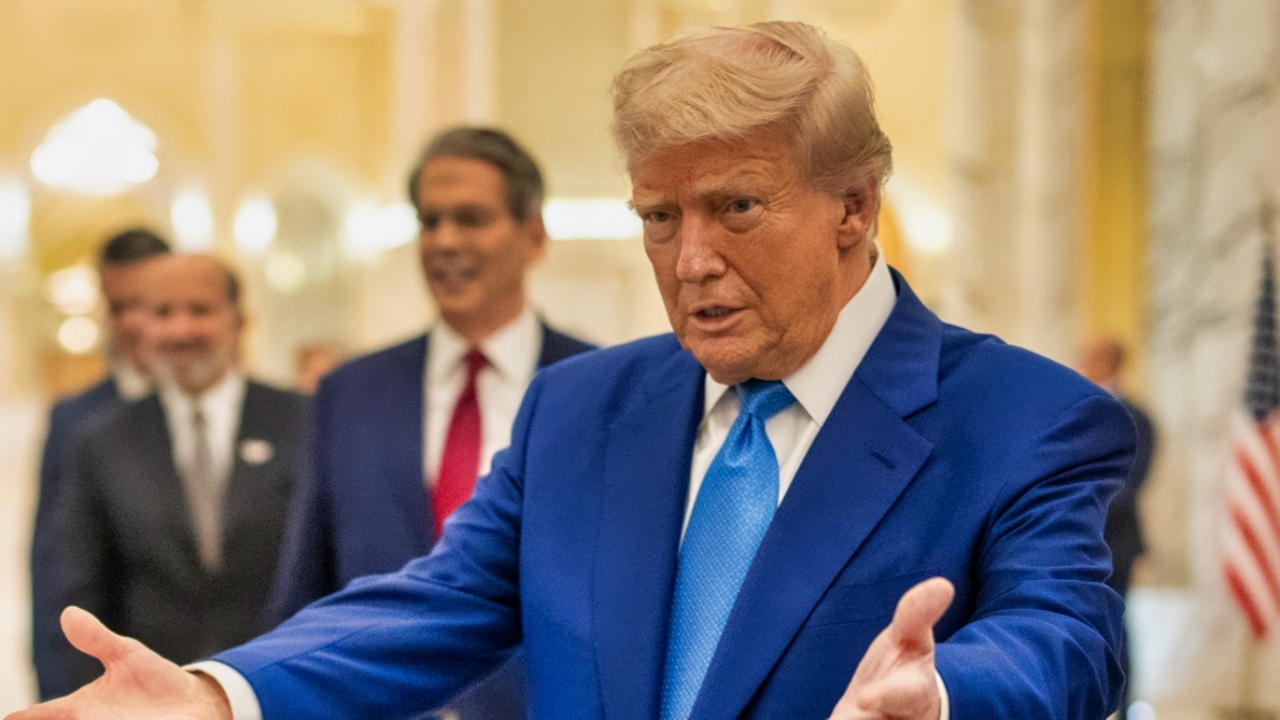
President Donald Trump participates in an welcome line at Qasr Al Watan in Abu Dhabi, United Arab Emirates, Thursday, May 15, 2025. (Official White House Photo by Daniel Torok)
The best Trump can hope for before the midterms is rates being held steady, but if the Fed warns that trouble is brewing, that’s bad news for Trump, too.
Why Interest Rates May Need to Be Increased
Probably the biggest concern facing the Federal Reserve right now is inflation.
Policymakers (and the president) had previously hoped that slowing inflation would eventually allow for interest rates to be slashed, but the economic fallout from the Iran conflict has changed the picture considerably.
Energy prices, after all, play a significant role in inflation because they affect far more than just the prices at the pump.
Higher oil prices mean rising transportation costs. Manufacturing also becomes more expensive, as does the price of moving goods around the country – or even the globe.
Those costs filter through the economy and ultimately reach customers as higher prices for everyday goods.
And although fears of a prolonged closure of the Strait of Hormuz have eased somewhat following the announcement of a tentative deal between the United States and Iran, oil markets remain fragile after months of disruption.
It’s also still very possible that conflict will reignite in the region – after all, it takes only one strike from Hezbollah against an Israeli target to prompt a response, and the deal between the U.S. and Iran could quickly collapse.
If energy prices remain elevated or begin to climb again, inflation could accelerate at just the wrong moment, and rates could rise in the near future.
The Polls and Trump’s Chances In November
The implications of rising interest rates, or even warnings that they are on the horizon, could be significant for President Trump.
The midterms are just five months away, with Americans heading to the polls on November 3. Trump isn’t on the ballot, but his party is, and his performance as president will significantly affect how independents vote.
A particularly poor economic performance could even risk losing some Republican support.
A Reuters/Ipsos poll published on June 8 found that just 35% of Americans approved of Trump’s overall job performance, while only 22% approved of his handling of the cost of living.
The same survey found widespread concern that gasoline prices will continue to rise in the months ahead.
On June 15, Reuters reported a very small uptick in those numbers, with Trump’s approval rising to 36% as angst about prices began to ease somewhat.
Still, the numbers aren’t great, and that dissatisfaction seems to be showing in midterm polling. An NBC News survey just found that a plurality of respondents want Democrats to win back control of Congress.
The poll, conducted between May 29 and June 7, showed that 49% of registered voters who responded want Democrats to win, while 44% want Republicans.
The poll is just one of many that indicate the Republicans lagging somewhat behind, meaning the president has ground to gain in the next five months.
Part of that will require him to secure the deal with Iran and resolve the global oil crisis just in time. It’s a big hill to climb.
About the Author: Jack Buckby
Jack Buckby is a British researcher and analyst specializing in defense and national security, based in New York. His work focuses on military capability, procurement, and strategic competition, producing and editing analysis for policy and defense audiences. He brings extensive editorial experience, with a career output spanning over 1,000 articles at 19FortyFive and National Security Journal, and has previously authored books and papers on extremism and deradicalization.


