

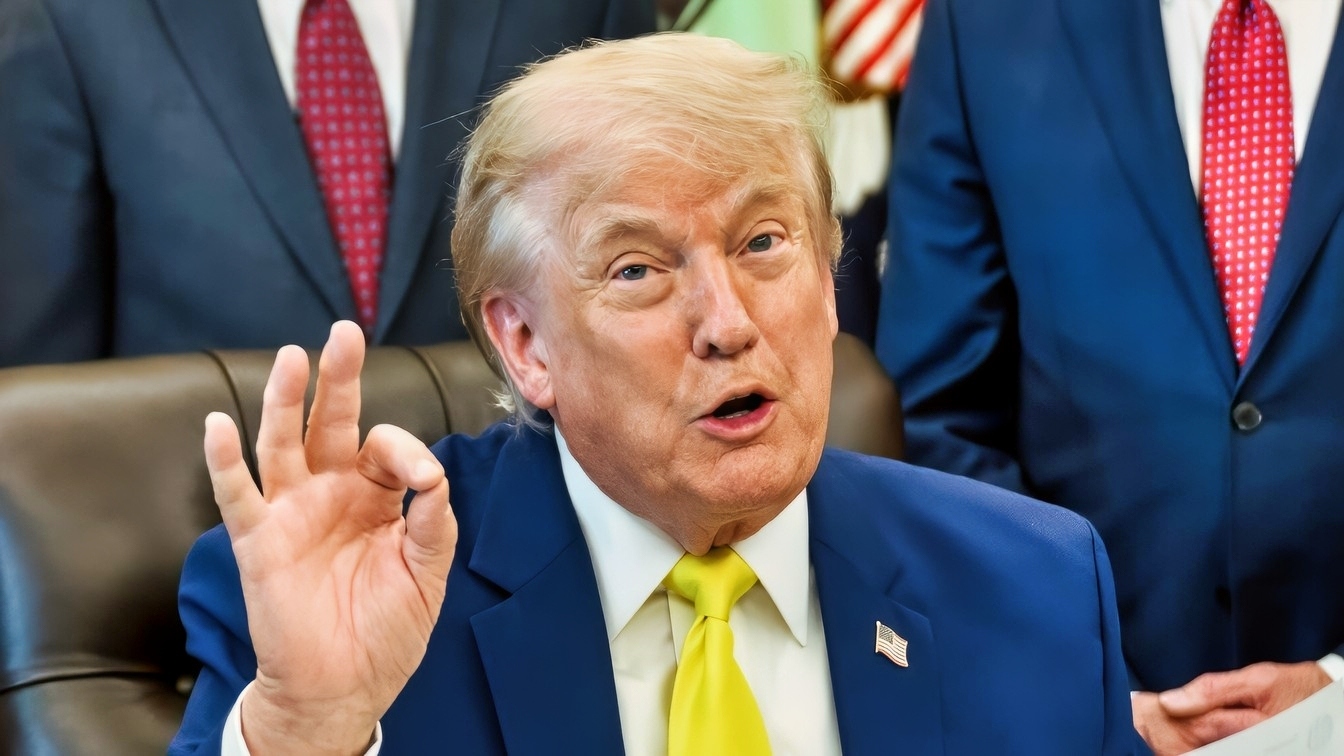
At 8:30 this morning, the Bureau of Labor Statistics released the May Consumer Price Index, and the number U.S. President Donald J. Trump spent two years promising to bury is back: inflation rose 4.2 percent over the past 12 months. That is the highest reading since April 2023, the third consecutive monthly acceleration, and it arrives with five more CPI reports scheduled before the November midterms. The man who won the presidency on the price of groceries and gasoline is now presiding over a price surge of his own making, and the data, the polling, and his own party’s press releases all tell the same story about where it came from.
The May CPI Report: Gasoline Up 40 Percent, and Energy Doing The Damage
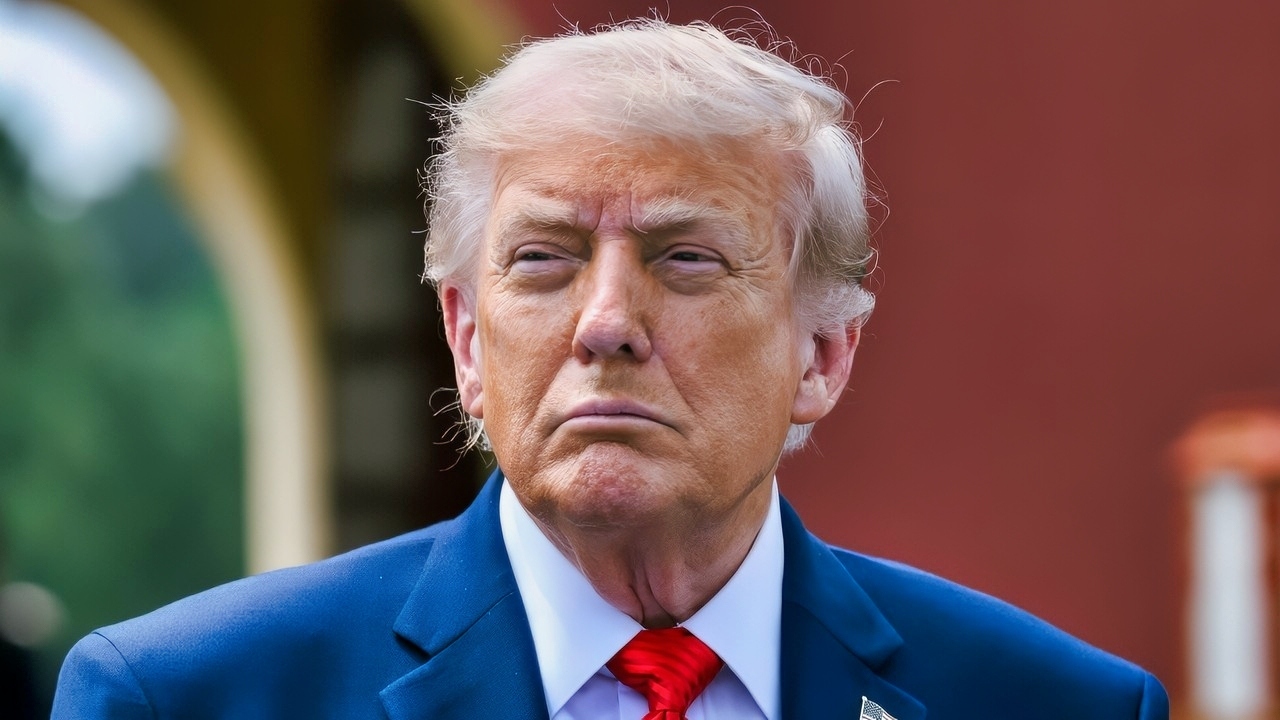
President Donald J. Trump tours the Hall of Prayer of Good Harvest with President Xi Jinping of the People’s Republic of China, Thursday, May 14, 2026, at the Temple of Heaven in Beijing. (Official White House Photo by Daniel Torok)
The internals of this morning’s report leave no mystery about the cause.
Energy costs are up 23.5 percent over the past year, gasoline is up 40.5 percent, fuel oil is up 58.9 percent, and energy alone accounted for more than 60 percent of the monthly increase.
Headline inflation climbed from 3.8 percent in April to 4.2 percent now. Core inflation, which strips out food and energy, sits at a far tamer 2.9 percent, and on a monthly basis, core actually came in below forecasts.
That gap between the headline and the core is the whole diagnosis. The American economy is not broadly overheating. Wages are not spiraling. One category is on fire: fuel, which flows directly from a closed Strait of Hormuz. The food index is now stirring too, up 3.1 percent from 2.3 percent the month before, which is what happens when diesel and shipping costs work their way into everything that moves by truck.
This is an energy shock wearing the official label of the United States government, and energy shocks have a known cause and a known start date.
The 2.4 Percent Republicans Claimed In Writing
Here is the part that should haunt the White House, because it is preserved on a government website. In February, House Budget Committee Chairman Jodey Arrington put out a statement celebrating the January CPI report showing inflation at 2.4 percent, crediting the president by name and declaring that Trump and Republicans are “Making America Affordable Again.” In March, he did it again, hailing the February report holding at 2.4 percent and contrasting Trump’s record with the Biden years, arguing Americans were finally getting relief.
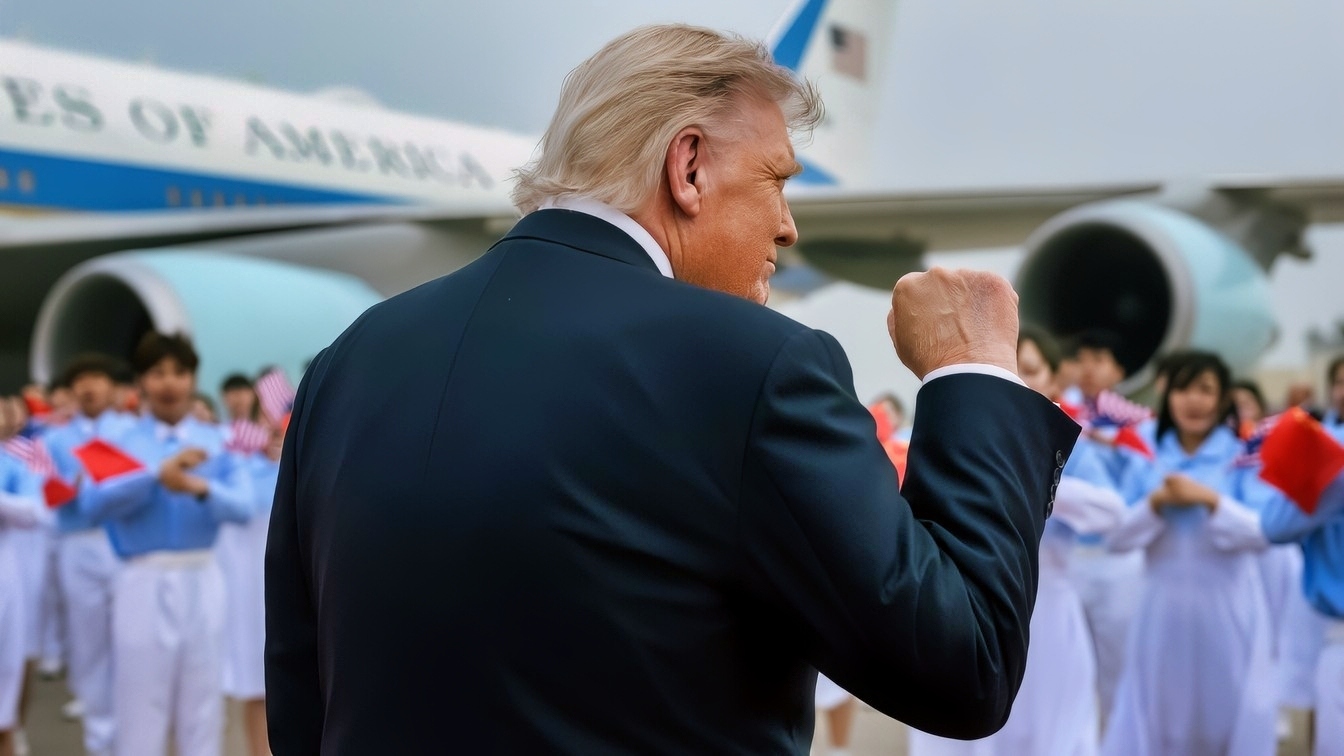
President Donald J. Trump greets Ambassadors David Perdue and Xie Feng, Executive Vice Minister of Foreign Affairs Ma Zhaoxu and Minister of Foreign Affairs Wang Yi at Beijing Capital International Airport, China on Friday, May 15, 2025, before boarding Air Force One en route Washington, D.C. (Official White House Photo by Daniel Torok)
Those statements were accurate when issued, and that is exactly the problem. The Republican Party formally, publicly, repeatedly claimed ownership of the inflation number when it was 2.4. The war against Iran opened on February 28. The Strait closed. The next CPI print rose, and the one after that, and the one after that, to this morning’s 4.2. A party that branded the number on the way down owns it on the way up, and Democrats will spend the next five months reading those press releases back into every camera in America.
From Operation Epic Fury To The Kitchen Table
The causal chain from the war to this morning’s report runs in a straight line, and every link is documented.
The Strait of Hormuz carried roughly a fifth of the world’s oil before the war; it has been effectively shut since the campaign began, and the supply ripped out of the global market sent prices up everywhere. The emergency releases that cushioned the first blow are draining, with US gasoline inventories falling at the fastest pace in the records and the Strategic Petroleum Reserve drawn down at historic rates while American fuel flows abroad to the highest bidder. The government’s own energy forecasters saw this coming months ago: the Energy Information Administration projected retail gasoline would peak near $4.30 a gallon, with diesel above $5.80, both staying elevated through the year.
Trump did not set out to cause a price shock. He set out to break Iran’s nuclear program and ended up with a hundred-day war, a closed strait, a stalemated negotiation, and a fuel bill mailed monthly to every American household. The presidency he won on affordability now generates the least affordable energy market in years, and unlike most political problems, this one is published on a federal schedule, at 8:30 in the morning, with decimal points.

Donald Trump Speaking at CPAC. Image Credit: Creative Commons.
The Polls: A Failing Grade On The Issue Voters Rank First
The political damage is no longer hypothetical, and the latest numbers describe a presidency falling through the floor. Trump’s job approval, above 50 percent at his second inauguration, has fallen to around 40 percent with disapproval at 57, and Brookings notes that his decision to attack Iran, which produced a longer and wider war than he expected, has reinforced the public’s sense that his priorities are not theirs — polling found just 21 percent believe he is focused on the right things.
On the specific issue of prices, the numbers are brutal by any measure in his polling. A YouGov survey at the start of June found 69 percent disapproval of his handling of inflation, Marquette Law School found 78 percent disapproval against 22 percent approval, and even the friendliest result, from Harris, had him at 35 percent.
Marquette also finds that inflation and the cost of living are the top voter issue at 37 percent — with immigration, the issue where Trump still polls respectably, fading sharply as a priority — and the same reporting notes the aggregated averages now place his approval below 40 percent nationally, with disapproval approaching 60.
The electorate has decided what the 2026 election is about, and it has chosen the subject where the president polls in the twenties.
Independents At 34 Percent: The Wave-Election Warning Light
For the midterms, one number matters above the rest. The aggregate trackers now put Trump at 38.1 percent, the lowest approval of either term, with his standing among independents at 34 percent — below the 36 percent that preceded the Democrats’ 41-seat House wave in 2018.
The historical pattern is unforgiving: every president whose party suffered a midterm wave saw independent approval fall under 40 before Election Day. The generic congressional ballot now runs around D+7, against a Republican House majority of nine seats. Even McLaughlin & Associates, a Republican polling firm, found Democrats overtaking the GOP on the generic ballot for the first time this cycle and warned that the party is hemorrhaging independents while the opposition’s voters look more energized.
The structural cushions are real and worth stating. Republican gerrymanders have shrunk the number of genuinely competitive House districts, and the 2026 Senate map tilts toward the GOP, with Democrats needing gains in difficult territory. A wave can break against those walls. But the conditions producing the wave are not abstractions; they are gasoline at the pump and a monthly CPI report from now until November 3, each one a referendum on the war’s bill.
Midterm elections punish the president’s party in normal years. They have never been kind to a president running a 22 percent approval rating on the issue that voters rank first.
The 2028 Problem the Republican Party Is Building
The longer horizon should worry Republicans even more, because the most recent proof of what inflation does to a governing party is Donald Trump’s own victory. The economy and prices were the electorate’s top concern in 2024, and Trump rode the public’s fury over the Biden-era price surge into office, defeating the party that presided over it. Jimmy Carter learned the same lesson in 1980. The pattern is among the most consistent in American politics: voters do not parse the causes of inflation; they punish whoever holds the office while they feel it.
Now run the timeline forward. The damage from this energy shock does not end when the shooting stops. Refilling the Strategic Petroleum Reserve takes years. Rebuilding the gasoline and distillate inventories drained this spring takes quarters at best. Gulf production shut in during the war recovers slowly, and the global stockpiles spent defending the price will leave the market exposed to every future tremor. If pump prices remain elevated into 2027 and 2028, the Republican nominee inherits the affordability grievance in exactly the position Kamala Harris occupied: defending the record of the party in power while voters remember what things used to cost. A party that won the White House on prices would be asking for a second term on a record of prices, and the 2024 result shows precisely how that argument ends.
The Exit Trump Keeps Not Taking
The honest counterpoint is that this inflation, unlike the broad-based surge of 2022, could unwind quickly, and that fact cuts both ways for the president. Because the spike is concentrated in energy, a deal that reopens the Strait of Hormuz would send crude and gasoline down fast, and the polling analysts modeling Trump’s recovery scenarios list a negotiated breakthrough as the clearest path back.
A president who ends the war and watches pump prices fall 40 percent before October would have a genuine story to tell. The Federal Reserve, meanwhile, can do little for him: cutting rates into an energy shock risks entrenching the inflation, while holding firm keeps borrowing costs high for an economy that did not cause the problem. The fix does not run through monetary policy. It runs through the deal Trump has been promising for weeks, the one he said was in its final throes, two or three days away, even as the strikes and counterstrikes of the past week pushed it further off.
That is the box this morning’s report closes around him. Trump wanted the war short, the Strait open, and the deal signed, and none of the three has happened. Every week of delay now has a published price: 3.8 in April, 4.2 in May, with the June number due July 14 and four more after that before Americans vote. He campaigned on the promise that he alone could make the country affordable again, and his own party put that claim in writing at 2.4 percent. The war he chose has been adding to the total ever since, and the voters who hired him to stop exactly this are already telling every pollster in the country what they intend to do about it.
About the Author: Harry J. Kazianis
Harry J. Kazianis (@Grecianformula) was the former Senior Director of National Security Affairs at the Center for the National Interest (CFTNI), a foreign policy think tank founded by Richard Nixon based in Washington, DC. Harry has over a decade of experience in think tanks and national security publishing. His ideas have been published in the NY Times, The Washington Post, The Wall Street Journal, CNN, and many other outlets worldwide. He has held positions at CSIS, the Heritage Foundation, the University of Nottingham, and several other institutions related to national security research and studies. He is the former Executive Editor of the National Interest and the Diplomat. He holds a Master’s degree focusing on international affairs from Harvard University.


