

The war with Iran is causing a global oil shortage, but there are other economic impacts that most Americans rarely think about. Reports now suggest that motor oil shortages could be on their way if a deal isn’t made soon.
According to industry groups and economists, disruptions to oil and petrochemical supply chains in the Persian Gulf risk causing shortages of some of the most widely used motor oils in the United States. Prices are already rising, and executives across the industry say the situation could worsen significantly over the summer. The shortage will be driven by a combination of damage to energy infrastructure in the Gulf and the continued closure of the Strait of Hormuz.
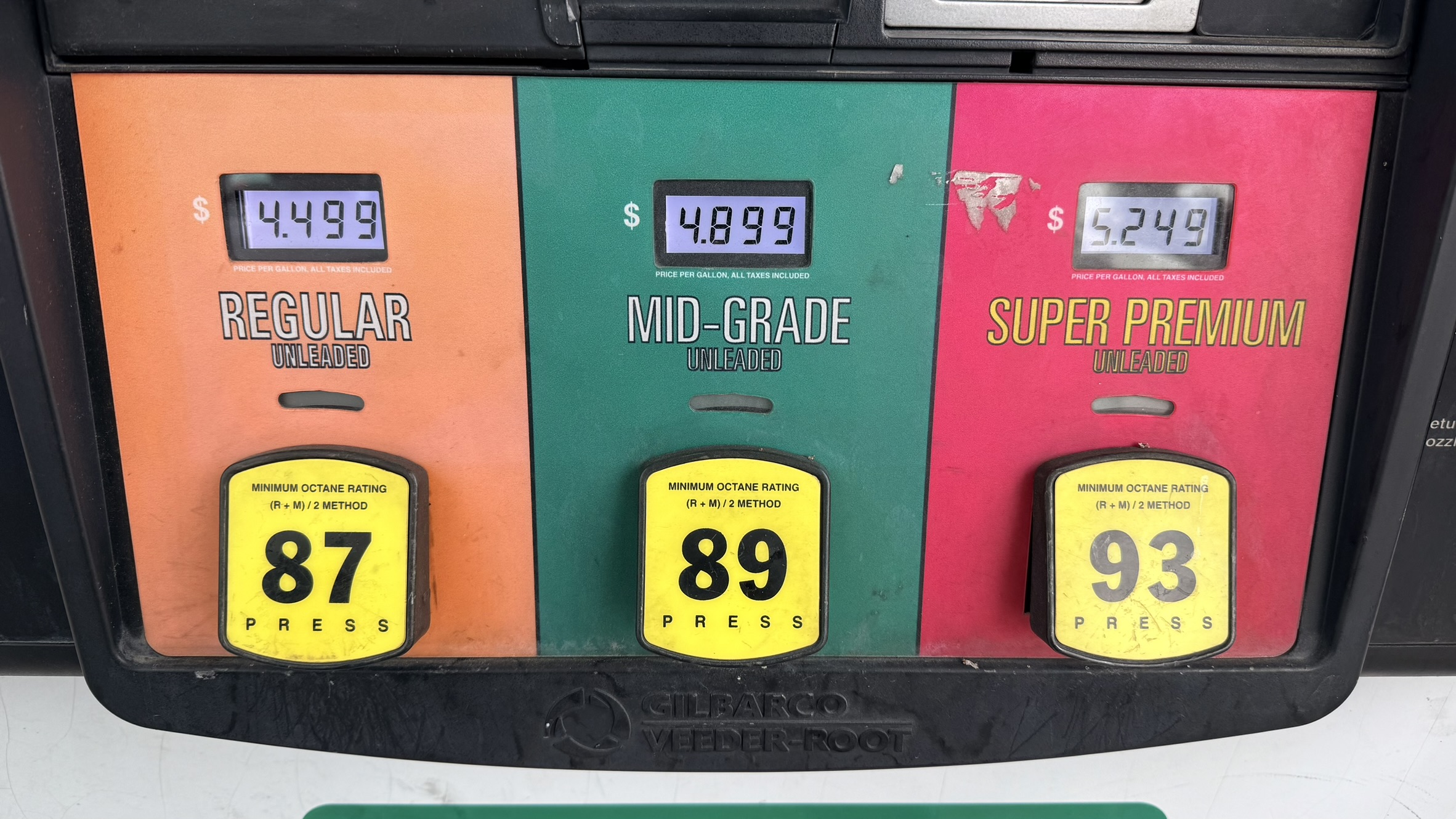
Gas Prices on May 9 outside of Orlando, Florida. Image Credit: Harry J. Kazianis for National Security Journal.
Why the Motor Oil Market Is Under Pressure
While much of the public attention on the Iran crisis has so far focused on crude oil prices and gasoline costs, the lubricant industry is also at risk because it depends on a separate but connected supply chain. Modern motor oils require refined base oils, which are then blended with additives to produce the final product used in vehicle engines. One of the most important is Group III base oil, a widely used product for low-viscosity lubricants used in modern passenger vehicles.
According to the Independent Lubricant Manufacturers Association (ILMA), roughly 44 percent of global Group III production comes from producers located in the Persian Gulf. Those supplies have been severely disrupted since the outbreak of the war earlier this year, with shipping routes through the Strait of Hormuz still restricted. Several major producers have been unable to move product through the waterway, forcing manufacturers to search for alternative sources.
Key Facilities Knocked Offline
Not only are raw materials becoming difficult to obtain, but one of the most important facilities in the global lubricant supply chain has also been knocked offline. Pearl GTL in Qatar, one of the largest gas-to-liquids facilities in the world and a major producer of Group III base oils, was taken offline during recent strikes. A prolonged outage here significantly reduces available supplies at a time when alternative sources are already under enormous pressure.
ILMA warned in a recent industry bulletin that U.S. inventories of Group III oils from Gulf suppliers could be exhausted within weeks if normal trade flows are not restored soon. Under normal conditions, lubricant producers would be able to turn to Asian refiners for replacement supplies, but many Asian producers also rely on crude shipments that move through the Strait of Hormuz. Those economies are facing supply constraints of their own and are depending on drawdown supplies being shipped from the United States to keep their economies functioning relatively normally. Refiners across Asia are also prioritizing diesel and jet fuel production due to exceptionally strong profit margins in those markets.

OVER NEVADA — A B-1B Lancer from the 37th Bomb Squadron, Ellsworth Air Force Base, S.D., streaks through the sky. Carrying the largest payload of both guided and unguided weapons in the Air Force inventory, the multi-mission Lancer is the backbone of America’s long-range bomber force. It can rapidly deliver massive quantities of precision and non-precision weapons against any adversary, anywhere in the world, at any time.
(U.S. Air Force photo by Master Sgt. Lance Cheung)
Prices Are Rising
Speaking to CNN, the president of Petroleum Trends International, Tom Glenn, said that the price of motor oil has increased multiple times since the war in Iran started.
“Three rounds of price increases over two and a half months is unheard of,” he said. “And the magnitude is stunning.”
Glenn also said that he has never seen price increases like this since he entered the industry in 1979.
Under normal conditions, bulk prices may increase by less than a dollar per gallon over the course of a year, but since the war began, some producers have announced increases that cumulatively total more than $5 per gallon.
Those increases are being driven by manufacturers facing higher costs for additives and transportation. The inflationary effect of an oil crisis hits almost all areas of trade, too, with packing and logistics also seeing price increases, which, in turn, raise the cost of making and selling motor oil.
Particularly vulnerable are low-viscosity oils such as 0W-16, 0W-8, and 0W-20. The 0W-20 grade is especially important because it is used by a large share of newer vehicles sold in North America and accounts for roughly one-third of passenger-vehicle motor oil demand.
Industry officials are warning that shortages in these specific products will create significant challenges for repair shops and service centers – as well as consumers.
A Long Disruption Incoming?
There is no doubt that the market will face disruption. It already is. The question is how severe it will become. Earlier this year, the American Petroleum Institute announced emergency provisional licensing measures designed to give lubricant manufacturers more flexibility in sourcing alternative base oils and maintaining production. Meanwhile, refiners and automobile manufacturers are working on contingency plans that could reduce pressure on supplies if shortages worsen.

A B-1B Lancer aircraft from the 34th Bomb Squadron departs from Al Udeid Air Base, Qatar, April 8, 2017. This departure marks the airframe’s first mission in the U.S. Air Force Central Command’s area of operations in more than two years. (U.S. Air Force photo by Staff Sgt. Joshua Horton)
But the outlook really depends on what happens in Iran. Prolonged disruption of the Strait of Hormuz will affect multiple petroleum product markets, and if shipping restrictions continue and Gulf facilities remain offline, lubricant shortages will become more widespread during the second half of the year.
But even if the disruption ends soon, it will take time for Hormuz to return to normal; between demining efforts and the time it takes for production facilities to resume normal operations, prices are likely to continue to rise through the year regardless.
About the Author: Jack Buckby
Jack Buckby is a British researcher and analyst specializing in defense and national security, based in New York. His work focuses on military capability, procurement, and strategic competition, producing and editing analysis for policy and defense audiences. He brings extensive editorial experience, with a career output spanning over 1,000 articles at 19FortyFive and National Security Journal, and has previously authored books and papers on extremism and deradicalization.


