
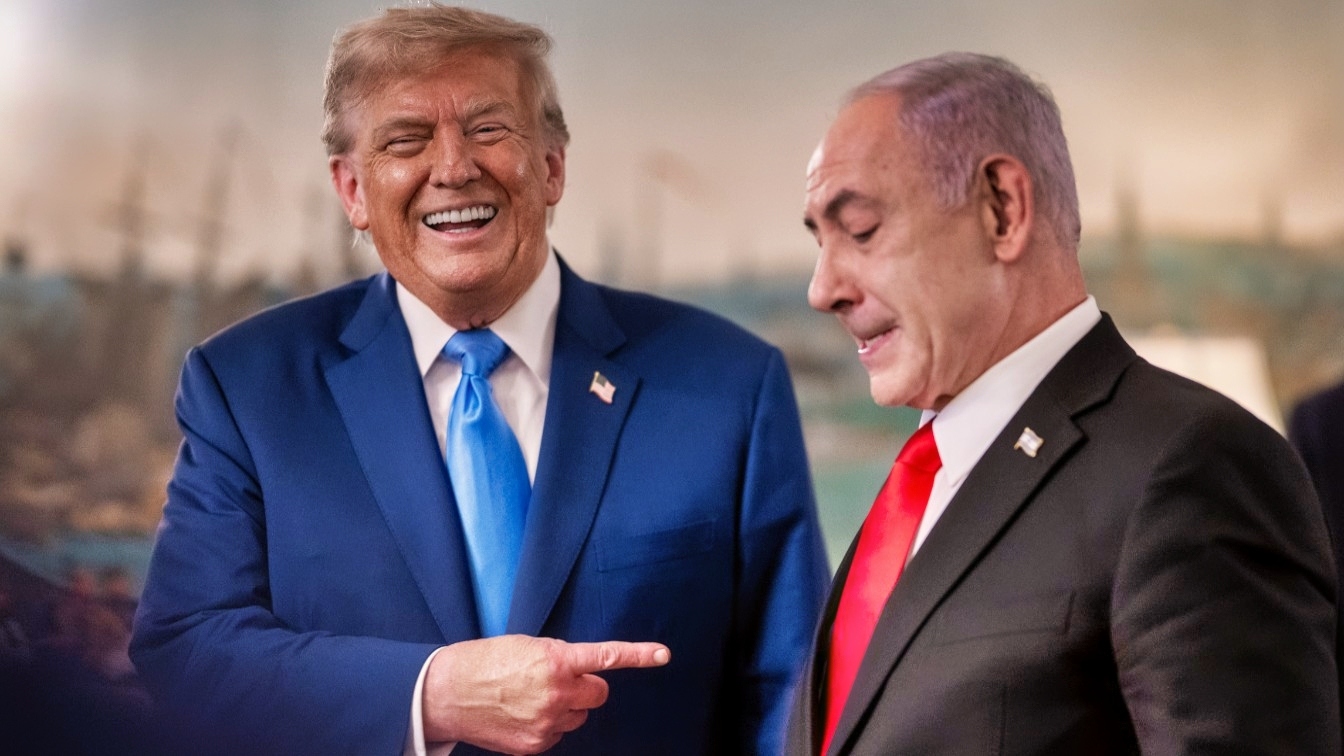
Did Trump’s Iran War Change the U.S.-Israel Relationship Forever?: For decades, the relationship between the United States and Israel has been widely considered to be unbreakable – but that may no longer be the case after the announcement of President Donald Trump’s memorandum of understanding between Washington and Tehran. The announcement of the deal, which lays the foundation for a future deal expected within 60 days, has shut Israel out almost entirely, and public statements from Jerusalem and Washington seem to suggest all may not be well between them.
Israeli officials insist that their country’s security interests remain the same and that they reserve the right to defend themselves against aggressors in southern Lebanon, while President Trump appears to be dead-set on stabilizing the region with or without the support of Jerusalem.

F-15I Ra’am from Israel. Image Credit: Creative Commons.

F-15I Fighter from Israel. Image Credit: Creative Commons.
Trump has secured the reopening of the Strait of Hormuz, at least for now, and hopes to avoid a prolonged conflict that could cause a global oil supply crisis.
Now, with Israel and Hezbollah still at odds and the risk of an Hormuz crisis still high, it’s hard to ignore the fact that the U.S. and Israel don’t appear to be the same partners they were before the war began – or even during the first months of the conflict.
Israel Locked Out Of Negotiations
On Monday, June 15, Washington announced that an MOU with Tehran had been digitally signed, bringing the agreement into effect.
The announcement prompted speculation about why the full text of the agreement had not been published, given that it must have been finalized before it could be signed.
The situation was further complicated when reports revealed that the United States had denied Israel’s request to review the deal’s contents.
The news came from i24 News correspondent Amichai Stein, who reported on X that Israel “asked to see the Iran-US MOU,” but that the admin said “no.” Officials from Washington also told the New York Post that they were unaware that the document’s contents had been shared with Israel.
It follows comments by Israeli National Security Minister Itamar Ben-Gvir in recent days about Israel’s obligations – or lack thereof – to comply with any deal negotiated between the United States and Iran. Speaking to Israeli media, Ben-Gvir reportedly said that the agreement “does not bind us,” and said that Israel is an “independent and sovereign state.”
Prime Minister Benjamin Netanyahu’s comments have also indicated a strained relationship with the United States.
In recent weeks, the prime minister has heavily implied in multiple statements that Israel retains the right to strike targets in Lebanon should it feel further attacks are necessary, and stressed that Iran would not obtain a nuclear weapon for as long as he is prime minister.
Just this week, Netanyahu said that Israel’s occupation of territory in Syria and Lebanon will continue despite the U.S. deal with Iran – much to President Trump’s obvious disapproval.
Trump Hits Out At Netanyahu
Speaking on Tuesday, President Trump said that while he maintains a “great relationship” with the Israeli prime minister, he believes that his strikes in Lebanon have been “vicious” and “too much.”
Trump made comments in France, where he attended the G7 summit.
“[I] didn’t like where two hours before we’re signing the agreement that there was an attack in Lebanon, in Beirut,” the president said.
also sought to downplay Israeli independence, stating that, without the United States, “there would be no Israel.”
“Without me, there would be no Israel, because no other president was willing to do what I did.”
Will Israel Determine the Outcome of the Deal?
While Israel has so far been locked out of the negotiation process, it may still prove hugely influential in the eventual outcome.
Even if negotiators somehow manage to bridge the enormous divide between Washington and Tehran on uranium enrichment and sanctions relief over the next 60 days, the process remains vulnerable to developments outside the negotiating room.
President Trump himself said that Israel is prone to doing “too much” militarily, and recent strikes in Lebanon have already demonstrated how quickly its military strikes can complicate diplomatic efforts – even if they’re justified.
If Israeli leaders conclude that the emerging deal leaves Iran too close to nuclear capability or fails to sufficiently address the threat posed by Hezbollah, they may decide that further military action is necessary regardless of what Washington thinks.
And that creates a difficult dilemma for the White House: new Israeli strikes could push Iran to walk, and force Washington to choose between making more concessions or returning to the military conflict it had hoped to leave behind.
Ultimately, Israel may hold the cards on a potential deal between the U.S. and Iran – unless, of course, Washington takes preemptive measures to ensure Netanyahu follows Trump’s lead.
About the Author: Jack Buckby
Jack Buckby is a British researcher and analyst specializing in defense and national security, based in New York. His work focuses on military capability, procurement, and strategic competition, producing and editing analysis for policy and defense audiences. He brings extensive editorial experience, with a career output spanning over 1,000 articles at 19FortyFive and National Security Journal, and has previously authored books and papers on extremism and deradicalization.


