

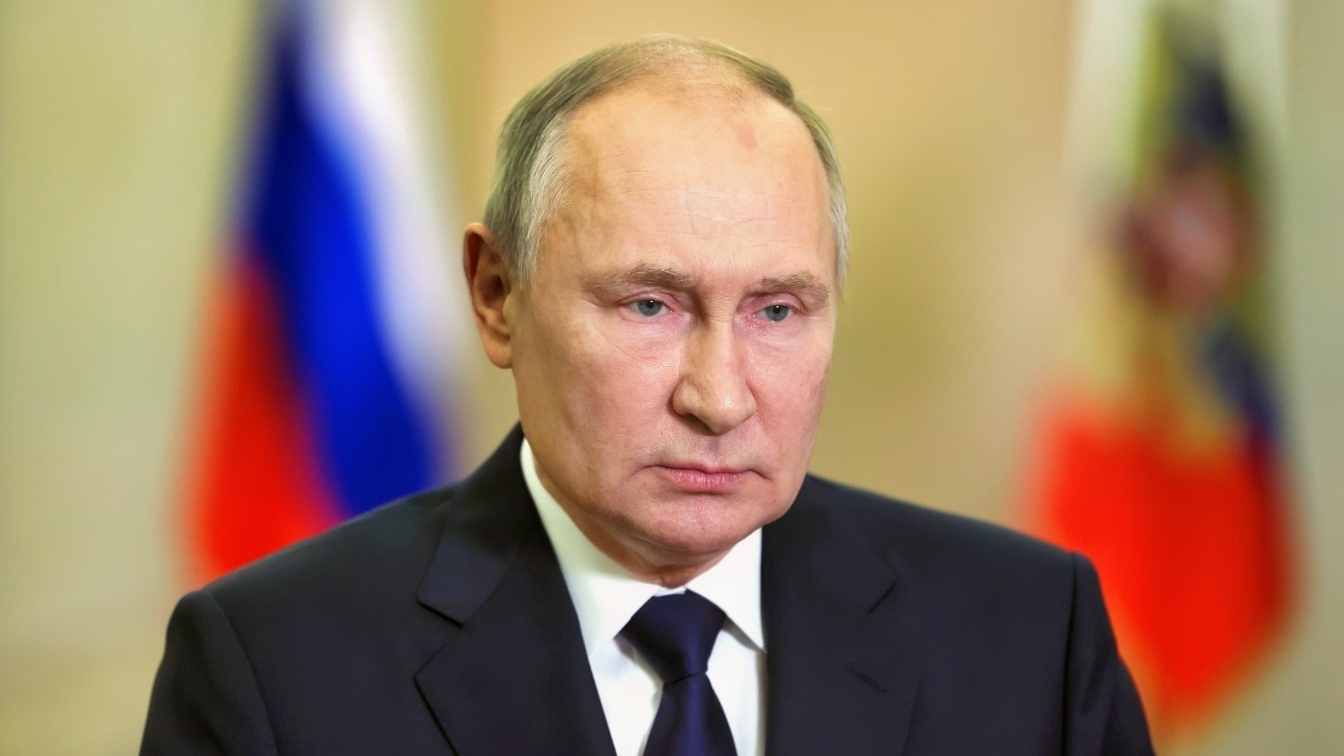
In February 2022, Russian President Vladimir Putin launched his “Special Military Operation” – a gamble that was intended to seize the entirety of Ukraine in a matter of days.
Instead, his invasion has become bogged down in a conflict that has lasted longer than the Soviet Union’s war against Nazi Germany in the Second World War and the entire First World War combined.
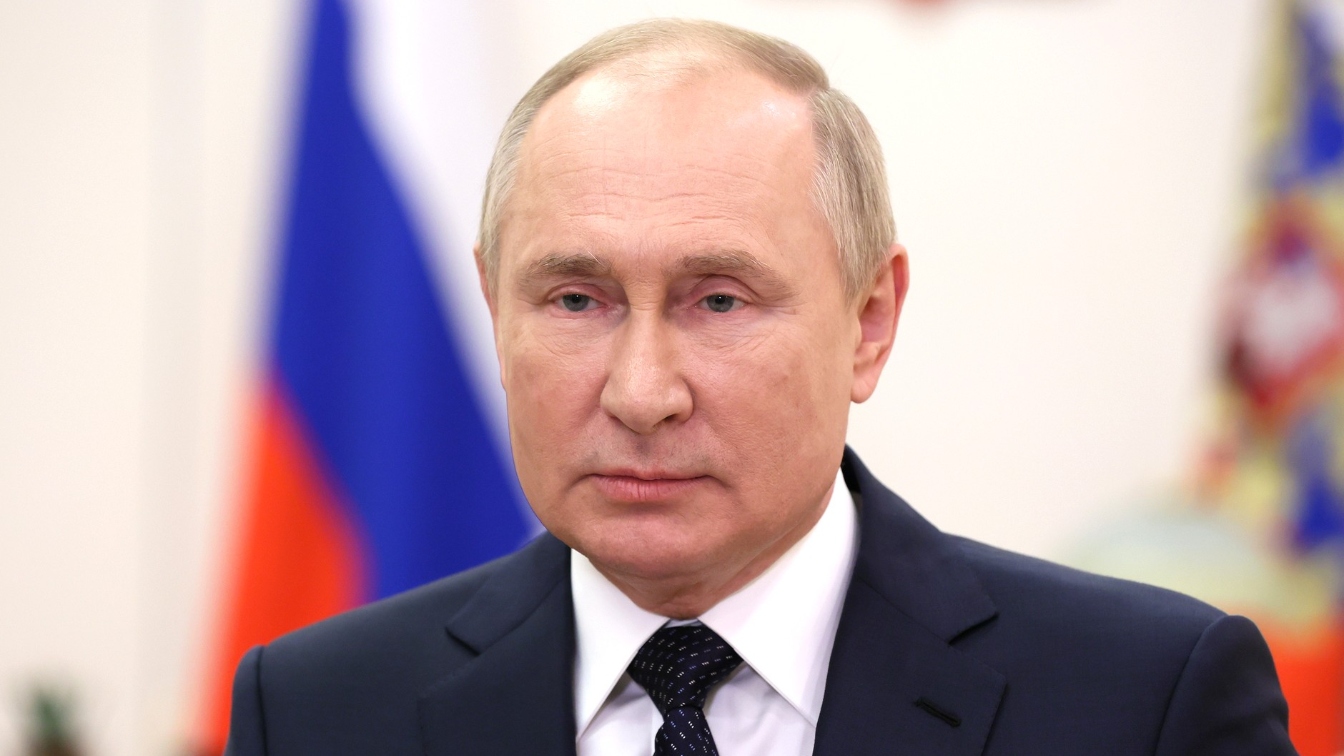
Putin in 2021 Creative Commons Image
What has now become a devastating war involving tens of thousands of soldiers killed in battle every month has nonetheless remained a distant abstraction for the populations of the major cities located in what is almost paradoxically called “European Russia.”
This is due to the Kremlin’s relentless efforts to obscure what was really occurring.
The conscription of manpower from the poorer, far-off regions of Central Asia in Russia, rather than from Moscow or St. Petersburg, was one method of keeping the war from being seen for what it was.
As the long-running BBC correspondent in Moscow, Steve Rosenberg, pointed out this week, the subterfuge of Putin’s spin doctors and image manipulators permitted the populations of these major metropolitan cities to pretend the war in Ukraine “wasn’t happening at all.”
Keeping the “secret” that there really is a war out there has become an illusion that Putin, a former KGB officer whose lackluster performance kept his advancement stalled at the Lt. Col. rank, is unable to maintain.
For all the little tricks at deception and disinformation that the Soviet secret police were supposed to be so skilled at, it is impossible to hide the truth now that the front line is just outside their window.
Car Bombs and Oil in the Rain
In the last year and a half, the news that another Army General has been assassinated on the streets of Moscow has become almost a regular event.
Drone strikes hitting these major cities – once a rare occurrence – are now taking place with regularity. Meanwhile, Ukraine’s war on Russia’s oil industry is creating petrol shortages in almost every major city.
In the past week, Ukrainian drones have hit Moscow’s major oil refining facility twice within a three-day period.
As has happened in other regions of Russia when refineries were targeted, the populations later huddle indoors as black, oily rain is pelting down from the skies – the aftermath of these petrol tanks being hit with explosive suicide drones that produce clouds of smoke that can be seen for miles.
These unheard-of and unthinkable signs of the war taking place all around, as the population goes about their daily business, are nothing if not abnormal for the citizens of Moscow.
As Roseenberg points out, these events have now become the “new normal.”
The Thursday, 18 June, attack on Moscow was one of the largest aerial assaults on the entire region since the war first began more than four years ago.
Not just the refinery but also shopping complexes and residential buildings were struck.
“I heard explosions and saw lots of smoke. It’s the kind of thing you normally see in the movies. I saw it from my apartment window, said one Moscow resident who spoke to the BBC the day after.
Increasing Isolation
But watching Putin’s appearances on Russian TV and listening to his public statements makes it clear he is doing his best to avoid any public coverage or acknowledgment of these events.
The same day that this massive drone attack hit the capital and black smoke covered the skies above as far as the eye could see, Putin was in the city of Kazan attending the ASEAN summit.
His official address to the event made no mention of the war or of his nation’s capital being under attack twice in the same week.
Instead, he delivered some of the same platitudes about how all the nations assembled should strive to create a “multipolar world” and trade in their national currencies instead of basing their import and export transactions on the US dollar.
In response, there has been an increasing number of Russians posting on various platforms mocking Putin’s handshakes and meetings at this summit with the Sultan of Brunei, the prime ministers of East Timor, Singapore, Malaysia, Thailand, Laos, and Cambodia, and the president of the Philippines.
More than one Instagram video commentary in Russian blasted the Russian President for uttering nary a word about the fires burning and oil tanks exploding less than ten miles from the Kremlin.
CNN’s Nick Paton Walsh commented on the same day on the “discontent in Moscow’s population and the political instability that can bring.
The relentless posting [by Russian citizens] of videos the Russian authorities have tried to limit shows growing dissent, and message management that has ultimately faltered.”
The “Putin myth”, as many have described it, has now been exposed for what it is.
The invisible protective shell that was supposed to keep the Russian population safe from the effects of war has proven to be nonexistent.
Last week, Putin was forced to admit the economic damage done by Ukraine’s drone strikes and to recognize that his forces cannot take Ukrainian territory in the Donbas after more than a decade of fighting.
His population sees all this while simultaneously venting their anger at internet blackouts and other inconveniences.
Putin may be able to convince himself that these relentless drone attacks are all temporary setbacks.
But long after the refinery fires have been put out and the oil covering entire sections of Moscow has been cleaned up, the population is going to realize that what they are seeing is a permanent decline of their political system – a decline from which it is destined never to recover.
About the Author: Reuben F. Johnson
Reuben F. Johnson has thirty-six years of experience analyzing and reporting on foreign weapons systems, defense technologies, and international arms export policy. Johnson is the Director of Research at the Casimir Pulaski Foundation. He is also a survivor of the Russian invasion of Ukraine in February 2022. He worked for years in the American defense industry as a foreign technology analyst and later as a consultant for the U.S. Department of Defense, the Departments of the Navy and Air Force, and the governments of the United Kingdom and Australia. In 2022-2023, he won two awards in a row for his defense reporting. He holds a bachelor’s degree from DePauw University and a master’s degree from Miami University in Ohio, with a specialization in Soviet and Russian studies. He lives in Warsaw.


yeye
June 21, 2026 at 11:37 am
The average russian citizen has always been very aware of the rise of the nazis in ukraine, and his awareness was greatly reinforced by the western-backed nazi intrusion into kursk region in august 2024. (Almost two years ago.)
That incursion was thought to have targeted the kursk nuclear power plant, though the nearest fighting took place tens of km away from the site.
Anyway, all russian citizens today are aware the nazis are still very much alive and well due to strong western support.
Thus, the russian citizens must immediately get rid of putin, now, today, so that the russian military can get on with the business of eliminating the nazis, plus their supporters or backers.
As dmitry medvedev has said, russia no longer needs to tolerate the nazis who’re now brazenly targeting civilians with their drones.
Away with the nazis.
The hell with starmer, macron and merz.
bishnoi-noi
June 21, 2026 at 11:53 am
The fighting in donbass, or the war to resist the nazis, has been received with much disdain and given huge bias by the western media.
The western media outlets and their voices have come out in true great support for the nazis.
Their articles and news stories always carry massive praise for herr zelenskyy, the corruption-scandaled nazi leader, and How well or How great his nazi forces are doing.
In reality, the nazi forces are still fighting due to powerful western backing, including numerous mercenaries recruited by the western agencies and their operatives.
Otherwise, the nazis would have collapsed into the dnieper long ago.
For example, today, the russian military is employing long-range glide bombs, like the FAB-500 to demolish ukro drone control points.
Thus, the nazis are targeting russian oil facilities, knowing that soon, on the battlefield, their forces would be totally wiped out.
Their leader, herr zelenskyy is now threatening belarus, and this could be his very last throw of the dice.
Those are early the acts of final desperation, as trump is nowvtoo busy or too occupied with the middle east, and so won’t come to their aid.
The end of the n-a-z-i-s !!!
zhduny
June 21, 2026 at 2:29 pm
US president donald trump has threatened to resume bombing of iran if hezbollah in lebanon don’t allow themselves to be at the receiving end of israeli bombs willingly and selflessly. Amen.
That stance should keep trump, JD Vance and the US War Dept on their toes, staring at today’s modern version of ‘the black hole of calcutta’ in the persian gulf.
That kind of situation, potentially gives a free hand today, to the russian military to crush the nazis in donbass, as trump can’t focus on two different places at the same time.
Hurrah, hurrah, hurrah.
Swamplaw Yankee
June 23, 2026 at 5:18 am
Re-read the last sentence. So, peer reader: Is the op-ed correct?
A permanent decline of the Muscovy political system from which it will NEVER recover!!
Right on the bulls eye or missed the wall as well?
That would be the end of the line of the Motherland Kremlin Muscovy ethnic marriage of 1939-40-41 to NAZI Hitler Fatherland. This fervent ‘Forever’ fascist marriage of the two old socialist traditions seems to be ignored by 2026 MAGA POTUS Trump elite.
The Muscovy ethnics butchery of Finnish, Polish and Ukrainian millions in these Muscovy-NAZI marriage years seems so very very forgotten by the lefty-pinkoe followers of Moscow + moles in 2026 USA.
Yes, the divorce was bitter with the NAZI Fatherland, but the new boyfriend, 1942 POTUS FDR, brought hundreds of millions of FREE USA tax payer gifts to the vivacious Motherland bride of NAZI Germany.
At Nuremburg, all butchery at Katyn, etc., was so quickly erased + forgotten by the Motherlands POTSDAM lover. The Genocide of 20,000,000 million during the HOLODOMOR was technically, just not an Yankee issue!
Today, the old kranky divorced Hitler Kremlin wife still dreams about her youthful liasons with her spiritual NAZI socialist Hitler, as the 2026 Kremlin Muscovy grandchildren still see NAZI yud wherever they glance about Ruuzzkey land..
MAGA POTUS 2026 Trump seems to see no moral issue inviting these grand kids of NAZI Butchery into His personal Florida home.