
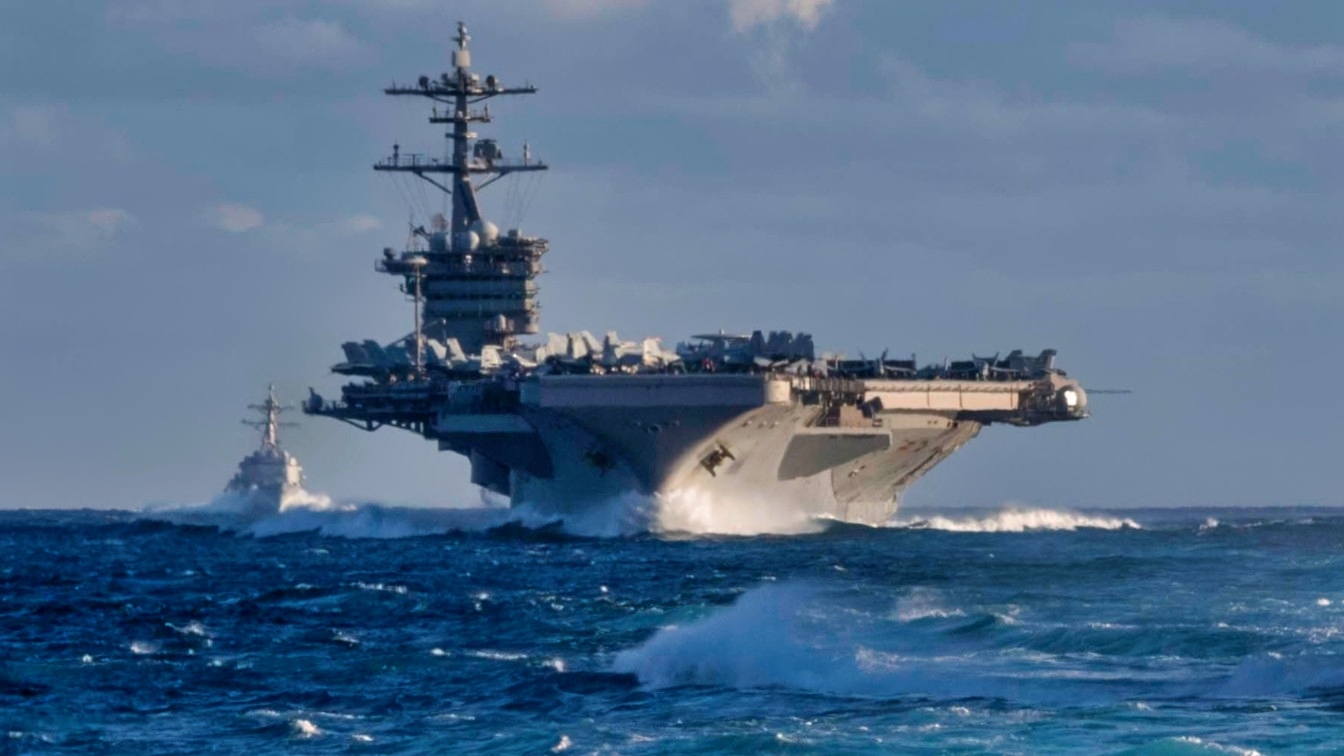
Iran Could Extract More Concessions By Closing Hormuz Again: Less than a day after Washington claimed Israel and Hezbollah had agreed to a ceasefire, additional strikes in Lebanon have not only collapsed the deal, but also resulted in the closure of the Strait of Hormuz. Tehran confirmed on the morning of Saturday, June 20, that it had once again closed the Strait of Hormuz, citing Israeli “violations” of the peace deal.
The Iranian military also said that the closure would be only the “first step” of its response to breaches of the ceasefire and warned that further measures would be taken if Israel continued its “aggression.”
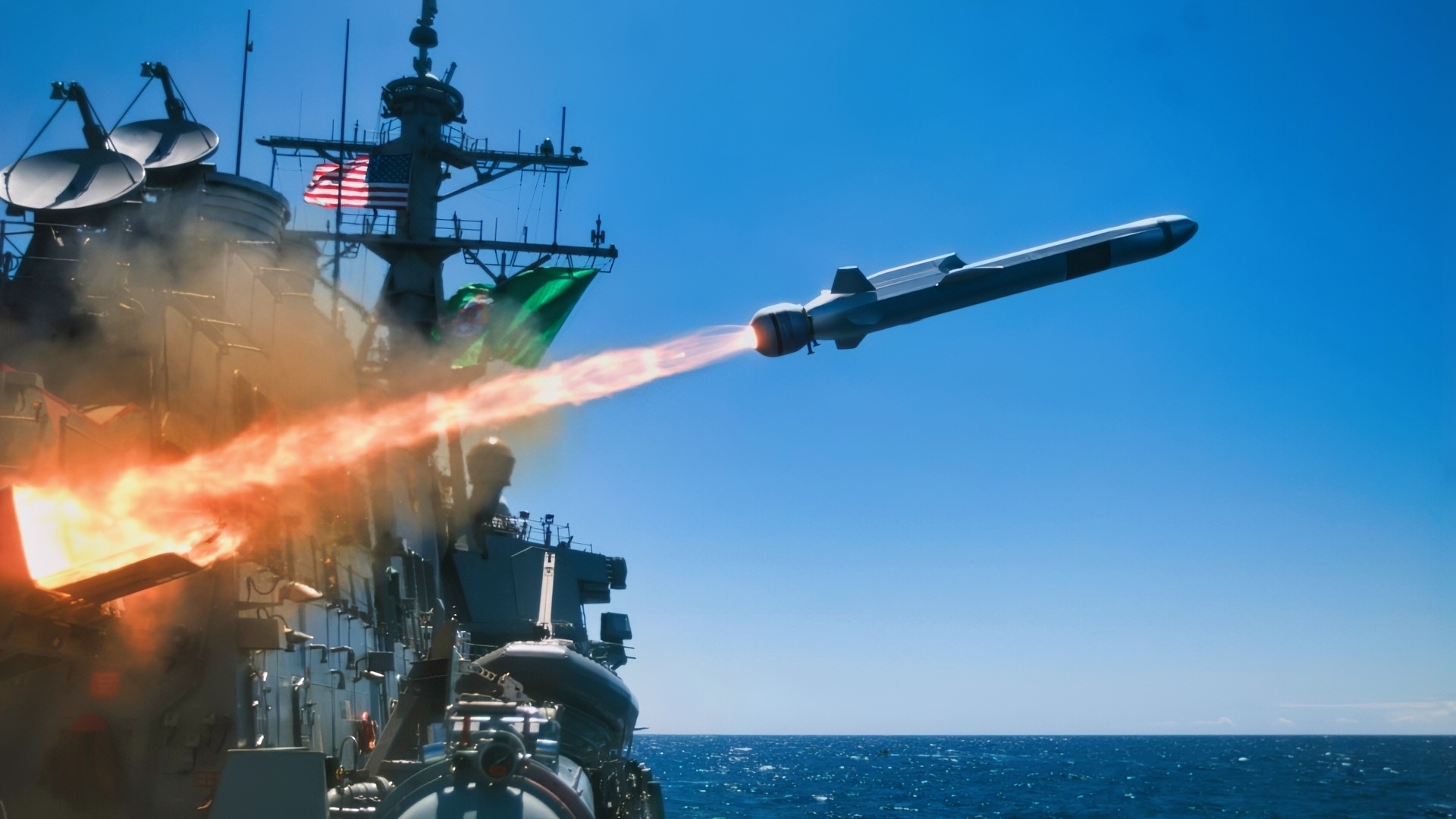
The Arleigh Burke-class guided-missile destroyer USS Fitzgerald (DDG 62), while participating in Exercise Rim of the Pacific (RIMPAC) 2024, fires the first naval strike missile from a U.S. destroyer July 18. Twenty-nine nations, 40 surface ships, three submarines, 14 national land forces, more than 150 aircraft, and 25,000 personnel are participating in RIMPAC in and around the Hawaiian Islands, June 27 to Aug. 1. The world’s largest international maritime exercise, RIMPAC provides a unique training opportunity while fostering and sustaining cooperative relationships among participants critical to ensuring the safety of sea lanes and security on the world’s oceans. RIMPAC 2024 is the 29th exercise in the series that began in 1971. (U.S. Navy photo by Mass Communication Specialist 2nd Class Jordan Jennings)
As of Saturday morning, the Islamic Revolutionary Guard Corps told vessels not to approach the shipping lane and warned that their security would be at risk.
The Violations
The ceasefire that was announced on June 19 was intended to bring an end to the latest round of fighting between Israel and Hezbollah, which was not brought under control by the recently signed memorandum of understanding (MOU) between Tehran and Washington.
The ceasefire, in theory, served to protect the fragile agreement that lays the foundation for a potential future peace deal. That new ceasefire, however, lasted only a matter of hours before both sides accused each other of violating its terms.
According to Israel, the first violation came from Hezbollah. The Israeli Defense Forces (IDF) said that over fifty projectiles were fired from Lebanon after the ceasefire was due to come into effect, and described the attacks as a blatant breach of the agreement. The IDF also said that it remained “committed to the ceasefire agreement” in Lebanon even after launching its own retaliatory strikes against Hezbollah.
“These constitute repeated violations of the ceasefire agreement by the Hezbollah terror organization. The IDF will not accept harm to Israeli civilians and its forces, and will respond forcefully to any use of force against them,” a statement reads.
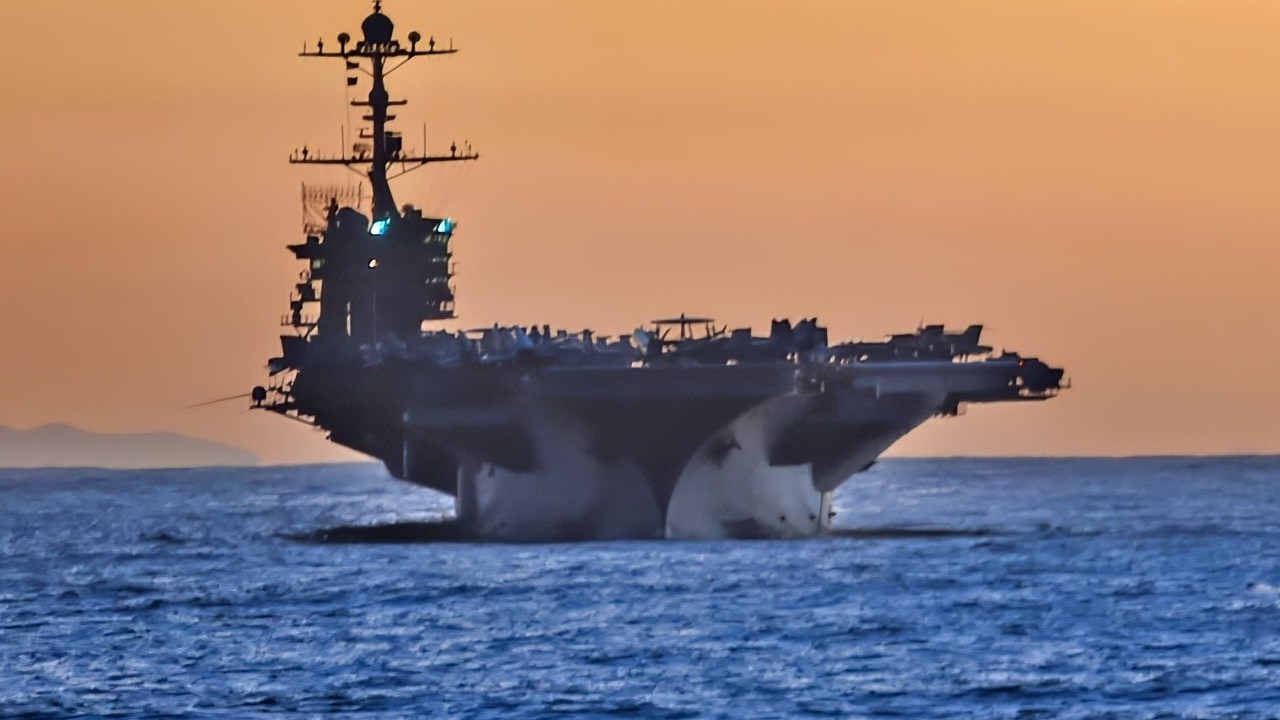
151111-N-KM939-021 PACIFIC OCEAN (Nov. 11, 2015) – USS John C. Stennis (CVN 74) travels behind the guided-missile destroyer USS Stockdale (DDG 106) during a Missile Exercise (MSLEX). Sailors from the John C. Stennis Strike Group are participating in a sustainment training exercise (SUSTEX) to prepare for future deployments. (U.S. Navy photo by Mass Communication Specialist 3rd Class David A. Cox/Released)
Meanwhile, Hezbollah has offered a different version of events, claiming that Israeli forces had attempted to move deeper into southern Lebanon and conduct operations in areas that they believed were covered by the ceasefire.
According to Hezbollah sources, their attacks were not a provocation but a direct response to Israeli military activity. The comments appear to refer to reports that Hezbollah used anti-tank missiles in strikes that killed four Israeli soldiers who were advancing into southern Lebanon near the Ali al-Taher hill.
Israel subsequently launched a new wave of airstrikes across southern Lebanon, with Israeli Prime Minister Benjamin Netanyahu stating that the Israeli military had struck more than 80 targets in the region and had “eliminated dozens of terrorists.”
Netanyahu insisted that Israel “will not tolerate attacks on our soldiers or our territory,” and said that the IDF “will exact a very heavy price from Hezbollah for these attacks.”
What About the Switzerland Talks?
The renewed fighting also casts doubt on plans for negotiations between Washington and Tehran to begin in Switzerland. Prior to the ceasefire announcement, officials from the United States, Iran, Qatar, Pakistan, and several European countries were expected to participate in talks in Switzerland to begin the next round of discussions.
Those plans, however, were already at risk when Vice President JD Vance canceled his planned trip to the country, with Swiss officials confirming that preparations for the meetings had been disrupted. The meeting was expected to focus on implementing the MOU, which guaranteed the opening of the Strait of Hormuz, and on establishing a framework for the 60-day period of discussions outlined in the memorandum.
On Saturday, reports confirmed that White House envoys Steve Witkoff and Jared Kushner had arrived in Switzerland, where the next round of talks with Iran were expected to take place on Sunday. Axios confirmed the news, citing U.S. officials familiar with the plans, adding that Iranian Foreign Minister Abbas Aragchi had traveled to Switzerland on Saturday to join the talks.
The news was also confirmed by Pakistan, a crucial mediator in the conflict, with officials stating that the talks will begin in Bürgenstock, Switzerland, on Sunday alongside mediators from Qatar.
Iran Says U.S. Not Living up to the Deal
Tehran has previously indicated that it would not continue negotiations if it believes the United States is not abiding by the obligations outlined in the MOU, with foreign ministry spokesperson Esmail Bagahei saying this week that negotiations will only begin when key commitments are upheld.
“The trip is therefore about demanding that the other side fulfill its obligations,” Bagahei said, adding that “the memorandum of understanding as a whole will be jeopardized” if that is not the case.
The stakes here are enormous. Even if President Donald Trump did not believe the MOU would result in a lasting peace deal, and that he might be forced to return to military action, the sixty-day negotiating period provided crucial relief to global oil markets.
With the Strait of Hormuz closed again, Tehran is proving it has leverage to extract further concessions from Washington while continuing to drive global economic chaos.
About the Author: Jack Buckby
Jack Buckby is a British researcher and analyst specializing in defense and national security, based in New York. His work focuses on military capability, procurement, and strategic competition, producing and editing analysis for policy and defense audiences. He brings extensive editorial experience, with a career output spanning over 1,000 articles at 19FortyFive and National Security Journal, and has previously authored books and papers on extremism and deradicalization.


Russ Fox
June 20, 2026 at 9:43 pm
We need to carpet bomb these lunatics!!
This will put an end to them thinking they’re a strong army. They can never stand up against the US.
They pick on the inferior countries thinking this gives them leverage.
Wake up you stupid evil leaders
Go USA