

The emerging US-Iran framework increasingly looks less like a decisive breakthrough and more like a mutual exit ramp.
Both sides are likely exhausted by the costs of continued escalation, with Washington hoping to end an increasingly expensive regional conflict and refocus on the Indo-Pacific, while Tehran wants economic relief and room to rebuild.
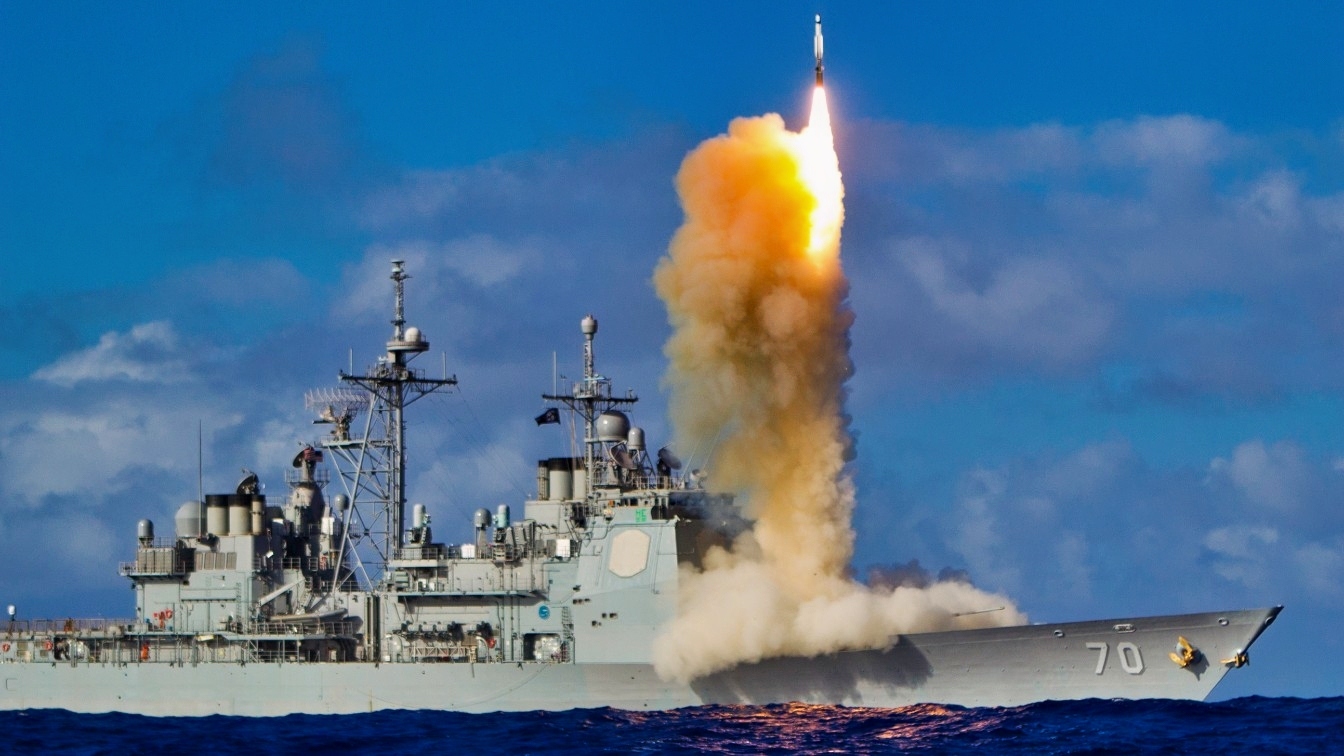
A Standard Missile-3 (SM-3) Block 1B interceptor missile is launched from the guided-missile cruiser USS Lake Erie (CG 70) during a Missile Defense Agency and U.S. Navy test in the mid-Pacific. The SM-3 Block 1B successfully intercepted a target missile that had been launched from the Pacific Missile Range Facility at Barking Sands in Kauai, Hawaii. Lake Erie detected and tracked the target with its on board AN/SPY-1 radar. The event was the third consecutive successful intercept test of the SM-3 Block IB missile. (U.S. Navy photo/Released)
The result is likely to be a deal that is sub-satisfactory but passable for both sides.
Reported Outcomes from the Negotiations
The outcomes from the negotiations include a 60-day roadmap toward a broader agreement, mechanisms designed to prevent military miscalculations in the Strait of Hormuz, a Lebanon-focused deconfliction process intended to prevent immediate escalation, and discussions centered heavily on sanctions relief and the restoration of oil exports.
What stands out is that negotiations appear to focus on crisis management rather than conflict resolution, aiming to stabilize the situation immediately rather than resolving every underlying dispute.
Ending the Hot War
Both sides clearly want the hot war to end. Washington’s incentives include months of military operations that have imposed real costs.
Epic Fury has forced the US to divide its attention and resources across multiple theaters in an unsustainable way.
The Pentagon continues to emphasize long-term competition with China, which Epic Fury directly interferes with by consuming interceptors, naval deployments, logistics, and political capital.
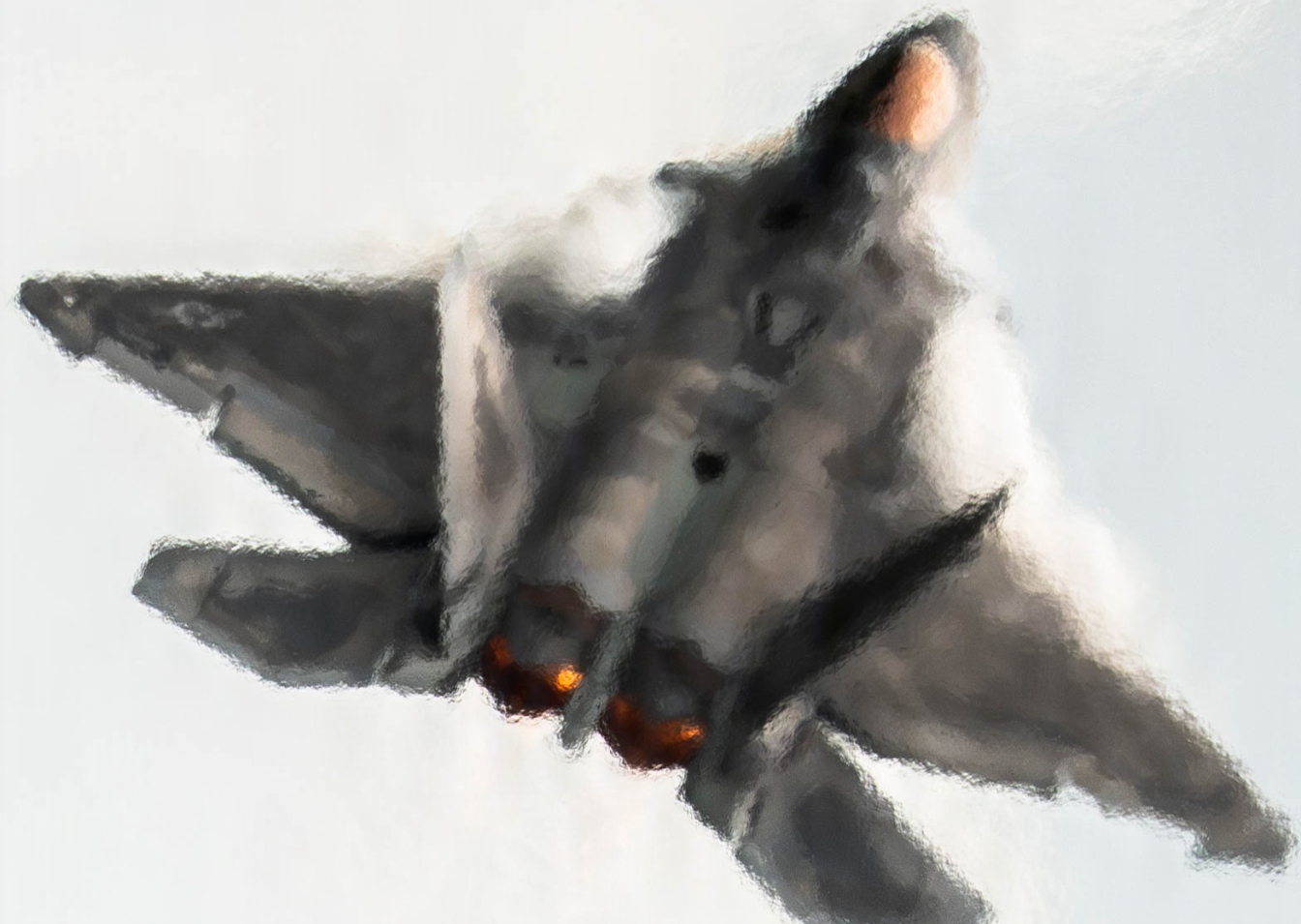
U.S. Air Force Capt. Nick “Laz” Le Tourneau, pilot and commander of the F-22 Raptor Aerial Demonstration Team, performs an aerial demonstration during the Spirit of St. Louis Air Show and STEM Expo in Chesterfield, Missouri, June 7, 2026. Aerial demonstrations are conducted to showcase the capabilities of the F-22 and provide the public an opportunity to observe Air Force operations, gaining a better understanding of its mission. (U.S. Air Force photo by Staff Sgt. Mary Bowers)
Iran, meanwhile, is also incentivized to stop fighting; it has suffered significant economic damage and now needs sanctions relief and restored oil exports.
Neither side achieves its maximal objectives—but now neither side wants to keep paying the price.
The Lingering Nuclear Question
The central dispute remains unresolved.
Iran continues insisting on the right to uranium enrichment, while the US continues insisting that Iran cannot move toward a nuclear weapon.
The potential outcome here could be another formula built around limits, suspension, inspections, and monitoring rather than a permanent dismantlement.
These are the dynamics that produced the crisis in the first place. If unresolved now, it remains a potential future flashpoint.
The Lebanon Tripwire
Washington and Tehran can negotiate what to do about Lebanon—but neither side can fully control every actor on the ground.
Israel remains a wildcard element here, continuing to emphasize its security requirements in southern Lebanon.
Israeli leaders have signaled they intend to preserve operational freedom, potentially forcing a divergence from their US allies. Hezbollah, too, has repeatedly rejected the idea of a permanent Israeli security zone.
So even if Washington and Tehran fully agree on a resolution in Lebanon, Israel and/or Hezbollah can still act independently and derail the broader framework.
The deal is obviously fragile, always one rocket volley or Israeli operation away from dismantling the US-Iran diplomatic framework.
The Oil Question
Iran wants to restore oil exports. And the energy markets naturally prefer stability. International businesses want predictability.
So many actors are interested in resuming oil exports as quickly as possible. International firms are already positioning for potential reentry.
These economic incentives could serve to keep an otherwise fragile agreement alive longer.
Strategic Ambiguity
The likely end state here is not a clean victory for either side, but rather a deal that both sides will spin to satisfy their respective constituents.
Washington will say that maximum pressure worked and that shipping lanes are now open because Iran ultimately backed down.
Tehran will say that its sovereignty was preserved while enrichment rights were protected, and economic sanctions pressure has been reduced.
Both narratives can coexist, at least temporarily. Could this framework lead to renewed cycles of violence?
The nuclear questions remain. Hezbollah remains intact.
The Israeli-Iranian competition has not been resolved. Basically, the agreement addresses symptoms more effectively than the causes.
The most likely outcome here is not a durable peace but a managed pause. Both Washington and Tehran appear to have concluded that continued escalation offers diminishing returns. That alone is likely to produce some sort of agreement.
But the fact that both sides want the fighting to stop does not mean they have resolved the disputes that caused the fighting in the first place.
About the Author: Harrison Kass
Harrison Kass is a writer and attorney focused on national security, technology, and political culture. His work has appeared in Tablet, City Journal, The Hill, The Spectator, and The Cipher Brief. He holds a JD from the University of Oregon and a master’s in Global & Joint Program Studies from NYU. More at harrisonkass.com.


dozy don
June 23, 2026 at 2:23 pm
Was the June 14 2026 US-iran deal whipped up by advisors, or was it concocted by kushner. Or by trump himself.
Whatever it is, now’s the time to settle the Palestinian issue, and avoid allowing netanyahu to continue hammering the Palestinians using his super powerful US-funded war machine.
1948 to 2026. Seventy-eight years since the UN took away Palestinian right to their homeland by allowing the birth of the western toehold in british-ruled Palestine.