


Yesterday, the head of the United States Department of Energy stated that traffic through the Strait of Hormuz was beginning to increase and was confident it would continue to rise in the coming weeks. The Secretary of Energy said this as the war between the U.S. and Iran continues to ramp up, with both sides continuing attacks against each other. He also discussed current oil prices and offered his view on why they have not risen as much as anticipated.
There is still a widespread sense of unease and uncertainty as the war drags on and the economic ramifications are felt around the world.
Running the Blockade

Littoral Combat Ship Deck National Security Journal Image by Stephen Silver.
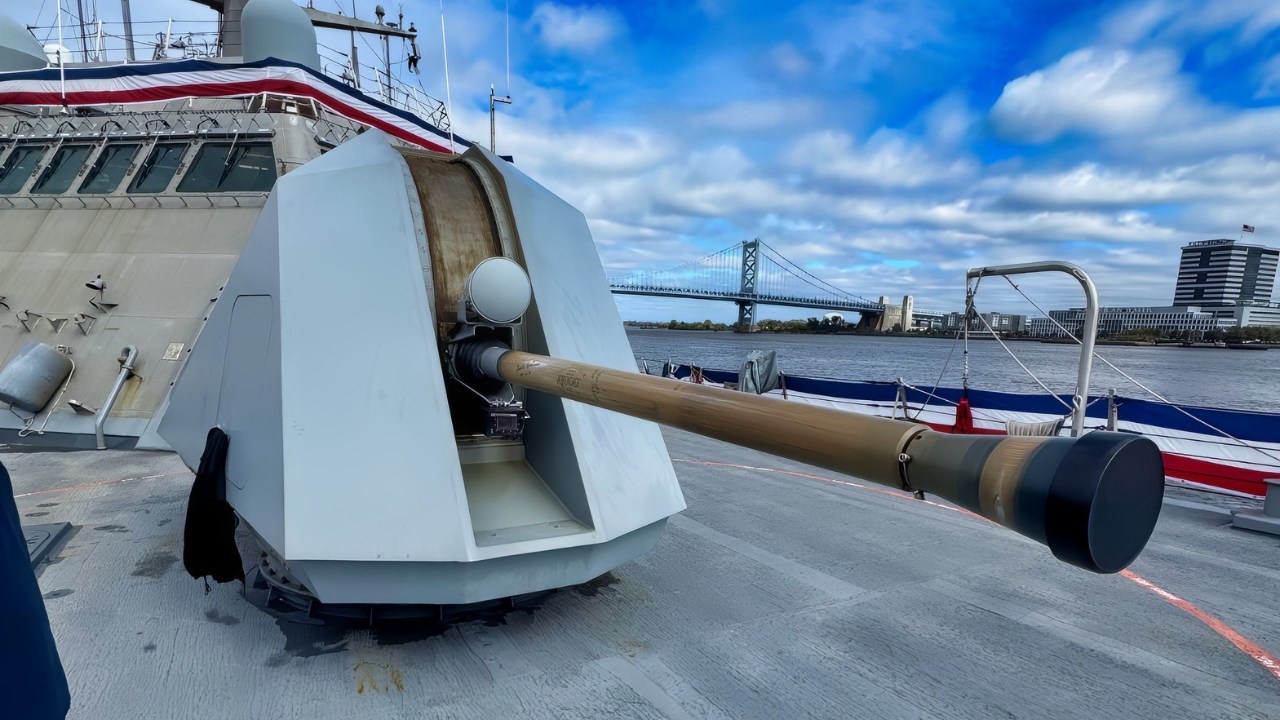
Littoral Combat Ship Deck Gun U.S. Navy. Image Taken by National Security Journal on October 14, 2025.
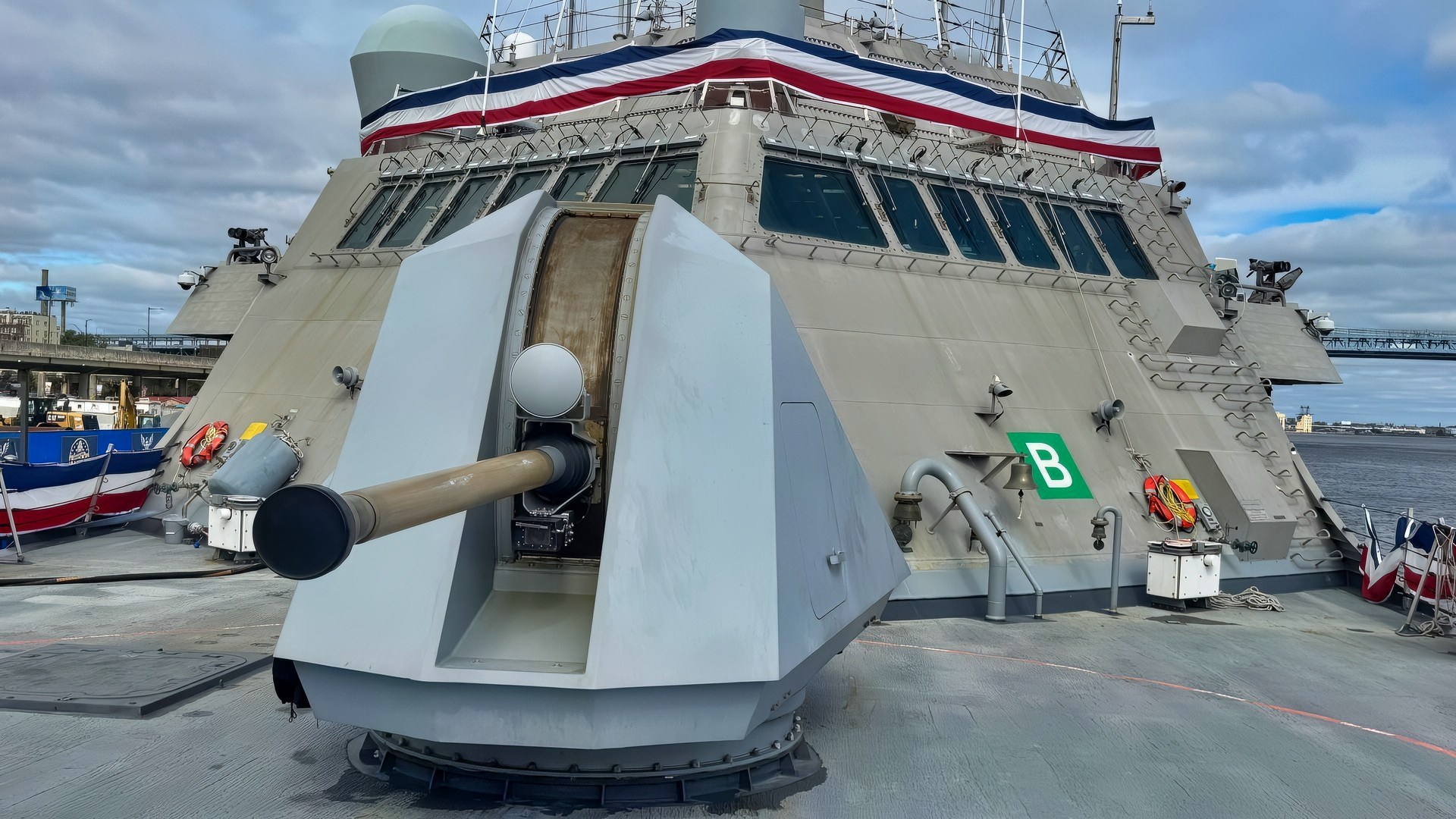
Littoral Combat Ship USS Cooperstown. Image Taken By National Security Journal October 14, 2025.

Littoral Combat Ship USS Cooperstown NSJ Photo Taken On October 14, 2025.
At a press conference on June 9th, Secretary of Energy Chris Wright reported that traffic through the Strait of Hormuz increased despite Iran’s blockade.
“I would say rising very meaningfully,” Wright said when asked how ship traffic is flowing through the strait compared to a week or two ago. He said oil exports through the Strait and the Gulf have risen and “will continue to rise.” Despite the generally optimistic tone, Wright added that it would still take months to return to pre-war levels of goods transit, even after the Strait is reopened. Since the closure of the Strait of Hormuz, around 20% of global oil and natural gas shipments have been disrupted, forcing suppliers to consider alternative routes or suspend operations altogether.
During the conference, Secretary Wright also spoke about the current state of oil prices and why he believed that prices have not spiked to anticipated levels. The reason for this, he explained, is that many major oil importers, mainly China, were tapping into domestic oil reserves. In May, oil imports into China dropped by about 4 million barrels per day, forcing the country to draw on its own inventory.
This has somewhat helped control oil demand, but as private inventories run dry, the increased demand is bound to be reflected in global oil prices. China is one of the biggest recipients of goods through the Strait of Hormuz. According to some estimates, around 40% of goods through the Strait head to China.
How Much Traffic is Passing Through Hormuz
Regarding the flow of traffic through Hormuz, there seems to be conflicting information on how many ships are actually passing through.
According to some reports, several tankers managed to slip through the blockade by turning off their transponders and navigating through select passages where Iranian surveillance is lightest.
However, according to other reports, transit through the Strait has decreased once again this past week as the fighting between Iran and the U.S. has ramped up again. On Tuesday, only four ships managed to pass through the Strait, most of which were linked to Iran.
On Wednesday (local time), no ships were recorded passing through the Strait of Hormuz.
Following reports of tankers breaking through the Iranian blockade, the Secretary-General of the International Maritime Organization (IMO), Arsenio Dominguez, issued a statement urging tankers to exercise caution in the region.
“I am increasingly concerned by reports that vessels continue to attempt to transit the Strait of Hormuz without any credible security guarantees, despite well‑established risks and the fact that seafarers have already been killed, injured, and others detained in recent incidents,” he said. “I urge all stakeholders to act with the highest level of responsibility and reiterate my call on all parties to refrain from any actions that place innocent civilian seafarers at risk.” Many tankers have already begun seeking alternative routes, with a surge in traffic reported through the Suez Canal.
The War Continues and the Strait Remains Closed
Despite efforts to reclaim control of the Strait, the U.S. has been unable to resume traffic at a meaningful rate. Just yesterday, reports emerged that an American AH-64 Apache attack helicopter was destroyed while shooting down Iranian drones around the Strait of Hormuz.
Thankfully, both pilots survived and were safely returned to base. This incident prompted retaliatory “self-defense” strikes by the U.S. against Tehran and further added to the air of uncertainty in the region. Recently, Trump promised that he would strike back hard against Iran for refusing to agree on a ceasefire deal. It is not currently clear who controls the Strait, but it is obvious that transit through the region remains unsafe for most oil tankers.
Despite small amounts of traffic through Hormuz, the Strait remains largely closed. According to some economists, traffic is not set to normalize through the region until Early 2027, after the war comes to a complete close.
However, it is uncertain when the Strait will be reopened or when Iran will agree to a peace deal. Diplomacy still appears to be on the table despite multiple failed past attempts, but with Israel and Hezbollah unable to agree on anything, the possibility of a protracted conflict is becoming more and more likely for Trump. The fighting is likely to continue in the region, with periodic periods of silence as both sides attempt to negotiate before resuming attacks on each other.
The Strait will likely remain closed, and oil prices will continue to rise until a deal is reached or one side capitulates.
About the Author: Isaac Seitz
Isaac Seitz, a Defense Columnist, graduated from Patrick Henry College’s Strategic Intelligence and National Security program. He has also studied Russian at Middlebury Language Schools and has worked as an intelligence Analyst in the private sector.


