
Airports in Moscow temporarily suspended flights on Monday, June 22, after local officials reported dozens of Ukrainian drones targeting Russia’s capital city.
The news comes as Ukraine steps up its long-range attacks against Russian energy infrastructure and major cities in what Ukrainian President Volodymyr Zelenskyy has described as a campaign of “long-range sanctions.”
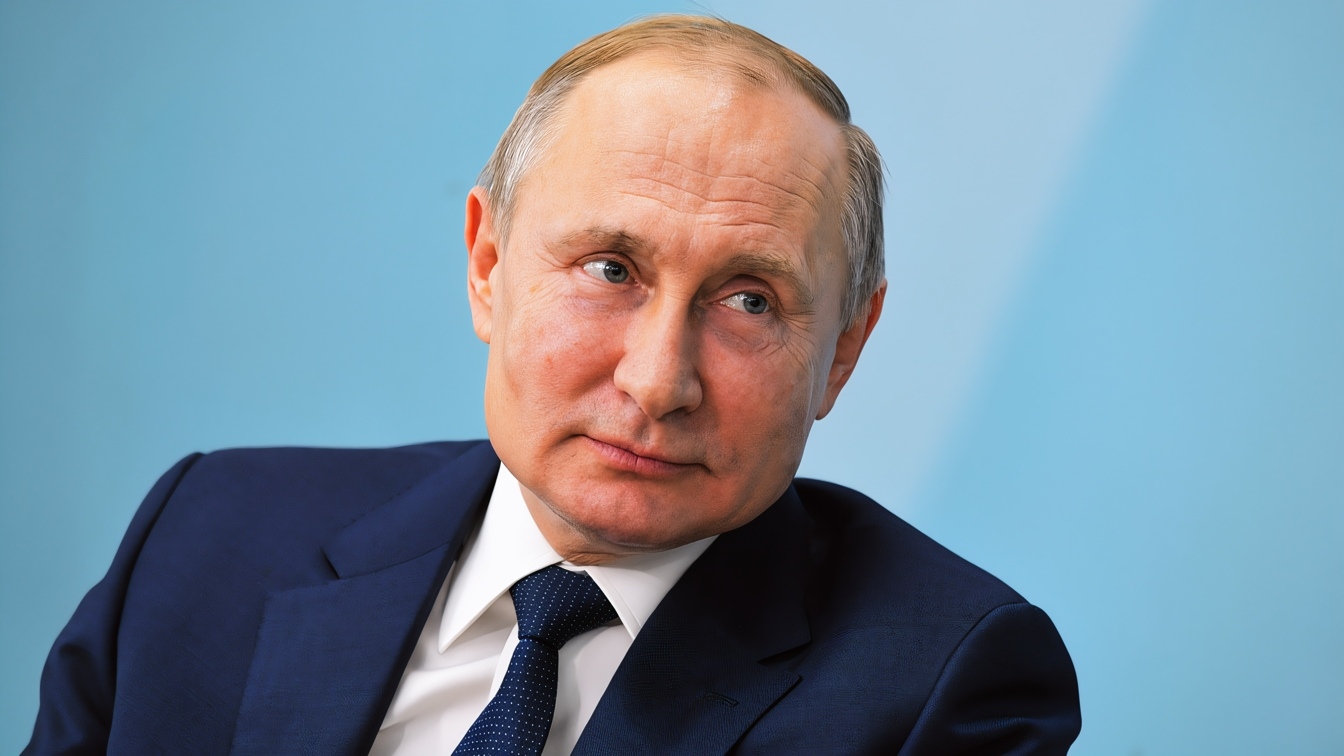
Putin in 2020 Russian Government Photo Handout
The news on Monday also came only days after Moscow suffered the biggest barrage of drones since the beginning of the war, with an attack targeting its primary oil refinery.
In a statement, Moscow Mayor Sergei Sobyanin reported that drones began targeting the capital city at 3 am local time. By 10 am, 80 Ukrainian drones were said to have been intercepted all over the city.
“The air defense forces of the Ministry of Defense destroyed a UAV flying towards Moscow. Emergency services specialists are working at the site of the fall of the wreckage,” Sobyanin’s statement explained.
Airports throughout Zhukovsky, Domodedovo, Vnukovo, and Sheremetyevo were also impacted by the strikes, being forced to shut down operations for several hours.
Strikes were observed throughout the rest of the country that same day.
Moscow Under Siege
Moscow has come under growing pressure from Ukrainian strikes in recent days and weeks.
On June 18, the Ukrainian president confirmed that Ukrainian “long-range sanctions” had targeted the Moscow oil refinery and other targets throughout the Rostov region.
The strikes quickly went viral when video footage appeared to show the heavy, circular lid of a fuel tank flying hundreds of feet into the air, amid plumes of black smoke and explosions.
“Last night, our long-range sanctions once again reached the Moscow region – for the second time this week, the Moscow oil refinery was hit.
Targets were also struck in the Rostov region and in temporarily occupied territories of Ukraine.

A member of 2nd Battalion, The Parachute Regiment fires a Next-generation Light Anti-tank Weapon (NLAW)…Paratroopers have demonstrated the firepower that they could bring to bear during combat missions as the British Army’s global response force. ..As the culmination of a course in support weapons skills, paratroopers staged a firepower demonstration on Salisbury Plain. ..The Next-generation Light Anti-tank Weapon (NLAW) is the first, non-expert, short-range, anti-tank missile that rapidly knocks out any main battle tank in just one shot by striking it from above…NLAW utilises predicted line of sight guidance and has overfly top and direct attack modes, and it is easy to use, making it a valuable tank destroyer for light forces that operate dismounted in all environments, including built up areas…It also has night vision capability and is designed for all climate conditions and environments..
This is a fully justified response to Russian attacks on our cities and communities, and another important result of our warriors’ work against facilities that sustain Russia’s war machine.
I thank our Defense and Security Forces of Ukraine for their coordinated efforts – the Security Service of Ukraine, the Unmanned Systems Forces, the Special Operations Forces, Defense Intelligence, and our missile brigade for their precision,” Zelenskyy’s statement reads.
In response to the strike, the Kremlin threatened further escalation.
Speaking to reporters at an event in Kazan, Russian Foreign Minister Sergei Lavrov explained that Moscow was mulling over possible group strikes against Ukraine.
“It is no coincidence that the president announced some time ago, after yet another Kyiv terrorist attack, that we will now conduct massive group strikes on a regular basis against targets whose condition directly affects the combat readiness of the Ukrainian Armed Forces,” Lavrov said.
301 Ukrainian Drones
The Associated Press reported on Monday that a Russian drone strike in Sumy, northeastern Ukraine, resulted in three deaths, including a 13-year-old boy.
Ukrainian attacks, meanwhile, saw 301 drones targeting infrastructure across multiple regions of Russia, including Crimea, the Black Sea, and the Azov Sea.
The Ukrainian drones were reportedly launched overnight, with local Telegram channels describing an enormous strike on Crimea and the Moscow region.
According to the Telegram channel Arkhangel Spetsnaza, the drones were intended to overload Russian air defenses ahead of a possible combined strike in the hours that followed.
The same channel also claimed that Ukrainian forces were attempting to establish an aerial corridor, forcing Russian defenses to expend interceptors.
More Ukrainian Drones On Their Way?
Late Monday afternoon, open source intelligence indicated that Ukrainian drones appeared to be heading south to Crimea.
At 23:30 Ukrainian time, Telegram channel “DRNBMR” noted that approximately 250 Ukrainian drones had been identified heading to Crimea, citing Russian sources.
Moscow has cause to be concerned, too.
Russian stocks of ballistic missiles shrink with every attack, and constant barrages of Ukrainian drones and missiles force its military to expend expensive interceptors, too.
Constant Ukrainian bombardments risk the Russian military-industrial complex falling short on its ability to replenish stocks in time.
And all the while, Moscow is escalating back, launching more devastating strikes on Ukrainian cities and using some of its most valuable and expensive missiles in the process – including its Zircon hypersonic cruise missiles that cost as much as $5.6 million to manufacture.
That’s a problem for Russia, not just because it’s expensive to replace these missiles, but because Kyiv knows just as well as Moscow does that escalation is hard to sustain.
Every Ukrainian missile and drone strike risks a Russian retaliation, but every Russian escalation depletes Moscow’s supply of ballistic missiles.
Ukraine knows, therefore, that Russia may not be capable of responding with the same level of destructive strikes every time Moscow is hit.
Something has to give, and on Monday, reports revealed how Russian air defense systems were being moved from the frontlines to protect the capital city – a move that could indicate Moscow is beginning to face reality and prepare for a barrage of new strikes.
About the Author: Jack Buckby
Jack Buckby is a British researcher and analyst specializing in defense and national security, based in New York. His work focuses on military capability, procurement, and strategic competition, producing and editing analysis for policy and defense audiences. He brings extensive editorial experience, with a career output spanning over 1,000 articles at 19FortyFive and National Security Journal, and has previously authored books and papers on extremism and deradicalization.


