


Summary and Key Points: Iran has halted its strikes on Israel, and the relief is widely shared: Washington calls it a success, Israel says pressure worked, and the commentary has moved on. It may be moving too fast. There is another reading of why Tehran stopped — one that has nothing to do with losing. Iran may have concluded that it had already accomplished what it had come to do. It never needed to actually close the Strait of Hormuz; the lingering threat alone was enough to rattle shipping firms, insurers, and energy markets, sending crude prices jumping overnight before easing.
The Iran War Crisis: Does Tehran Have What It Wants?
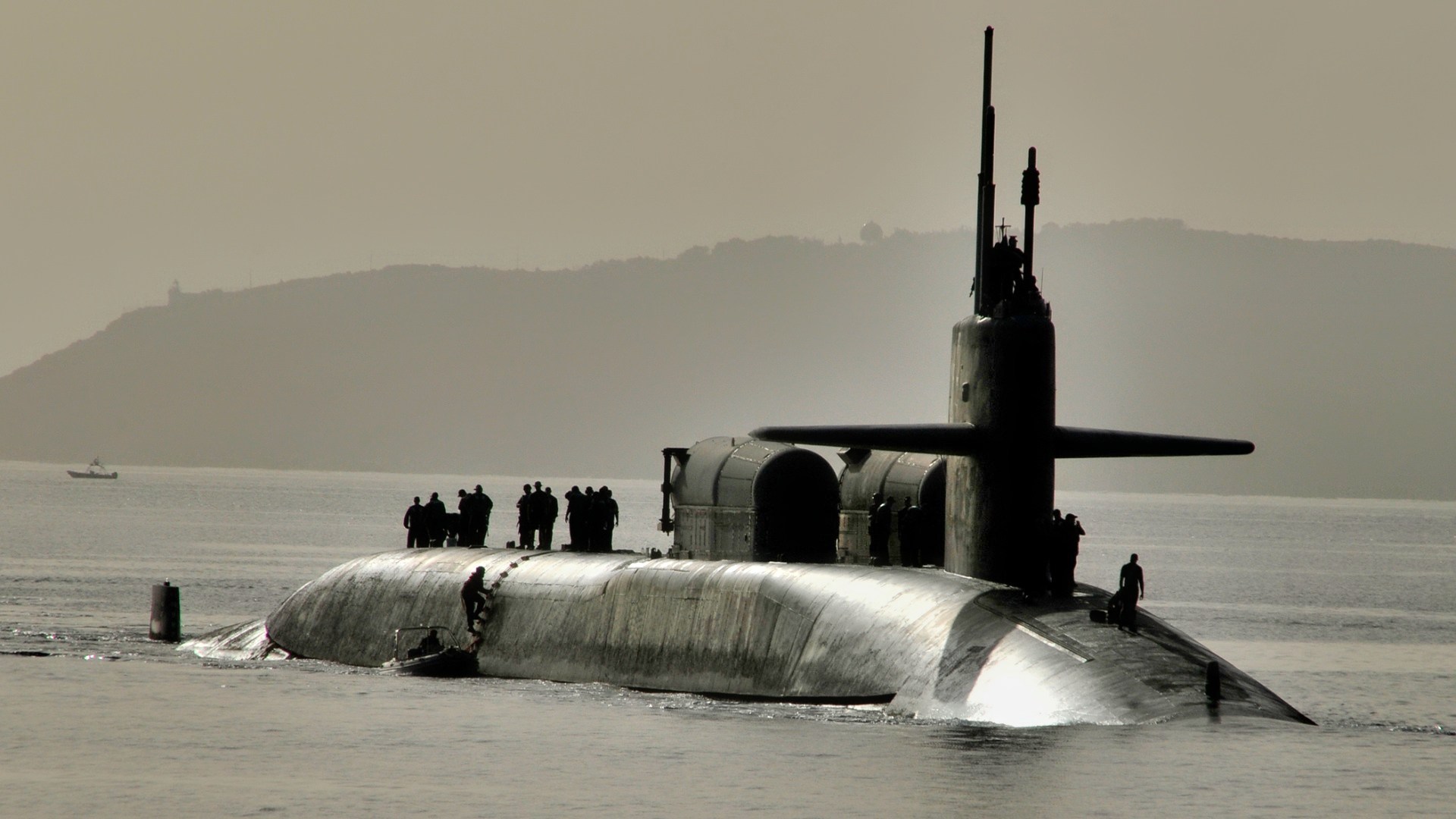
The guided missile submarine USS Florida (SSGN 728) arrives in Souda Bay, Greece, May 21, 2013, for a scheduled port visit. The Florida was underway in the U.S. 6th Fleet area of responsibility conducting maritime security operations and theater security cooperation efforts. (U.S. Navy photo by Paul Farley/Released)
Iran says it is halting its strikes on Israel, ending the sharpest exchange since April’s truce, even as it warns of harsher attacks if the “hostile acts” continue. Washington is calling that a success. Israel is treating it as evidence that pressure worked. Plenty of commentators have already moved on to the next question.
They may be moving a little too quickly.
The assumption underneath much of the discussion is that Iran wanted a bigger fight and then decided against one. That is certainly possible. But there is another explanation that deserves consideration. Tehran may have looked at this latest round of fighting and concluded that further escalation would buy it very little. Not because it was losing, but because it had already made its point.
The easiest mistake to make in a crisis like this is to focus exclusively on the military exchange itself. Missiles become the story. So do air defenses, targets, battle damage assessments, and all the other metrics that military professionals understandably care about.
States care about those things. They also care about political effects.
Iran has spent decades trying to convince the world that it possesses the ability to disrupt a region through which a large share of the global economy still flows. That claim has often sounded less persuasive during periods of relative calm. Then a crisis arises, and everyone remembers why the Strait of Hormuz occupies such a prominent place in strategic thinking.
A curious thing happened over the past several days. Iran did not need to tighten its grip on the Strait any further.
The lingering threat was enough.

Littoral Combat Ship. Image Credit: Creative Commons.
Shipping companies reacted. Insurers reacted. Governments reacted. Energy markets reacted, with crude spiking more than five percent overnight before easing. Not because commerce stopped, but because people suddenly had to contemplate what would happen if it did.
Iran has never needed to shut down the global economy. It has never needed to win a war with the United States. What it has needed is something much smaller: a reminder that any future war in the Gulf would carry costs well beyond the battlefield.
It accomplished that.
The conversation surrounding the crisis has largely centered on Israel and Iran, which is understandable. They were the protagonists. Yet some of the most important audiences were sitting elsewhere.
In Beijing.
In New Delhi.
In Tokyo.
The countries that consume enormous quantities of Gulf energy did not need a lecture on the strategic importance of the Strait of Hormuz. They were reminded of it in real time.
Not because China suddenly became more sympathetic to Tehran. It did not. Chinese leaders dislike instability. They dislike disruptions to trade. They dislike uncertainty in energy markets. But they dislike being reminded of their vulnerabilities, too.
Iran understands that.
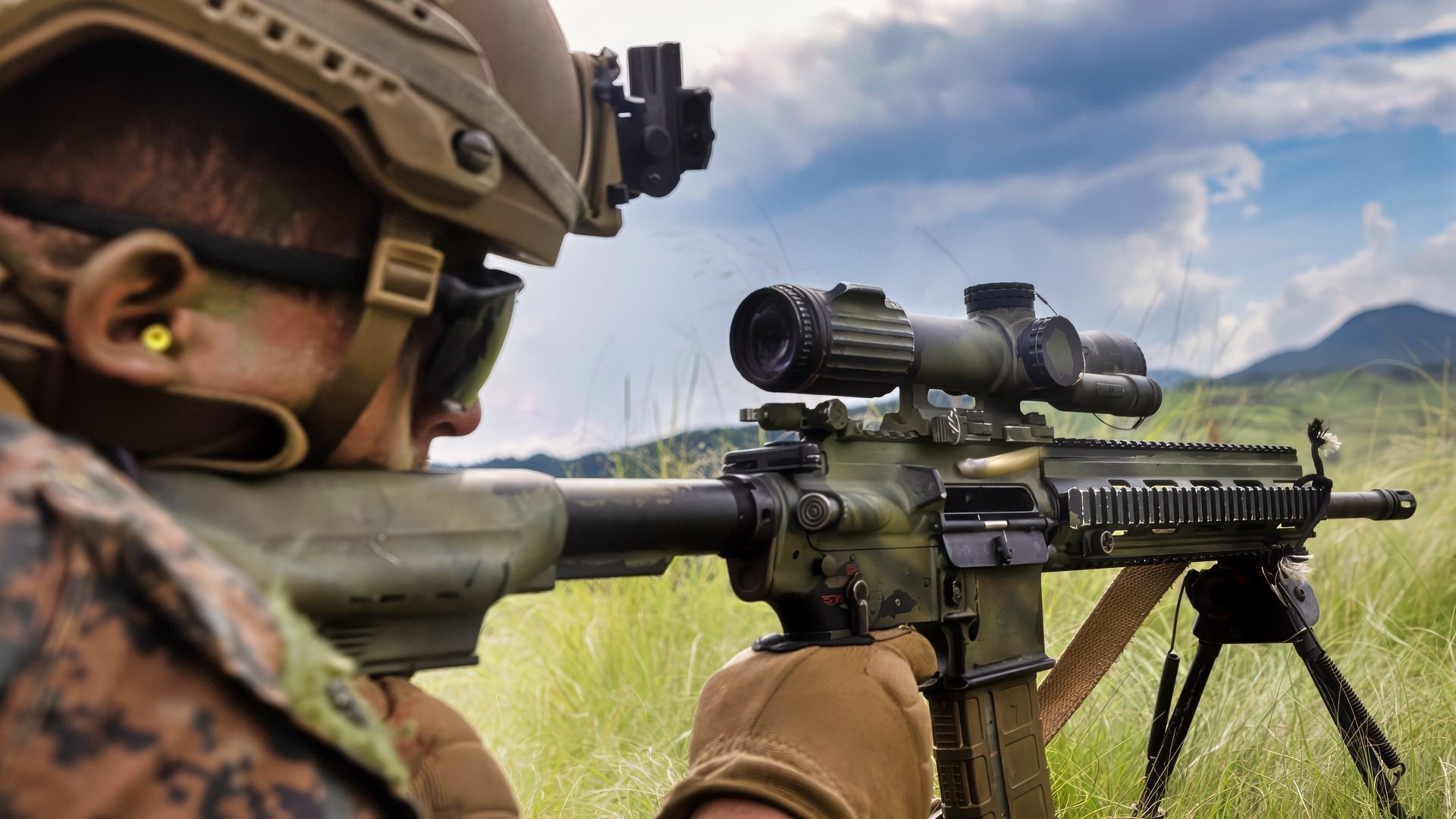
U.S. Marine Corps Cpl. Wyatt Mccullough, a rifleman with 12th Littoral Combat Team, 12th Marine Littoral Regiment, 3rd Marine Division, fires the M27 Infantry Automatic Rifle during Resolute Dragon 25 at Hijudai Maneuver Area, Oita Prefecture, Japan, Sept. 15, 2025. Resolute Dragon is an annual bilateral exercise in Japan that strengthens the command, control, and multi-domain maneuver capabilities of U.S. Marines in III Marine Expeditionary Force and Japan Self-Defense Force personnel, with a focus on controlling and defending key maritime terrain. Mccullough is a native of Texas. (U.S. Marine Corps photo by Lance Cpl. Rodney Frye)
One reason Tehran has survived so many confrontations over the years is that it rarely measures success the way outsiders expect. The regime’s leaders know they cannot defeat the United States. They know they cannot match Israel technologically. They know that a prolonged conventional war would expose weaknesses they would rather keep hidden.
During the Tanker War in the 1980s, Iran discovered something that it has never really forgotten. It could not dominate the Gulf, but it could make life in the Gulf more dangerous and more expensive for everyone else. Four decades later, the technology has changed. The underlying logic has not.
The regime talks like a revolutionary movement. It often acts like a government trying to stay in power.
This is where the American side of the story becomes interesting.
For more than a decade, successive administrations have spoken about shifting strategic attention toward Asia. The language changes. The emphasis changes. The objective remains remarkably consistent. American policymakers would like to devote more time and resources to the challenges posed by China.
Then something happens in the Middle East.
Something always seems to happen in the Middle East.
A crisis erupts. Diplomats get on airplanes. Carrier groups move. Intelligence assets are reassigned. Presidential attention follows.
The pattern is familiar enough that it barely attracts comment anymore.

U.S. Marine Corps Cpl. Ethan Benedict, a chemical, biological, radiological, and nuclear specialist with Combat Logistics Battalion 6, Combat Logistics Regiment 2, 2nd Marine Logistics Group, poses for a photo after a simulated CBRN response as part of Exercise Freezing Winds 2025 in Gylto, Finland, Nov. 30, 2025. CBRN response Marines are trained to conduct precise detection, identification, and sampling of hazardous agents to protect personnel, preserve life, and support the attribution of weapons of mass destruction incidents. Freezing Winds is conducted to increase interoperability between Marines, Finland, and NATO Allies by executing combined amphibious operations in and around the Baltic Sea littorals, and is part of a regularly occurring series of exercises in northern Europe that demonstrates the capability to deploy and train Marines and Sailors in support of the NATO Alliance. Benedict is a native of Florida. (U.S. Marine Corps photo by Sgt. Alfonso Livrieri)
Iran cannot force the United States to abandon its priorities. It cannot dictate American grand strategy. It cannot compel Washington to remain permanently focused on the Gulf.
It does not have to.
It only has to remind American policymakers that leaving the region behind is harder than many of them would prefer. That reminder may be worth more to Tehran than another missile barrage.
There is a tendency after every crisis to assume that the side that stopped first must have learned the appropriate lesson. International politics does not work that neatly. Countries draw different conclusions from the same events. Governments often emerge from the same confrontation believing entirely different things.
Washington is understandably relieved that the shooting appears to be subsiding. So is everyone else who is interested in avoiding another Middle Eastern war.
Relief is warranted.
The United States may conclude that deterrence was restored. Iran may conclude that it demonstrated exactly what it needed to demonstrate.
If so, the most consequential thing about Tehran’s decision may not be that it stopped shooting. It may be the conditions it attached, and the reason it believed it could.
About the Author: Dr. Andrew Latham
Andrew Latham is a professor of international relations and political theory at Macalester College in Saint Paul, MN. You can follow him on X: @aakatham.


