
On Sunday, June 21, Russian authorities in Crimea completely suspended the sale of fuel to civilians until at least Wednesday, June 24.
It comes after weeks of fuel rationing measures, including the introduction of fuel coupons and the later slashing of fuel coupon sales to just 20 liters in May.

President Donald J. Trump and President Zelenskyy in the Oval Office. White House Photo.
In a statement published on Telegram, Sergei Aksyonov, the governor of Crimea, confirmed that fuel was in such short supply that it would be sold only to government agencies.
“Fuel will be sold only to government agencies that ensure the functioning and security of the Republic of Crimea,” Aksyonov said, adding, “I ask everyone to remain calm and only trust official sources of information.”
The Strikes That Caused It
Ukrainian President Volodymyr Zelenskyy confirmed on Sunday that the Ukrainian military had struck an oil depot and other fuel facilities used to supply Russian forces.
The strikes were also confirmed by Russian authorities in Crimea.
According to Aksyonov, at least 28 people were wounded in the attacks on Saturday night through Sunday morning, while local authorities in the Krasnodar region – slightly east of Crimea – also confirmed that a drone attack hit an oil transport facility and killed one person.
The Russian Defense Ministry also announced that 239 Ukrainian drones were intercepted over eight regions, including over the Sea of Azov and the Black Sea.
Zelenskyy offered additional details about the strikes in a statement published on X, accompanied by video footage of the damage.
“Last night, our long-range sanctions targeted the occupiers’ military logistics, oil industry, and air defense. All of this is just a response to Russia’s brutal attacks against our people. I thank the warriors of the Security Service of Ukraine, the Unmanned Systems Forces, the Defense Intelligence of Ukraine, and the Special Operations Forces for their successful work at a distance of about 300 kilometers from the frontline,” the statement reads.
Zelenskyy also confirmed that facilities on both sides of the Crimean Bridge were hit, including maritime logistics used to transport oil in the Krasnodar region and an oil depot in Kerch.
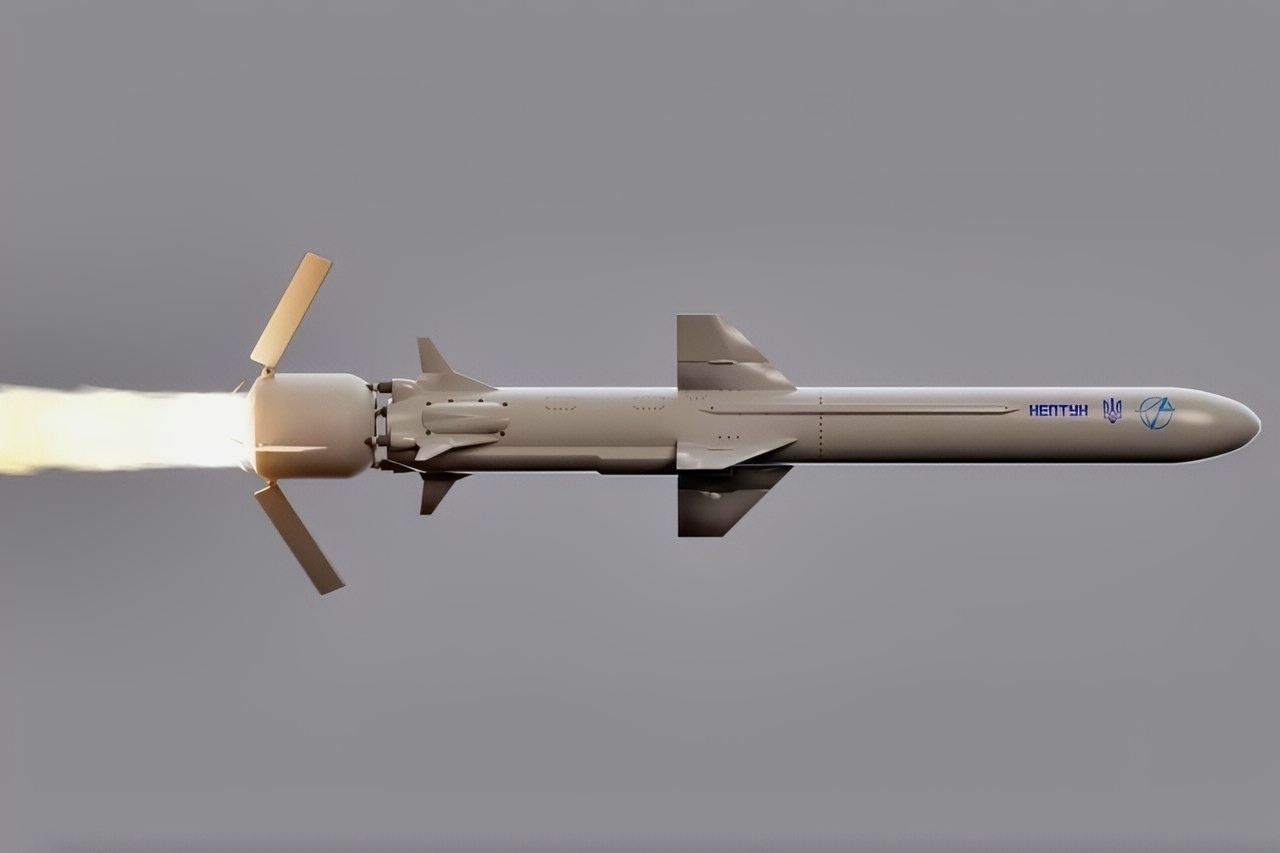
Neptune Missile. Image Credit: Government of Ukraine.
“In addition, military logistics facilities were successfully struck, along with four radar stations belonging to S-400 systems and two Pantsir systems,” the statement continues.
Why Ukraine Is Targeting Crimea
Crimea is a critical military hub for Russia.
After annexing the Ukrainian territory in 2014, a move largely considered illegal by the international community, Crimea became a major logistics center that established a Russian military presence in the south of Ukraine.
Since the invasion of Ukraine in 2022, Crimea has served as a crucial supply line for Russian forces.
Everything from fuel and ammunition to military personnel all move through Crimea before being distributed to Russian units operating on the front lines.
That is, in part, why Ukraine is focusing so heavily on the region – and doing so with barrages of drones and long-range missiles that are now being manufactured domestically.
The Ukrainian president refers to the ongoing strikes as a form of “long-range sanctions” against Russia, designed to make the occupation of Crimea more expensive and difficult to sustain.
The recent strikes targeting oil depots and ferry crossings not only make it difficult to support civilian life but also make it difficult for Russia to even maintain control of the region.
Ukraine is successfully isolating Crimea from the Russian mainland – and it’s working.
Ukraine Confirms Even More Strikes
On Monday, June 22, Ukraine’s military also confirmed fresh strikes on a Russian plant manufacturing electronics used in missiles.
The strike occurred in the Voronezh region of Russia, while other attacks took place at the Dubna satellite communications center in Moscow.
The Ukrainian General Staff confirmed the latest round of attacks, only hours after the recent Crimea strikes, in a statement issued on Telegram.
“It manufactures electronics used in Russian missiles, in particular for the Iskander tactical missile system,” the statement explained.
Russian authorities also confirmed the strike, with Voronezh Regional Governor Alexander Gusev also issuing a statement on Telegram to the same effect.
The statement described the target of the strike as an “industrial enterprise on the left bank of the Voronezh River in the provincial capital.”
“We have sustained extremely heavy losses today,” the statement also says, adding that the missile attack also killed five people.
“Several dozen citizens sought medical help, but most were sent home after receiving treatment,” he added.
Moscow Moves Air Defenses
In response to Ukrainian strikes, Moscow is reportedly pulling air defense systems from the front lines and moving them to defend the Russian capital, instead.
Reports on Monday described how a Pantsir anti-aircraft missile system has been installed on a tower near a main oil refinery in Moscow – the same refinery that was hit in devastating Ukrainian strikes last week.
Russia’s air defense network is already stretched, and moving systems from the front line could indicate that Moscow is shifting its focus from frontline gains to defending its mainland.
About the Author: Jack Buckby
Jack Buckby is a British researcher and analyst specializing in defense and national security, based in New York. His work focuses on military capability, procurement, and strategic competition, producing and editing analysis for policy and defense audiences. He brings extensive editorial experience, with a career output spanning over 1,000 articles at 19FortyFive and National Security Journal, and has previously authored books and papers on extremism and deradicalization.


