
Russian authorities in Crimea declared a state of emergency on Friday, June 26, following weeks of Ukrainian strikes that have disrupted the peninsula’s power grid and crippled its fuel supply network.
The announcement also comes after the Russian Ministry of Defense confirmed that 660 Ukrainian drones were intercepted overnight, with Crimea targeted alongside roughly a dozen other Russian or Russian-controlled regions.

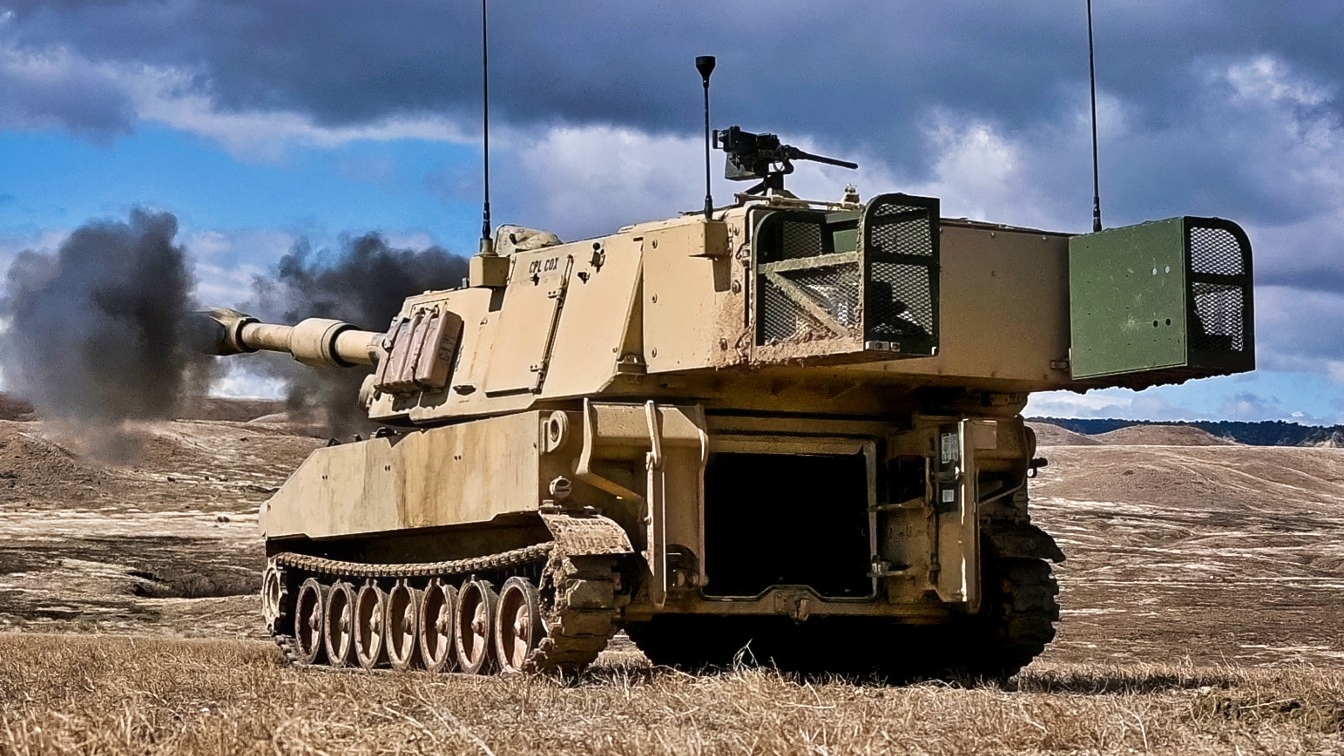
NATO Artillery Test. Image Credit: NATO.
Russian officials also said on Friday that dozens more Ukrainian drones have been destroyed since, bringing the total reported figure to over 700.
The announcement should not come as a surprise. After weeks of fuel rationing measures in the peninsula and increasingly devastating Ukrainian strikes on bridges, military, and energy infrastructure, Crimea is now at risk of becoming isolated from the Russian mainland.
Ukraine’s long-range missile and drone strategy is now in full effect, with Ukrainian President Volodymyr Zelenskyy committed to a 40-day-long barrage of Russian facilities that could challenge not only Russia’s claim to the peninsula, but its ability to sustain the war.
State of Emergency in Crimea: Ukraine Attacks
The Russian-installed governor of Sevastopol, Mikhail Razvozhayev, announced the state of emergency along with the Russian-appointed head of Crimea, Sergei Aksyonov.
In a video address published on Telegram, Razvozhayev said that the state of emergency will remain in effect until the situation improves.
Aksyonov, meanwhile, said the decision was economic and served to simplify and streamline the process for property damage claims.
The emergency declaration is expected to assist authorities with processing compensation claims and allow businesses to invoke force majeure clauses.
The announcement also said that the move will simplify decisions related to restoring public services and fixing infrastructure, and it also gives officials the power to restrict movement if they deem it necessary.
The measures come as Crimea’s economy faces substantial and possibly insurmountable strain.
Children’s summer camps in Crimea have been suspended until September 1, although that timeline may be optimistic; with more Ukrainian strikes expected over the next six weeks, the chances of children’s summer camps being safe in the near future seem low.
What’s more, passenger sea transport in Sevastopol Bay was suspended on Friday morning, and rail links have been significantly reduced.
Viral video footage shared on social media has also shown a mass exodus of Crimean residents and tourists attempting to flee the peninsula, but getting trapped as they approach bridges currently under repair or severely damaged by Ukrainian strikes.
The number of trains to and from Russia is expected to be cut from 18 to 7 over the next two weeks, and could fall even further in the coming days.
Tourism, which is one of Crimea’s biggest industries, is obviously taking a beating. The peninsula has long been a major vacation destination, and significant investment in the wake of the 2014 Russian annexation has only furthered that boom.
Despite the enormous military presence in Crimea, tourists flock to the region every summer – but now, between the air raid alerts and the fuel crisis, it’s hard to imagine the Crimean economy returning to anything close to normal in the near term.
Ukraine Steps Up the Pressure
On Thursday, June 25, Ukrainian President Volodymyr Zelenskyy announced that he had approved plans for a 40-day campaign to influence Russia to end its occupation of Ukraine.
In a statement published via Telegram, Zelenskyy described a meeting with Ukraine’s security service about ongoing strikes, and suggested he believed Kyiv has the power to force Moscow back to the negotiating table.
“I approved a 40-day operation by the Service to influence the aggressor state in order to press for an end to the war,” Zelenskyy wrote.
But the pressure isn’t new – it’s been ongoing for weeks. Sevastopol has borne the brunt of the damage.
It is the largest city in Crimea and the home of Russia’s Black Sea Fleet.
Razvozhayev said on Friday that electricity restrictions will continue because repairs to the power grid are being interrupted by air raid alerts caused by Ukrainian drone activity.
In recent days, reports revealed how Ukrainian strikes plunged half of Crimea into darkness, prompting widespread evacuations.
Robert Brovdi, the commander of Ukraine’s drone forces, confirmed that Kyiv had struck Sevastopol’s main power substation seven times in the early hours of Wednesday.
Sevastopol has suffered constant blackouts, with unstable electricity also disrupting water supplies. Razvozhayev has said that water supply will only return to normal in Sevastopol once the grid has been stabilized – if, indeed, it can be stabilized before the next wave of Ukrainian strikes knocks it out entirely.
But the pressure isn’t just limited to Crimea’s biggest city. Ukrainian attacks have targeted oil depots and transport routes throughout Crimea, making it impossible for peaceful civilian life to continue in the region.
The peninsula is also becoming harder for Moscow to supply and defend, raising the likelihood of the region being isolated from the Russian homeland – and perhaps, at some point, coming back under Ukrainian control.
About the Author: Jack Buckby
Jack Buckby is a British researcher and analyst specializing in defense and national security, based in New York. His work focuses on military capability, procurement, and strategic competition, producing and editing analysis for policy and defense audiences. He brings extensive editorial experience, with a career output spanning over 1,000 articles at 19FortyFive and National Security Journal, and has previously authored books and papers on extremism and deradicalization.


